
Interior Design Styles
Japandi Interior Design: Perfect Blend of Japanese & Scandinavian
In recent years, Japandi interior design has become one of the most sought-after styles for homeowners, designers, and minimalism lovers. This design trend seamlessly combines the timeless elegance of Japanese interior design with the cozy functionality of Scandinavian interiors. The result is a space that feels calm, warm, and beautifully uncluttered – a perfect reflection of a modern, mindful lifestyle.
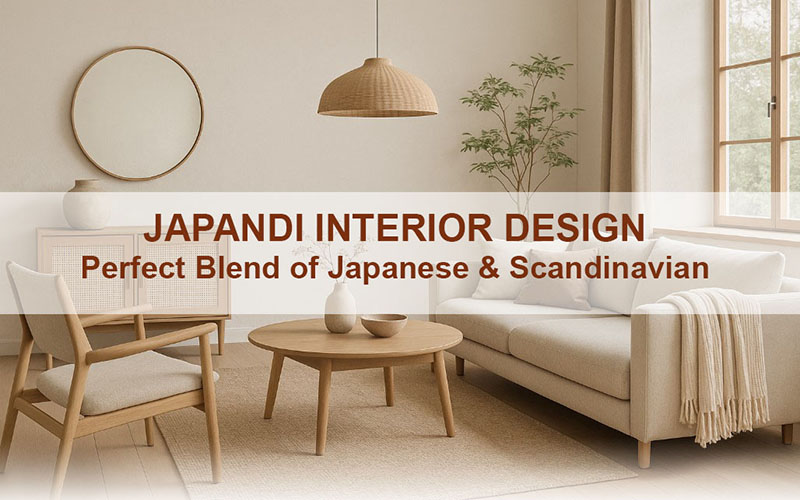
At its core, Japandi celebrates the philosophy of “less is more” while embracing nature, craftsmanship, and comfort. Whether you are furnishing a Japandi style home, creating a peaceful Japandi bedroom, or planning a modern Japandi living room, this style offers a harmonious balance of beauty and practicality.
Key Characteristics of Japandi Interior Design
1. Philosophy & Lifestyle
Japandi is more than just an aesthetic – it’s a way of life. Rooted in the Japanese principle of wabi-sabi (finding beauty in imperfection) and the Scandinavian concept of hygge (creating coziness), Japandi promotes mindfulness and intentional living.
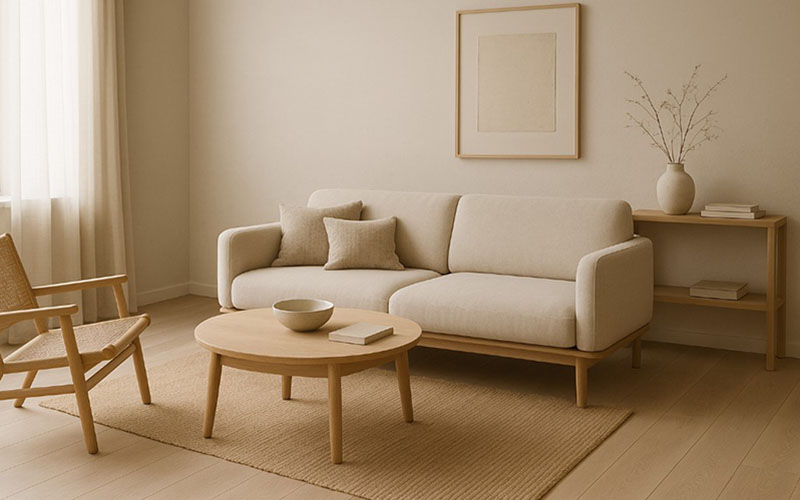
A minimalist lifestyle Japandi living room is not filled with excess furniture or unnecessary decor. Instead, each piece is carefully chosen for its function and design. This approach makes Japandi ideal for those who value simplicity, balance, and a stress-free home environment.
2. Color & Mood
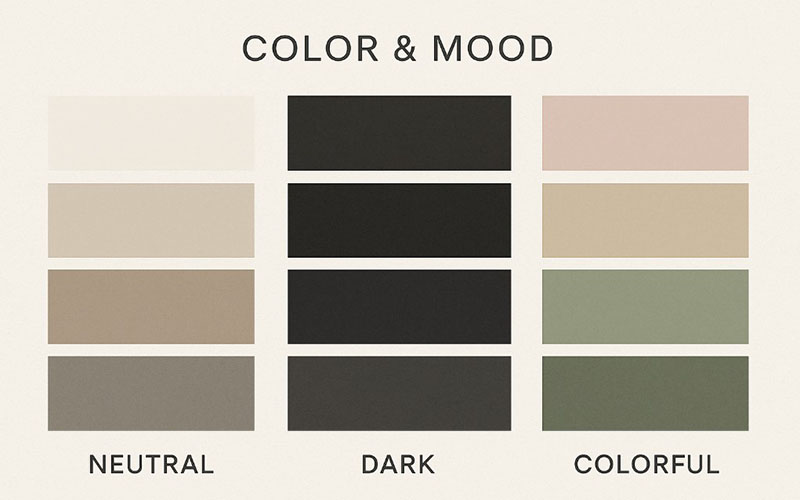
The Japandi color scheme is one of its most recognizable features. Neutral shades dominate the palette, with soft whites, warm beige, taupe, and muted grays setting the tone. These hues are often paired with Japandi wall colors in earthy tones, creating a natural flow throughout the space.
For those who prefer a moodier atmosphere, dark Japandi interiors are a growing trend. By incorporating Japandi dark wood furniture, black accents, or charcoal walls, designers achieve a dramatic yet calming look. On the other hand, colorful Japandi adds subtle pops of pastel or muted greens to keep the design fresh and lively.
3. Materials & Textures
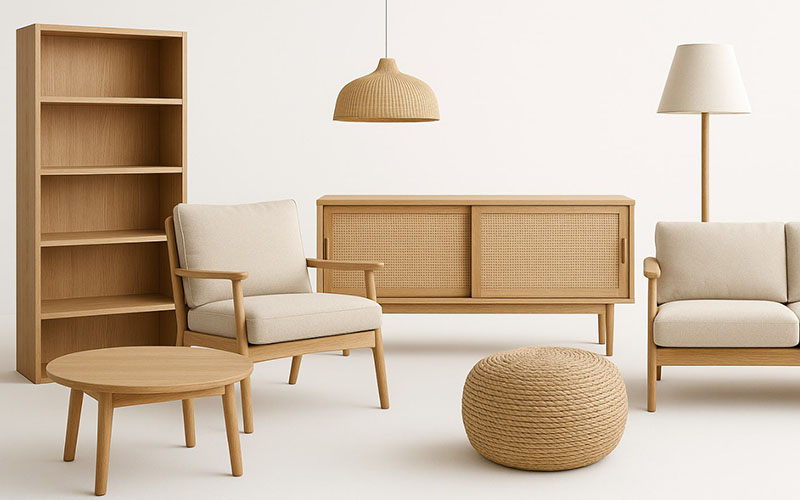
Authenticity is key in Japandi interiors. Natural and sustainable materials such as wood, bamboo, rattan, stone, and linen dominate the style. Light oak or ash flooring works beautifully for a classic Japandi style flooring approach, while Japandi dark wood tones bring depth and sophistication to more modern homes.
Even small details matter – Japandi interior doors and Japandi window treatments are often made from wood or fabric that emphasizes natural textures. The goal is to create a tactile, sensory experience that feels grounded in nature.
4. Furniture & Decor
Furniture in Japandi interior design is simple, functional, and timeless. Low-profile sofas, clean-lined wooden tables, and open shelving define the look. Instead of heavy ornamentation, Japandi emphasizes quality craftsmanship and organic shapes.
Japandi style furniture is often paired with Japandi style plants to introduce greenery and life into the room. Accessories like ceramic vases, handmade textiles, or woven baskets enhance the Japandi decor style without overwhelming the space. For those looking for inspiration, working with a professional Japandi interior designer can help achieve the perfect balance of Japanese serenity and Scandinavian comfort.
Benefits of Japandi Interior Design
Choosing Japandi interior design style for your home offers more than just visual appeal – it transforms how you live. Here are some of the main benefits:
- Calm and Relaxing Atmosphere
The balance of Japanese serenity and Scandinavian coziness creates spaces that feel restorative. Whether it’s a Japandi bedroom or a Japandi living room, the style encourages relaxation and mindfulness. - Timeless and Versatile
Japandi design doesn’t follow short-lived trends. With its neutral palette and natural materials, it works well in different types of homes – from a modern apartment to a traditional Japandi style house. - Sustainability and Functionality
Using eco-friendly woods, recycled materials, and handmade crafts makes Japandi a sustainable choice. Its focus on functional furniture ensures that every piece serves a purpose. - Adaptability
Japandi pairs well with other influences. For example, industrial Japandi (or Japandi industrial) combines concrete and metal with wood for a bolder look. Meanwhile, modern Japandi interior design embraces contemporary layouts and technology while maintaining minimalism.
By adopting Japandi, homeowners embrace a more intentional and simplified lifestyle – one that values quality over quantity and sustainability over excess.
Benefits of Japandi Interior Design
| Benefit | Description |
|---|---|
| Calm & Relaxing Atmosphere | Combines Japanese serenity with Scandinavian coziness for mindful, restorative spaces. |
| Timeless & Versatile | Neutral palettes and natural materials work across different home types, avoiding short-lived trends. |
| Sustainability & Functionality | Eco-friendly woods, recycled materials, and purposeful furniture promote sustainable living. |
| Adaptability | Blends well with other styles such as Industrial or Modern Japandi, adding flexibility and uniqueness. |
Japandi in Different Rooms
1. Living Room
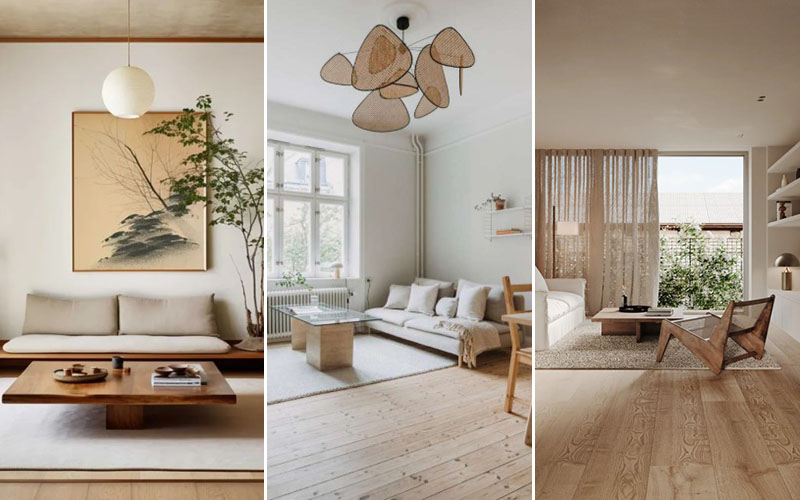
The Japandi living room is the heart of the home. Neutral Japandi wall colors and natural Japandi style flooring set the foundation, while low-profile furniture keeps the space uncluttered.
- Ideas include a Japandi style living room with linen sofas, a reclaimed wood coffee table, and woven rugs.
- Add greenery for freshness (Japandi style plants) and balance it with soft lighting (Japandi lighting living room).
- Smaller spaces can adapt too – Japandi small living rooms maximize light and functionality without sacrificing style.
- If you prefer a modern touch, a modern Japandi living room blends sleek Scandinavian lines with warm Japanese textures.
For more inspiration, explore Japandi living room design, Japandi living room ideas, and Japandi living room decor guides.
2. Bedroom
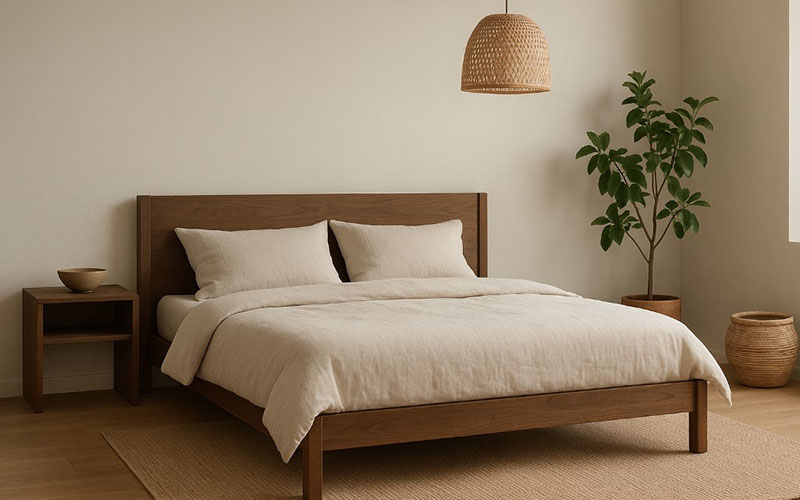
The bedroom is where Japandi truly shines. A Japandi interior design bedroom focuses on simplicity, rest, and natural harmony.
- Choose a Japandi bed frame in light or dark Japandi wood, paired with linen or cotton bedding.
- A minimalist Japandi bedroom or bedroom Japandi style often features uncluttered nightstands, neutral Japandi wall colours, and calming plants.
- For a moody effect, the dark Japandi bedroom (or dark Japandi style) uses deeper tones like charcoal, walnut, or black.
- If you prefer something softer, the Japanese Scandinavian bedroom or Scandinavian Japanese interior design highlights airy whites with warm wood textures.
Accessories such as handmade pottery, woven baskets, and Japandi bedroom decor elements complete the look.
3. Kitchen & Dining Room
In the kitchen, Japandi interior design kitchen principles shine through with open shelving, wooden cabinetry, and ceramic dishware.
- The dining area often features long wooden tables, sleek chairs, and pendant lighting, creating the perfect Japandi dining room ideas for family gatherings.
- Flooring in Japandi style home interiors usually combines practicality with beauty – wood, bamboo, or stone are excellent options.
4. Bathroom
A Japandi interior design bathroom transforms daily routines into spa-like experiences.
- Think natural stone sinks, wooden vanities, neutral walls, and soft lighting.
- Adding greenery enhances the connection to nature, while minimal decoration keeps the space serene.
5. Home Office & Hall
Japandi also works beautifully for workspaces.
- A Japandi office design or Japandi style office emphasizes focus with clean lines and clutter-free desks.
- A Japandi hall or entryway introduces guests to the home’s calm, minimal aesthetic with wood tones and warm lighting.
Japandi Style House & Architecture
Japandi is not limited to furniture and decor – it also influences the overall Japandi style house and architectural design. The philosophy of simplicity and natural balance is applied to layouts, materials, and construction methods.
Japandi House Style & Interior
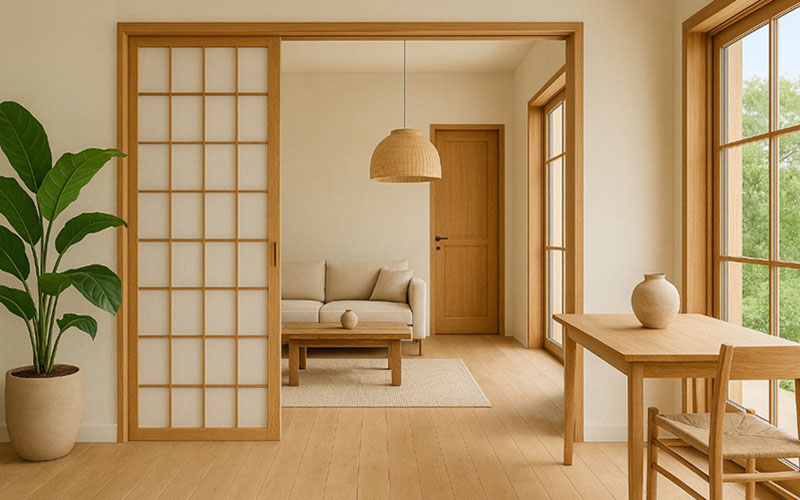
- A Japandi house interior typically features open-plan spaces, natural lighting, and seamless transitions between rooms. Large windows or Japandi window designs connect the indoors with nature.
- Japandi interior doors often highlight clean wood panels or sliding shoji-inspired designs that emphasize minimalism.
Japandi House Plans & Design
- Japandi house plans favor functional spaces with a flow that encourages calm and mindfulness.
- A Japandi house design blends Japanese craftsmanship with Scandinavian practicality, creating homes that are both elegant and livable.
- Many homeowners now choose Japandi home design and Japandi home style for modern living, especially when designing sustainable houses.
Architecture and Exteriors
- Neutral facades, natural cladding, and open courtyards are common in Japandi house style.
- These homes embody the idea of “bringing nature inside,” making them perfect for eco-friendly and modern lifestyles.
Japandi Design Variations & Inspirations
While the essence of Japandi remains the same, there are many creative variations that allow homeowners to personalize their spaces.
Modern Japandi Interior Design
- This variation combines sleek lines and contemporary layouts with Japandi’s natural materials. A modern Japandi style is perfect for urban apartments or new builds.
- A modern Japandi living room might include dark accents, metallic details, or integrated smart-home technology while still keeping a minimalist aesthetic.
Industrial Japandi
- Also known as Japandi industrial, this variation adds raw materials like concrete, exposed steel, and brick to traditional Japandi interiors.
- By balancing industrial toughness with Japandi wood tones and plants, homeowners create a bold yet harmonious design.
Dark Japandi
- A more dramatic take, dark Japandi interiors use dark Japandi wood, charcoal walls, and moody lighting to evoke intimacy and depth.
- This style works especially well in a dark Japandi bedroom or a cozy living space.
Colorful Japandi & Japandi with Color
- While Japandi is often associated with neutral tones, some designers explore colorful Japandi.
- Adding muted greens, blues, or terracotta accents creates vibrancy without losing Japandi’s balance.
- A Japandi room design can feature these pops of color in decor items, textiles, or wall art.
Japandi Fashion & Lifestyle Influence
- Beyond interiors, Japandi has even inspired Japandi fashion, with minimalist clothing lines emphasizing natural fabrics and neutral palettes.
- For homeowners, this crossover proves that Japandi is not just a decor choice but a holistic lifestyle.
Japandi Inspiration Sources
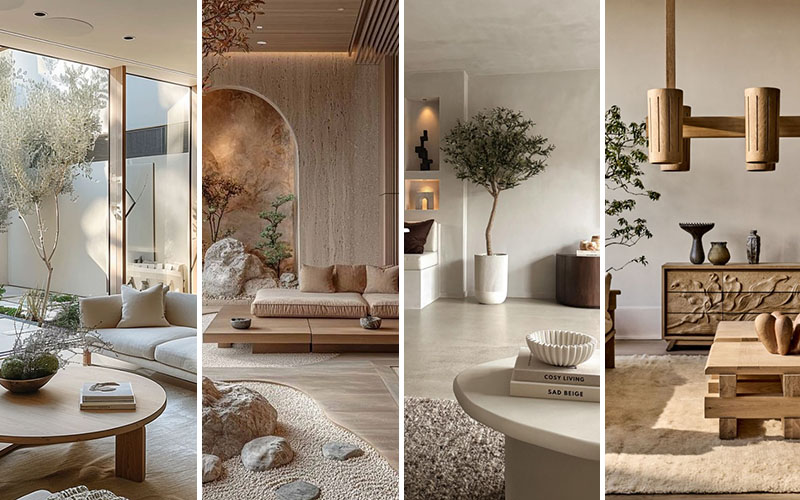
- From design magazines to social media, Japandi inspiration is everywhere.
- Many Japandi interior designers share Japandi design ideas that mix cultural influences, such as Scandinavian Japanese interior design or Japanese Scandinavian interiors.
Practical Japandi Design Ideas
Applying Japandi at home doesn’t have to be complicated. With a few thoughtful choices, you can transform any space into a peaceful, functional retreat.
Start with the Basics
- Use a neutral Japandi color scheme as the foundation – soft whites, earthy tones, and natural wood finishes.
- Select flooring wisely: Japandi flooring or Japandi style flooring in light oak or bamboo instantly sets the tone.
Choose Quality Over Quantity
- Invest in timeless Japandi style furniture such as low wooden tables, linen sofas, and open shelving.
- A Japandi style room should have fewer but more meaningful pieces, ensuring functionality and elegance.
Incorporate Nature
- Add greenery with Japandi style plants to enhance freshness.
- Use woven baskets, ceramic pots, and wooden frames for a natural touch.
Play with Light and Texture
- Integrate layered lighting: ceiling pendants, floor lamps, and Japandi lighting living room fixtures.
- Add texture with linen curtains, rattan lampshades, or Japandi window treatments for softness and warmth.
Personalize with Decor
- Accessorize mindfully with Japandi decor style items like pottery, handmade textiles, or subtle wall art.
- For inspiration, explore Japandi decor ideas, Japandi design ideas, and Japandi style decor.
Extend Japandi Beyond the Living Room
- Create a calming Japandi bedroom style or Japandi bedroom design with wooden frames and neutral linens.
- Transform your workspace with a Japandi office design that promotes focus and simplicity.
- Consider the entryway too – a Japandi hall sets the tone for the rest of your home.
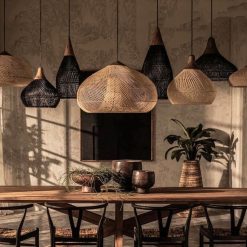
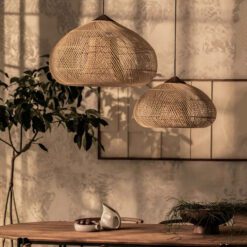
Rattan Pendant Light
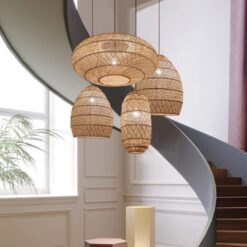
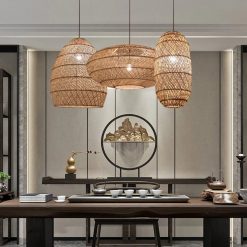
Rattan Pendant Light
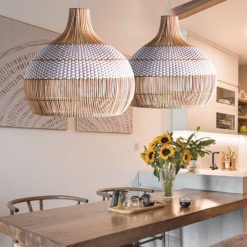
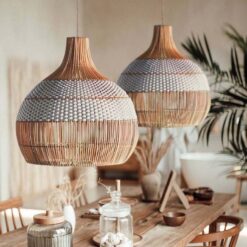
Rattan Pendant Light
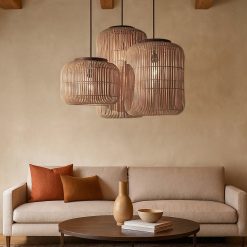
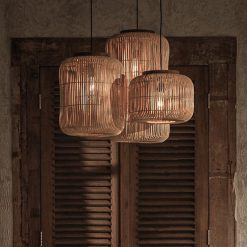
Rattan Pendant Light
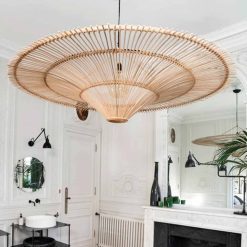
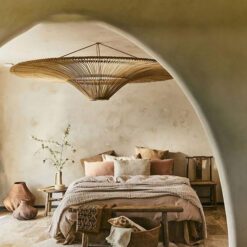
Rattan Pendant Light
Common Mistakes to Avoid
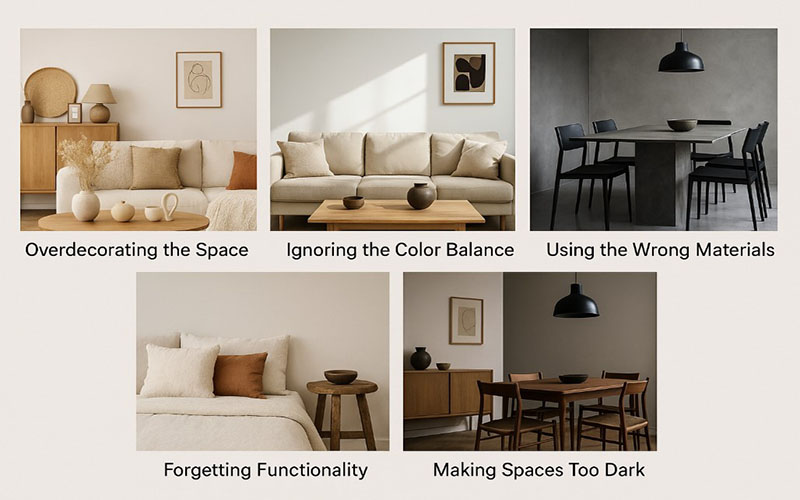
While Japandi is admired for its balance and beauty, many people make errors that dilute its essence. Avoid these common pitfalls:
Overdecorating the Space
A true Japandi room design is minimal. Too many accessories can overwhelm the look and contradict the principle of simplicity.
Ignoring the Color Balance
Choosing colors that are too bright or mismatched undermines the style. Instead of bold primaries, opt for muted Japandi wall colours and earthy Japandi colors.
Even when adding accents through Japandi with color, they should remain subtle.
Using the Wrong Materials
Avoid synthetic or overly glossy finishes. Japandi emphasizes authenticity, so natural woods, stone, and fabrics should dominate.
Heavy industrial touches without balance (like too much concrete or metal) may overpower the warmth of Japandi home interiors.
Forgetting Functionality
Japandi values practicality. A cluttered Japandi living room design or overfilled Japandi room decor ignores the core principle: form must follow function.
Making Spaces Too Dark
While dark Japandi interior design can be elegant, going too heavy with dark tones in every room creates a gloomy atmosphere.
Balance dark accents with light woods, soft textiles, and greenery to keep the space inviting.
Conclusion
Japandi interior design is more than just a style – it’s a philosophy of living. By blending Japanese serenity with Scandinavian coziness, Japandi creates spaces that are functional, sustainable, and calming. Whether you’re designing a Japandi living room, a Japandi bedroom, or an entire Japandi style home, this approach offers timeless beauty and intentional simplicity.
What makes Japandi truly special is its versatility. From modern Japandi interiors with sleek lines to dark Japandi styles that feel moody and intimate, or even industrial Japandi spaces that combine raw materials with natural warmth – there’s a version of Japandi that fits every lifestyle.
If you’re searching for harmony, balance, and authenticity in your home, Japandi is the perfect interior design style to explore.
Frequently Asked Questions (FAQ)
1. What is Japandi interior design?
Japandi interior design is the fusion of Japanese minimalism and Scandinavian functionality. It blends natural materials, neutral colors, and clean lines to create calm and cozy living spaces.
2. What colors are used in Japandi interiors?
Typical Japandi wall colors and palettes include soft whites, beiges, taupe, muted grays, and natural Japandi wood tones. For a modern twist, you can explore dark Japandi interiors or even subtle accents in colorful Japandi designs.
3. How do I decorate a Japandi living room?
A Japandi style living room focuses on simplicity, function, and warmth. Use neutral walls, light wood or Japandi flooring, low-profile furniture, and add greenery with Japandi style plants. Layered lighting such as Japandi lighting living room fixtures also helps create a cozy atmosphere.
4. Can Japandi work in small spaces?
Yes! A Japandi small living room or a compact apartment can look spacious with the Japandi approach. The key is to choose fewer but functional pieces, keep walls light, and use natural textures.
5. What makes a Japandi bedroom unique?
A Japandi bedroom style combines low wooden furniture, neutral bedding, and minimal decor for a calming retreat. Depending on preference, you can design a light-filled Scandinavian Japanese bedroom or a moody dark Japandi bedroom.
6. Is Japandi only about minimalism?
Not entirely. While Japandi shares traits with minimalism, it adds warmth, texture, and coziness. For example, Japandi interior design bedrooms and Japandi room decor often include natural fabrics and handcrafted accents that make the space feel inviting.
7. What materials are best for Japandi homes?
Stick to authentic, natural, and sustainable options such as wood, stone, bamboo, linen, and ceramics. Flooring choices like Japandi style flooring in oak or bamboo, along with Japandi interior doors and Japandi window treatments, help maintain harmony and authenticity.
8. Can Japandi be mixed with other design styles?
Yes. Many designers experiment with industrial Japandi by adding concrete and steel, or with modern Japandi interior design that incorporates sleek lines and smart-home features. The style is adaptable as long as the core principles of balance and simplicity are preserved.
9. Is Japandi suitable for bathrooms and kitchens?
Absolutely. A Japandi interior design bathroom uses natural stone, wood, and soft lighting for a spa-like vibe. Similarly, a Japandi interior design kitchen features open shelving, wooden cabinetry, and minimal yet functional layouts.
10. Do I need a professional designer to achieve Japandi style?
Not always. Many homeowners successfully create Japandi home interiors with careful furniture and decor choices. However, working with a Japandi interior designer can provide expert guidance and customized Japandi design ideas tailored to your lifestyle.

Read more articles
25+ Bedroom Floor Lamp Ideas to Brighten & Elevate Your Space
Bedroom floor lamp ideas offer one of the simplest and most stylish ways to elevate [...]
Oct
Best Laundry Room Lighting Ideas for a Brighter, Cleaner Space
Laundry Room Lighting Ideas focus on turning one of the hardest-working spaces in your home [...]
Sep
20+ Guest Bedroom Lighting Ideas for a Warm, Welcoming Space
Guest bedroom lighting ideas focus on creating a warm, welcoming, and comfortable environment for anyone [...]
Sep
Best Study Room Lighting Ideas for a Bright and Focused Space
A well-designed study room is more than just a desk and a chair – it’s [...]
Sep
20+ Master Bedroom Lighting Ideas for a Modern, Elegant Space
Master bedroom lighting ideas go far beyond simply choosing a ceiling fixture. A master bedroom [...]
Sep
10 Home Office Lighting Ideas for a Bright, Productive Workspace
The home office has become one of the most important rooms in modern living. Whether [...]
Aug
How to Fix Eye Strain from Bad Home Office Lighting
You take screen breaks. You’ve adjusted your monitor brightness. You even bought blue-light glasses. And [...]
Aug
25+ Bedside Pendant Light Ideas for a Stylish Modern Bedroom
Bedside Pendant Light Ideas are becoming increasingly popular as homeowners look for smarter, more stylish [...]
Aug
Best Entryway Lighting Ideas to Brighten Your Entry Space
Your entryway sets the tone for your entire home – it’s the first space guests [...]
Aug
30+ Bedroom Pendant Light Ideas for a Stylish, Well-Lit Retreat
Bedroom Pendant Light Ideas can instantly elevate the atmosphere of your room, adding height, character, [...]
Aug
25+ Bedroom Ceiling Light Ideas to Transform Your Room
Bedroom Ceiling Light Ideas play a key role in creating a space that feels bright, [...]
Aug
How to Master Bedroom Lighting Ideas Like a Pro
Finding the right bedroom lighting ideas can completely transform the mood, comfort, and functionality of [...]
Jul
Explore our collections
Rattan Pendant Light
100 Products
Bamboo Pendant Light
39 Products
Fabric Pendant Light
44 Products
Wood Pendant Light
9 Products
Rope Pendant Light
18 Products
Rattan Wall Sconce
6 Products
Rattan Table Lamp
9 Products
Rattan Floor Lamp
9 Products