
Lighting Ideas
Kitchen Lighting Ideas: A Complete Guide to Bright Kitchens
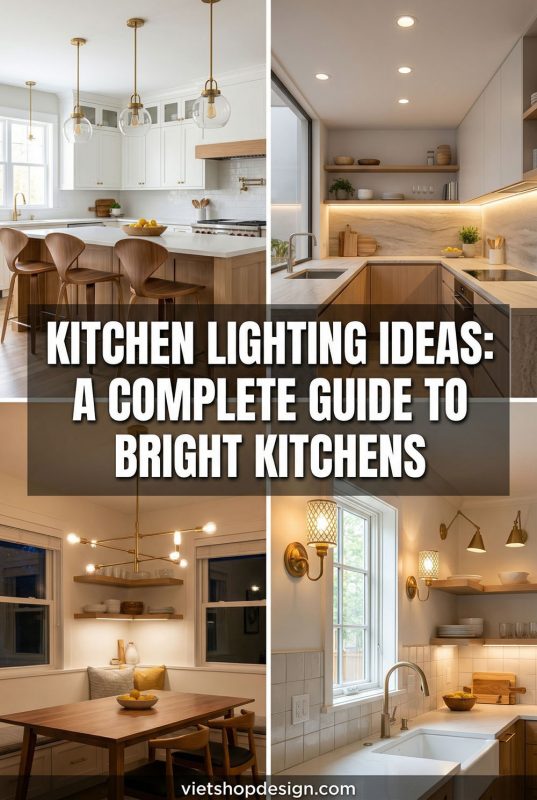
Kitchen lighting is more than just adding a few fixtures to brighten your space – it shapes how your kitchen feels, functions, and supports your daily routines. From cooking and prepping to dining and socializing, every task in the kitchen requires the right type of illumination. That’s why homeowners are actively searching for practical kitchen lighting suggestions that balance beauty and efficiency.
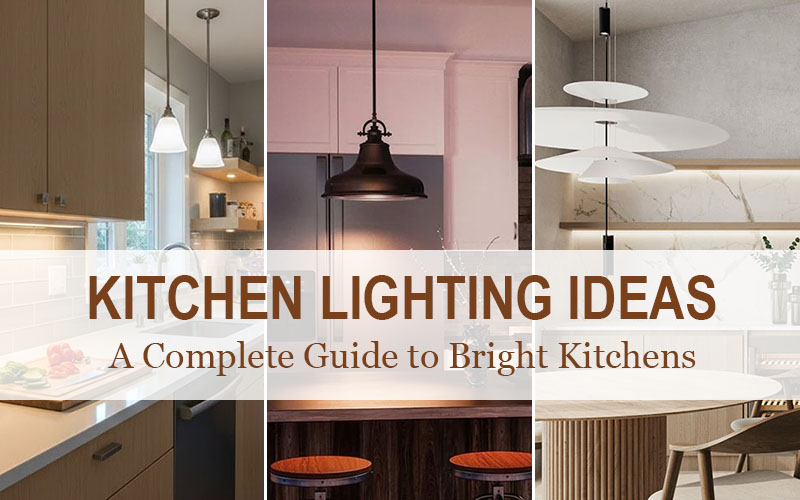
Modern kitchens are evolving into multi-functional hubs, meaning the lighting must go beyond basic overhead fixtures. A well-lit kitchen uses a layered approach to create clarity for cooking, comfort for dining, and atmosphere for hosting guests. Whether your home has a spacious open-plan layout or a compact apartment kitchen, the right lighting strategy can completely transform the space.
This pillar guide brings together the essential kitchen lighting ideas you need – covering lighting layers, layout planning, ceiling solutions, small-kitchen lighting, material choices, and more. For specialized topics like above kitchen island lighting and over kitchen island lighting, you can refer to dedicated articles, while this guide focuses on the complete, high-level strategy for your entire kitchen.
Master the Three Core Layers of Kitchen Lighting
Creating a bright, functional, and visually appealing kitchen starts with understanding the three fundamental layers of light: ambient, task, and accent/decorative. When combined thoughtfully, these layers form a cohesive lighting design that works harmoniously from morning to evening.
1. Kitchen Ambient Lighting
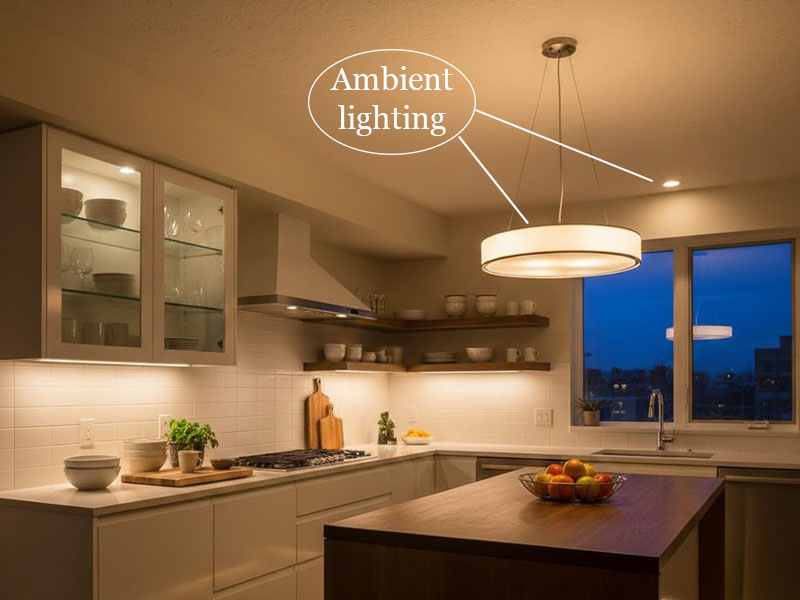
Ambient lighting acts as the foundation of your kitchen lighting design. It provides overall brightness, sets the general mood, and ensures the entire space feels inviting and easy to navigate. Good ambient lighting eliminates dark corners and prepares the room for all other layers to work effectively.
Best options for kitchen ambient lighting include:
- Recessed lighting placed in a grid for balanced coverage
- Flush-mount or semi-flush ceiling fixtures for even illumination
- Cove or indirect ceiling lighting to create a soft glow
- Linear LED ceiling panels for modern, consistent brightness
Brightness & color tips:
- Aim for 70–100 lumens per square foot for overall kitchen clarity
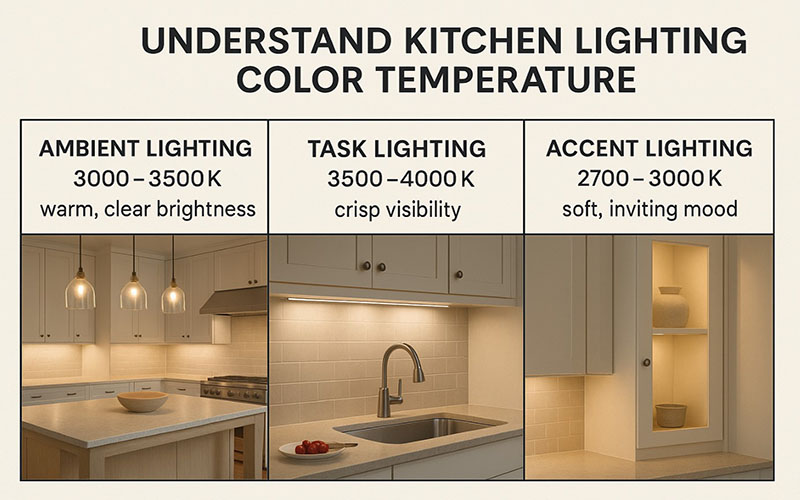
- Choose 3000–3500K for warm yet crisp ambient light
- Opt for CRI 90+ to maintain accurate food and color visibility
Ambient lighting works best when dimmable, allowing you to shift the kitchen from energizing daylight brightness to a softer, evening-friendly atmosphere.
2. Kitchen Task Lighting
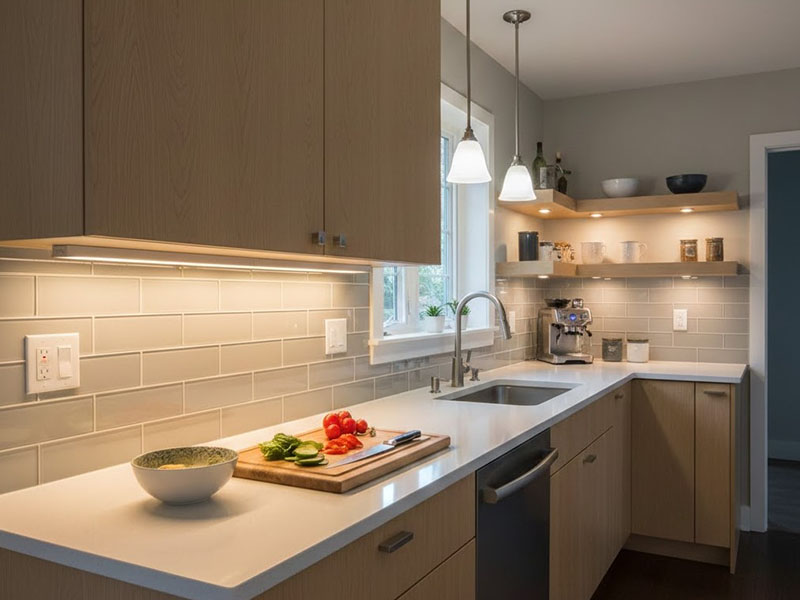
Task lighting provides the bright, focused light needed for meal preparation, cooking, reading recipes, and cleaning. Unlike ambient lighting, which spreads evenly, task lighting is targeted toward important work areas where precision and clarity matter.
Where task lighting is essential:
- Prep areas
- Cooking zones near the stove
- Dishwashing and cleaning zones
- Walkways and transitional spaces
- Kitchen corners that ambient lighting can’t reach
Best task lighting types:
- Adjustable track lighting for flexible beam direction (kitchen track lighting ideas can be expanded in Section 7)
- Directional recessed LEDs aimed toward work surfaces
- Under-cabinet lights (covered in your separate article)
- Focused ceiling spotlights for islands or prep zones
Color temperature:
- Choose 3500–4000K for crisp visibility when working with food
Task lighting ensures you avoid shadows on countertops and makes cooking safer and more enjoyable.
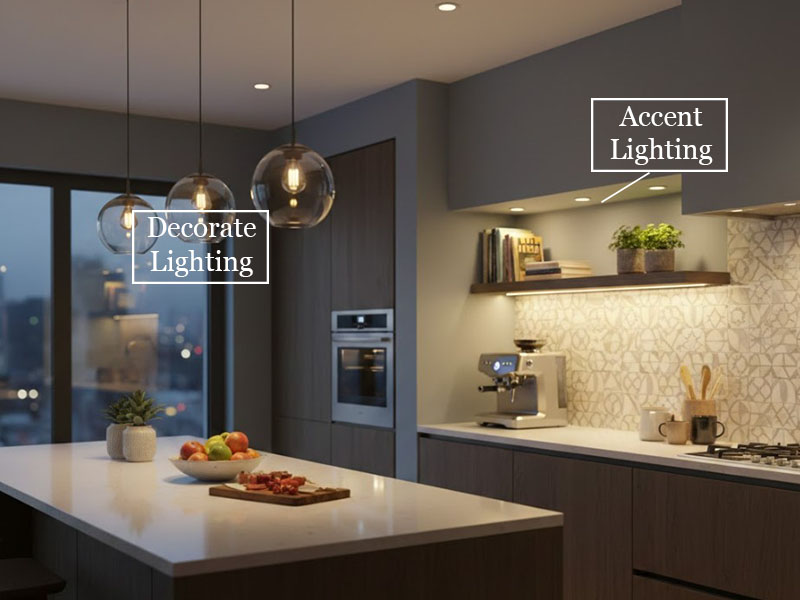
3. Kitchen Accent & Decorative Lighting
Accent and decorative lights add dimension, highlight architectural details, and create visual interest. This layer introduces character through shadows, glow, and artistic fixture designs.
Accent and decorative lighting options include:
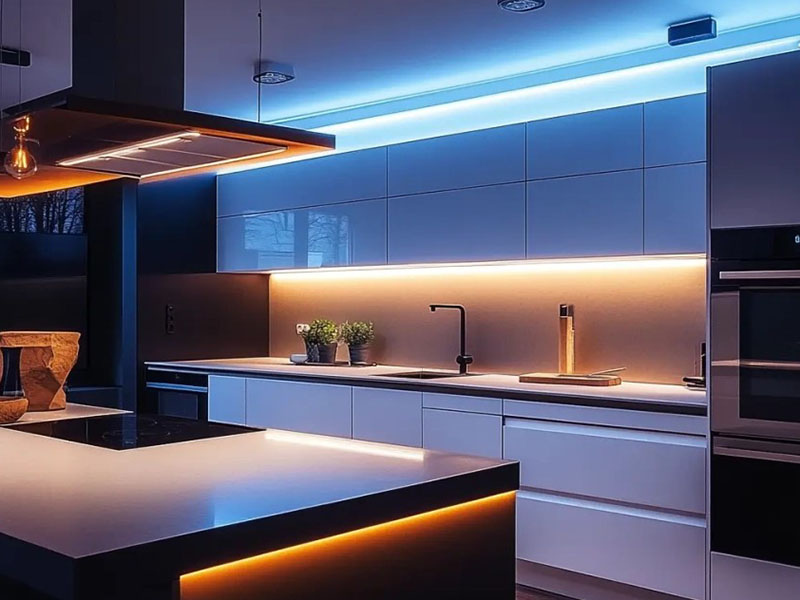
- Toe-kick lighting along the bottom of cabinets
- Above-cabinet LED strip lighting to create height
- Niche, display, or alcove lighting
- Sculptural or organic-material light fixtures (rattan, bamboo, woven, glass, metal)
- Decorative pendants or hanging lights (kitchen hanging lights ideas will appear again in later sections)
Use these lights to spotlight areas you want to stand out – such as open shelving, textured walls, or beautiful natural-material fixtures.
Kitchen Lighting Layout for Balanced, Functional Space
A successful kitchen lighting plan begins with understanding the layout. Even the most beautiful fixtures won’t perform well if they’re placed incorrectly. That’s why kitchen lighting layout and thoughtful kitchen lighting design are essential for creating a space that looks cohesive, functions smoothly, and avoids common lighting mistakes.
Planning your layout involves dividing the kitchen into zones, placing lights to prevent shadows, and making sure each layer supports the others. Below is a simple but highly effective guide to help you create a lighting plan that works for any kitchen style or size.
1. Zoning Your Kitchen by Function
Every kitchen has several activity zones, and each requires different lighting strength and direction. Instead of using one centralized light for the entire kitchen, break your space into the following functional areas:
| Kitchen Zone | Lighting Requirement |
|---|---|
| Prep Zone | Strong task lighting for chopping and food preparation |
| Cooking Zone | Directional light for visibility and safety |
| Cleaning Zone | Bright, shadow-free lighting over the sink |
| Dining/Breakfast Nook | Soft ambient or decorative lighting for a cozy atmosphere |
| Walkways | Consistent ambient lighting for safe movement |
When you plan lighting based on zones, you eliminate dark areas and make every activity easier and more comfortable.
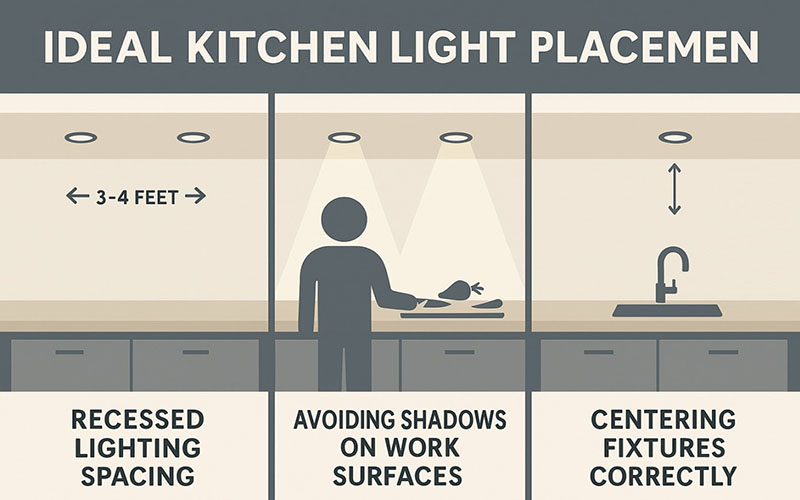
2. Ideal Light Placement (General Rules to Follow)
The way you position fixtures drastically affects both brightness and aesthetics. Follow these layout principles for a balanced and efficient design:
Recessed Lighting Spacing
- Space recessed lights 4–6 feet apart depending on ceiling height
- Avoid placing them directly above your head when working at the counter to prevent shadows
Avoiding Shadows on Work Surfaces
One of the most common design issues is casting shadows on your prep area.
To prevent this:
- Place lights in front of you, not behind you
- Position recessed beams toward the edge of countertops
- Use adjustable lights when possible to direct illumination accurately
Centering Fixtures Correctly
- Align lights with the geometry of your kitchen
- Keep track fixtures parallel with countertops
- Center decorative lights above islands and dining tables – not in random locations
A clean and organized layout instantly makes your kitchen feel more professional and visually balanced.
3. Smart Lighting, Dimmers & Controls
Integrating smart controls into your lighting plan lets you adjust brightness, color temperature, and scheduling effortlessly. Dimmers allow you to shift from bright cooking light to soft evening light within seconds.
For the best results:
- Install dimmers on all major lighting layers for better control throughout the kitchen
- Use smart bulbs and tunable-white LED strips to adjust color temperature as needed
- Add motion sensors for pantry lighting, toe-kick illumination, and late-night navigation
- Choose fixtures with a high CRI to ensure accurate and natural color rendering
A well-designed kitchen lighting layout with smart controls improves comfort, energy efficiency, and long-term usability.
Kitchen Lighting Ideas by Style
Your kitchen’s lighting should match the look and feel of the interior. Whether your home leans modern, rustic, Japandi, or classic, the right fixtures instantly elevate the space. This section helps you choose lights based on aesthetic direction – while keeping the pillar article unique and avoiding overlap with detailed island-lighting posts.
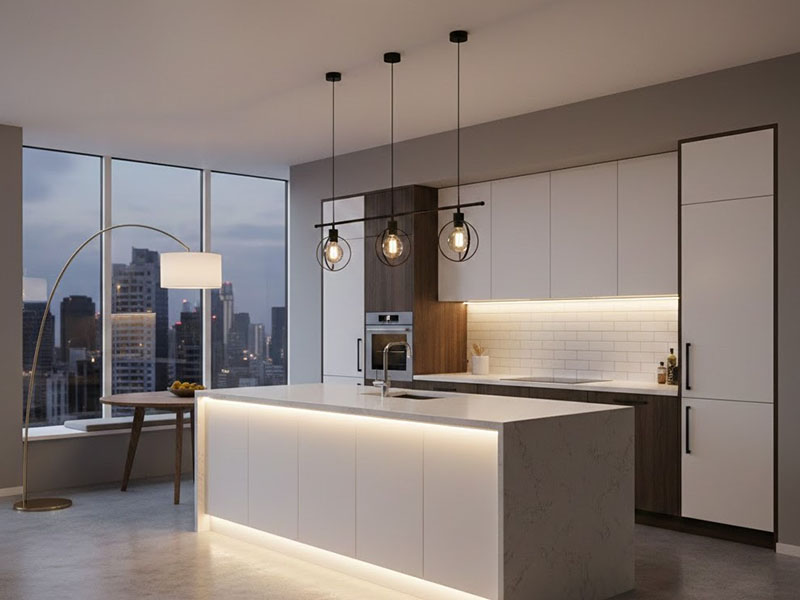
1. Modern Kitchen Lighting Ideas
Modern kitchens favor clean lines, simplicity, and functional elegance. This style often incorporates hidden light sources, minimal shapes, and slim silhouettes.
Best modern lighting choices:
- Linear LED fixtures across the ceiling
- Slim recessed lights for a minimalist feel
- Matte black or brushed metal hardware
- Geometric or sculptural pendants
- Discreet under-cabinet or toe-kick lighting
You can also pair modern lighting with modern kitchen island lighting fixtures – such as sleek metal pendants or long bar-style LEDs – without diving deep into island-specific details.
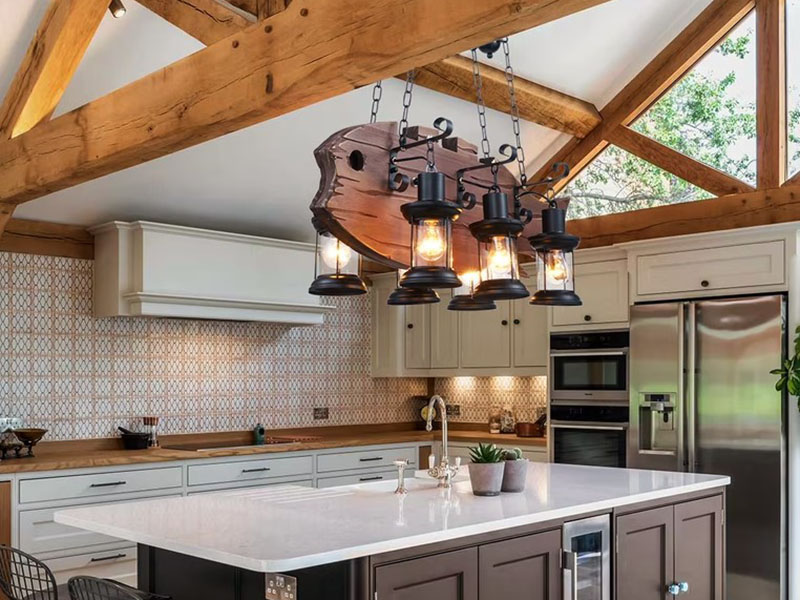
2. Farmhouse & Rustic Kitchen Lighting Ideas
Farmhouse kitchens embrace warmth, comfort, and natural textures. Lighting plays a big role in creating this familiar and inviting mood.
Great farmhouse lighting options:
- Rattan or bamboo pendant lights
- Lantern-style fixtures with warm light temperatures
- Wooden chandeliers or iron frame chandeliers
- Vintage-inspired glass dome lights
- Rustic wall sconces with soft white bulbs
These materials bring organic charm and a handcrafted touch, perfect for homes that value earthy, natural aesthetics.
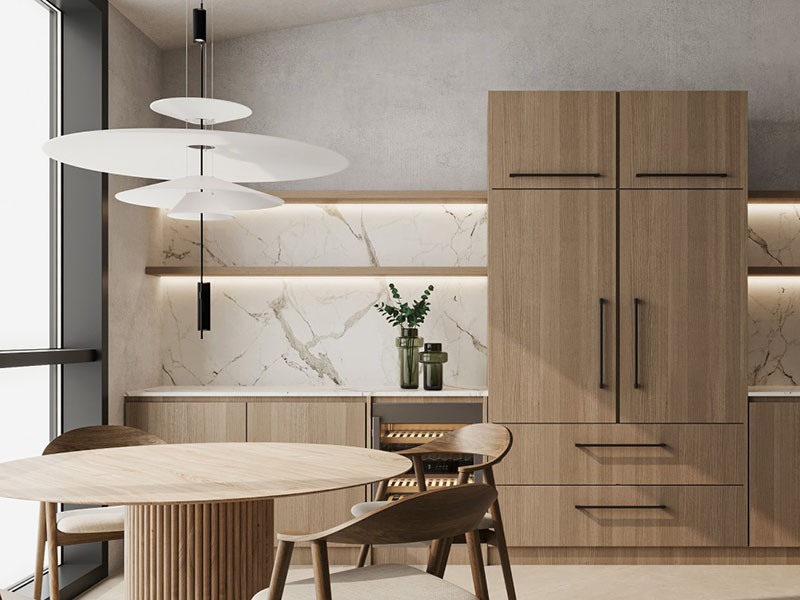
3. Japandi & Scandinavian Kitchen Lighting Ideas
Japandi and Scandinavian styles combine minimalism with warmth. They celebrate natural materials, soft shapes, and calm lighting.
Key lighting characteristics:
- Gentle, diffused glow rather than harsh brightness
- Light wood tones and clean lines
- Natural-fiber lighting, like woven rattan and bamboo lamps
- Simple pendant lights with neutral finishes
- Layered ambient + task lighting for balance
This style is ideal for homeowners who prefer a serene, uncluttered kitchen with plenty of natural textures.
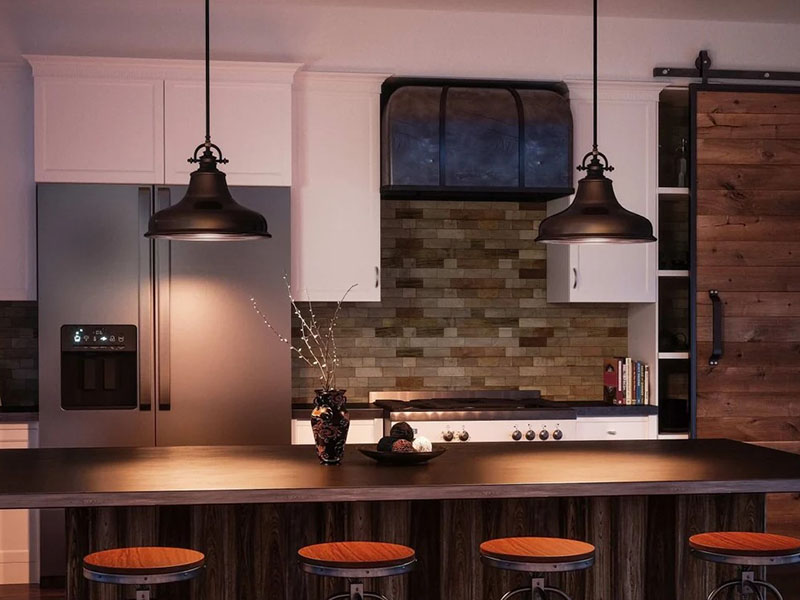
4. Industrial Kitchen Lighting Ideas
Industrial kitchens emphasize bold fixtures, exposed hardware, and metallic finishes. Lighting is often raw, functional, and visually striking.
Popular industrial lighting options:
- Black or bronze metal pendant lights
- Exposed-bulb designs
- Multi-head track fixtures
- Caged lights for unique character
- Large metal dome pendants over dining areas
Industrial lighting brings a strong visual impact while remaining practical for cooking spaces.
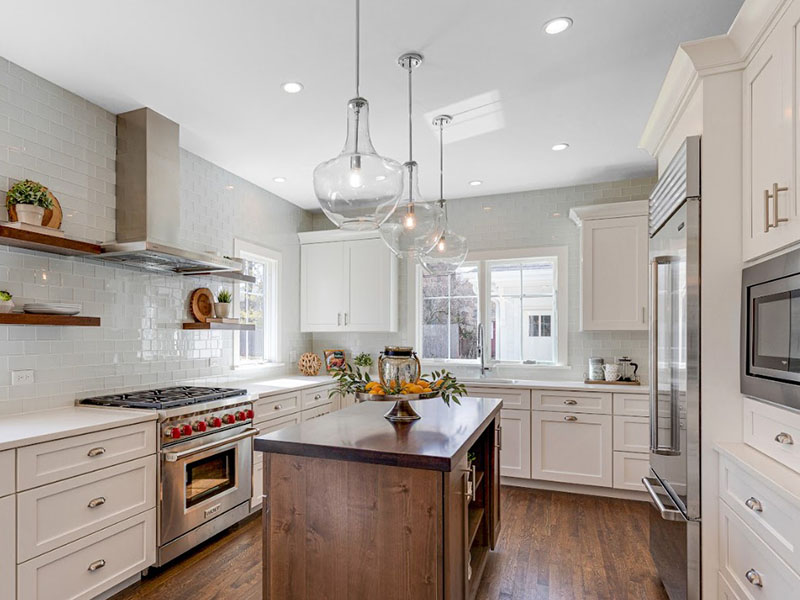
5. Transitional & Classic Kitchen Lighting Ideas
If you prefer something timeless – but not overly traditional – transitional lighting offers the perfect balance.
Top options for this style:
- Glass pendants with subtle metallic accents
- Drum-style ceiling fixtures
- Brass or brushed nickel chandeliers
- Classic flush mounts with modern details
Transitional lighting allows you to blend modern functionality with classic warmth, making it one of the most flexible design styles.
Kitchen Lighting Ideas for Different Kitchen Sizes
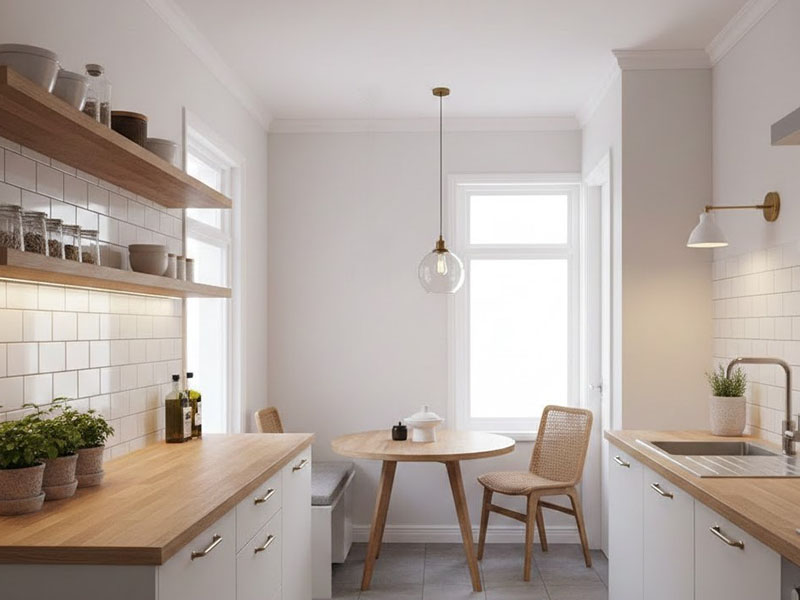
1. Small Kitchen Lighting Ideas
Small kitchens need strategic lighting to maximize space, increase brightness, and avoid shadows that make the room feel cramped. Well-planned layers of light can visually expand the room and give it a clean, airy presence. These kitchen lighting ideas for small kitchen designs focus on simplicity, clarity, and smart placement.
Top lighting ideas for small kitchens:
- Use bright, even ambient lighting: Slim flush mounts and recessed LEDs distribute light evenly without taking up visual space.
- Choose reflective surfaces to boost brightness: Glossy backsplashes, white cabinetry, and light countertops help bounce light and make the kitchen feel larger.
- Avoid large or bulky fixtures: Oversized pendants or heavy chandeliers overwhelm small kitchens. Choose compact, minimal designs instead.
- Incorporate vertical lighting: Cove lighting or subtle uplighting above cabinets draws the eye upward, creating the illusion of a taller room.
- Add targeted task lighting: Directional recessed lights, slim track lighting, or motion-sensor pantry lights ensure prep zones stay clear and bright.
These small kitchen lights ideas create the perfect balance of efficiency and visual openness.
2. Medium & Large Kitchen Lighting Ideas
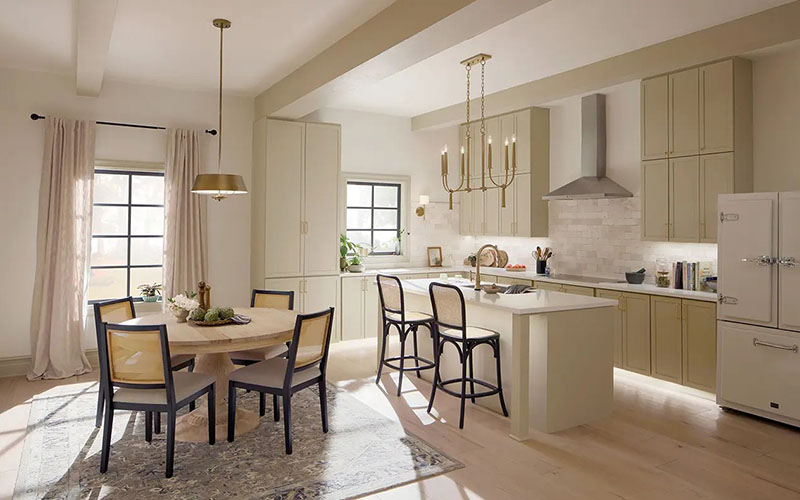
Larger kitchens allow more flexibility in combining ambient, task, and accent lighting. The goal is to maintain even brightness while adding dimension and decorative elements that enhance the room’s architecture.
Best ideas for medium and large kitchens:
- Layer multiple light sources: Use a combination of recessed lights, pendants, track lights, and accent fixtures to prevent dark pockets.
- Install multi-head fixtures or track systems: These kitchen track lighting ideas work especially well in long or open-plan kitchens where light needs to be directed to several zones.
- Feature one or two statement fixtures: A chandelier above the dining area or stylish pendant over the central zone creates a focal point and adds personality.
- Use dimmers on every layer: Dimmers help transition the kitchen from task-ready brightness to a warm, relaxed evening mood.
Ceiling-Specific Kitchen Lighting Ideas
| Ceiling Type | Description | Best Lighting Options |
|---|---|---|
| 1. Flat Ceiling Kitchen Lighting Ideas | Flat ceilings are versatile and support both minimal and decorative lighting styles. | • Recessed LED grid layout • Modern linear ceiling panels • Slim semi-flush fixtures • LED strips integrated into architectural lines |
| 2. Vaulted or High Ceiling Kitchen Lighting Ideas | High or vaulted ceilings need lighting that brings illumination closer to work areas while highlighting the dramatic height. | • Long-drop pendant lights • Multi-tier chandeliers • Adjustable track lighting that follows ceiling slope • Combined uplighting + downlighting |
| 3. Low Ceiling Kitchen Lighting Ideas | Low ceilings require compact, low-profile fixtures that keep the room bright and open. | • Low-profile flush mounts • Slim recessed lighting • Linear ceiling bars • Soft cove lighting |
| 4. Creative Ceiling Lighting Accents | Subtle lighting accents add modern style without overwhelming the ceiling. | • Perimeter LED ceiling-edge lighting • Indirect ceiling strips for floating effect • Ceiling-to-wall lighting transitions |
Kitchen Lighting by Placement
This section focuses on lighting placements you haven’t covered in other articles, ensuring the pillar remains unique and comprehensive. These ideas enhance depth, safety, and visual interest throughout the kitchen.
1. Toe-Kick Lighting
Toe-kick lighting adds a subtle glow along the bottom edge of lower cabinets. It increases nighttime visibility, improves safety, and creates a floating effect that makes the kitchen feel lighter and more modern. Warm LED strips are ideal for soft, low-level illumination that complements both contemporary and traditional designs.
2. Above-Cabinet Lighting
Above-cabinet lighting creates beautiful uplighting that adds height and dimension to the room. Unlike under-cabinet lighting (covered in a separate article), this placement focuses on ambiance rather than task illumination. It’s a great option for kitchens with high ceilings or for homeowners who want a designer-inspired atmosphere.
3. Perimeter & Cove Lighting
Perimeter lighting runs along the outer edges of the ceiling, while cove lighting hides LED strips within architectural details to create soft, indirect glow. Both techniques help eliminate harsh shadows, make the ceiling appear higher, and add a polished, contemporary look. They work exceptionally well in modern, minimalist, or Scandinavian-style kitchens.
4. Kitchen Track Lighting
Track lighting is flexible, directional, and ideal for kitchens that need adaptable illumination. It’s a smart solution for long or irregularly shaped kitchens where standard fixtures can’t reach every zone. These kitchen track lighting ideas allow you to aim light precisely at prep areas, artwork, shelving, corners, or dining nooks.
5. Pantry Lighting
Pantry lighting ensures visibility and convenience in storage areas. Motion-sensor strips or compact recessed lights provide instant illumination without taking up shelf space. These fixtures make the pantry look clean, functional, and easy to navigate – especially useful in walk-in pantries or tall, narrow pantry closets.
6. Breakfast Nook or Kitchen Table Lighting
A dining nook or casual breakfast corner benefits from warmer, more intimate lighting. Soft pendants, dome lights, or mini chandeliers work well here. This is the perfect place to introduce kitchen table lighting ideas that create a relaxed environment for morning coffee, family meals, or late-night snacks.
Tips for Choosing the Right Kitchen Light Fixtures
Selecting the right fixtures is essential for achieving a cohesive and functional kitchen lighting design. From materials and brightness to safety and maintenance, every detail influences the final look and usability.
1. Choose the Right Materials
Different materials create different moods. Natural textures like rattan, bamboo, or wood add warmth and organic charm – perfect for Japandi, farmhouse, and Scandinavian kitchens. Glass and metal fixtures provide a sleek, modern feel, while fabric shades soften the space with diffused light.
Material choice also affects cleaning and durability. In kitchens where grease or moisture is common, smooth surfaces like sealed rattan, coated bamboo, glass, or metal are easier to maintain.
2. Understand Brightness, Color Temperature & CRI
Lighting quality matters as much as the fixture itself. Aim for:
- Ambient lighting: 3000–3500K for warm, clear brightness
- Task lighting: 3500–4000K for crisp visibility
- Accent lighting: 2700–3000K for soft, inviting mood
A CRI of 90+ ensures accurate color rendering – important for food preparation and maintaining visual clarity throughout the kitchen.
3. Safety, Heat & Maintenance Considerations
Kitchens accumulate heat, steam, and grease, so choose fixtures that can handle these conditions. Look for:
- Easy-to-clean surfaces
- Moisture-resistant or sealed materials
- Fixtures rated for kitchen or damp-use areas
- LED bulbs that stay cool and reduce fire risk
Maintenance-friendly design ensures your kitchen lighting stays bright, clean, and reliable long-term.
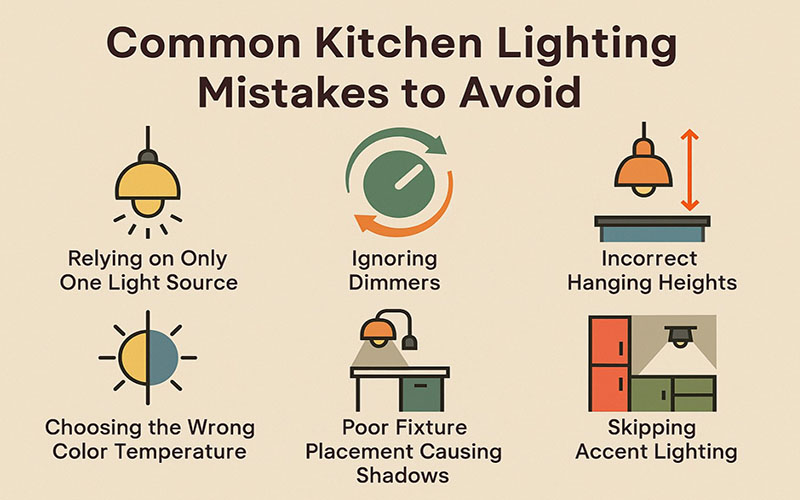
Common Kitchen Lighting Mistakes to Avoid
Even with great fixtures and a strong layout plan, certain mistakes can make your kitchen feel dim, unbalanced, or uncomfortable. Avoiding these issues ensures your lighting design looks intentional and performs well every day.
1. Relying on Only One Light Source
A single ceiling fixture is not enough for a modern kitchen. It creates uneven brightness and leaves shadows in prep areas. Every kitchen – large or small – needs a combination of ambient, task, and accent lighting for proper clarity and balance.
2. Ignoring Dimmers
Without dimmers, your kitchen has only one mood: fully bright. Adding dimmers lets you transition effortlessly from daytime task lighting to evening ambiance. They also improve energy efficiency and extend the life of your bulbs.
3. Incorrect Hanging Heights
Pendants and chandeliers hung too high or too low disrupt the flow of the kitchen.
General guidelines:
- Pendants above tables: 28–34 inches above the surface
- Pendants above islands: 30–36 inches above the countertop
- Chandeliers: proportional to the size of the room and table
Proper height ensures both comfort and visual harmony.
4. Choosing the Wrong Color Temperature
Warm light that is too yellow or cool light that is too blue can distort the kitchen’s colors and make food appear unappetizing. Stick to the recommended Kelvin ranges for each layer to keep your kitchen looking bright, clean, and cohesive.
5. Poor Fixture Placement Causing Shadows
Lights placed directly behind you – especially when you’re standing at the countertop – cast shadows that make cooking difficult. Proper positioning, especially for recessed and task lighting, ensures hands-free visibility and safe food preparation.
6. Skipping Accent Lighting
Accent lighting may seem optional, but it adds depth and dimension to the kitchen. Without it, even a well-lit kitchen can feel flat or sterile. A few targeted accent fixtures can significantly improve the atmosphere and visual interest.
Conclusion
A well-designed kitchen lighting plan does more than illuminate a room – it enhances functionality, elevates your home aesthetic, and transforms everyday cooking into a more enjoyable experience. By layering ambient, task, and accent lighting, planning a thoughtful layout, and choosing the right fixtures for your style and ceiling type, your kitchen becomes brighter, safer, and more visually engaging.
Whether you’re designing a compact apartment kitchen or upgrading a spacious open-plan layout, these kitchen lighting ideas provide a complete roadmap for achieving balanced, beautiful illumination. For more specific lighting guides – such as over kitchen island lighting, above island lighting, or under-cabinet lighting – you can explore the dedicated articles that dive deeper into each placement.
Ready to elevate your kitchen with lighting that blends beauty, functionality, and natural warmth?
Explore our handcrafted rattan and bamboo pendant lights – made by skilled Vietnamese artisans and designed to bring a soft, inviting glow to any kitchen style.
Discover the full collection at VietShopDesign and find the perfect light to transform your kitchen today.
If you need personalized recommendations or help choosing the right fixture, our team is always here to assist you.

Read more articles
25+ Bedroom Floor Lamp Ideas to Brighten & Elevate Your Space
Bedroom floor lamp ideas offer one of the simplest and most stylish ways to elevate [...]
Oct
Best Laundry Room Lighting Ideas for a Brighter, Cleaner Space
Laundry Room Lighting Ideas focus on turning one of the hardest-working spaces in your home [...]
Sep
20+ Guest Bedroom Lighting Ideas for a Warm, Welcoming Space
Guest bedroom lighting ideas focus on creating a warm, welcoming, and comfortable environment for anyone [...]
Sep
Best Study Room Lighting Ideas for a Bright and Focused Space
A well-designed study room is more than just a desk and a chair – it’s [...]
Sep
20+ Master Bedroom Lighting Ideas for a Modern, Elegant Space
Master bedroom lighting ideas go far beyond simply choosing a ceiling fixture. A master bedroom [...]
Sep
10 Home Office Lighting Ideas for a Bright, Productive Workspace
The home office has become one of the most important rooms in modern living. Whether [...]
Aug
How to Fix Eye Strain from Bad Home Office Lighting
You take screen breaks. You’ve adjusted your monitor brightness. You even bought blue-light glasses. And [...]
Aug
25+ Bedside Pendant Light Ideas for a Stylish Modern Bedroom
Bedside Pendant Light Ideas are becoming increasingly popular as homeowners look for smarter, more stylish [...]
Aug
Best Entryway Lighting Ideas to Brighten Your Entry Space
Your entryway sets the tone for your entire home – it’s the first space guests [...]
Aug
30+ Bedroom Pendant Light Ideas for a Stylish, Well-Lit Retreat
Bedroom Pendant Light Ideas can instantly elevate the atmosphere of your room, adding height, character, [...]
Aug
25+ Bedroom Ceiling Light Ideas to Transform Your Room
Bedroom Ceiling Light Ideas play a key role in creating a space that feels bright, [...]
Aug
How to Master Bedroom Lighting Ideas Like a Pro
Finding the right bedroom lighting ideas can completely transform the mood, comfort, and functionality of [...]
Jul
Explore our collections
Rattan Pendant Light
100 Products
Bamboo Pendant Light
39 Products
Fabric Pendant Light
44 Products
Wood Pendant Light
9 Products
Rope Pendant Light
18 Products
Rattan Wall Sconce
6 Products
Rattan Table Lamp
9 Products
Rattan Floor Lamp
9 Products