
Natural Materials & Craftsmanship
Can You Paint Rattan Furniture? Expert Tips & Step-by-Step Guide
Can you paint rattan furniture? This is a question many homeowners ask when trying to refresh their decor without replacing their favorite natural-fiber pieces. Whether it’s a painted wicker chair that’s lost its charm or a rattan coffee table that no longer fits your color scheme, painting may seem like a simple solution.
And it is – when done properly.
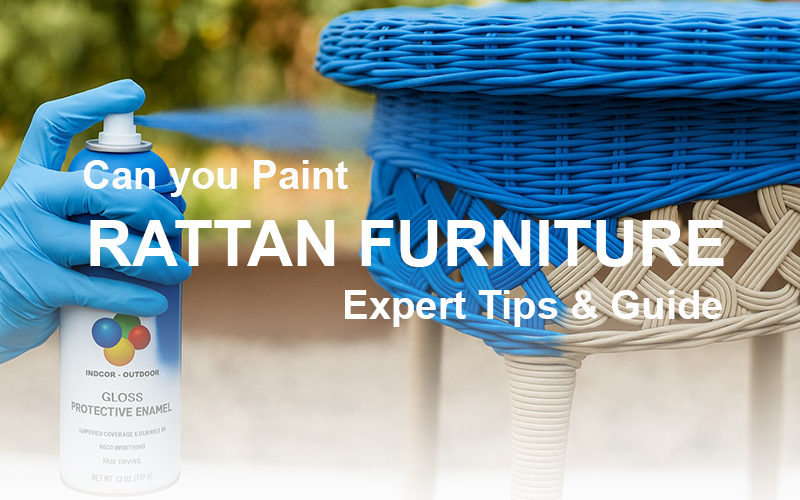
As a furniture expert specializing in natural materials like rattan and wicker, I can confirm: Yes, you can paint rattan furniture. With the right tools, paint type, and preparation, it’s possible to transform an old or faded piece into something fresh, modern, and stylish.
This applies not only to indoor items, but also to outdoor pieces. In fact, many people often ask:
- Can you paint wicker outdoor furniture?
- Can you spray paint wicker or rattan chairs?
- What paint works best for plastic wicker furniture?
These are all valid concerns – and in this guide, we’ll break down everything you need to know, including how to paint rattan furniture step by step for the best results, whether it’s natural or synthetic.
Can You Paint Rattan Furniture? – The Short Answer
Yes, you can paint rattan furniture – and wicker too. In fact, with the right preparation, tools, and paint type, painting rattan is one of the easiest and most cost-effective ways to refresh a piece. Whether it’s an antique heirloom or a budget-friendly flea market find, rattan takes well to paint when handled with care.
But before diving in, it’s important to understand the materials involved.
- Rattan is a natural vine-like material that’s flexible yet durable. It’s often used for the structure or weaving in chairs, tables, and sofas.
- Wicker refers to the weaving technique, not the material itself. It can be made of natural rattan, bamboo, reed – or synthetic resin (common in outdoor furniture).
So when you’re asking “can wicker be spray painted?”, the answer depends on what it’s made from:
- Natural rattan or reed wicker – Yes, it can be sanded lightly and painted with spray paint, chalk paint, or acrylics.
- Synthetic (resin or plastic) wicker – Yes, but you’ll need to use paint formulated for plastic surfaces, such as special paint for plastic wicker furniture.
And what about can you spray paint wicker specifically?
Spray painting is actually the preferred method for most rattan and wicker furniture. Why? Because the woven texture has many nooks and curves that a brush might miss or streak.
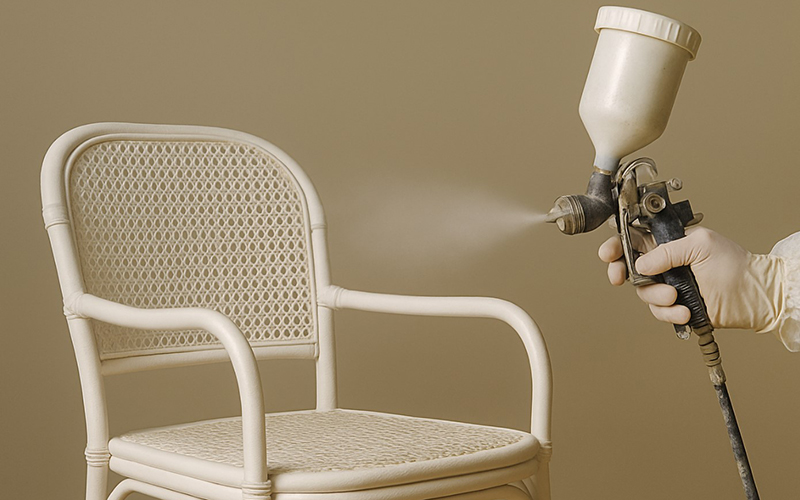
Whether you’re repainting a chalk paint wicker chair or giving an old painted rattan coffee table a trendy new shade, the key is knowing what kind of material you’re working with – and choosing the right paint.
Why Paint Rattan Furniture?
There are several great reasons to paint rattan or wicker furniture – beyond just aesthetics. Whether you’re refreshing a painted rattan coffee table or customizing a flea market find, painting can give new life to old or weathered pieces.
Here’s why it’s worth doing:
- Budget-friendly makeover
Painting is far more cost-effective than buying new furniture. A few cans of the right paint can completely transform a tired rattan chair or wicker loveseat into something fresh and contemporary. - Customization to fit your space
Want your furniture to match a boho, coastal, or farmhouse vibe? Whether you’re aiming for a matte white chalk paint wicker chair or a bold navy rattan bench, paint lets you achieve the look you want. - Reviving vintage charm
Some older painted wicker chairs may have great structure but faded or outdated color. A fresh coat of paint can preserve their charm while updating their appearance. - Outdoor protection
For wicker outdoor furniture, using the right exterior-grade paint and sealant can help protect it from sun, rain, and humidity – extending its life for years.
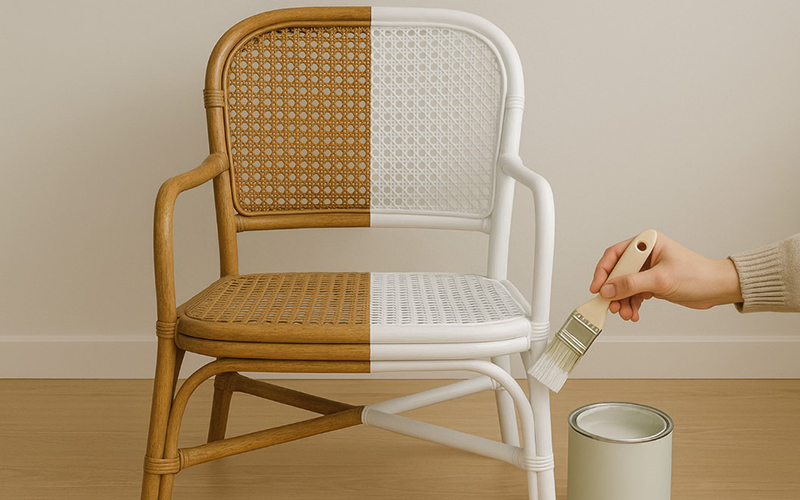
Painting also gives you the freedom to experiment. Want to try a statement black finish? A soft sage green? Or perhaps a classic whitewash? With paint, the possibilities are endless.
Types of Paint Suitable for Rattan and Wicker Furniture
Choosing the right type of paint is crucial – especially when working with porous, flexible materials like rattan or woven wicker. Not all paints are created equal, and using the wrong one can lead to peeling, cracking, or uneven results.
Here’s a breakdown of paint options and when to use them:
Spray Paint (Recommended for most projects)
Spray paint is the go-to choice for many DIYers because it gets into all the crevices and curves of wicker or rattan. If you’re wondering “can wicker be spray painted?” – yes, and this is the best method for smooth, even coverage.
- Great for both natural and synthetic materials
- Choose a formula that includes primer, or apply primer first
- For outdoor items, choose an exterior-grade spray paint
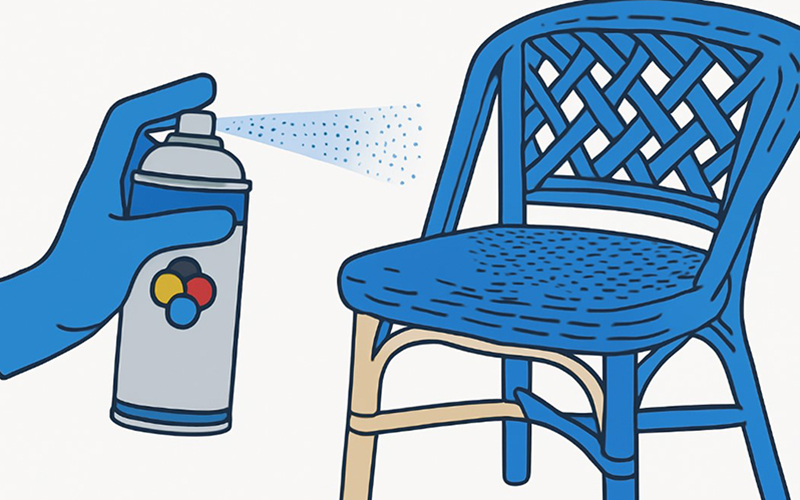
Tip: Want a clean, modern look on a painted rattan coffee table? Use a satin or matte finish spray paint in neutral tones.
Chalk Paint for Rattan Furniture
Chalk paint gives a soft, matte, vintage-style finish and is ideal if you’re going for a rustic or shabby-chic look. It works especially well for indoor projects like chalk paint wicker chairs or small accent tables.
- Requires a wax or sealant topcoat for protection
- Can be applied with a brush (for flat areas) or sponge (for texture)
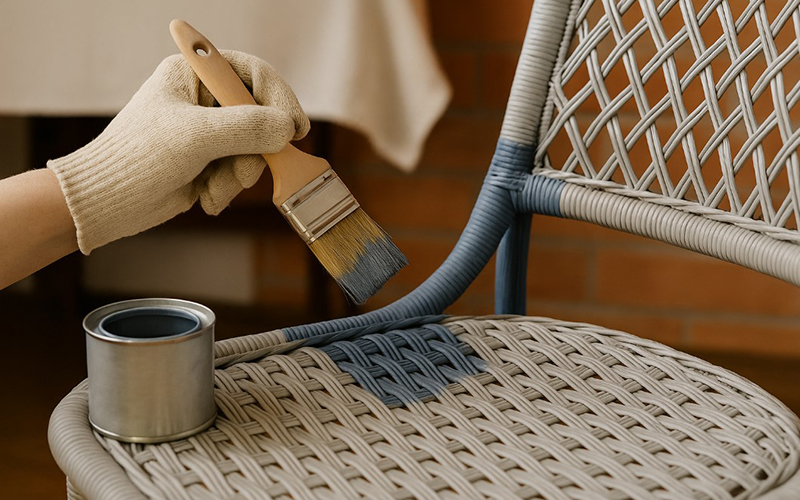
Note: Chalk paint is thicker than spray paint, so it may not reach into all the weaves – making it better for lightly textured pieces.
Acrylic Paint for Rattan Furniture
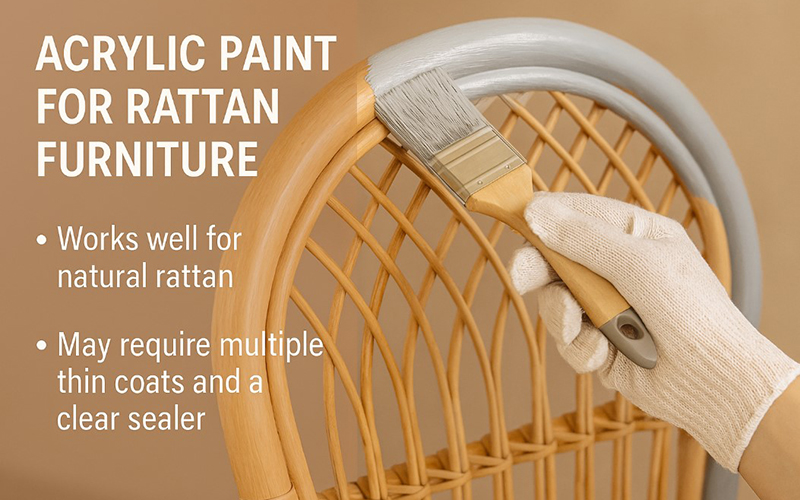
Acrylic paint is widely available and can be used with a brush or sprayer. While not as quick as spray paint, it’s ideal for those who want more control or are working on smaller touch-up jobs.
- Works well for natural rattan
- May require multiple thin coats and a clear sealer
Comparison table between Chalk Paint and Acrylic Paint for painting rattan or wicker furniture:
| Criteria | Chalk Paint | Acrylic Paint |
|---|---|---|
| Finish | Matte, soft, vintage-style look | Smooth, satin to semi-gloss finish |
| Coverage | High coverage, usually 1–2 coats needed | Requires 2–3 thin coats for even results |
| Best For | Rustic, shabby-chic, boho, or vintage interiors | Modern, neutral, or bold-colored projects |
| Application Method | Applied with brush or sponge; harder to reach deep weaves | Brush or sprayer; easier to reach intricate details |
| Durability (without sealer) | Lower – prone to scratches and moisture without wax or sealant | More durable than chalk paint but still benefits from a topcoat |
| Requires Sealant/Topcoat? | Yes – needs wax or clear coat to protect the finish | Recommended, especially for outdoor use |
| Adhesion to Rattan/Wicker | Good on porous, rough, or primed surfaces | Very good on most surfaces; flexible with layering |
| Drying Time | Touch dry in 30–60 minutes, fully cured in 24–48 hours | Similar drying time; thinner coats dry faster |
| Ease of Use | Slightly harder for intricate pieces; ideal for smaller, flat surfaces | Easier for various sizes, including large furniture |
| Color Range | Soft pastels, earthy and neutral tones | Wide range of colors, including bold and vibrant shades |
👉 Summary:
- Choose Chalk Paint for a vintage, matte look in indoor settings like bedrooms or living rooms.
- Choose Acrylic Paint for color versatility, smoother application, and better durability for both indoor and outdoor use (when sealed).
Paint for Plastic Wicker Furniture
Synthetic or resin wicker (common in patio furniture) won’t absorb regular paint well. For these materials, use paint designed for plastic surfaces – often labeled as “bonds to plastic.”
- Apply a plastic-bonding primer first
- Use spray paint specifically for resin or plastic furniture
- Finish with an exterior-grade clear coat if used outdoors
Searching for paint for plastic wicker furniture is essential if you want the paint to stick and last without cracking.


Rattan Pendant Light
Vintage Rattan Pendant Light Fixture High Quality Lamp Shades


Rattan Pendant Light


Rattan Pendant Light


Rattan Pendant Light


Rattan Pendant Light
Preparation: How to Get Rattan Ready for Painting
Before you pick up a paint can, it’s critical to prepare your rattan or wicker furniture properly. A little prep goes a long way in ensuring that your paint adheres well and lasts for years without chipping or flaking.
Here’s a step-by-step preparation checklist:
1. Clean Thoroughly
Dust, dirt, and oils can prevent paint from sticking. Use a soft brush or vacuum to remove debris from the weaves. Then wipe the surface with a damp cloth and mild soap solution.
Let it dry completely – this is especially important with natural rattan, which is sensitive to moisture.
2. Repair Any Damage
Check for loose strands, cracked weaves, or broken joints. Use wood glue or rattan repair kits to reinforce problem areas before painting.
For example, if you plan to paint a rattan chair with a slightly sagging seat, fix it first – paint won’t hold structure together.
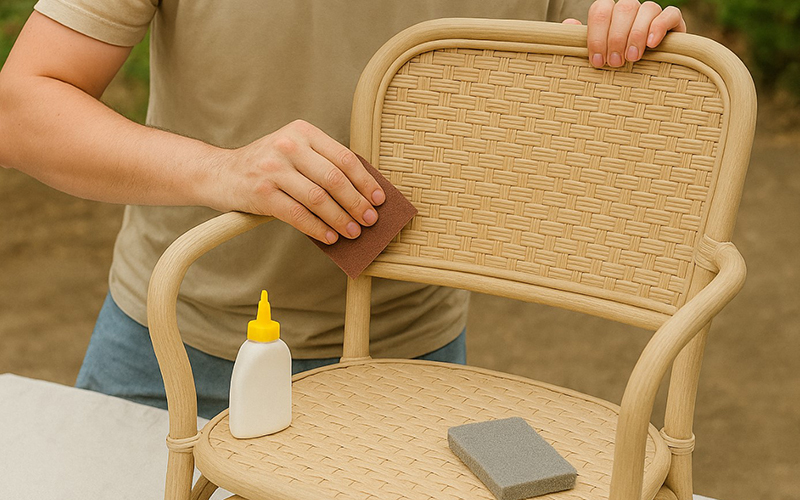
3. Sand Lightly
Light sanding helps the paint bond better. Use fine-grit sandpaper (around 220 grit) and gently go over the surface, especially any glossy areas or old paint. Be careful not to damage the delicate weaving.
4. Apply Primer (if needed)
For best results – especially on resin or painted surfaces – apply a primer before painting. Use:
- Stain-blocking primer for wood-based rattan
- Plastic-bonding primer for synthetic or plastic wicker furniture
This step is essential for long-lasting, even coverage.
Step-by-Step Guide: How to Paint Rattan Furniture
Now that your furniture is clean, dry, and primed, it’s time for the fun part – painting!
Whether you’re restoring a vintage chalk paint wicker chair or giving a faded rattan coffee table a modern refresh, follow these steps for a professional-looking finish:
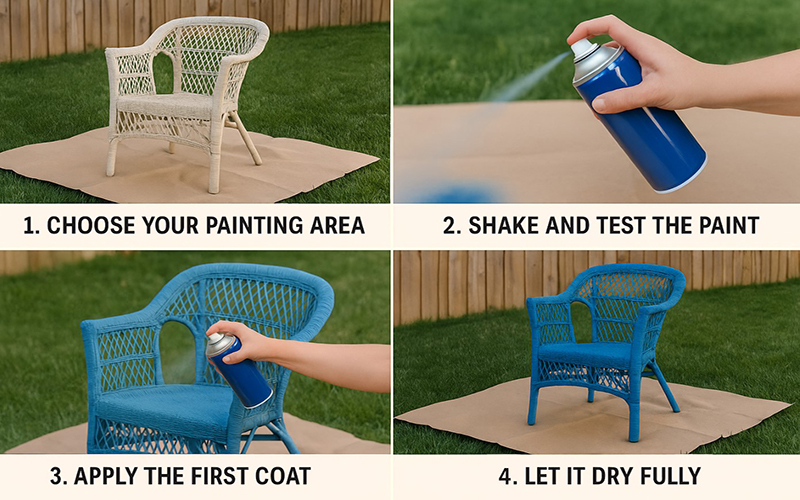
1. Choose Your Painting Area
Set up in a well-ventilated area (preferably outdoors or in a garage with airflow). Lay down a drop cloth or cardboard to protect the ground from overspray.
2. Shake and Test the Paint
If using spray paint, shake the can vigorously for at least one minute. Test spray on a piece of cardboard to check the color and nozzle flow.
3. Apply the First Coat
Hold the spray can about 8–12 inches (20–30 cm) from the surface. Use sweeping side-to-side motions. Start with a light, even coat – don’t try to cover everything at once.
Want to know can you spray paint wicker without clogging the weave? Yes – just be patient and build up color slowly.
If using chalk or acrylic paint, use a soft brush or foam brush. Dab gently into the weave and brush in the direction of the grain to avoid drips.
4. Let It Dry Fully
Allow the first coat to dry completely – usually 1–2 hours, depending on humidity and paint type. Avoid touching or moving the piece during this time.
5. Add a Second Coat (if needed)
Apply a second thin coat for even coverage. For darker shades or older painted rattan furniture, a third coat may be necessary.
6. Seal the Finish
To protect the paint – especially for outdoor use – finish with a clear sealant. Use a spray-on polyurethane or chalk paint wax, depending on your chosen paint type.
Pro Tip: When spray painting, always move your hand before pressing and releasing the nozzle. This prevents buildup and uneven spots, especially in tight rattan weaves.
Tips for best rattan interior painting results
Painting rattan or wicker furniture isn’t difficult, but getting a smooth, durable finish requires some technique. Whether you’re working on a painted wicker chair or a rattan coffee table, follow these expert tips to get the most professional-looking result:
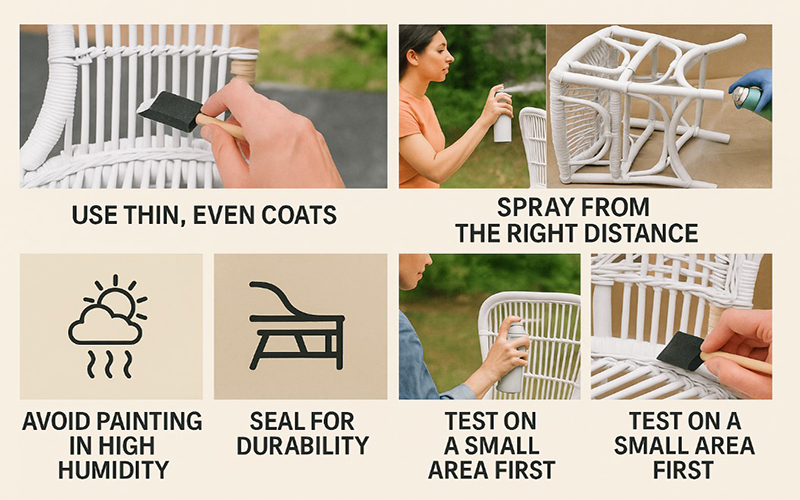
1. Use Thin, Even Coats
It’s tempting to cover everything in one go, but thick paint tends to drip and clog the weave. Apply multiple light coats, allowing each one to dry thoroughly.
2. Spray From the Right Distance
For spray paint, hold the can 8–12 inches (20–30 cm) from the surface and keep your wrist moving in steady, horizontal passes.
Still wondering can wicker be spray painted evenly? Yes – but only with consistent distance and motion.
3. Paint Upside-Down First
If the piece has legs or underside supports, flip it and start with those areas. Once dry, turn it upright and finish the top. This ensures no missed spots.
4. Avoid Painting in High Humidity
Moisture in the air can cause paint to dry unevenly or become tacky. Choose a dry day or paint indoors with ventilation.
5. Seal for Durability
Use a clear spray sealant or wax to protect the finish from scratches, UV rays, and moisture – especially if your painted rattan furniture will be placed outdoors.
6. Test on a Small Area First
Whether you’re trying a new shade or experimenting with chalk paint on a wicker chair, test in a hidden spot to see how the material absorbs it.
How Long Does Painted Rattan Last?
A well-painted rattan piece – whether indoor or outdoor – can last several years if properly maintained. But how long depends on a few key factors:
1. Quality of Preparation
Poor prep (skipping cleaning, sanding, or priming) leads to peeling, chipping, or uneven coverage. A painted wicker chair with good prep will easily outlast one done hastily.
2. Exposure to Elements
For painted wicker outdoor furniture, sunlight, rain, and temperature swings will eventually take their toll. Using UV-protective paint and sealant can extend life by 3–5 years or more.
3. Maintenance Habits
Wipe down your painted rattan coffee table regularly. Keep it dry and clean, and touch up scratches early before they spread.
4. Type of Paint Used
- Chalk paint gives a beautiful, matte look but needs regular waxing or sealing.
- Spray paint with primer tends to last longer with less upkeep.
- Plastic-specific paint is essential for resin wicker – otherwise, it will peel within months.
With proper prep, materials, and sealing, even a chalk paint wicker chair used indoors can maintain its look for 5+ years.
Common Mistakes to Avoid when Paint Rattan Furniture
Even though painting rattan furniture is a relatively simple DIY project, there are a few common mistakes that can lead to disappointing results – or even damage your piece.
Avoid these pitfalls to ensure a smooth, lasting finish:
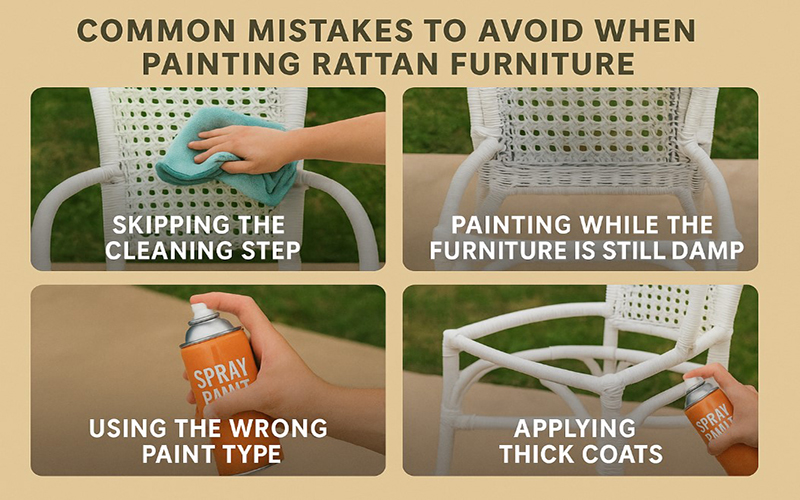
1. Skipping the Cleaning Step
Dirt, dust, and oils act as a barrier between the paint and your furniture. Not cleaning thoroughly will lead to uneven paint adhesion or early flaking – especially around tight weaves or corners.
2. Painting While the Furniture is Still Damp
Natural rattan absorbs moisture easily. If you clean your furniture but don’t let it dry completely, the paint won’t bond well and may bubble or crack.
3. Using the Wrong Paint Type
Wondering can you spray rattan furniture with any spray paint? Not exactly. Use spray paint formulated for wood or wicker. For synthetic pieces, make sure to use paint for plastic wicker furniture to avoid peeling.
4. Applying Thick Coats
Heavy paint layers don’t just look messy – they block the weave’s natural flexibility and can cause clumping or dripping. Always build up color with multiple thin coats.
5. Not Sealing the Paint
Many people forget to add a clear topcoat, especially on painted wicker chairs used outdoors. Without a sealant, the paint will fade, chip, or become damaged by moisture over time.
6. Ignoring Repairs Before Painting
Don’t use paint as a cover-up for structural issues. A cracked leg, broken weave, or loose joint should be fixed before you paint a rattan chair – paint won’t make it sturdier.
Can You Repaint Rattan Furniture Again?
Yes, absolutely! One of the great things about rattan and wicker furniture is that it’s very forgiving – and repainting is a great way to breathe new life into a piece that’s already been painted once (or even twice).
However, there are a few things to keep in mind:
1. Lightly Sand the Existing Finish
If the old paint is in good condition (no peeling or bubbling), a light sanding is usually enough to dull the surface so the new paint can adhere. For a chalk paint wicker chair, remove any wax coating first.
2. Clean Thoroughly Again
Even if it looks clean, always wipe the surface to remove dust, especially after sanding. This helps the new layer bond better and prevents blotchy results.
3. Use Compatible Paint Types
If you’re repainting over chalk paint, you can reapply chalk paint or use acrylic – but avoid mixing incompatible types (e.g., oil over latex) without proper primers.
4. Don’t Layer Too Much Paint Over Time
Every coat adds thickness, and with rattan or wicker, too many layers can clog the weave pattern or cause it to stiffen unnaturally. If the paint buildup is heavy, consider stripping or sanding down before repainting.
A painted rattan coffee table that’s been properly sanded and repainted can look just as good – if not better – than new.
Alternative Options: Should You Paint or Stain?
While painting is a popular way to refresh rattan or wicker furniture, it’s not the only option. In some cases, staining may actually be a better choice – depending on the finish you want and the condition of the piece.
Here’s how to decide between the two:
Choose Paint If…
- You want to completely change the color (e.g. white, black, navy, sage)
- The furniture already has an old or uneven finish
- You prefer a smooth or matte texture – like a chalk paint wicker chair look
- You’re working with painted wicker chairs or pieces with prior damage or discoloration
Paint can cover flaws, discoloration, and old stains – making it ideal for well-used pieces or bolder color transformations.
Choose Stain If…
- You love the natural woven texture and want to enhance the grain
- The piece is made from raw or lightly-finished rattan
- You want a more organic or rustic look, common in farmhouse or Japandi decor
- You plan to use a clear or lightly tinted finish for a subtle refresh
Staining helps preserve the natural character of rattan, but it won’t mask imperfections or give you bright, opaque colors.
| Criteria | Choose Paint If… | Choose Stain If… |
|---|---|---|
| Color Goals | You want to change the color completely (white, black, navy, sage, etc.) | You want to enhance the natural grain and keep the original tone |
| Surface Condition | The furniture has an old, uneven finish or prior discoloration | The piece is raw, lightly finished, or in good natural condition |
| Desired Look | You prefer a smooth or matte look (e.g. chalk paint finish) | You want an organic or rustic look (farmhouse, Japandi) |
| Hiding Imperfections | Ideal for covering flaws, scratches, or old stains | Not suitable for hiding flaws – highlights the natural texture |
| Texture Preference | Texture is less important; focus is on uniform color | Texture is important; you want to retain and show the weave’s detail |
| Use Case | Great for bold color transformations or older pieces | Best for subtle refreshes on newer or well-preserved natural fiber furniture |
| Prep Required | Clean and possibly sand, then paint | Requires stripping old paint/varnish, full sanding, and careful application |
Tip: Staining requires even more prep than painting – including full stripping of old paint or varnish. It’s best for newer or well-preserved natural-fiber pieces.
Final Thoughts: Is Painting Rattan Furniture Worth It?
So, can you paint rattan furniture?
Yes – and not only can you, but you absolutely should if you’re looking to refresh, personalize, or restore a beautiful piece of woven furniture.
Whether you’re updating a vintage painted rattan coffee table, experimenting with chalk paint on a wicker chair, or protecting your wicker outdoor furniture from the elements, painting is a practical, creative, and rewarding DIY project.
Just remember:
- Prep thoroughly
- Use the right paint for your material
- Apply thin coats
- And seal it well for durability
With proper care, your painted rattan furniture can last for years – bringing style, charm, and character to your home or patio.
Tip:
Thinking about trying it yourself? Start with a small item – like a rattan footstool or accent chair – and work your way up.
Ready to bring handcrafted charm into your space?
Discover our collection of beautifully made rattan and bamboo pendant lights – perfect for adding warmth and texture to any room. Whether you’re refreshing your home or completing a DIY makeover, our lights are designed to pair perfectly with your natural decor style.
👉 Visit our shop now and find the perfect piece for your next home project!
Frequently Asked Questions (FAQ)
1. Do I need to sand rattan furniture before painting?
Light sanding is recommended, especially on glossy or previously painted surfaces. It helps the new paint adhere better and ensures a smoother finish. Just be gentle – rattan is flexible and can fray if over-sanded.
2. Can I use a brush instead of spray paint?
Yes, but it’s not ideal for woven surfaces. Spray paint offers more even coverage and gets into tight areas. For flat areas like table legs or armrests, a brush is fine – but for painted wicker chairs, spray paint is often the better choice.
3. How long does it take for painted rattan to dry?
Drying times vary by paint type and climate:
- Spray paint: Touch dry in 30–60 minutes, fully cured in 24 hours
- Chalk paint: 1–2 hours between coats, longer cure time (2–3 days)
Always follow the manufacturer’s instructions and avoid handling the furniture too soon.
4. Can you spray rattan furniture outdoors?
Yes – but make sure the weather is dry, warm (above 15°C/60°F), and not too windy. If you’re asking can you spray paint wicker outdoors, the answer is yes, but avoid painting in direct sunlight or high humidity, as it may affect adhesion and drying.
5. Can I paint synthetic or plastic wicker furniture?
Absolutely, but you must use the right paint for plastic wicker furniture. Look for spray paint labeled “bonds to plastic” or “for resin surfaces.” A plastic primer is also recommended to improve adhesion and durability.
6. Will the paint crack or peel over time?
Only if the surface wasn’t properly prepared. With correct cleaning, sanding, priming, and sealing, a painted rattan coffee table or wicker bench can stay beautiful for years – even with regular use.
7. What colors work best for rattan or wicker furniture?
Neutrals like white, beige, or charcoal are timeless. Soft greens, navy, and even matte black are trendy in modern homes. For a vintage or cottage look, try chalk paint on a wicker chair in muted pastels or warm earth tones.
8. Can I repaint furniture that was already painted?
Yes! Just lightly sand the surface, clean it, and apply fresh coats. For example, you can easily refresh painted wicker chairs from last season with a new color – just be careful not to build up too many thick layers over time.
9. Should I seal painted rattan furniture?
Yes, especially for pieces that will be used outdoors or handled frequently. Use a clear topcoat spray or wax finish (for chalk paint) to add a layer of protection against moisture, UV, and wear.
10. Is painting rattan furniture a long-term solution?
Definitely – if done right. A properly prepped and sealed piece can last 3–5 years or more without needing a refresh. Even a chalk paint wicker chair used indoors can hold up beautifully with minimal upkeep.



Unlock VIP Perks
Join as a priority member to receive gifts and be the first to access exclusive deals, our newest collections, and more...
Read more articles
30+ Trending Scandinavian Rattan Pendant Light Ideas for a Warm, Natural Home
This is rattan lighting at its most diverse and exciting. From sculptural flower forms to [...]
Jun
10+ Scandinavian Rattan Dome Pendant Light Ideas for Natural Style
The dome pendant is one of interior design’s most enduring forms – and in natural [...]
Jun
9 Scandinavian Rattan Chandelier Ideas for Organic Elegance
Natural rattan chandeliers and pendant lights are the ultimate expression of Scandinavian design at its [...]
Jun
10+ Scandinavian Brown Rattan Light Ideas for a Warm, Earthy Style
Brown rattan pendant lights sit at the sweet spot between natural warmth and refined style. [...]
Jun
20+ Scandinavian Black Rattan Light Ideas for a Bold, Natural Style
Black rattan pendant lights are the design world’s best-kept secret. They carry all the warmth [...]
Jun
11 Scandinavian Beige Rattan Light Ideas for a Warm, Natural Nordic Style
Beige rattan pendant lights are having a moment – and it’s easy to see why. [...]
Jun
25+ Scandinavian Bamboo Light Ideas to Transform Your Home
If you’re looking to bring warmth, texture, and a touch of nature into your living [...]
Jun
7 Restaurant Wood Pendant Lights for Architectural Dining Atmosphere
Wood pendant lighting creates a restaurant dining atmosphere that no other natural organic fiber material [...]
Jun
12 Restaurant Wicker Rope Lighting for Textural Dining Atmosphere
Wicker, hemp rope, jute, and paper rope pendant lighting creates a quality of restaurant dining [...]
Jun
20+ Trending Restaurant Rattan Lights for Stylish Dining Atmosphere
The most memorably designed and the most genuinely impressive restaurant dining environments today go far [...]
Jun
7 Restaurant Rattan Dome Pendant Lights for Elegant Dining Atmosphere
The dome form is rattan’s most naturally generous restaurant pendant silhouette – and above a [...]
Jun
7 Restaurant Rattan Statement Chandeliers for Upscale Dining Atmosphere
A rattan statement chandelier above a restaurant dining room does something that a single pendant [...]
Jun
Explore our collections
Rattan Pendant Light
95 Products
Bamboo Pendant Light
38 Products
Fabric Pendant Light
41 Products
Wood Pendant Light
7 Products
Rope Pendant Light
14 Products
Rattan Wall Sconce
6 Products
Rattan Table Lamp
6 Products
Rattan Floor Lamp
9 Products