
Lighting Guides & Tips
Lighting Fixture Installation Cost (2026 Expert Guide)
The lighting fixture installation cost is one of the most important factors to consider when planning a home lighting upgrade. Whether you’re updating ceiling lights, adding pendants above your kitchen island, or installing outdoor fixtures for better curb appeal, understanding installation costs helps you budget wisely and avoid unexpected expenses.


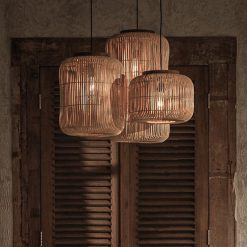
Rattan Pendant Light
Vintage Rattan Pendant Light Fixture High Quality Lamp Shades


Rattan Pendant Light


Rattan Pendant Light

Rattan Pendant Light


Rattan Pendant Light
On average, the price of installing a new light fixture depends on the fixture type, labor rates in your area, and whether new wiring or ceiling modifications are required. While simple replacements can be done as DIY projects, more complex installations – such as chandeliers, recessed lights, or outdoor lighting – are best left to licensed electricians.
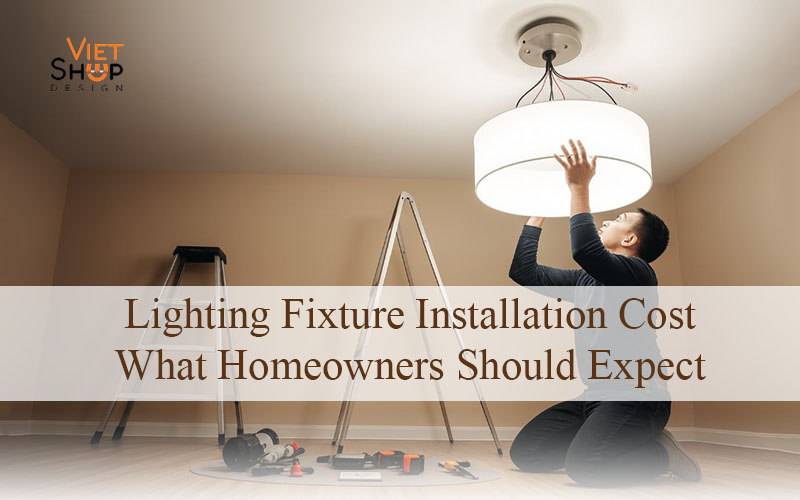
In this guide, we’ll break down the average lighting fixture installation cost, explain what affects the total price, and share expert tips to help you save money while achieving a bright, stylish, and energy-efficient home.
Average Lighting Fixture Installation Cost
Across the United States, the average cost to install a light fixture typically ranges from $100 to $650 per fixture, including materials and labor. Simple jobs like swapping out an old ceiling light might cost less than $150, while complex installations – such as recessed lighting, chandeliers, or outdoor fixtures – can reach $1,000 or more.
Typical Price Ranges by Job Type
Across the United States, the average cost to install a light fixture typically ranges from $100 to $650 per fixture, depending on the type of light, wiring condition, and the complexity of the installation.
Simple jobs like swapping out an existing ceiling or wall light are usually quick and affordable, while more complex installations – such as chandeliers, recessed lights, or outdoor fixtures – require additional wiring and specialized labor, increasing the total cost.
In most cases, the fixture type, accessibility, and local electrician rates play the biggest roles in determining the final price. Understanding these factors will help you set realistic expectations before diving into detailed labor costs and regional price differences.
Labor Costs
Electricians usually charge between $75 and $150 per hour, depending on the project complexity and regional labor rates.
Here’s a rough breakdown for reference:
- Installing a ceiling light: $100 – $250
- Installing an outdoor light: $150 – $400
- Adding new wiring or an electrical box: $200 – $500+
The labor cost to install a light fixture often accounts for more than half of the total project price – especially when extra electrical work, ceiling modifications, or safety checks are required.
Regional Differences
Installation prices vary across states and cities:
- In major metropolitan areas, electrician rates and permit fees are generally higher.
- In suburban or rural regions, homeowners might pay 15–25 percent less.
- If you plan to install LED or energy-efficient fixtures, you may offset some costs through lower long-term energy bills.
DIY vs Professional Installation
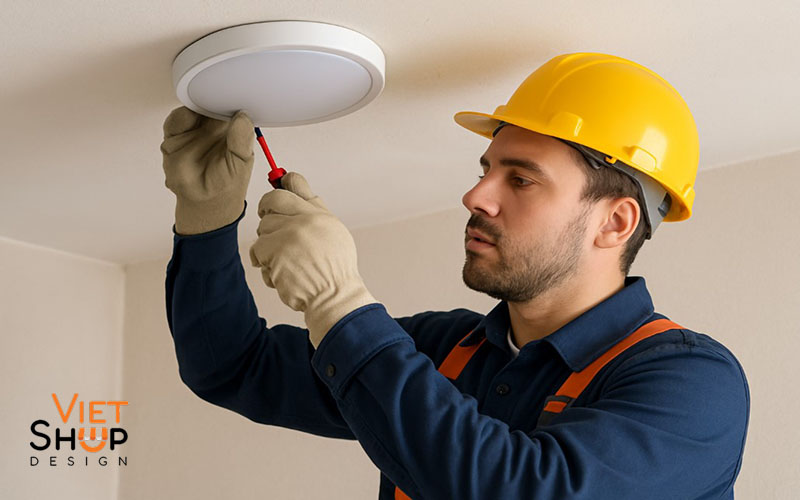
For simple replacements – such as changing an existing ceiling light or wall sconce – experienced homeowners can often handle the task safely. However, when the job involves wiring an overhead light, adding new junction boxes, or working on high ceilings, hiring a professional electrician ensures the work meets local electrical codes and prevents costly mistakes.
Lighting Installation Cost by Fixture Type
Not all lighting installations are created equal – the type of fixture you choose plays a major role in the total cost. From simple ceiling lights to intricate chandeliers, each option has its own installation requirements and price range.
Below is a detailed breakdown to help you plan more accurately.
1. Ceiling and Overhead Lights
- Average Cost: $100 – $300
- What Affects Price: Replacing an existing light is quick and affordable if the wiring is already in place. However, installing a new overhead fixture where no wiring exists can increase costs due to drywall cutting and new electrical boxes.
- Best For: Bedrooms, living rooms, hallways.
A ceiling light is one of the most common and cost-effective upgrades. Even basic replacements can dramatically improve brightness and aesthetics.
2. Pendant Lights
- Average Cost: $150 – $400 per light
- What Affects Price: Height of the ceiling, fixture weight, and whether multiple pendants are being installed.
- Best For: Kitchen islands, dining areas, entryways.
Pendant lights require careful alignment for symmetry, and in some cases, ceiling reinforcement for heavier models.
3. Chandeliers
- Average Cost: $200 – $2,000+
- What Affects Price: Fixture size, weight, ceiling height, and complexity of wiring.
- Best For: Dining rooms, foyers, great rooms.
Installing large chandeliers on high or vaulted ceilings may require scaffolding or special bracing, which adds to labor time and cost.
4. Recessed and Can Lights
- Average Cost: $150 – $500 per light
- What Affects Price: Existing wiring, insulation, and ceiling accessibility.
- Best For: Kitchens, basements, hallways, offices.
Adding recessed lights to an existing ceiling typically costs more than installing them during new construction, as electricians need to cut drywall and run new wiring.
See more:
- Recessed Lighting Layout Guide: Room-by-Room Tips & Ideas
- Recessed Lighting Installation Cost in 2026: Money-Saving Tips
- How to Install Recessed Lighting: Everything You Need to Know
5. Bathroom and Vanity Lights
- Average Cost: $100 – $300
- What Affects Price: Wall condition, moisture-proof fittings, and wiring adjustments.
- Best For: Bathrooms, powder rooms.
Vanity lighting is essential for task illumination and must meet electrical safety standards in damp environments.
6. Outdoor, Porch, and Exterior Lights
- Average Cost: $150 – $600
- What Affects Price: Weatherproofing, outdoor-rated materials, and power source distance.
- Best For: Entryways, patios, garages, and pathways.
Outdoor lighting often requires sealed fixtures, extra conduit, and protective wiring, increasing the installation complexity.
7. Track and Under-Cabinet Lighting
Average Cost:
- Track lighting: $150 – $450
- Under-cabinet lighting: $200 – $500
What Affects Price: Type of bulbs (LED vs halogen), number of lights, and wiring accessibility.
Best For: Kitchens, studios, and modern living spaces.
These lighting systems add flexibility and functionality but take more time to wire properly compared to standard fixtures.
| Type of Job | Average Cost Range | Notes |
|---|---|---|
| Ceiling or overhead light | $100 – $300 | Common in bedrooms, living rooms, and hallways |
| Pendant or hanging light | $150 – $400 | May require ceiling reinforcement |
| Recessed or can lights | $150 – $500 each | Involves ceiling cutting and wiring |
| Chandelier installation | $200 – $2,000+ | Heavier fixtures and high ceilings increase cost |
| Outdoor or porch light | $150 – $600 | Requires weather-resistant wiring and mounting |
| Vanity or bathroom light | $100 – $300 | Installation depends on wall structure |
| Track lighting | $150 – $450 | Requires multiple connection points |
| Under-cabinet lighting | $200 – $500 | Common in kitchens for task lighting |
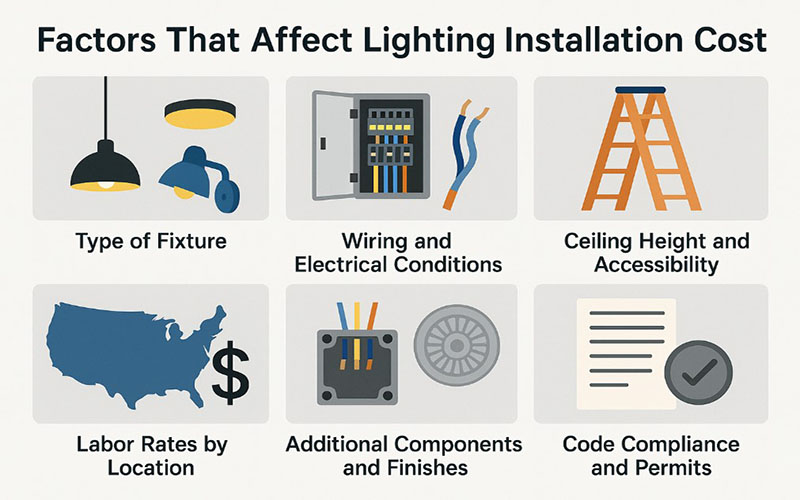
Factors That Affect Lighting Installation Cost
Several variables can influence the total light fixture installation cost. Understanding them helps you estimate your budget more accurately and avoid surprises once work begins.
1. Type of Fixture
Heavier, more intricate fixtures like chandeliers or multi-bulb pendants naturally cost more to install than a simple flush-mount ceiling light. Larger fixtures often require stronger mounting brackets and additional support.
2. Wiring and Electrical Conditions
If your home already has existing wiring and an electrical box, installation is straightforward. However, adding new wiring, switches, or outlets can significantly increase the total price. In older homes, electricians may need to update outdated wiring to meet safety codes.
Adding a new circuit or running wires through finished walls can easily double your labor cost.
3. Ceiling Height and Accessibility
Higher ceilings or difficult-to-reach spaces require ladders, scaffolding, and extra labor. Installing fixtures in vaulted or cathedral ceilings often costs more due to setup time and safety equipment.
4. Labor Rates by Location
Electrician rates vary by region. Urban areas typically have higher hourly rates and permit costs, while rural homeowners often pay less. On average, expect $75 to $150 per hour for licensed electricians, depending on complexity.
5. Additional Components and Finishes
Optional upgrades such as dimmer switches, smart lighting controls, or decorative ceiling medallions can raise your total project cost. Each add-on typically adds $50–$200 depending on materials and labor.
6. Code Compliance and Permits
In some states, electrical work that involves new wiring or high-load fixtures may require permits and inspections. Permit fees can range from $50 to $200 but ensure safety and compliance with local building regulations.
7. Number of Fixtures Installed
Electricians often charge less per unit when installing multiple fixtures in one visit. Bundling several lights together – for example, five recessed lights instead of one – can reduce the per-fixture rate and overall cost.
💡 Tip: Before hiring, request a detailed quote that breaks down labor, materials, and potential extras. This transparency helps you compare estimates and avoid hidden fees.
DIY vs. Professional Light Fixture Installation
When it comes to lighting upgrades, many homeowners wonder: should I install it myself or hire an electrician?
Both approaches have pros and cons, and the right choice depends on your experience, comfort level with electrical work, and the complexity of the fixture.
DIY Installation
Pros:
- Saves money on labor costs.
- Ideal for simple replacements where wiring already exists.
- Flexible timing – you can complete the project at your own pace.
Cons:
- Electrical work can be risky without proper knowledge.
- Mistakes may lead to short circuits or fire hazards.
- Could void insurance coverage if local codes aren’t met.
DIY installation is best for small, straightforward projects such as replacing a wall sconce or updating an existing pendant. However, you should always shut off power at the breaker and follow safety standards.
Professional Installation
Pros:
- Ensures safety and compliance with electrical codes.
- Electricians have tools and expertise for complex jobs.
- Saves time, especially when installing multiple fixtures or working with high ceilings.
Cons:
- Higher upfront cost due to labor fees.
- Scheduling may depend on contractor availability.
Hiring a licensed electrician is the safest choice for large or high-voltage projects – such as wiring an overhead light, installing new ceiling fixtures, or adding exterior lighting. The peace of mind and professional finish often justify the extra cost.
When to Hire a Professional
You should always hire a professional if your project involves:
- Running new wiring or adding electrical boxes.
- Installing heavy fixtures (like chandeliers or multi-arm pendants).
- Working on high or sloped ceilings.
- Adding outdoor or wet-location lighting that requires waterproofing.
For minor replacements, DIY can be rewarding. But for anything beyond a simple swap, a certified electrician ensures long-term safety and compliance.

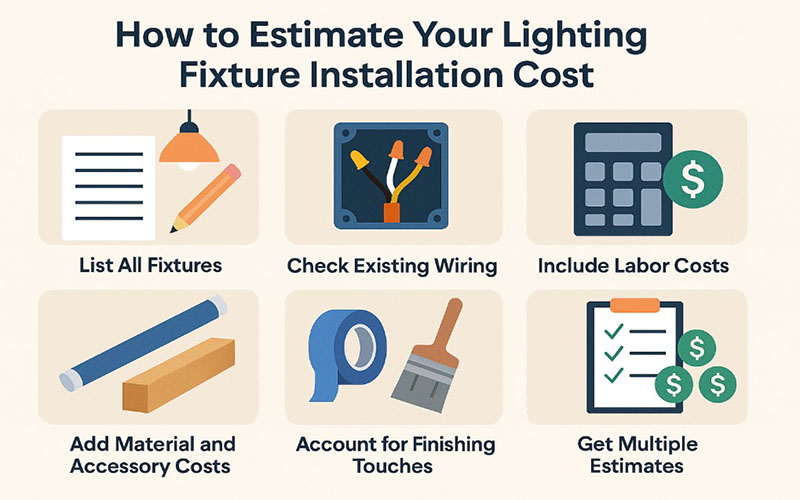
How to Estimate Your Lighting Fixture Installation Cost
Knowing how to calculate your total cost helps you plan your lighting upgrade efficiently. The overall price depends on fixture type, labor, and whether wiring is already available.
Here’s a step-by-step approach to estimate your budget:
1. List All Fixtures
Write down how many lights you plan to install – for example:
- 4 recessed ceiling lights
- 2 pendant lights over the kitchen island
- 1 bathroom vanity fixture
Multiply by the average cost range for each type (see Section III).
2. Check Existing Wiring
If you’re replacing an old fixture using existing wiring, your installation will be cheaper.
However, adding new wiring or moving fixtures to another location can increase the total cost by $200–$500 per fixture.
3. Include Labor Costs
Electrician rates range from $75 to $150 per hour.
- Small jobs (one or two fixtures) may take 1–2 hours.
- Installing multiple recessed lights or outdoor systems could take half a day or more.
Ask for quotes that specify hourly vs flat-rate pricing.
4. Add Material and Accessory Costs
Don’t forget items like:
- Mounting brackets or junction boxes
- Dimmer switches or smart controls
- Extra wiring or connectors
These can add $50–$200 to your total project.
5. Account for Finishing Touches
Some installations require patching drywall or repainting around the fixture. If your project involves recessed or can lights, you may need an additional $50–$100 for ceiling repair or finishing work.
6. Get Multiple Estimates
Request at least two or three quotes from licensed electricians. Comparing them helps ensure fair pricing and transparency. Ask each provider to include labor, materials, and potential extras in the written estimate.
Example:
Installing four recessed lights ($175 each) and one pendant light ($250) could total around $950–$1,100, including labor and materials – assuming existing wiring. Adding new wiring or smart controls could raise the cost closer to $1,400.
Ways to Save Money on Light Fixture Installation
While lighting can transform your home, installation costs can add up quickly – especially if you’re upgrading multiple rooms. Fortunately, there are several smart ways to reduce your total expense without compromising safety or style.
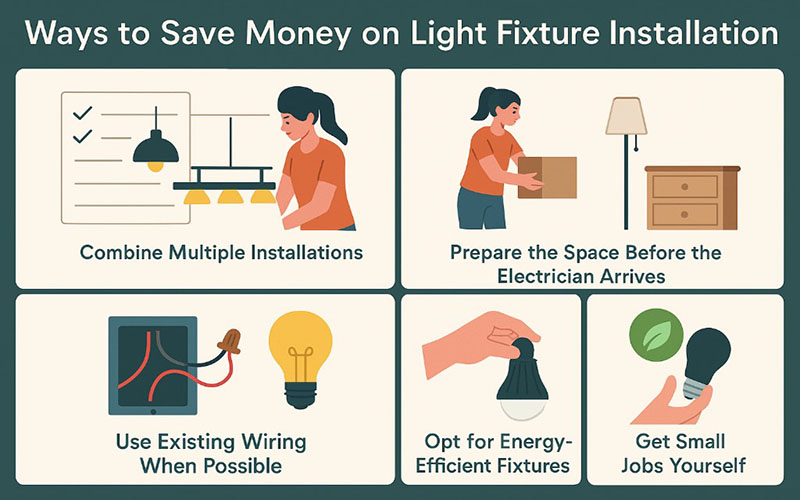
1. Combine Multiple Installations
Electricians often offer discounts when installing several fixtures in one visit. Grouping all your lighting updates – for example, adding ceiling lights, wall sconces, and under-cabinet lights together – can lower the per-fixture labor cost.
2. Prepare the Space Before the Electrician Arrives
Clear furniture, remove old fixtures, and make sure the power circuit is accessible. This allows your electrician to start work immediately, reducing billable time.
3. Use Existing Wiring When Possible
If you can reuse existing junction boxes and wiring, you’ll save significantly on labor and materials. Relocating lights or running new wires through walls can easily double the installation cost.
4. Choose Fixtures That Fit Your Electrical Setup
Selecting fixtures that match your existing voltage and wiring simplifies the job. For instance, if your ceiling already supports a standard mounting plate, pick a compatible light instead of one requiring additional bracing or adapters.
5. Compare Multiple Quotes
Always get estimates from two or three licensed electricians. Ask for a written quote that separates labor, materials, and additional charges. This helps you identify inflated costs or unnecessary extras.
6. Opt for Energy-Efficient Fixtures
Although LED and smart lighting systems may cost more upfront, they consume less power and last longer – saving you money on electricity bills and replacement costs over time.
7. Do Small Jobs Yourself
If you’re comfortable with minor tasks – like swapping bulbs, assembling fixture parts, or repainting around new lights – handle them on your own. Leave complex wiring and heavy fixtures to professionals.
Pro Tip: Ask your electrician if they charge per fixture or per hour. For simple replacements, a flat-rate fee is often cheaper.
When to Replace or Upgrade Old Light Fixtures
Even the best lighting fixtures don’t last forever. Knowing when to replace or upgrade helps maintain safety, efficiency, and aesthetics throughout your home.
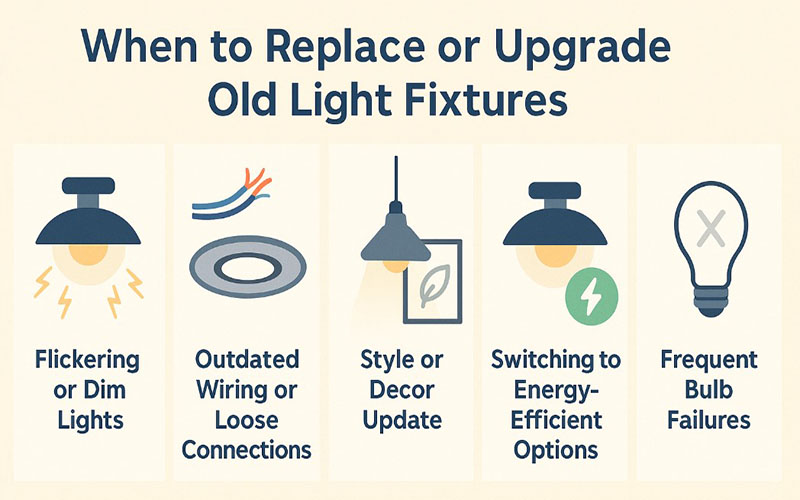
1. Flickering or Dim Lights
If your lights flicker, hum, or appear dim even with new bulbs, it could signal wiring issues or a failing fixture. In this case, replacement isn’t just cosmetic – it’s a safety precaution.
2. Outdated Wiring or Loose Connections
Older homes often have wiring that no longer meets current safety standards. If your light fixtures feel warm to the touch or spark when turned on, it’s time for an upgrade by a certified electrician.
3. Style or Decor Update
Lighting trends evolve, and upgrading fixtures can instantly modernize your space. Swapping a dated brass chandelier for a minimalist pendant or woven rattan light can make a huge aesthetic difference.
4. Switching to Energy-Efficient Options
Replacing older incandescent fixtures with LED or smart lighting reduces energy consumption by up to 80%. These upgrades also require less maintenance and last significantly longer.
5. Frequent Bulb Failures
If bulbs keep burning out too quickly, it may indicate voltage instability or poor fixture design. A replacement can solve the issue and save you money in the long run.
💬 Tip: On average, interior light fixtures should be evaluated every 8–10 years. Regular maintenance and timely upgrades prevent electrical hazards and improve your home’s lighting quality.
Conclusion
Lighting plays a huge role in shaping how your home looks and feels. Whether you’re upgrading your kitchen pendants, adding recessed lights, or illuminating your outdoor space, knowing your lighting fixture installation cost helps you budget smartly and avoid surprises.
Most homeowners spend between $100 and $650 per fixture, though the final price depends on factors like fixture type, wiring complexity, and electrician rates in your area.
Simple swaps may be DIY-friendly, but when new wiring, ceiling access, or heavy fixtures are involved, hiring a licensed electrician ensures the job is done safely and correctly.
By understanding labor costs, comparing estimates, and planning installations strategically, you can achieve a bright, stylish, and energy-efficient home without overspending.
Frequently Asked Questions (FAQ)
Installing a standard ceiling light usually costs between $100 and $300. Factors such as wiring complexity, ceiling height, and accessibility can raise or lower this price.
Most electricians charge $75 to $150 per hour, or $100 to $650 per fixture, depending on project complexity.
Basic replacements use existing wiring, so additional costs are minimal. If new wiring or electrical boxes are needed, expect to add $200–$500 per fixture.
Yes – if you’re simply replacing an existing fixture and are familiar with electrical safety. However, for complex wiring or heavy fixtures, it’s safer to hire a professional electrician.
Flush-mount ceiling lights and simple wall sconces are the most affordable, often costing under $150 to install.
Looking for beautiful, handcrafted lighting?
Explore our curated collection of bamboo, rattan, and natural-fiber pendant lights at vietshopdesign.com – designed to bring warmth, character, and timeless style to any room.
✨ Find the perfect light for your home today!



Unlock VIP Perks
Join as a priority member to receive gifts and be the first to access exclusive deals, our newest collections, and more...
Read more articles
25+ Best Outdoor Bamboo Pendant Lights for a Warm, Natural & Inviting Space
Outdoor bamboo pendant lighting transforms a pergola, patio, or covered garden dining space from a [...]
Jun
11 Best Organic Modern Rope Lighting Ideas for a Warm, Inviting Space
Wicker, hemp rope, jute, and water hyacinth bring the most authentically textural and the most [...]
Jun
25+ Trending Organic Modern Rattan Lights for a Cozy Living Space
The most beautifully designed organic modern interiors today are built not on safe pendant choices [...]
Jun
8 Organic Modern Rattan Dome Pendant Lights for a Soft, Natural Interior
The dome form is rattan’s most naturally generous and most softly organic pendant silhouette – [...]
Jun
9 Organic Modern Rattan Chandeliers for a Soft, Natural Interior
A rattan chandelier in an organic modern interior creates the most complete expression of what [...]
Jun
11 Organic Modern Brown Rattan Lights for a Warm, Earthy Home
Brown rattan brings the most warmly grounded and most gently earthy pendant tone to an [...]
May
15+ Organic Modern Black Rattan Lights for a Warm, Bold Home
Black rattan in an organic modern interior creates a precisely beautiful design tension – the [...]
May
12 Organic Modern Beige Rattan Lights for a Natural Interior
Beige rattan is the pendant material that organic modern design was made for – its [...]
May
25+ Organic Modern Bamboo Lights for a Soft, Natural Interior
Organic modern design lives at the most beautiful intersection of clean contemporary form and warm [...]
May
8 Best Organic Modern Wood Pendant Lights for a Warm, Natural Home
Wood pendant lighting brings a quality to an organic modern interior that no softer natural [...]
May
8 Modern Rustic Wood Lighting for a Warm, Architectural Interior
Wood pendant lighting belongs in a modern rustic interior the way exposed timber belongs in [...]
May
12 Modern Rustic Wicker Rope Pendant Lights for a Warm, Textural Interior
In a modern rustic interior built around exposed timber beams, rough stone walls, worn leather [...]
May
Explore our collections
Rattan Pendant Light
95 Products
Bamboo Pendant Light
38 Products
Fabric Pendant Light
41 Products
Wood Pendant Light
7 Products
Rope Pendant Light
14 Products
Rattan Wall Sconce
6 Products
Rattan Table Lamp
6 Products
Rattan Floor Lamp
9 Products