
Lighting Guides & Tips
Lighting Temperature Guide: How to Choose the Perfect Light Color
Welcome to your complete Lighting Temperature Guide – your go-to resource for understanding how light color affects every space in your home. Lighting temperature might sound technical, but it’s actually one of the simplest ways to transform how a room feels. The warmth or coolness of a bulb’s glow can influence mood, comfort, and even the way your décor looks.
Each type of light – from a cozy amber glow to a crisp white tone – creates a different atmosphere. Knowing how to choose the right one is key to perfect interior lighting. That’s where the color temperature chart for light bulbs comes in. This simple visual tool helps you read the lighting colour temperature guide and understand how different Kelvin levels affect the look and function of your lights.
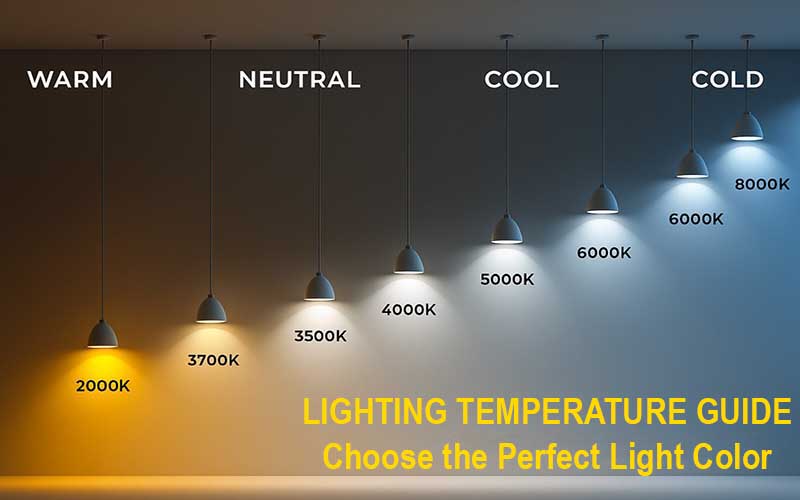
Measured in Kelvin (K), lighting temperature tells you whether a bulb produces warm, soft tones or cool, daylight-like brightness. Once you know how to interpret the light color temperature guide, you’ll be able to pick bulbs that not only illuminate your space but also enhance your style – whether it’s a relaxing living room, a bright kitchen, or a modern workspace.
What Is Lighting Temperature?
Lighting temperature (or color temperature) describes the color appearance of light produced by a bulb, measured in degrees Kelvin (K). It’s not about how hot a bulb feels, but rather how “warm” or “cool” the light looks to your eyes.
Here’s the general rule:
- Lower Kelvin (2000K–3000K) → Warm, golden tones similar to candlelight or sunrise.
- Mid-range Kelvin (3500K–4100K) → Neutral white, balanced between warm and cool.
- Higher Kelvin (5000K–6500K) → Cool, bluish-white tones like daylight.
See more:
- How Many Lumens Per Square Foot (Room-by-Room Guide)
- How Many Watts to Light a Room? A Practical Guide for Your Home
Designers and homeowners often rely on a light color temperature guide or light temperature color chart to visualize this range. The lower end of the scale gives off a cozy, relaxing glow perfect for living rooms or bedrooms, while the higher end provides a sharp, energizing brightness ideal for offices, bathrooms, or task areas.
You might have seen these numbers printed on light bulb packaging – that’s part of the colour temperature guide. It helps you predict how the bulb will appear once it’s installed. For instance, a 2700K bulb emits a warm amber light, while a 5000K bulb feels like crisp daylight.
When choosing lighting, don’t rely on wattage alone. Two bulbs with the same wattage can look entirely different if their Kelvin values vary. That’s why modern shoppers and designers prefer checking the light color temperature chart – it offers a quick visual reference for how the light will look in real life.
Ultimately, understanding this concept ensures your lighting complements both your décor and your lifestyle. A warm, dimmed light may be perfect for winding down, while a cool, bright tone enhances focus and visibility. Knowing how to read the light color temperature guide will help you find that perfect balance every time you light up a room.


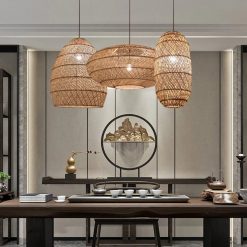
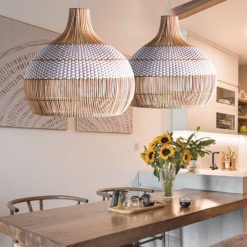
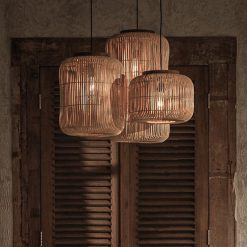
Rattan Pendant Light
Vintage Rattan Pendant Light Fixture High Quality Lamp Shades

Rattan Pendant Light

Rattan Pendant Light

Rattan Pendant Light

Rattan Pendant Light
Understanding the Kelvin Scale (2000K–6500K)
To make lighting choices easier, experts use a Kelvin Colour Chart – a simple yet powerful visual tool that shows how light color changes as Kelvin values rise. On the chart, the lower numbers on the left represent warm amber hues, while higher numbers on the right shift toward cool blue-white light.
Here’s a quick overview of the most common ranges on the lamp kelvin chart and how they affect your space:
| Kelvin Range | Lighting Type | Appearance | Ideal Use |
|---|---|---|---|
| 1800K–2200K | Candlelight | Deep amber, romantic | Restaurants, cozy corners, rustic spaces |
| 2700K–3000K | Warm White | Soft golden glow | Living rooms, bedrooms, cafés |
| 3500K–4100K | Neutral White | Balanced and natural | Kitchens, offices, showrooms |
| 5000K–6500K | Cool White / Daylight | Bright, crisp blue-white | Bathrooms, studios, workspaces |
Each range on the LED Kelvin color chart produces a distinct feel:
- Warm light (2000K–3000K): Creates a calming, intimate vibe.
- Neutral white (3500K–4100K): Keeps colors accurate and balanced.
- Cool white (5000K–6500K): Boosts focus and alertness.
You can even find a 3000K color temperature chart to visualize how that perfect “in-between” light looks – soft enough for comfort, yet bright enough for tasks. Many modern bulbs also include their own LED lighting temperature chart on the packaging to help you compare and choose precisely.
Understanding the Kelvin scale helps you tailor your lighting to both your space and purpose. A warm tone can make a minimalist room feel more inviting, while a cool tone enhances clarity in work areas. Once you can read a lamp kelvin chart, choosing the right bulb becomes an art form rather than a guess.
How Lighting Temperature Affects Mood and Atmosphere
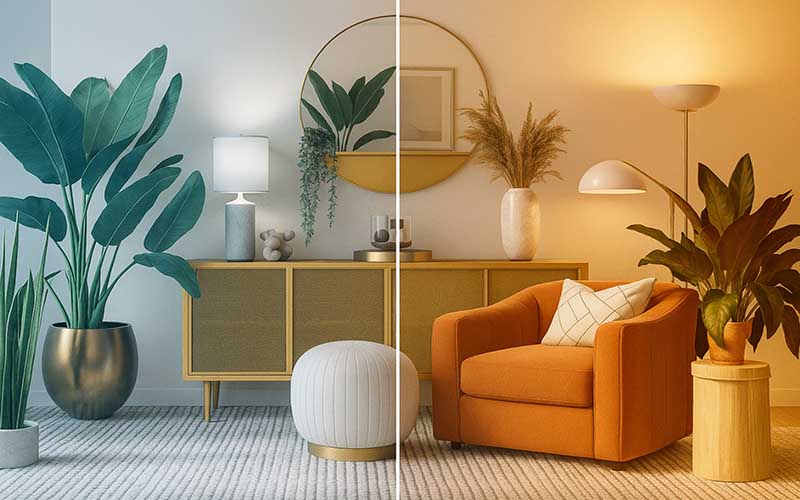
Lighting does far more than illuminate – it shapes the way we feel. The color temperature of a bulb can influence your emotions, focus, and even your perception of space. Understanding how warm and cool tones affect mood is key to creating a well-balanced environment.
On the kelvin light color chart, warmer tones (below 3000K) appear soft and golden. These shades make a room feel intimate and relaxing, perfect for winding down at night. They help lower stress and promote comfort, which is why many homes and hospitality spaces favor them.
In contrast, cooler light (above 4000K) leans toward bluish-white. This type of lighting increases alertness, improves concentration, and makes colors look sharper. It’s the reason offices, studios, and bathrooms often use higher Kelvin lighting.
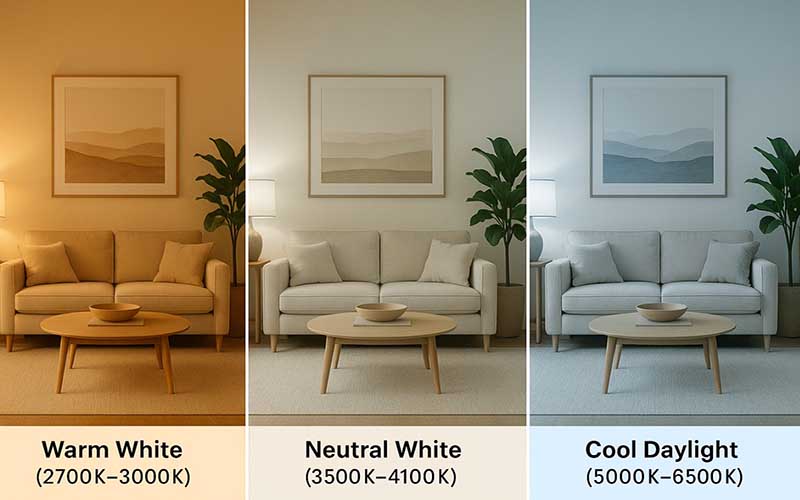
The light bulb spectrum chart shows that even small changes in Kelvin can alter the perceived mood of a room:
- Warm White (2700K–3000K): Invites calmness and comfort.
- Neutral White (3500K–4100K): Maintains balance and accuracy.
- Cool Daylight (5000K–6500K): Boosts energy and focus.
If you want your lighting to feel more natural, aim for mid-range tones that mimic daylight without being harsh. The key is harmony – blending warm and cool lights to match how you use each space.
When you plan your lighting setup, think emotionally: Do you want to relax? Focus? Entertain? The light color temperature guide helps you set the right tone every time.
Lighting Temperature by Room Type (Room-by-Room Guide)
Every room serves a different purpose – and its lighting should reflect that. The ideal color temperature depends on how the space is used and the atmosphere you want to create. Use the following LED bulb color chart as a quick reference when choosing bulbs for each area of your home.
| Room Type | Recommended Kelvin Range | Lighting Effect | Ideal For |
|---|---|---|---|
| Living Room & Lounge Areas | 2700K–3000K | Warm white, cozy glow | Relaxing, entertaining guests |
| Bedroom | 2200K–2700K | Soft amber light | Comfort, rest, and intimacy |
| Kitchen & Dining Area | 3000K–4000K | Bright yet inviting | Cooking, eating, and socializing |
| Bathroom | 4000K–5000K | Clear and refreshing light | Grooming, makeup, cleaning |
| Home Office or Study | 5000K–6500K | Daylight tone | Focus, productivity, reading |
| Outdoor & Patio Spaces | 2700K–3000K | Gentle, warm illumination | Ambience, evening gatherings |
The bulb light color chart and light bulb colour temperature chart make these differences easy to visualize. Warm light flatters skin tones and adds depth to natural materials like rattan, bamboo, or linen – perfect for cozy interiors. Meanwhile, cooler tones bring out the crispness of modern surfaces like marble, glass, and metal.
If you’re designing a layered lighting plan, consider combining multiple tones:
- Use warm bulbs (2700K) for ambient lighting.
- Add neutral lights (3500K) for balanced general illumination.
- Include cool task lights (5000K+) where clarity is essential.
When selecting fixtures, check the bulb color temperature chart or bulb color guide on the packaging – it shows how the light will actually appear once installed. Smart LEDs even allow you to adjust color temperature throughout the day, mimicking natural sunlight cycles for comfort and well-being.
Lighting is more than a necessity – it’s a design tool that shapes the personality of your space. By reading the bulb color temperature chart and matching Kelvin ranges to each room’s function, you can craft environments that look beautiful and feel just right, day or night.
How to Choose the Right Bulb Temperature
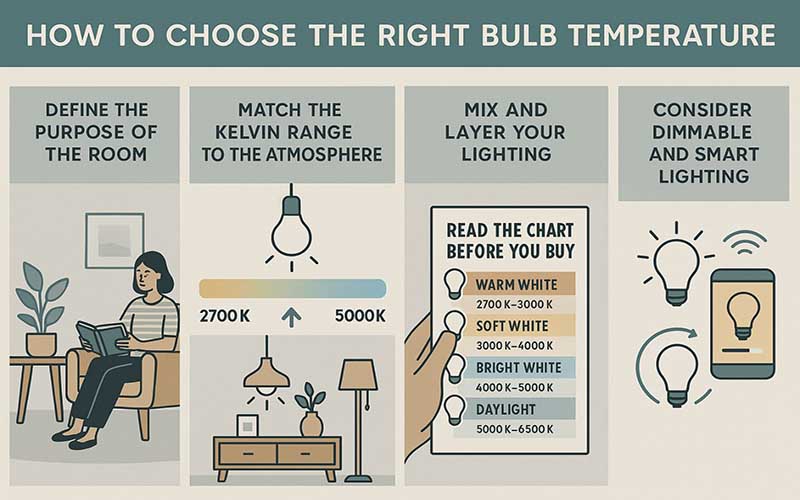
Choosing the right lighting temperature doesn’t have to be confusing – it’s about matching the Kelvin range with how you use your space. The LED color temperature guide and light bulb temperature guide make it easier than ever to get lighting that both looks and feels perfect.
Here’s a simple, step-by-step approach:
1. Define the purpose of the room
Ask yourself: Do you want a warm, cozy vibe or a bright, energetic feel?
- Spaces for relaxation (living room, bedroom) → 2700K–3000K
- Spaces for focus or tasks (office, kitchen, bathroom) → 4000K–6000K
2. Match the Kelvin range to the atmosphere you want
- Warm light (below 3000K): Ideal for calm, intimate settings.
- Neutral light (3500K–4100K): Balanced brightness for everyday living.
- Cool light (5000K+): Boosts productivity and clarity.
3. Mix and layer your lighting
Don’t rely on just one source of light. Combine different fixtures and tones:
- Use rattan lamps or pendant with warm bulbs for ambient lighting.
- Add cooler LED strips or recessed lights for focused illumination.
Layering light adds depth and harmony to your design.
4. Read the chart before you buy
Always check the LED bulb temperature chart or color temperature label on the packaging. It tells you exactly how the bulb’s color will appear in your home.
5. Consider dimmable and smart lighting
Modern LEDs can adjust both brightness and temperature. With smart bulbs, you can switch from a warm 2700K evening glow to a daylight 5000K tone for morning energy – all from your phone or voice control.
When you understand how to use a light bulb temperature guide, you can confidently design every space with purpose. No more guesswork – just lighting that fits your mood, décor, and lifestyle.
Warm Light vs Cool Light: Which One Is Better?
One of the most common questions homeowners ask is:
Should I use warm or cool light?
The answer depends entirely on your space, your activities, and your style. To help you decide, let’s compare both types side by side using insights from the light bulb color chart and LED light bulb color chart.
| Feature | Warm Light (2000K–3000K) | Cool Light (4000K–6500K) |
|---|---|---|
| Color Tone | Yellow to amber | White to bluish-white |
| Mood Created | Cozy, relaxing, intimate | Bright, alert, focused |
| Ideal Spaces | Living rooms, bedrooms, restaurants | Offices, bathrooms, kitchens |
| Design Styles | Boho, Rustic, Japandi, Wabi-Sabi | Minimalist, Industrial, Modern |
| Best Used For | Ambience, evening relaxation | Daylight tasks, clarity, precision |
| Example Bulb | 2700K Warm White | 5000K Daylight White |
As the lamp color temperature chart shows, warm light brings comfort and softness – perfect for natural materials like rattan, bamboo, and linen that thrive under gentle illumination. It’s the light that flatters your skin, enhances wood tones, and creates an inviting feel.
Cool light, on the other hand, helps reveal detail and contrast. It’s ideal for reading, cooking, grooming, or working – any task that requires visibility and focus. Modern interiors with metal, glass, or concrete surfaces often look sharper and cleaner under cooler tones.
The bulb color chart reminds us that neither is “better” than the other – they simply serve different purposes. In fact, the best homes use a mix of both. A cozy warm glow for evenings, balanced with brighter, cooler light for morning tasks, achieves perfect harmony.
If you’re unsure, start with 3000K–3500K – a soft, balanced tone that works beautifully across most rooms. It’s the sweet spot on any color temperature chart, offering the best of both worlds.
Best Color Temperature for Different Design Styles
Your lighting temperature choice should match not only the function of a room but also its interior design style. Different aesthetics call for different tones, and understanding the light bulbs Kelvin chart or LED light colour chart can help you find that perfect match between style and illumination.
Here’s how Kelvin temperature pairs beautifully with various décor themes:
| Design Style | Recommended Color Temperature | Effect & Feel |
|---|---|---|
| Boho & Rustic | 2700K–3000K (Warm White) | Creates a cozy, golden glow that highlights natural materials like rattan, bamboo, and linen. |
| Japandi & Wabi-Sabi | 2500K–3000K | Soft amber tones emphasize simplicity, serenity, and texture. |
| Modern & Minimalist | 3500K–4100K (Neutral White) | Clean and balanced light enhances open spaces and modern finishes. |
| Industrial & Contemporary | 4000K–5000K | Cool white tones emphasize metal and contrast with darker interiors. |
| Coastal & Scandinavian | 3000K–3500K | Gentle white tones create bright, airy spaces filled with calm energy. |
In Boho or Japandi homes, for example, warm bulbs around 2700K complement woven pendants and wooden textures perfectly. The soft, golden hue from the light bulbs Kelvin chart brings depth and warmth that mimic natural sunlight filtered through organic materials.
Meanwhile, Modern and Industrial designs often shine under higher Kelvin ranges. The LED light colour chart shows that 4000K–5000K lighting enhances sharp lines, chrome surfaces, and neutral palettes – ideal for offices, lofts, and open living spaces.
When lighting aligns with your design, it doesn’t just illuminate – it tells a story. A Kelvin temperature color chart can be your secret tool to blend ambiance, mood, and style seamlessly.
Conclusion
Light color temperature is one of the most overlooked aspects of interior design – yet it has the power to transform how a room feels, functions, and connects with its occupants. From the cozy warmth of 2700K to the clarity of 5000K daylight, the color temperature chart for LED bulbs helps you find lighting that truly fits your space.
Whether you’re using soft tones to unwind or crisp whites to stay focused, the color temp guide and light bulb heat temperature chart make choosing the right Kelvin range effortless. The key is balance: blending warm and cool light layers to suit both mood and practicality.
Warm light comforts. Cool light energizes. Together, they create a home that feels alive from dawn to dusk.
Ready to elevate your home lighting?
Discover our handcrafted rattan and bamboo pendant lights – designed to pair beautifully with every lighting temperature, from cozy amber to modern daylight tones.
Visit VietShopDesign.com and find your perfect glow today.
FAQ – Lighting Temperature Guide
The color temperature chart for LED bulbs displays how light appearance changes along the Kelvin scale – from warm amber tones (2000K) to bright daylight whites (6500K). It helps you choose bulbs that create the right mood for your space.
The Kelvin light color chart shows that lower Kelvin numbers (like 2700K) produce warm, cozy light, while higher numbers (5000K+) emit cool, energizing light. Pick your Kelvin range based on whether you want a relaxing or focused atmosphere.
According to the 3000K color temperature chart, both ranges fall in the warm white category. However, 2700K gives off a slightly softer, golden glow – perfect for bedrooms or lounges – while 3000K looks a bit whiter and suits kitchens or hallways.
A light bulb spectrum chart shows how different color temperatures affect color rendering and mood. It reveals how warm light enhances wood and fabrics, while cooler tones make whites, glass, and metals appear clearer and more vivid.
LEDs emit very little heat compared to incandescent bulbs. The light bulb heat temperature chart shows that most LED bulbs stay cool to the touch, making them energy-efficient and safe for enclosed fixtures or long hours of use.
You can find a LED bulb color chart on most bulb packaging or online guides like this one. It visually compares different Kelvin levels so you can select the ideal tone – warm for comfort, neutral for balance, and cool for clarity.



Unlock VIP Perks
Join as a priority member to receive gifts and be the first to access exclusive deals, our newest collections, and more...
Read more articles
30+ Trending Scandinavian Rattan Pendant Light Ideas for a Warm, Natural Home
This is rattan lighting at its most diverse and exciting. From sculptural flower forms to [...]
Jun
10+ Scandinavian Rattan Dome Pendant Light Ideas for Natural Style
The dome pendant is one of interior design’s most enduring forms – and in natural [...]
Jun
9 Scandinavian Rattan Chandelier Ideas for Organic Elegance
Natural rattan chandeliers and pendant lights are the ultimate expression of Scandinavian design at its [...]
Jun
10+ Scandinavian Brown Rattan Light Ideas for a Warm, Earthy Style
Brown rattan pendant lights sit at the sweet spot between natural warmth and refined style. [...]
Jun
20+ Scandinavian Black Rattan Light Ideas for a Bold, Natural Style
Black rattan pendant lights are the design world’s best-kept secret. They carry all the warmth [...]
Jun
11 Scandinavian Beige Rattan Light Ideas for a Warm, Natural Nordic Style
Beige rattan pendant lights are having a moment – and it’s easy to see why. [...]
Jun
25+ Scandinavian Bamboo Light Ideas to Transform Your Home
If you’re looking to bring warmth, texture, and a touch of nature into your living [...]
Jun
7 Restaurant Wood Pendant Lights for Architectural Dining Atmosphere
Wood pendant lighting creates a restaurant dining atmosphere that no other natural organic fiber material [...]
Jun
12 Restaurant Wicker Rope Lighting for Textural Dining Atmosphere
Wicker, hemp rope, jute, and paper rope pendant lighting creates a quality of restaurant dining [...]
Jun
20+ Trending Restaurant Rattan Lights for Stylish Dining Atmosphere
The most memorably designed and the most genuinely impressive restaurant dining environments today go far [...]
Jun
7 Restaurant Rattan Dome Pendant Lights for Elegant Dining Atmosphere
The dome form is rattan’s most naturally generous restaurant pendant silhouette – and above a [...]
Jun
7 Restaurant Rattan Statement Chandeliers for Upscale Dining Atmosphere
A rattan statement chandelier above a restaurant dining room does something that a single pendant [...]
Jun
Explore our collections
Rattan Pendant Light
95 Products
Bamboo Pendant Light
38 Products
Fabric Pendant Light
41 Products
Wood Pendant Light
7 Products
Rope Pendant Light
14 Products
Rattan Wall Sconce
6 Products
Rattan Table Lamp
6 Products
Rattan Floor Lamp
9 Products