
Interior Design Styles
Modern Zen Interior Design Ideas for a Peaceful Home
In a world filled with noise, clutter, and constant stimulation, more and more people are turning to their homes as places of peace, simplicity, and emotional clarity. One design approach that perfectly embodies this philosophy is Zen interior design.
Inspired by the principles of Zen Buddhism, this style offers more than just a look – it’s a mindset. With its minimalism, natural elements, and focus on harmony, Zen design helps create spaces that are calm, centered, and deeply restorative. Whether you’re decorating a modern apartment or a cozy cottage, adopting Zen interiors can transform your home into a sanctuary for the soul.
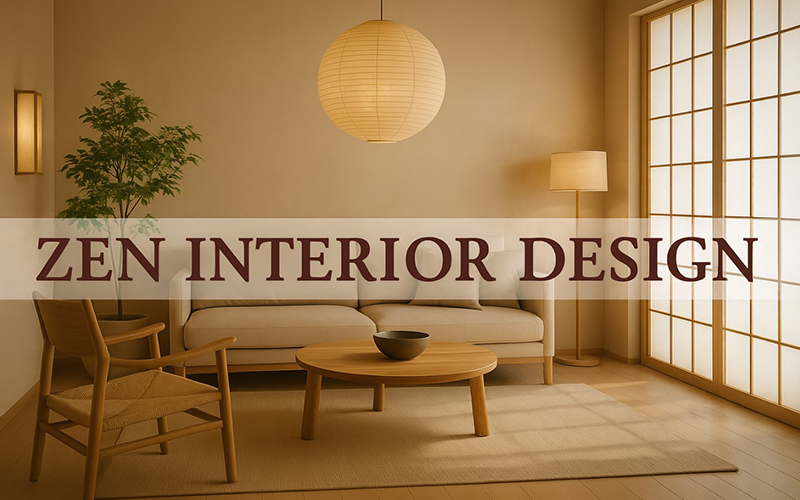
In this guide, we’ll explore what Zen interior design truly means, its core principles, how it differs from other Asian-inspired styles, and how you can bring its timeless calm into every room – from the bedroom and bathroom to the garden and beyond.
What Is Zen Interior Design?
At its core, Zen interior design is about intentional simplicity. It draws from the teachings of Zen Buddhism, particularly those that emphasize mindfulness, inner peace, and connection with nature. This design style values space, silence, and subtle beauty – inviting you to slow down and breathe deeply the moment you step into your home.
While its roots are deeply Japanese, the Zen aesthetic has influenced a broader category of Asian interior design styles, and blends beautifully with Asian-inspired home decor across the globe. You might see it paired with soft neutral tones, earthy materials like bamboo or stone, and furnishings that feel both organic and timeless.
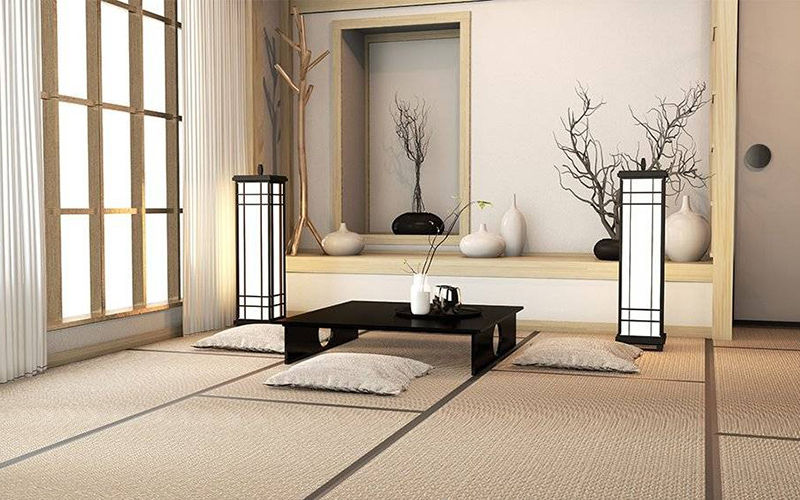
Unlike other visually minimal styles, Zen design isn’t cold or sterile. Instead, it’s warm, grounded, and deeply human. It encourages a mindful lifestyle – one where your environment nurtures your well-being.
Whether you call it Asian Zen interior design, minimalist Zen interior design, or simply a way to find calm in your daily life, this approach offers a powerful antidote to modern chaos. It’s not about having less, but about having what matters most.
Core Principles of Zen Interior Design
Zen interiors aren’t just about aesthetics – they reflect a way of life. Every element in a Zen space is intentional, fostering peace, balance, and focus. Below are the key principles that define minimalist Zen interior design:
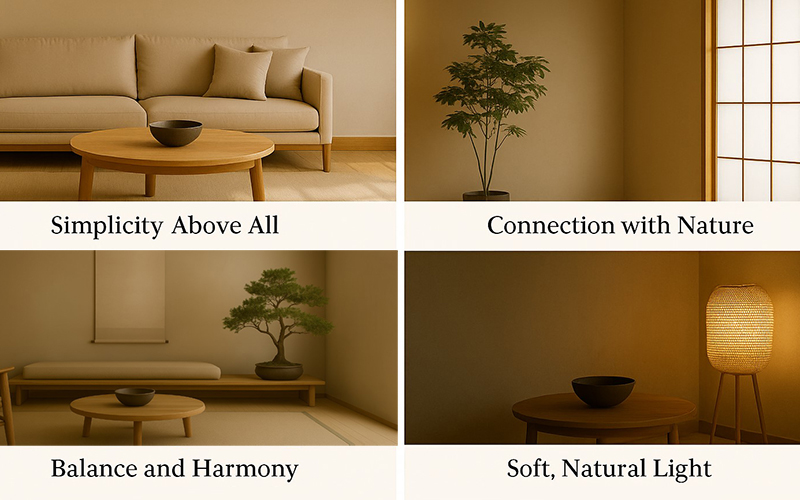
1. Simplicity Above All
Zen design follows the mantra “less is more.” It favors uncluttered spaces and purposeful furnishings. Each item should serve a function or inspire calm.
- Eliminate visual noise: no excessive patterns, bold colors, or unnecessary decor.
- Embrace clean lines and neutral tones that let the space breathe.
This aligns perfectly with the minimalist modern Zen interior design movement, which takes traditional Zen values and applies them to contemporary homes.
2. Connection with Nature
Natural elements play a central role in Zen interiors. Think wood, stone, bamboo, linen, and paper – materials that age gracefully and connect you to the outdoors.
- Let in natural light through large windows or sheer curtains.
- Incorporate indoor plants, bonsai, or a water feature to enhance serenity.
This principle also ties Zen closely to other Asian design styles, especially those found in modern Asian interior design, where nature-inspired harmony is a common thread.
3. Balance and Harmony
Zen spaces are intentionally balanced. Whether it’s the symmetrical arrangement of furniture or the thoughtful use of empty space, the goal is always visual and emotional harmony.
- Use symmetry and proportion in layout.
- Leave negative space to give the room room to “breathe” – a Japanese concept called ma (間).
This aspect is especially prominent in Asian Zen interior design, which blends structure and flow effortlessly.
4. Soft, Natural Light
Lighting in Zen interiors is subtle and ambient. Avoid harsh overhead lighting. Instead, layer your space with gentle light from floor lamps, wall sconces, and pendant fixtures made of natural materials.
- Use warm color temperatures (around 2700K) to foster relaxation.
- Consider materials like rice paper, woven rattan, or frosted glass for lamp shades.
This connects naturally with Zen lighting ideas (to be explored in section IX), where light is not just functional but meditative.
Bamboo Pendant Light
Bamboo Sinnerlig Pendant Lamp Wicker Lantern for Cozy Interiors
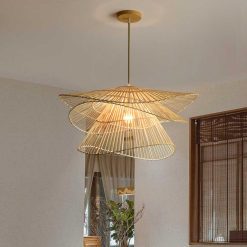
Bamboo Pendant Light
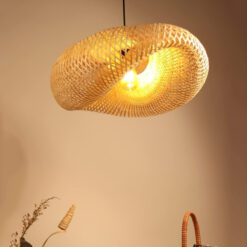
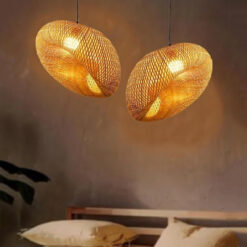
Bamboo Pendant Light
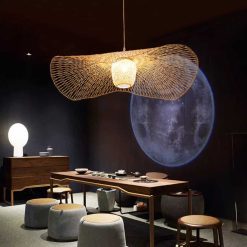
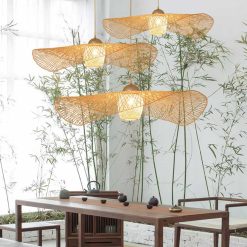
Bamboo Pendant Light
Creative Lotus Bamboo Pendant Light Fixture for Natural Interiors
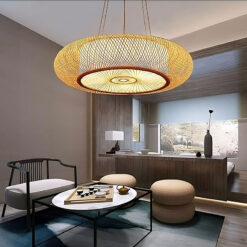
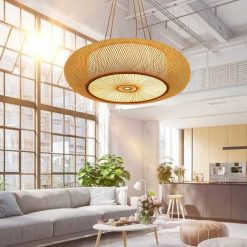
Bamboo Pendant Light
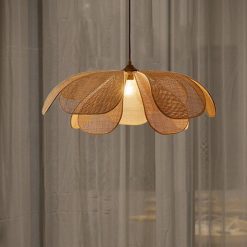
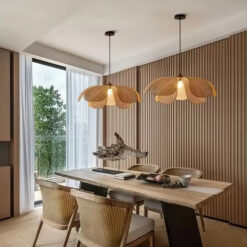
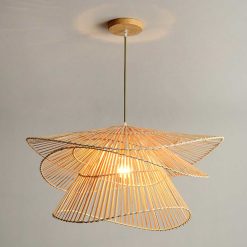
Rattan Pendant Light
Rattan Flower Pendant Light – Woven Petal Ceiling Lamp for Dining Room
5. Calm Color Palette
The Zen palette is muted, earthy, and restorative. Popular colors include soft whites, beiges, taupes, warm grays, and natural greens.
- Avoid bright or saturated tones that excite the senses.
- Combine textures instead of colors to add interest without visual clutter.
The color philosophy in Zen overlaps with Asian-inspired interior design, where tone-on-tone combinations and texture layering are key.
Zen Interior Design by Room
Zen isn’t a one-size-fits-all formula – it adapts beautifully to each area of the home. Whether you’re updating a single room or curating an entire sanctuary, applying Zen interior design principles room by room ensures a cohesive yet personal result.
1. Living Room: Create a Space to Unwind
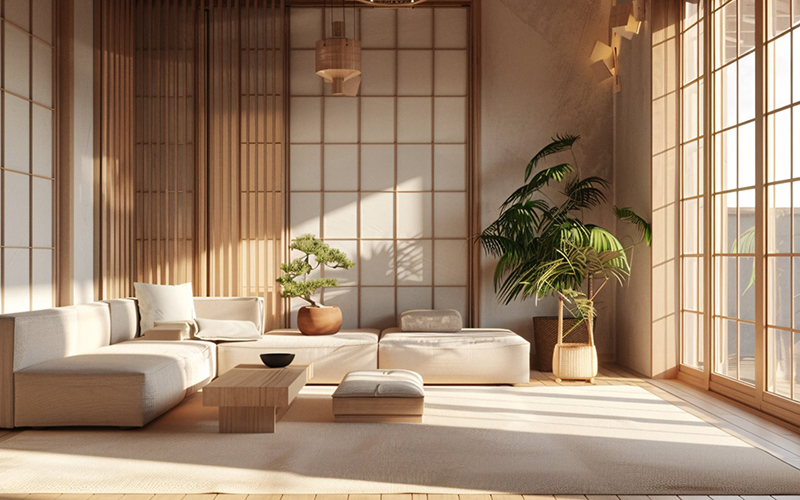
Your living room sets the tone for the rest of your home. A Zen living space should feel open, airy, and uncluttered.
- Choose low-profile furniture with clean lines and natural textures like wood, rattan, or linen.
- Limit decor to a few meaningful items – think a bonsai tree, a neutral-colored ceramic vase, or a large floor cushion.
- For lighting, opt for Zen floor lamps or Zen pendant lights made of bamboo or woven fibers, which cast soft, ambient glows.
Adding subtle elements of Asian-inspired home decor, such as a Shoji screen or a simple calligraphy print, can enrich the room with quiet cultural depth.
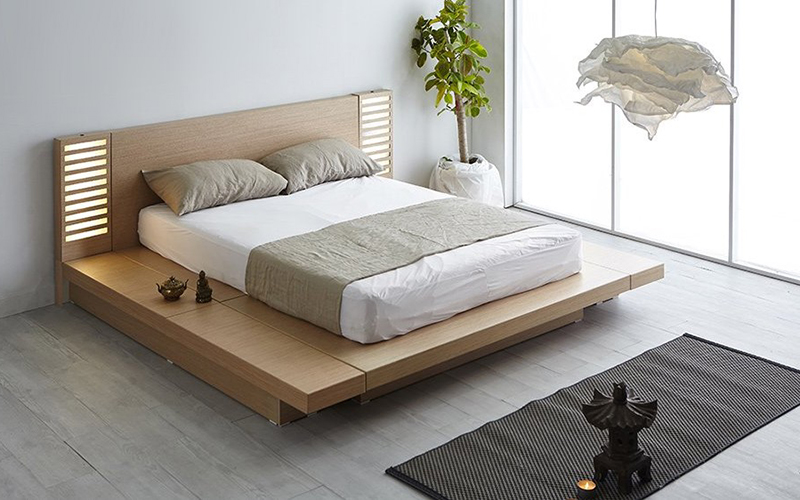
2. Bedroom: A True Retreat
The bedroom is perhaps the most important space to get right in Zen interior design. It’s where we rest, recharge, and reconnect with ourselves.
- Stick to soft, neutral colors like warm beige, muted taupe, or pale gray.
- Choose a low, simple platform bed with natural linens.
- Avoid clutter – bedside surfaces should be clean, with perhaps a small Zen table lamp, a single candle, or a smooth river stone.
Zen bedroom design is about eliminating distractions and inviting deep rest. Keep the lighting soft and indirect, and if space allows, add a meditation corner with a floor cushion or small altar.
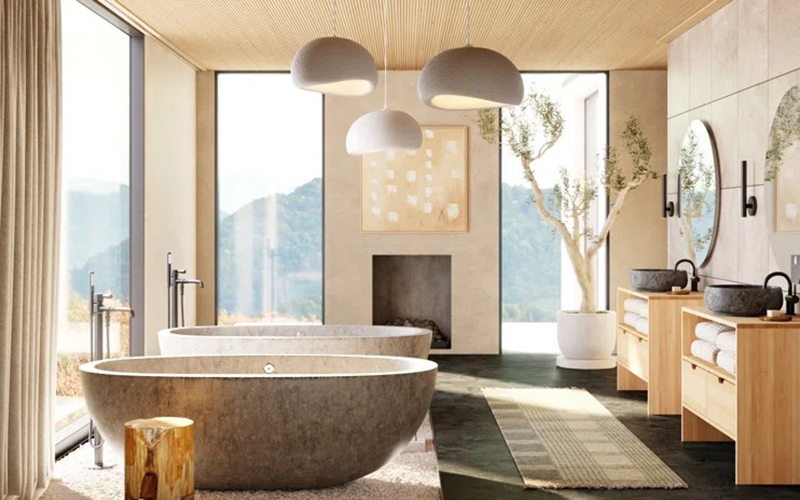
3. Bathroom: Turn Routine into Ritual
Transform your bathroom into a spa-like sanctuary by combining natural materials with warm, soothing light.
- Use wood, stone, and matte ceramic finishes where possible.
- Incorporate Zen bathroom lighting like wall sconces or dimmable ceiling lights in warm tones.
- Decorate minimally – maybe a small bamboo stool, a potted plant, or rolled linen towels.
The goal is to elevate everyday routines into calming rituals.
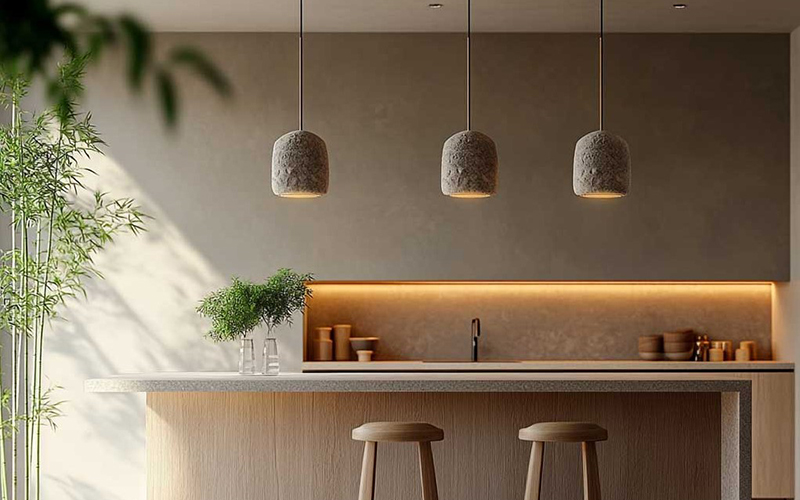
4. Dining Room and Kitchen: Mindful Nourishment
These spaces should inspire both nourishment and presence. Zen kitchens and dining areas are simple, organized, and grounded.
- Use open shelving or hidden cabinetry to avoid visual clutter.
- Choose a solid wood table with minimal accessories – a single centerpiece like a ceramic bowl or vase is enough.
- Lighting here should be soft yet functional. A Zen pendant light above the table can add focused calm.
5. Garden or Balcony: Connect with Nature
If you have outdoor space, turn it into a Zen retreat.
- Add Zen garden lights along pathways or around a water feature for gentle evening ambiance.
- Use gravel, stepping stones, moss, bamboo, and natural wood to mirror a Japanese garden feel.
- Keep the layout minimal and intentional, encouraging quiet reflection or tea rituals.
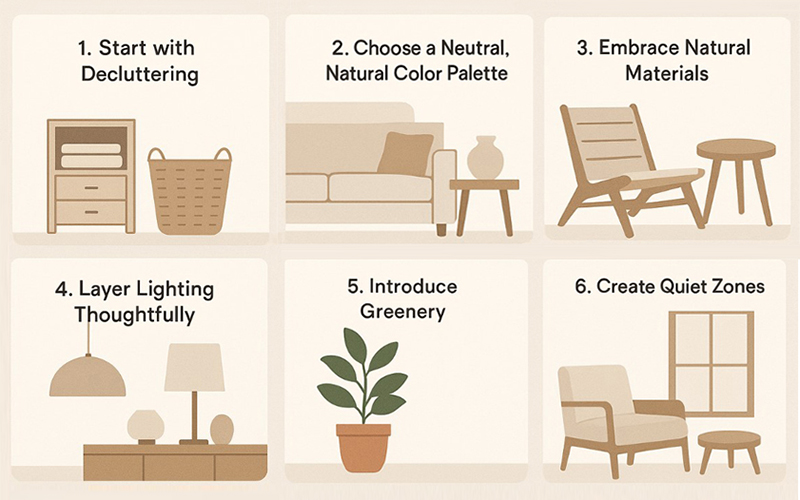
How to Bring Zen Interior Design into Your Home
You don’t have to remodel your entire house to embrace Zen home decor. Even small changes can create a big impact. Here’s how to gradually transform your space into a Zen-inspired retreat.
1. Start with Decluttering
Zen begins with clarity – and that starts by removing what no longer serves you. Clean out surfaces, drawers, and shelves. Keep only items that are useful or bring a sense of calm.
2. Choose a Neutral, Natural Color Palette
Soft whites, stone gray, pale beige, muted green – these colors soothe the mind and expand the space visually.
- Stay within a tonal range, and use contrast through texture rather than color.
- Consider accenting with earth-based hues like terracotta or charcoal for grounding.
3. Embrace Natural Materials
Incorporate elements like:
- Wood (especially light-toned or weathered varieties)
- Stone, linen, rattan, bamboo, clay
- Handmade or imperfect finishes (embracing Wabi-Sabi subtly)
These materials create a warm, tactile environment that brings nature indoors.
4. Layer Lighting Thoughtfully
Avoid harsh, direct lighting. Instead:
- Combine overhead lights with Zen wall sconces, floor lamps, and table lamps to create layered softness.
- Choose warm white bulbs (2700K–3000K).
- Use dimmers wherever possible to adjust mood throughout the day.
5. Introduce Greenery
Plants bring balance, life, and air purification. Opt for minimalist species like:
- Snake plants
- Bamboo
- Peace lilies
- Bonsai or small pines
Place them in simple, natural pots and let them act as living decor.
6. Create Quiet Zones
Designate one area in your home as a no-distraction zone – a reading nook, meditation corner, or yoga space.
- Use a tatami mat, low seating, candles, or incense.
- Avoid screens, clutter, or loud colors in this space.
This encourages mindfulness and makes Zen not just a look, but a lifestyle.
Zen vs Other Similar Styles
Because of its simplicity and use of natural materials, Zen interior design is often confused with several other design styles. While they may overlap in aesthetics, each has its own philosophy and cultural background. Here’s how Zen compares to other popular styles:
1. Zen vs Minimalist Design
At first glance, Zen and minimalist interiors look alike – both value simplicity and clean lines. But there’s a key difference:
- Minimalist design is focused on function, utility, and eliminating excess.
- Zen interior design, while also simple, is deeply spiritual and rooted in mindfulness and emotional wellness.
In short, minimalist interiors aim for “less,” while Zen aims for “peace.”
2. Zen vs Japandi
Japandi is a fusion of Japanese Zen and Scandinavian minimalism. It combines the soft, rustic textures of Japanese design with the cozy functionality of Scandinavian style.
- Japandi often uses slightly darker wood tones, plush textiles, and layered textures.
- Zen tends to be lighter, more spacious, and more focused on the spiritual ambiance of the space.
Japandi vs. Zen is not a matter of better or worse – just a difference in balance between East and West.
3. Zen vs Wabi-Sabi
Both styles originate from Japan and embrace simplicity and nature.
- Wabi-Sabi celebrates imperfection, aging, and authenticity – like a cracked ceramic bowl that becomes more beautiful with time.
- Zen values perfect balance, calm, and intentional space. It’s about order and clarity.
You might say Wabi-Sabi embraces chaos beautifully, while Zen creates harmony through structure.
4. Zen vs Modern Asian & Chinese Interior Design
Modern Asian interior design includes a broader palette of influences – from Chinese to Thai to Korean aesthetics. It can feature bolder colors, more ornate furniture, or symbolic decor like dragons, calligraphy, or lacquerware.
- Modern Chinese interior design might include red tones, intricate carvings, or feng shui arrangements.
- Zen design, by contrast, is subdued, earthy, and avoids symbolism in favor of feeling.
So while Zen can be part of an Asian interior design style, it stands out for its quiet restraint and meditative mood.
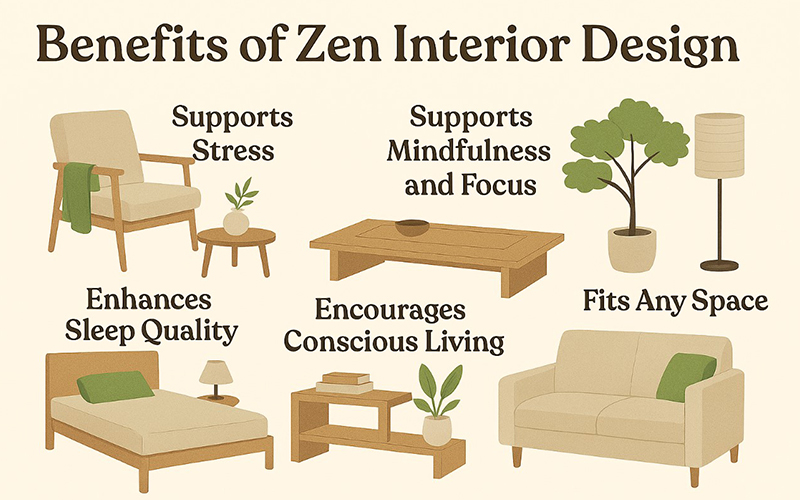
Benefits of Zen Interior Design
Choosing Zen interior design isn’t just about creating a beautiful home – it’s about cultivating a lifestyle that prioritizes peace, intention, and well-being. Here are some powerful benefits this approach can bring:
1. Reduces Stress
Zen interiors promote a clutter-free environment that lowers mental noise. From soothing color palettes to soft lighting, every design choice helps calm your nervous system.
2. Supports Mindfulness and Focus
By eliminating distractions, Zen spaces encourage you to be present – whether you’re eating, reading, or just relaxing. It’s a powerful way to bring mindfulness into your daily routine.
3. Enhances Sleep Quality
In a Zen bedroom design, low lighting, earthy tones, and natural materials create a restful environment that supports deeper, more restorative sleep.
4. Encourages Conscious Living
Living with less helps you appreciate what you have. Zen design promotes sustainability, intentional shopping, and better consumption habits.
5. Timeless Aesthetic
Because of its minimalist and nature-inspired roots, Zen interiors never go out of style. Unlike trend-driven decor, a well-designed Zen home remains beautiful and relevant for years.
6. Fits Any Space
Whether you’re in a small apartment or a spacious house, Zen design adapts easily. It’s especially ideal for:
- Compact city dwellings
- Home offices or meditation rooms
- Spa-inspired bathrooms
- Calm corners in open-concept homes
Common Mistakes to Avoid with Zen Interiors
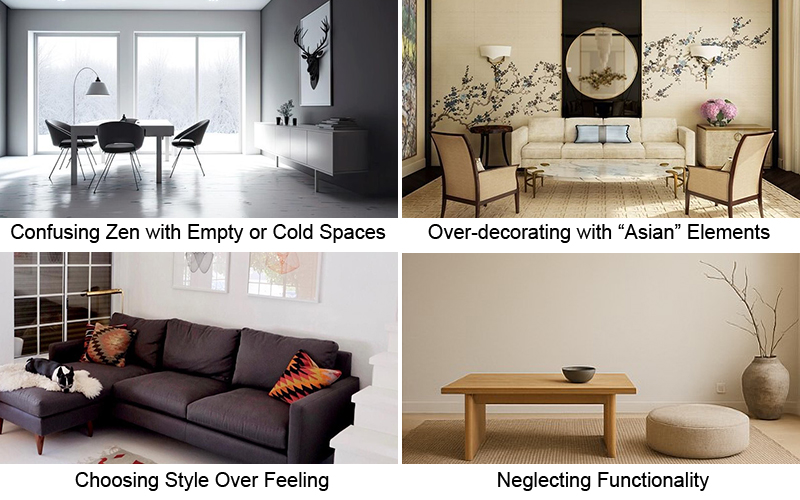
While Zen interior design may appear simple, executing it well takes intention and subtlety. Many people misunderstand the essence of Zen and fall into common design traps. Here are a few mistakes to avoid:
1. Confusing Zen with Empty or Cold Spaces
Zen is minimalist, but not sterile. An overly empty room with harsh lighting and no personality misses the point.
- Do this instead: Use natural textures, layered lighting, and a few meaningful decor pieces to create warmth and soul.
2. Over-decorating with “Asian” Elements
While Zen is part of the broader Asian interior design style, it’s not about filling your space with symbols like Buddha statues, red lanterns, or calligraphy just for effect.
- Tip: Choose accents mindfully. A single bonsai or a handcrafted wood sculpture is more Zen than a shelf full of trinkets.
3. Choosing Style Over Feeling
Many people copy the look of a Zen room from Pinterest without understanding its emotional goal: to create peace and stillness.
- Ask yourself: How does this space make me feel? If it doesn’t promote calm or clarity, it may not be truly Zen – even if it looks the part.
4. Neglecting Functionality
Zen design is about intentional living. A beautiful room that doesn’t support your daily routines isn’t fully Zen.
- Example: Choose furniture that fits your lifestyle – like a low reading chair with a Zen floor lamp instead of a trendy but impractical piece.
Applying Zen Interior Design in Different Spaces
One of the strengths of Zen interior design is its flexibility. You don’t need a traditional Japanese home or large open rooms – Zen principles can enhance any environment. Here’s how to adapt Zen to different living and working spaces:
1. Zen in Small Apartments
Living in a small space doesn’t mean you can’t live mindfully. In fact, minimalist Zen interior design works especially well in compact areas.
- Stick to multipurpose furniture and hidden storage.
- Use light colors and mirrors to visually open the space.
- Focus on one or two zones of calm – such as a quiet corner with a Zen table lamp and a meditation mat.
2. Zen in Home Offices
Turn your workspace into a stress-free productivity zone.
- Keep your desk clean and free of visual clutter.
- Incorporate natural light, soft wall colors, and grounding decor like a small plant or pebble tray.
- Consider a simple Zen wall sconce instead of a harsh desk lamp to reduce eye fatigue.
3. Zen in Homestays and Guest Rooms
Guests appreciate spaces that feel thoughtful and welcoming. Zen interiors create a sense of peace that resonates across cultures.
- Use breathable bedding, soft lighting, and neutral tones.
- Add calming details like incense, bamboo trays, or Zen pendant lights for warmth.
This approach also works beautifully in Asian-inspired home decor rentals, offering a memorable and serene experience.
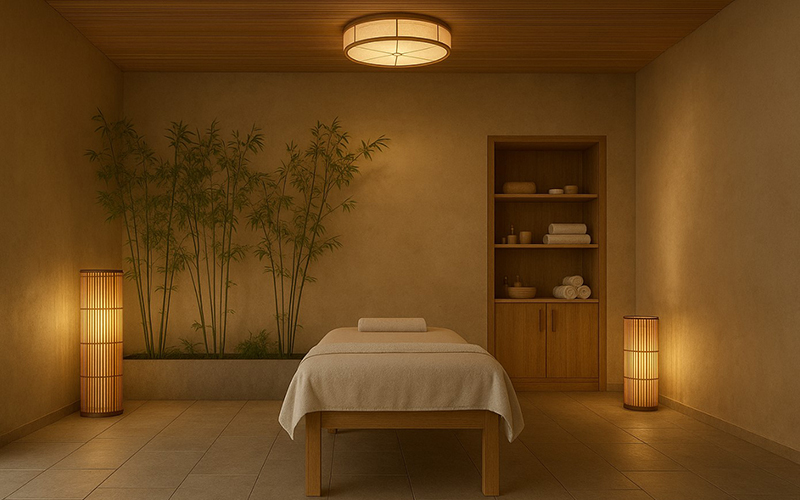
4. Zen in Spas and Wellness Spaces
Spas naturally align with Zen values – silence, nature, and simplicity.
- Choose organic materials: stone, bamboo, warm wood.
- Keep the palette neutral, the layout open, and lighting indirect.
- Use Zen ceiling lights and floor lanterns to create a glow without glare.
Whether you’re designing a personal wellness nook or a commercial retreat, Zen principles elevate the atmosphere and client experience.
Zen Lighting Ideas: Illuminate Calm with Intention
Lighting plays a fundamental role in Zen interior design – not just to brighten a space, but to shape its mood, flow, and emotional energy. In Zen-inspired interiors, lighting is never harsh or dominant; it’s soft, layered, and designed to support serenity.
Here’s how to choose lighting that complements your Zen lifestyle:
1. Zen Ceiling Light
Overhead lighting in Zen interiors should feel soft, natural, and unobtrusive. Avoid harsh spotlights or cool-toned bulbs that disrupt the calm.
Instead, choose bamboo ceiling lights or fixtures made from other natural materials like rice paper or linen. The woven texture of bamboo lights diffuses illumination beautifully, casting a warm, ambient glow.
For larger rooms, consider recessed lighting with dimmer switches to gently adjust the mood without overwhelming the space.
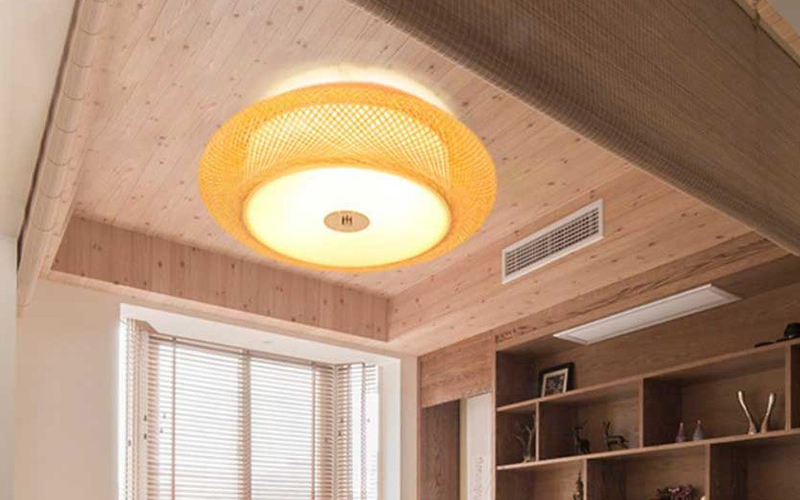
Link product: https://vietshopdesign.com/product/round-bamboo-ceiling-mount-light/
2. Zen Pendant Light
A Zen pendant light brings a sense of calm and focus to spaces like dining areas, entryways, or cozy reading corners. Its purpose is not to draw attention, but to quietly enhance the atmosphere with soft, downward lighting.
When choosing a fixture, opt for organic shapes and textures such as handwoven or natural wood finishes. Hang the light at eye level or slightly lower to encourage warmth and intimacy in the space.
Avoid shiny, ornate designs – matte surfaces and raw, natural materials better reflect the simplicity and serenity of Zen interiors.
- A rattan pendant light is an excellent option, offering both handcrafted texture and gentle illumination that perfectly align with the Zen aesthetic.
- A wabi sabi pendant light embraces the beauty of imperfection, often featuring raw edges, asymmetry, and organic materials that create a sense of quiet authenticity.
- A fabric pendant light adds softness and warmth to the space, diffusing light in a calm, understated way that supports mindfulness and comfort.
3. Zen Floor Lamps
Zen floor lamps are perfect for corners that need ambient light or vertical balance. Look for tall, slender frames with neutral shades to maintain a calm and uncluttered feel.
Paper lantern-style lamps or curved wooden arches work beautifully in Zen interiors, adding gentle illumination without visual noise. A rattan floor lamp is also an excellent choice – its natural woven texture and soft light bring warmth and organic charm to the space.
These lamps are ideal beside a low chair, a meditation mat, or placed near a leafy plant in the living room to enhance serenity and grounding.
4. Zen Table Lamps
Table lamps bring Zen energy to nightstands, desks, and side tables by offering soft, focused lighting that supports calm and mindfulness.
Choose Zen table lamps with simple silhouettes and warm-colored bulbs to maintain a soothing atmosphere. Ceramic or wooden bases paired with linen or parchment shades work beautifully in minimalist interiors.
A rattan table lamp is another excellent option – its handwoven texture and gentle glow add natural warmth and a touch of craftsmanship to any space. For added versatility, look for lamps with a dimmable function to support seamless day-to-night transitions.
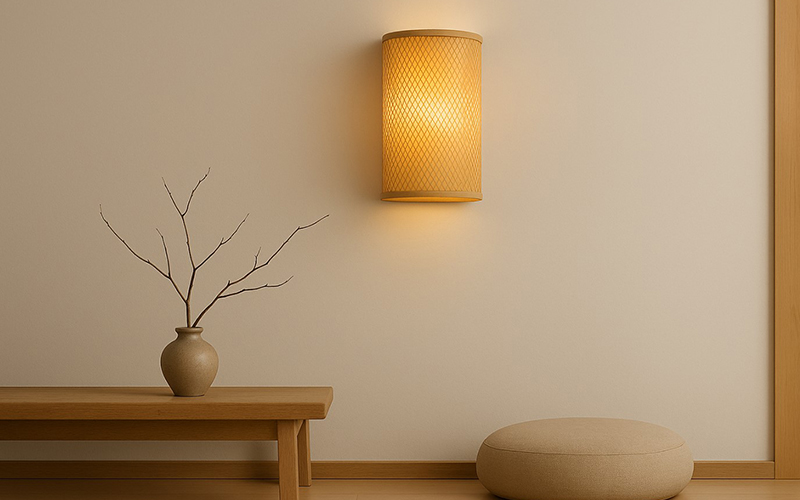
5. Zen Wall Sconce
Zen wall sconces offer gentle, indirect lighting that doesn’t overwhelm the eye. They’re perfect for creating a calming atmosphere in hallways, beside the bed, or in bathrooms where a spa-like glow is desired.
Choose sconces with hidden bulbs or diffused glass panels to soften the light. A bamboo wall sconce is a beautiful option, combining natural material with minimalist design to enhance warmth and simplicity.
For the best effect, pair these sconces with organic wall finishes like plaster, stone, or textured paint to create a cohesive, tranquil environment.
6. Zen Bathroom Lighting
Bathrooms benefit greatly from thoughtful, calming lighting that supports relaxation and mindfulness. Instead of harsh overhead fluorescents, choose wall sconces or pendant lights with warm, ambient tones.
Zen bathroom lighting should mimic the softness of natural daylight – diffused, indirect, and never overpowering. Incorporating dimmable lights, low-mounted fixtures, or candles can turn daily routines into quiet, meditative rituals.
- Fabric-covered lights with linen or parchment shades for soft diffusion.
- Rattan bathroom light is a beautiful option, offering both texture and warmth through its natural woven structure.
7. Zen Garden Lights
Outdoor Zen lighting helps extend the calm beyond your walls.
- Use Zen garden lights to highlight pathways, bonsai trees, or water features.
- Choose low, subtle lighting fixtures that blend into the environment.
- Solar-powered lights with bamboo or stone finishes are ideal for eco-conscious design.
FAQs about Zen Interior Design
1. What is Zen interior design?
Zen interior design is a minimalist, nature-inspired design philosophy rooted in Japanese Zen Buddhism. It emphasizes simplicity, natural materials, and mindful space planning to create calm, harmonious living environments.
2. How do I create a Zen-style bedroom?
To create a Zen bedroom, use a low platform bed, soft neutral colors, and natural materials like wood or linen. Keep the space clutter-free, add soft lighting such as a Zen table lamp, and include calming elements like a plant or floor cushion.
3. What’s the difference between Zen and Japandi design?
Zen design focuses on spiritual calm and minimalism rooted in Japanese tradition, while Japandi combines Japanese Zen with Scandinavian coziness. Japandi uses more texture and warmth, while Zen leans toward silence and purity.
4. Can Zen interior design work in small spaces?
Yes! Zen interior design is ideal for small homes and apartments. Its minimalist approach reduces clutter and makes rooms feel larger and more peaceful. Use light colors, low furniture, and vertical storage to maximize space.
5. How do I light a Zen room properly?
Use layered, soft lighting. Combine Zen ceiling lights, floor lamps, and wall sconces with warm white bulbs (2700K–3000K). Avoid harsh overhead lights. Materials like paper, rattan, and frosted glass help diffuse the light beautifully.
6. What colors are used in Zen interior design?
Zen interiors use neutral, earthy tones like soft white, beige, stone gray, and muted green. These colors promote peace and blend well with natural textures such as wood, linen, and bamboo.
7. Is Zen interior design the same as minimalist design?
Not exactly. While both styles value simplicity, minimalist design is driven by utility and function, whereas Zen design adds a spiritual, emotional layer – focusing on mindfulness, calm, and connection with nature.
8. Can I combine Zen with other interior styles?
Absolutely. Zen blends well with styles like Scandinavian (Japandi) or modern Asian interior design. Just keep the core Zen principles: simplicity, natural materials, and a calming color palette.
Conclusion
Zen interior design is more than a style – it’s a way of living with presence, peace, and intention. Through minimalism, natural materials, and thoughtful lighting, it transforms your home into a haven of calm in a busy world.
Whether you’re embracing the full Zen philosophy or introducing just a few elements into your space, the result is the same: more clarity, less stress, and a deeper connection with what truly matters.
Start small – clear a surface, light a soft lamp, bring in a plant. Over time, your home will gently reflect your inner peace. And that’s the essence of Zen.



Unlock VIP Perks
Join as a priority member to receive gifts and be the first to access exclusive deals, our newest collections, and more...
Read more articles
25+ Best Outdoor Bamboo Pendant Lights for a Warm, Natural & Inviting Space
Outdoor bamboo pendant lighting transforms a pergola, patio, or covered garden dining space from a [...]
Jun
11 Best Organic Modern Rope Lighting Ideas for a Warm, Inviting Space
Wicker, hemp rope, jute, and water hyacinth bring the most authentically textural and the most [...]
Jun
25+ Trending Organic Modern Rattan Lights for a Cozy Living Space
The most beautifully designed organic modern interiors today are built not on safe pendant choices [...]
Jun
8 Organic Modern Rattan Dome Pendant Lights for a Soft, Natural Interior
The dome form is rattan’s most naturally generous and most softly organic pendant silhouette – [...]
Jun
9 Organic Modern Rattan Chandeliers for a Soft, Natural Interior
A rattan chandelier in an organic modern interior creates the most complete expression of what [...]
Jun
11 Organic Modern Brown Rattan Lights for a Warm, Earthy Home
Brown rattan brings the most warmly grounded and most gently earthy pendant tone to an [...]
May
15+ Organic Modern Black Rattan Lights for a Warm, Bold Home
Black rattan in an organic modern interior creates a precisely beautiful design tension – the [...]
May
12 Organic Modern Beige Rattan Lights for a Natural Interior
Beige rattan is the pendant material that organic modern design was made for – its [...]
May
25+ Organic Modern Bamboo Lights for a Soft, Natural Interior
Organic modern design lives at the most beautiful intersection of clean contemporary form and warm [...]
May
8 Best Organic Modern Wood Pendant Lights for a Warm, Natural Home
Wood pendant lighting brings a quality to an organic modern interior that no softer natural [...]
May
8 Modern Rustic Wood Lighting for a Warm, Architectural Interior
Wood pendant lighting belongs in a modern rustic interior the way exposed timber belongs in [...]
May
12 Modern Rustic Wicker Rope Pendant Lights for a Warm, Textural Interior
In a modern rustic interior built around exposed timber beams, rough stone walls, worn leather [...]
May
Explore our collections
Rattan Pendant Light
95 Products
Bamboo Pendant Light
38 Products
Fabric Pendant Light
41 Products
Wood Pendant Light
7 Products
Rope Pendant Light
14 Products
Rattan Wall Sconce
6 Products
Rattan Table Lamp
6 Products
Rattan Floor Lamp
9 Products