
Lighting Ideas
Wabi-Sabi Lighting Ideas: Create Calm, Warm, Timeless Spaces
Wabi-Sabi lighting ideas focus on creating a home that feels calm rather than perfect.
In a world filled with bright screens, sharp lines, and constant stimulation, many interiors look polished but feel overwhelming. Wabi-Sabi lighting offers a quieter alternative, using softness and warmth to shape atmosphere instead of demanding attention.
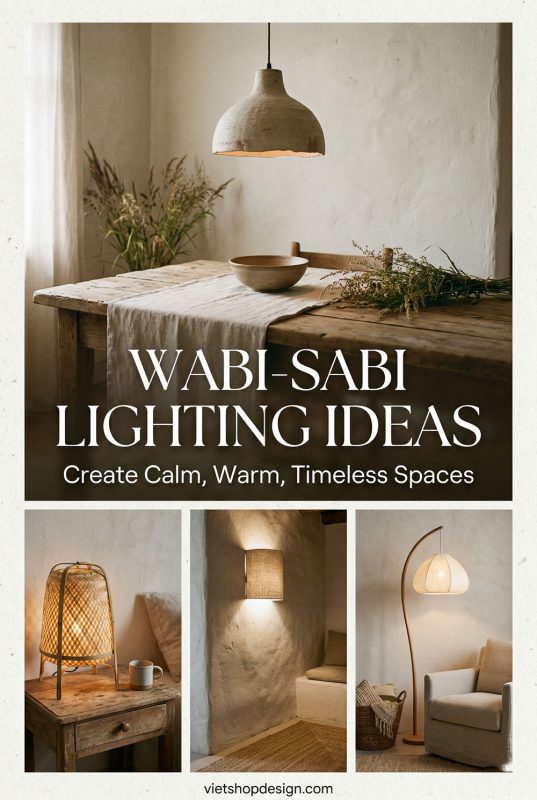
Rather than flooding a room with brightness, Wabi-Sabi lighting allows shadows to exist. It highlights natural textures, celebrates handcrafted details, and brings a sense of ease into everyday living. The result is a space that feels grounded, lived-in, and deeply comforting – especially in the evening.
In this guide, you’ll discover how thoughtful lighting choices can transform your home through the lens of Wabi-Sabi, from understanding the core principles to choosing lights that feel warm, intentional, and timeless.
What Is Wabi-Sabi Lighting?
Wabi-Sabi lighting isn’t about brightness. It’s about how a space feels when the lights are on.
Imagine coming home in the evening to a room that is not fully illuminated. Instead, a soft, warm glow settles across textured walls and natural materials. Shadows are present, not hidden. The atmosphere feels calm, grounded, and unhurried.
Inspired by the Japanese philosophy of Wabi-Sabi, this lighting approach embraces imperfection, simplicity, and the quiet beauty of things that feel real and lived-in. In many American homes today, where daily life often feels fast and overstimulating, Wabi-Sabi lighting offers a sense of balance and emotional comfort.
Rather than relying on strong overhead fixtures or cool, clinical light, Wabi-Sabi interiors use lighting to shape mood. Light becomes softer and more intentional. It supports rest instead of productivity, intimacy instead of visibility, and atmosphere instead of display.
A handwoven pendant above a dining table, a gentle floor lamp beside a sofa, or a soft bedside light can completely change how a space feels. Wabi-Sabi lighting does not demand attention. It quietly invites you to slow down and stay.
Key Principles of Wabi-Sabi Lighting Design
Wabi-Sabi lighting follows a few quiet principles. They are not strict rules, but thoughtful guidelines that help create spaces that feel calm, natural, and timeless.
Soft, Gentle Light Creates Calm
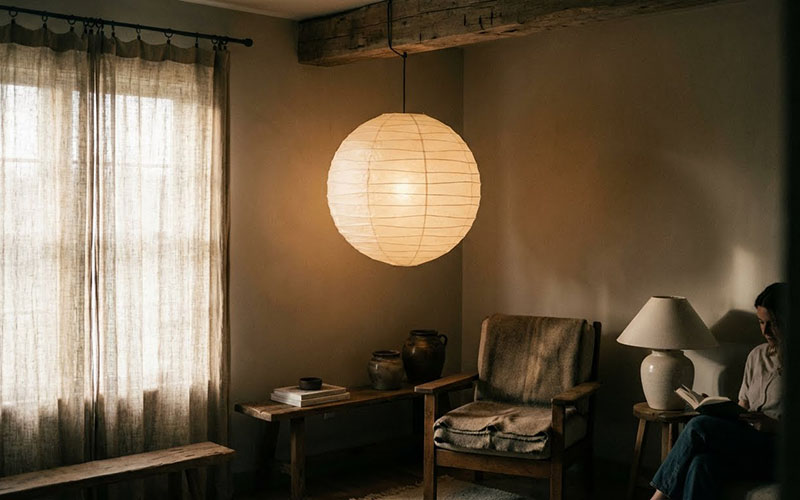
In Wabi-Sabi interiors, light should never feel harsh or aggressive. Overly bright lighting disrupts the sense of ease that defines this style. Instead, light should be soft and diffused, allowing it to fade naturally into shadows.
This gentle illumination adds depth and warmth to a room, making evenings feel more intimate and restful.
Natural Materials Shape the Glow
The materials surrounding the light are just as important as the light itself. Wabi-Sabi lighting often features natural elements such as bamboo, rattan, wood, linen, or clay.
These materials soften the glow and add texture, creating light that feels organic rather than artificial. When light passes through woven or fabric shades, it feels warmer and more inviting.
Imperfection Adds Character
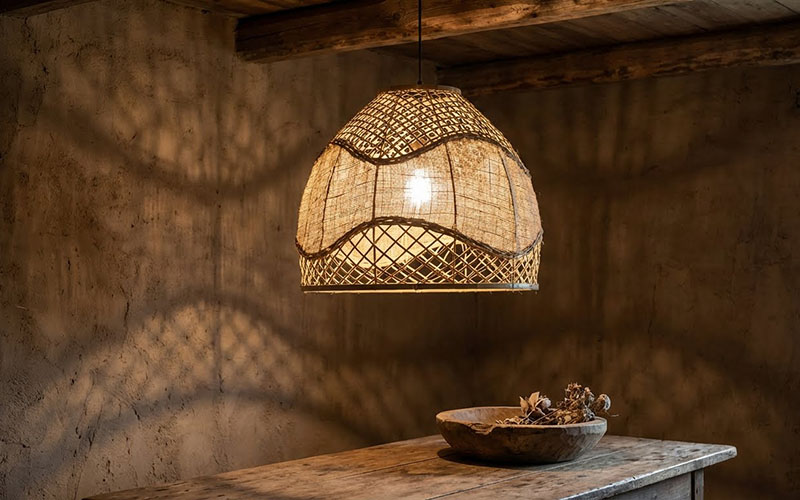
Perfection is not the goal in Wabi-Sabi lighting. Slight irregularities, organic shapes, and visible craftsmanship give each piece its unique character.
Uneven weaving or subtle variations in form remind us that the light was made by hand. These imperfections bring authenticity and warmth to the space.

Simplicity Over Excess
Wabi-Sabi lighting favors fewer, more intentional light sources. Rather than filling a room with multiple fixtures, it is often better to choose one or two meaningful lights and allow them to stand quietly in the space.
Empty space is not a flaw. It is part of what makes a room feel balanced and calm.
Lighting Should Support the Mood
In a Wabi-Sabi home, lighting is never meant to dominate the room. It works quietly in the background, supporting the overall mood and emotional tone of the space.
You may not notice the light fixture immediately, but you will notice how comfortable the room feels and how naturally it encourages you to relax.
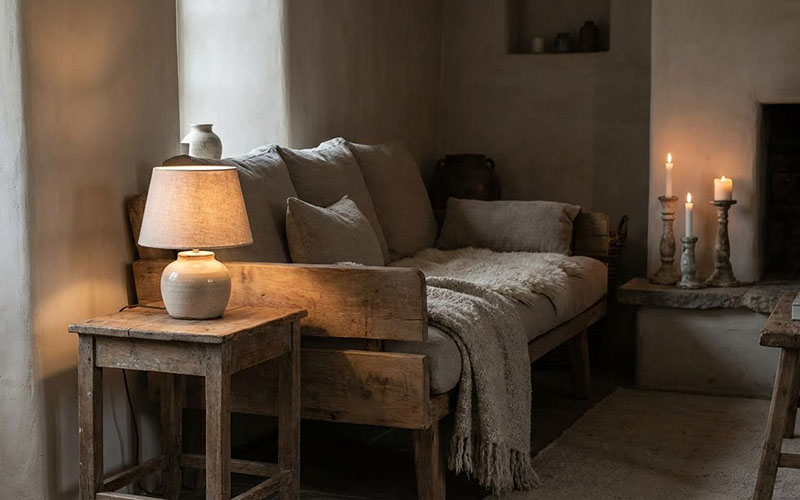
Best Types of Lighting for Wabi-Sabi Interiors
Not every light belongs in a Wabi-Sabi space. The right lighting feels quiet, grounded, and naturally connected to the room. These are the types of lighting that work best in Wabi-Sabi interiors.
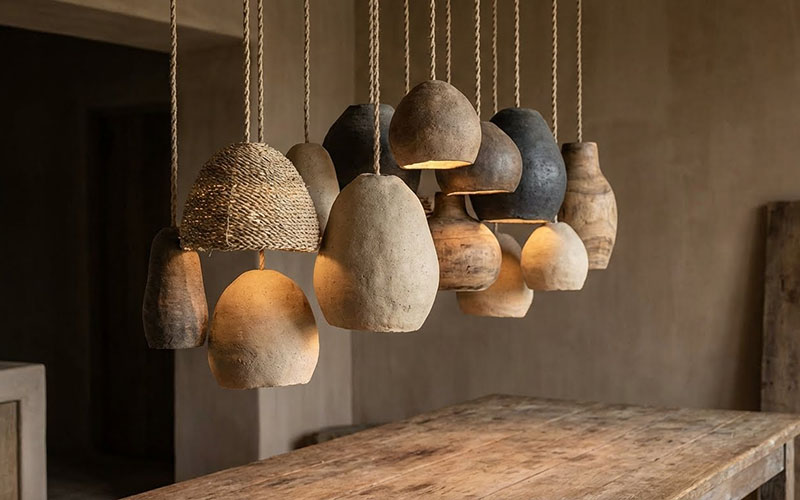
Pendant Lights with Organic Forms
Pendant lights are one of the most natural lighting choices for Wabi-Sabi interiors. Their presence feels calm yet intentional, especially when crafted from natural materials and shaped with soft, imperfect lines.
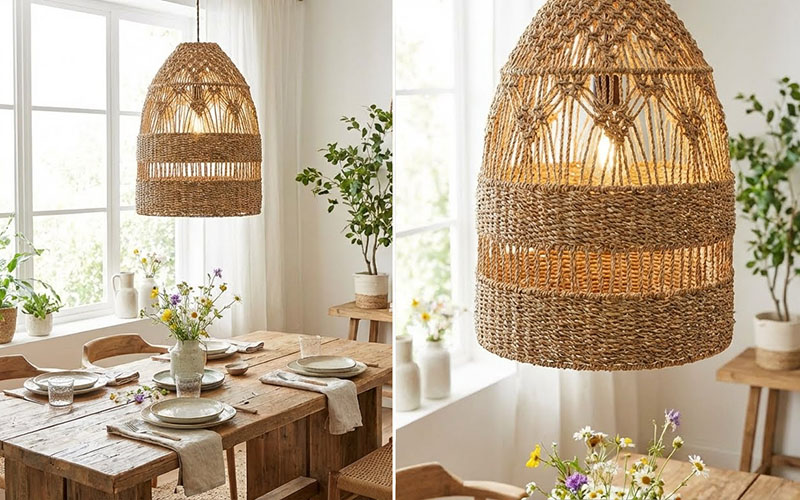
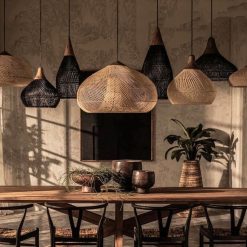
A rattan pendant light or bamboo pendant light gently diffuses light, creating warm, subtle shadows that add depth rather than harsh brightness. These handwoven pendants work beautifully over dining tables, kitchen islands, or as a quiet focal point in a living room.
In Wabi-Sabi design, pendant lights don’t need to match perfectly. Small variations in shape, texture, or weaving make rattan and bamboo pendants feel more authentic, relaxed, and true to the spirit of natural living.
Floor Lamps for Quiet Corners
Floor lamps play an important supporting role in Wabi-Sabi lighting. They are ideal for reading corners, living rooms, and bedrooms where a softer, lower light is preferred.
Look for floor lamps with linen or fabric shades, wooden bases, or organic silhouettes. These lamps create pools of light that feel intimate and personal, especially in the evening. Instead of lighting the entire room, they invite you into a specific moment or activity.
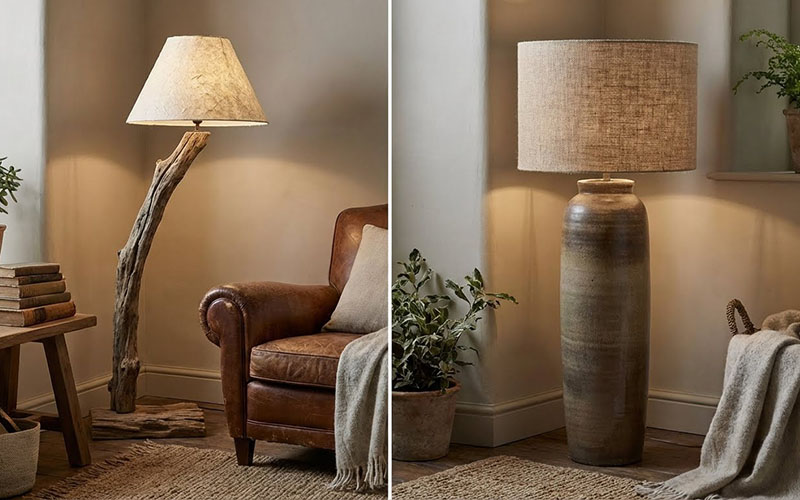
Table Lamps for Subtle Warmth
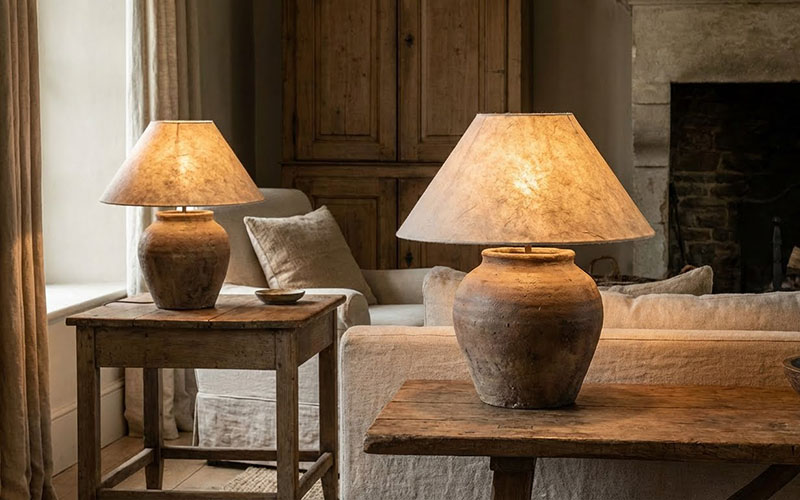
Table lamps are often overlooked, but they are essential in Wabi-Sabi interiors. A small lamp on a bedside table, console, or shelf adds warmth without overwhelming the space.
Ceramic, clay, or fabric-based lamps feel especially at home in Wabi-Sabi rooms. Their low height and soft glow help create a sense of comfort and calm, making them perfect for nighttime routines and slow evenings.
Wall Sconces for Gentle Accent Lighting
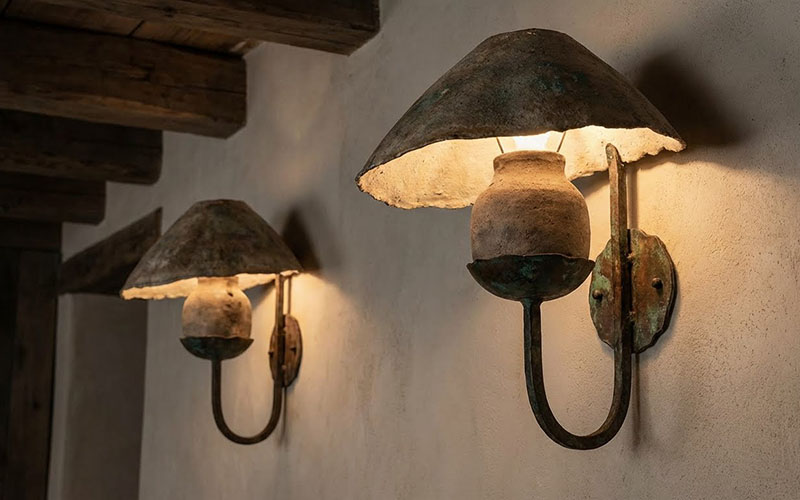
Wall sconces are a quiet alternative to overhead lighting. They provide soft side lighting that enhances texture and creates a soothing atmosphere.
In bedrooms, hallways, and bathrooms, wall sconces help reduce glare while adding visual interest. Upward or downward light directions work especially well, allowing light to wash gently across walls instead of shining directly into the room.
Wabi-Sabi Lighting Ideas by Room
Each room in a home has its own rhythm, and Wabi-Sabi lighting adapts to those differences while maintaining a consistent sense of calm.
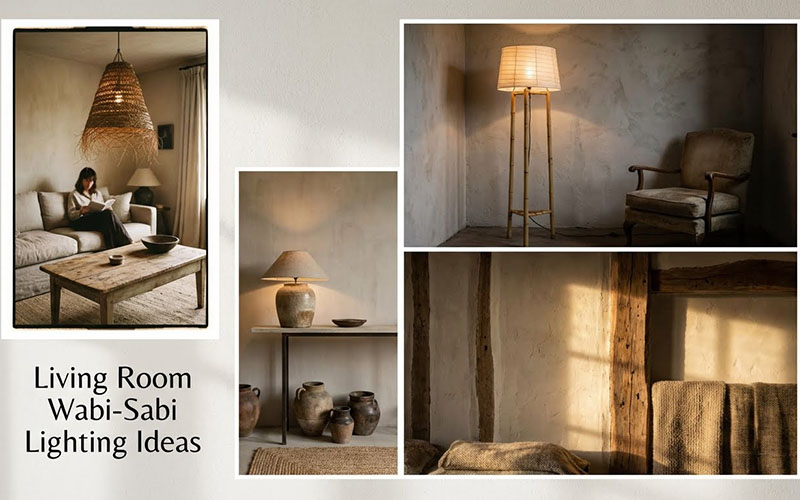
Living Room Wabi-Sabi Lighting Ideas
In the living room, lighting should encourage relaxation and conversation. A single pendant light can serve as a quiet focal point, while a floor lamp or table lamp adds softness in the evening.
Instead of lighting the entire space evenly, allow corners to remain slightly dim and let light interact with natural textures like wood, plaster, and woven fabrics. This layered yet minimal approach reflects some of the most thoughtful living room lighting ideas, creating a space that feels warm, calm, and authentically lived-in.
Dining Room Lighting That Feels Intimate
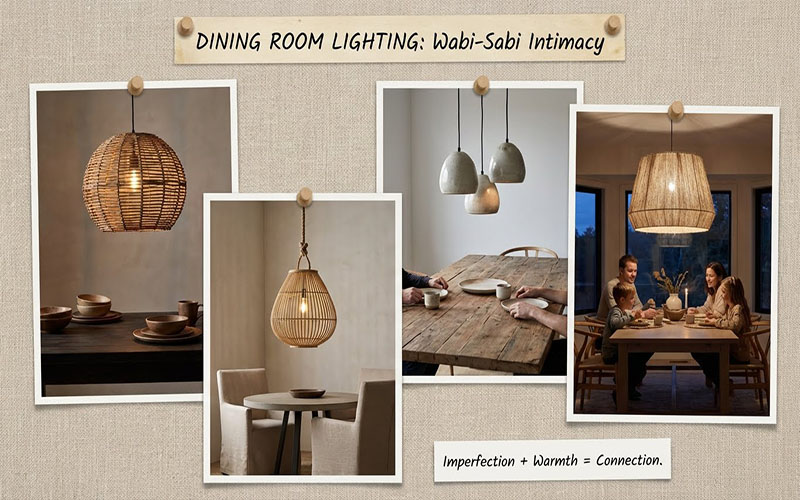
When it comes to dining room lighting ideas, Wabi-Sabi design offers a beautifully understated approach. A handwoven pendant centered above the dining table creates an intimate atmosphere, encouraging slower meals and more intentional moments together.
The light should hang low enough to visually anchor the table, yet remain soft to avoid glare. Imperfect shapes and natural materials add warmth and character, transforming the dining area into a space where people naturally want to linger.
Bedroom Wabi-Sabi Lighting Ideas
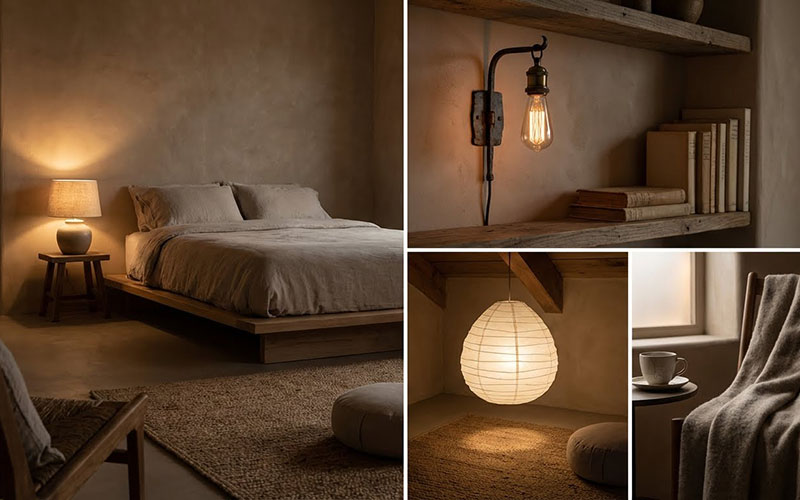
In a Wabi-Sabi bedroom, lighting should support rest and quiet evening routines. Harsh ceiling lights are often unnecessary and can feel disruptive in a space meant for slowing down.
Thoughtful bedroom lighting ideas focus on softer sources such as bedside table lamps, wall-mounted sconces, or gently glowing pendants. These layers of light create a calm, personal atmosphere that feels restful and comforting at night.
Rather than fully illuminating the room, the goal is to provide just enough light to create a sense of safety, warmth, and ease.
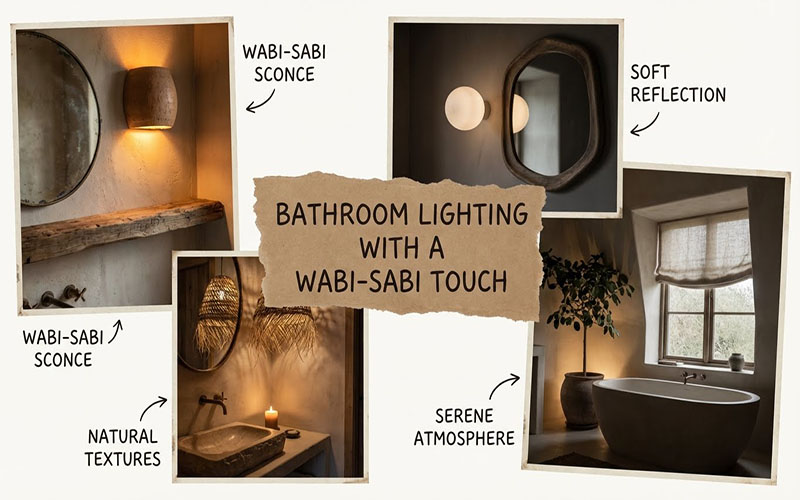
Bathroom Lighting with a Wabi-Sabi Touch
Even functional spaces like bathrooms can benefit from a softer, more intentional approach to lighting. When exploring bathroom lighting ideas, Wabi-Sabi design emphasizes warmth and balance rather than harsh brightness. Wall sconces with warm light help soften the space and reduce sharp reflections.
Natural textures, simple forms, and carefully layered lighting make the bathroom feel less clinical and more serene. The result is a space that feels calming and grounded, not purely practical.
Small Spaces and Quiet Corners
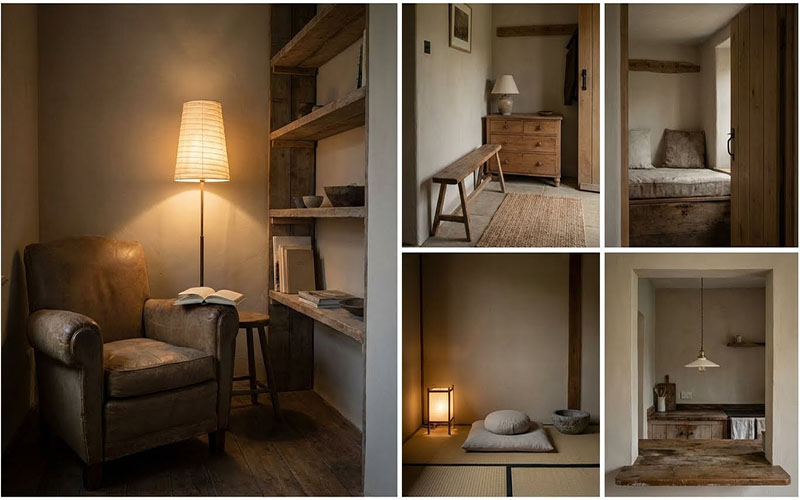
Wabi-Sabi lighting shines in small spaces. A single lamp in a reading nook, entryway, or meditation corner can completely transform how that area feels.
These small moments of light add warmth and intention throughout the home, reminding us that not every space needs to be fully lit to be meaningful.
Choosing the Right Bulb for Wabi-Sabi Lighting
Even the most beautiful light fixture can lose its charm if the bulb feels wrong. In Wabi-Sabi interiors, the quality of light matters just as much as the form of the lamp.
Wabi-Sabi lighting favors warmth over brightness. Light should feel soft and calming, never sharp or clinical. A warm glow helps slow the mind and makes spaces feel more intimate, especially in the evening.
Bulbs with a warmer color temperature create a gentle atmosphere that complements natural materials such as wood, bamboo, linen, and clay. This warmth enhances textures and allows shadows to exist naturally, which is essential to the Wabi-Sabi mood.
The light itself should feel steady and comfortable. Flickering or overly bright bulbs can feel distracting. Instead, choose bulbs that provide a consistent glow and allow the fixture to softly diffuse the light rather than expose it directly.
In Wabi-Sabi homes, lighting is often dimmer than in conventional interiors. This is intentional. Softer light encourages rest, reflection, and presence. It also helps different areas of the home feel distinct without overwhelming the senses.
When selecting bulbs, think less about how much light you need and more about how you want the space to feel once the sun goes down.

Common Lighting Mistakes That Break the Wabi-Sabi Mood
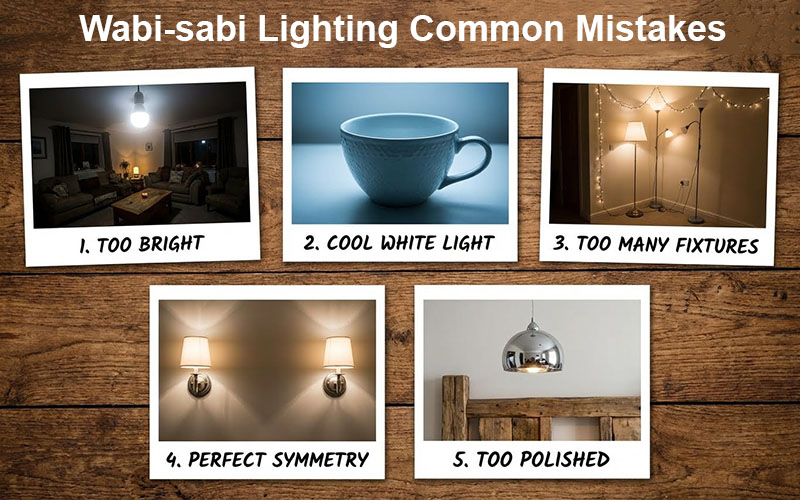
Wabi-Sabi lighting appears simple, but that simplicity can be easily disrupted by a few common mistakes. Avoiding these choices helps preserve the calm, natural atmosphere that defines this style.
1. Using Lighting That Is Too Bright
One of the most common mistakes is choosing lighting that is overly bright. Strong overhead lights flatten textures and remove the sense of depth that Wabi-Sabi interiors rely on. When everything is evenly illuminated, the space can feel harsh and restless rather than calm.
2. Relying on Cool or Neutral White Light
Cool or neutral white light may feel clean and modern, but it often makes a Wabi-Sabi space feel cold or impersonal. Warm light is essential for creating emotional comfort and a sense of balance within the room.
3. Overdecorating with Too Many Light Fixtures
Adding too many light sources can quickly break the mood. Wabi-Sabi interiors benefit from restraint. When multiple fixtures compete for attention, the space feels cluttered and visually noisy. Fewer, thoughtfully chosen lights create a more meaningful environment.
4. Choosing Perfect Symmetry
While balance is important, strict symmetry can feel rigid. Wabi-Sabi lighting allows for subtle variations in height, placement, or form, helping the space feel more natural, relaxed, and human.
5. Selecting Fixtures That Look Too Polished or Glossy
Highly polished or glossy fixtures often reflect light too sharply, disrupting the organic quality of Wabi-Sabi design. Matte, textured, or naturally finished materials keep the light soft and grounded.
By avoiding these mistakes, lighting becomes a quiet support for the space rather than something that pulls attention away from it.
How to Layer Lighting the Wabi-Sabi Way
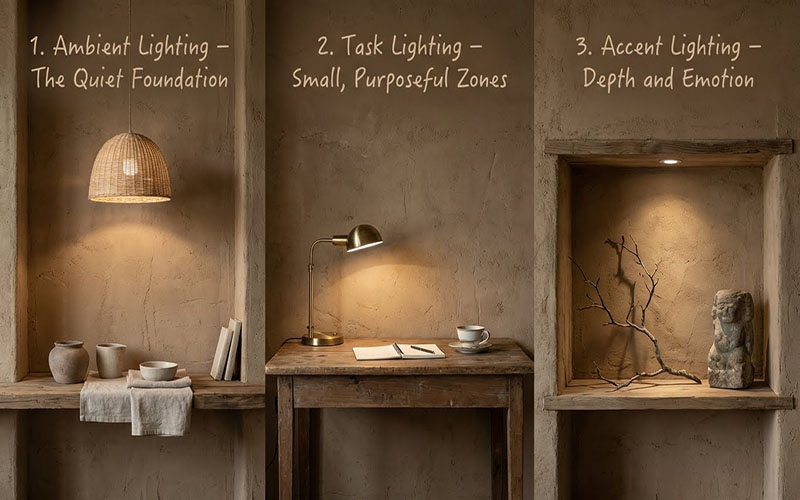
Layered lighting is often discussed in interior design, but in Wabi-Sabi spaces, layering is done with restraint and intention. The goal isn’t to add more light, but to create a natural rhythm of brightness and shadow throughout the room.
1. Ambient Lighting – The Quiet Foundation
Ambient lighting forms the base layer and serves as the main source of illumination. This is often a pendant light or a simple ceiling-mounted fixture. In Wabi-Sabi interiors, ambient light should feel soft and understated, offering just enough brightness to make the space feel safe and comfortable.
2. Task Lighting – Small, Purposeful Zones
Task lighting supports specific activities such as reading, working, or winding down. Floor lamps, bedside lamps, or focused lights near a desk work best when they feel personal and localized. Instead of lighting the entire room, task lighting creates small, intimate zones of light.
3. Accent Lighting – Depth and Emotion
Accent lighting is the quietest and most expressive layer. A small table lamp on a shelf or a wall sconce gently washing light across a textured surface adds warmth and depth without drawing attention to itself. This layer enhances atmosphere rather than function.
In Wabi-Sabi homes, these layers remain subtle. Not every room needs all three. Sometimes, a single well-placed light is enough. What matters most is that each light has a clear purpose and contributes to the overall calm of the space.
Styling Tips to Make Wabi-Sabi Lighting Feel Authentic
Lighting alone does not create a Wabi-Sabi atmosphere. How it is styled within the space makes all the difference.
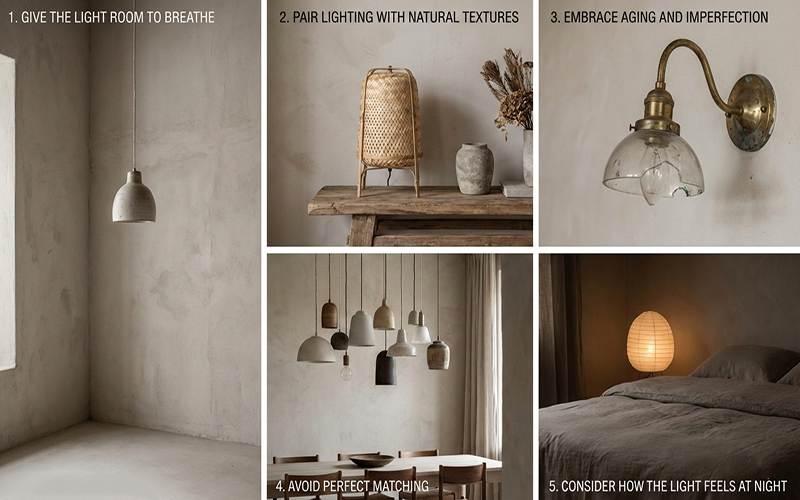
1. Give the Light Room to Breathe
Avoid crowding light fixtures with too many decorative objects. Open space around a lamp or pendant allows its shape and soft glow to feel intentional, calm, and quietly present.
2. Pair Lighting with Natural Textures
Wabi-Sabi lighting feels most grounded when surrounded by natural materials. Linen curtains, wooden furniture, clay vessels, and woven elements help soften the light and enhance its warmth.
3. Embrace Aging and Imperfection
Signs of wear, handmade textures, or slightly weathered surfaces add depth and authenticity. Wabi-Sabi lighting becomes more beautiful over time, not less.
4. Avoid Perfect Matching
Resist the urge to coordinate everything precisely. A Wabi-Sabi space feels collected rather than styled. Lighting should feel as though it naturally belongs, not as if it was chosen to impress.
5. Consider How the Light Feels at Night
Wabi-Sabi lighting is experienced most fully in the evening. Pay attention to how the space feels after dark, when the home grows quieter and the light becomes softer, warmer, and more intimate.
Why Handcrafted Woven Lights Feel Right in Wabi-Sabi Homes
Handcrafted lighting naturally aligns with the Wabi-Sabi philosophy. Each piece carries subtle variations that make it unique, from the weave of natural fibers to the way light filters through the material.
Woven lights made from bamboo or rattan soften illumination and create gentle shadows that add depth to a room. Their organic textures feel warm and grounding, especially in spaces designed for rest and connection.
These lights do not chase perfection. Instead, they celebrate the human touch behind their creation. Over time, natural materials develop character, allowing the lighting to age gracefully alongside the home.
In Wabi-Sabi interiors, this sense of authenticity matters more than trends. Handcrafted lighting feels timeless because it is rooted in material, process, and emotion rather than decoration.
If you’re drawn to this quiet, handcrafted beauty, explore our collection of bamboo and rattan woven lights designed to bring warmth and calm into Wabi-Sabi homes.
Rattan Pendant Light
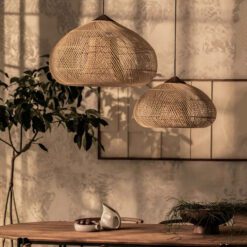
Vintage Rattan Pendant Light Fixture High Quality Lamp Shades
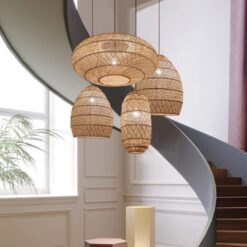
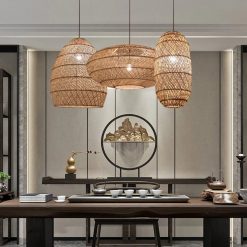
Rattan Pendant Light
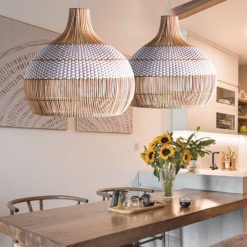
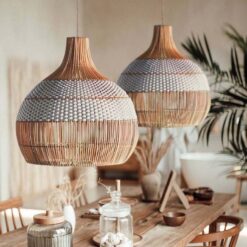
Rattan Pendant Light
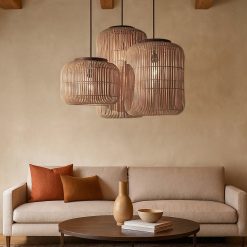
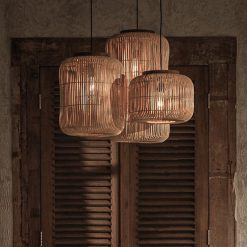
Rattan Pendant Light
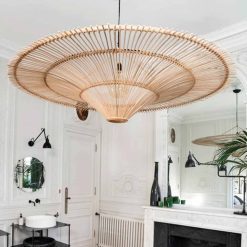

Rattan Pendant Light
Final Thoughts: Lighting as a Quiet Emotion
Wabi-Sabi lighting is not about making a statement. It is about creating a feeling.
When chosen with care, lighting becomes a quiet presence that shapes how a home feels in the evening. It softens the edges of the day, encourages rest, and makes ordinary moments feel meaningful.
A Wabi-Sabi home does not need to be bright to be beautiful. It needs to feel calm, warm, and lived-in. Lighting plays a central role in achieving that balance.
By embracing softness, natural materials, and intentional simplicity, Wabi-Sabi lighting transforms a house into a place of comfort and quiet beauty.
Frequently Asked Questions About Wabi-Sabi Lighting
Soft, warm lighting works best in Wabi-Sabi interiors. Fixtures made from natural materials such as bamboo, rattan, wood, linen, or clay help diffuse light gently and create a calm, grounded atmosphere.
Yes. Wabi-Sabi lighting works especially well in modern homes by softening clean lines and adding warmth and texture. It helps modern spaces feel more relaxed and emotionally comfortable.
Warm light is essential for Wabi-Sabi interiors. A soft, warm glow enhances natural textures and creates an intimate, calming mood, especially in the evening.
Yes. Wabi-Sabi lighting is ideal for small spaces. A single well-placed lamp or pendant can create a strong sense of atmosphere without overwhelming the room.
Not always. Many Wabi-Sabi spaces rely on pendants, wall sconces, and lamps instead of bright ceiling lights. If a ceiling light is used, it should feel soft and blend naturally into the space.
No. Wabi-Sabi lighting embraces subtle variation. Slight differences in shape, texture, or placement make a space feel more natural and authentic rather than rigid or overly styled.
You may also like:



Unlock VIP Perks
Join as a priority member to receive gifts and be the first to access exclusive deals, our newest collections, and more...
Read more articles
25+ Best Outdoor Bamboo Pendant Lights for a Warm, Natural & Inviting Space
Outdoor bamboo pendant lighting transforms a pergola, patio, or covered garden dining space from a [...]
Jun
11 Best Organic Modern Rope Lighting Ideas for a Warm, Inviting Space
Wicker, hemp rope, jute, and water hyacinth bring the most authentically textural and the most [...]
Jun
25+ Trending Organic Modern Rattan Lights for a Cozy Living Space
The most beautifully designed organic modern interiors today are built not on safe pendant choices [...]
Jun
8 Organic Modern Rattan Dome Pendant Lights for a Soft, Natural Interior
The dome form is rattan’s most naturally generous and most softly organic pendant silhouette – [...]
Jun
9 Organic Modern Rattan Chandeliers for a Soft, Natural Interior
A rattan chandelier in an organic modern interior creates the most complete expression of what [...]
Jun
11 Organic Modern Brown Rattan Lights for a Warm, Earthy Home
Brown rattan brings the most warmly grounded and most gently earthy pendant tone to an [...]
May
15+ Organic Modern Black Rattan Lights for a Warm, Bold Home
Black rattan in an organic modern interior creates a precisely beautiful design tension – the [...]
May
12 Organic Modern Beige Rattan Lights for a Natural Interior
Beige rattan is the pendant material that organic modern design was made for – its [...]
May
25+ Organic Modern Bamboo Lights for a Soft, Natural Interior
Organic modern design lives at the most beautiful intersection of clean contemporary form and warm [...]
May
8 Best Organic Modern Wood Pendant Lights for a Warm, Natural Home
Wood pendant lighting brings a quality to an organic modern interior that no softer natural [...]
May
8 Modern Rustic Wood Lighting for a Warm, Architectural Interior
Wood pendant lighting belongs in a modern rustic interior the way exposed timber belongs in [...]
May
12 Modern Rustic Wicker Rope Pendant Lights for a Warm, Textural Interior
In a modern rustic interior built around exposed timber beams, rough stone walls, worn leather [...]
May
Explore our collections
Rattan Pendant Light
95 Products
Bamboo Pendant Light
38 Products
Fabric Pendant Light
41 Products
Wood Pendant Light
7 Products
Rope Pendant Light
14 Products
Rattan Wall Sconce
6 Products
Rattan Table Lamp
6 Products
Rattan Floor Lamp
9 Products