
Natural Materials & Craftsmanship
Rattan vs Bamboo: Which Is Better? Full Comparison Guide
Rattan and bamboo are two of the most iconic natural materials used in handcrafted home décor – especially in pendant lights, baskets, wall décor, and furniture. At first glance, they seem almost identical: both are long, woody, and associated with sustainable, tropical-inspired design. Because of this visual similarity, many homeowners wonder:
- Is bamboo and rattan the same?
- Which one is stronger?
- What material is best for lighting and furniture?
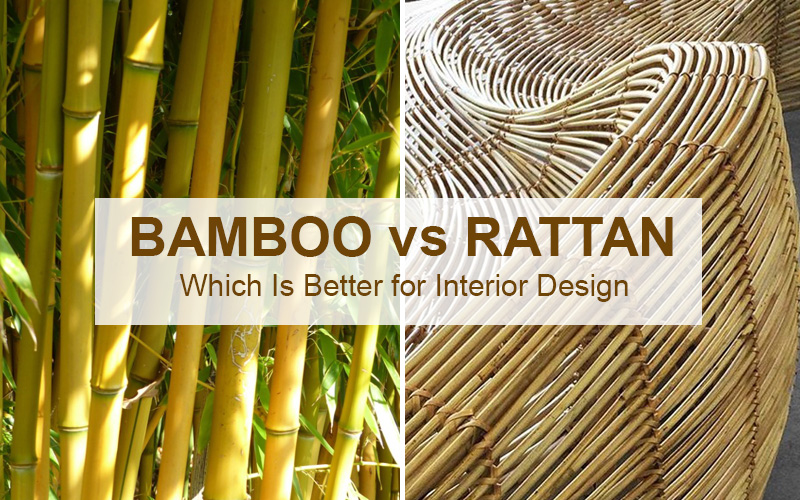
Even though rattan and bamboo come from the same tropical regions and are often used together in traditional craftsmanship, they are completely different materials with different structures, performance, and ideal applications.
Understanding these differences is essential for choosing the right products for your home – whether you’re shopping for pendant lights, chairs, storage baskets, or decorative pieces.
This guide breaks down everything you need to know: from how each material grows to the key characteristics, pros and cons, and which one works best for different types of interior design.
A Quick Comparison: Rattan vs Bamboo
Before diving deep into the details of these natural materials, here’s a simple overview to help you quickly understand how rattan and bamboo differ:
Rattan vs Bamboo Comparison Table
| Feature | Rattan | Bamboo |
|---|---|---|
| Material Type | A solid, flexible climbing vine | A hollow, rigid grass |
| Structure | Solid core, fibrous, bendable | Hollow tube, strong but stiff |
| Flexibility | Highly flexible | Very low flexibility |
| Strength | Strong + flexible → ideal for weaving | Strong but brittle under bending |
| Appearance | Smooth, warm-toned, natural patterns | Straight, smooth, uniform nodes |
| Uses | Lighting, baskets, chairs, woven décor | Poles, frames, flooring, kitchenware |
| Feel in Design | Soft, organic, artisanal | Clean, modern, minimal |
| Durability Indoors | Excellent | Excellent |
| Durability Outdoors | Poor (natural rattan is best for indoor use) | More durable if used as whole; split bamboo absorbs moisture quickly and performs worse. |
| Eco-Friendliness | Fast-growing, biodegradable | Extremely fast-growing, highly renewable |
| Cost | Usually slightly higher (more labor-intensive) | Often more affordable |
Key Takeaway
- Rattan = flexible and perfect for weaving → ideal for pendant lights, baskets, and curved furniture.
- Bamboo = strong but rigid → ideal for structural frames, poles, and straight-line designs.
Both are highly sustainable, but each excels in different applications depending on strength, flexibility, and aesthetic goals.
Key Points About Rattan
Rattan is a solid, flexible climbing vine that grows throughout the tropical forests of Southeast Asia – especially in Indonesia, Vietnam, the Philippines, and Malaysia. Unlike bamboo, which grows straight upward as a type of tall grass, rattan grows by climbing up surrounding trees, creating long, rope-like canes that are incredibly strong yet naturally bendable.
Why Rattan Is Unique
Rattan is prized in interior design and handcrafted décor because it offers a rare combination of:
- Strength and durability (solid core, long fibers)
- High flexibility (perfect for curved shapes)
- Lightweight structure (easy to carry and install)
- Natural aesthetic with warm, organic lines
- Eco-friendly growth (fast-growing, regenerates quickly)
These qualities make rattan one of the best materials for:
- Woven pendant lights
- Baskets and storage décor
- Chairs and lounge furniture
- Mirrors with woven frames
- Wall art and décor pieces
- Handmade accessories and accents
How Rattan Is Processed
After harvesting, rattan is:
- Cut into long canes
- Cleaned and sun-dried
- Split or peeled into thinner strips (called rattan peel)
- Used for weaving, binding, or making solid frames
The outer skin becomes cane webbing or thin weaving strips, while the solid inner core is used for structural parts.
Why Rattan Works Perfectly in Home Décor
Because rattan bends elegantly without breaking, artisans can create:
- Rounded lamp shades
- Intricate weave patterns
- Spiral, dome, drum, or bell-shaped lights
- Organic, handcrafted details that feel warm and natural
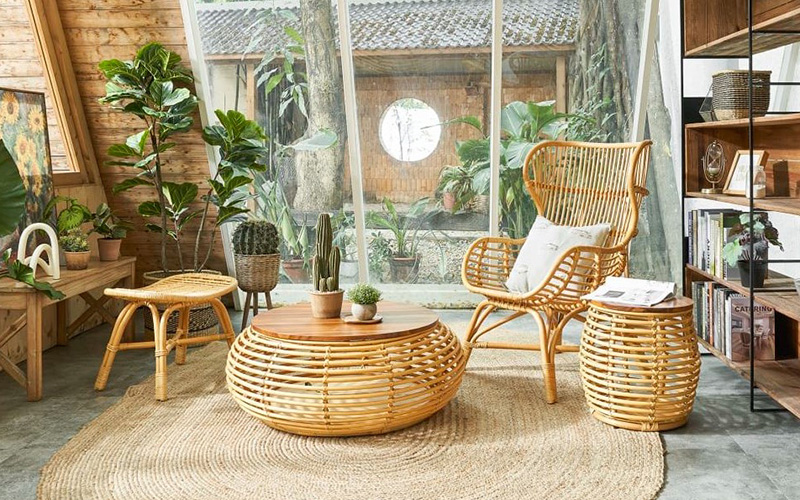
This is why rattan pendant lights are one of the most popular choices in modern American homes – in Boho, Coastal, Japandi, Scandinavian, and Wabi-Sabi interiors.
Key Points About Bamboo
Bamboo is a hollow, fast-growing grass known for its rigid, upright structure and distinctive nodes. It is one of the fastest-growing plants in the world – some species grow up to 1 meter per day – making it a highly renewable, environmentally friendly resource.
Unlike rattan, bamboo is not a vine and does not bend easily. Its hollow tube and stiff walls give it excellent compressive strength but almost no flexibility, which defines the types of products it is best suited for.
Key Characteristics of Bamboo
- Hollow cylindrical structure
- Strong, hard, and naturally rigid
- Lightweight but sturdy
- Distinct nodes spaced along the culm
- Smooth, minimal, modern appearance
- Extremely fast growth → highly sustainable
Common Uses of Bamboo
Because bamboo is rigid and strong, it is widely used for:
- Furniture frames and legs
- Structural poles
- Flooring and wall panels
- Kitchenware (cutting boards, utensils)
- Planters and garden décor
- Eco-friendly household products
Bamboo can be split into thin strips, but even then, it remains much less flexible than rattan, so it is not ideal for weaving large, curved objects like pendant lamps.
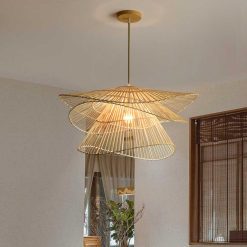
The outer bamboo layer can be split into thin, durable, and flexible strips that are perfect for weaving bamboo pendant lights, lamp shades, baskets, and decorative panels. This outer skin is naturally tougher and smoother than the inner core, allowing artisans to create lightweight, elegant, and stable woven designs.
Bamboo Pendant Light
Bamboo Sinnerlig Pendant Lamp Wicker Lantern for Cozy Interiors
Bamboo Pendant Light
Bamboo Pendant Light
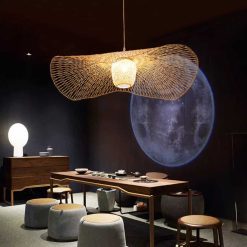
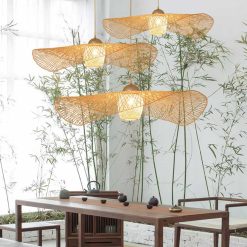
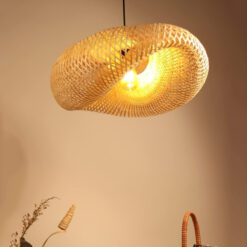
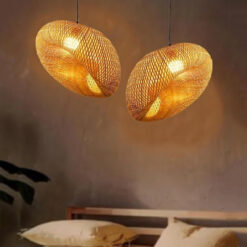
Bamboo Pendant Light
Creative Lotus Bamboo Pendant Light Fixture for Natural Interiors
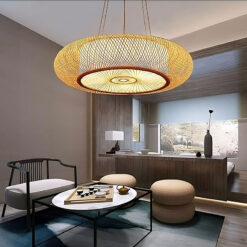
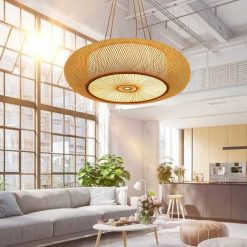
Bamboo Pendant Light
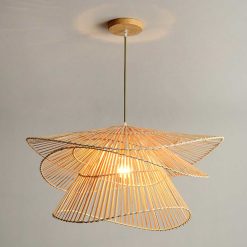
Rattan Pendant Light
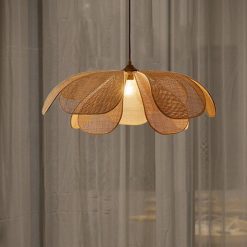
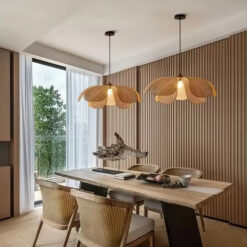
Rattan Flower Pendant Light – Woven Petal Ceiling Lamp for Dining Room
Rattan vs Bamboo: Key Differences Explained
Although rattan and bamboo are often mistaken for each other, they differ in almost every structural and functional aspect. Understanding these differences helps homeowners choose the right material for lighting, furniture, and home décor.
1. Structure & Composition
Rattan: Solid Core, Fibrous, and Flexible
Rattan has a solid center and long fibers that give it both strength and elasticity. This allows artisans to bend, curve, and weave rattan into detailed shapes without it cracking.
Bamboo: Hollow, Hard, and Rigid
Bamboo is a hollow cylindrical grass (known as a culm) with evenly spaced nodes along its length. This hollow structure provides excellent compressive strength, making bamboo strong in straight-line applications – but it also means bamboo has very low flexibility. When forced to bend, bamboo is far more likely to crack or split compared to rattan.
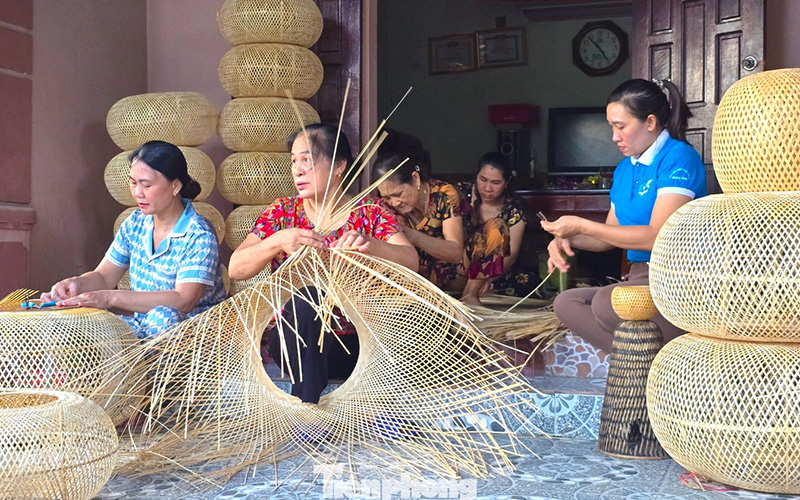
Despite its rigidity, bamboo can still be used to create decorative items. However, this requires skilled craftsmanship, where artisans carefully process and split the outer layer of bamboo into thin, flat, durable strips. These strips can then be woven into wall décor, trays, partitions, lampshades with straight-line patterns, and other minimalistic pieces. The work is highly labor-intensive and requires precise handcrafting to ensure each strip is smooth, strong, and consistent.
→ Verdict:
- Rattan wins for weaving, bending, shaping, and intricate artisanal craftsmanship.
- Bamboo wins for straight, structural, architectural, or load-bearing elements – and for decorative pieces that rely on thin, skillfully crafted bamboo strips rather than curves.
2. Strength & Durability
| Characteristic | Rattan | Bamboo |
|---|---|---|
| Strength Type | Strong yet flexible | Strong under compression |
| Performance Under Pressure | Can handle tension and bending | Highly resistant to straight-line pressure |
| Weakness / Limitation | — | Prone to splitting when bent |
| Best Durability Use | Durable indoors for decades | Durable for poles, flooring, and straight structures |
| Best Applications | Works well in lighting and furniture with curves | Ideal for straight, structural elements like poles, flooring, and frames |
→ Verdict:
- Choose rattan for curved designs and woven textures.
- Choose bamboo for rigid structures like legs, beams, and frames.
3. Flexibility
This is where the difference becomes extremely clear.
Rattan
- Can bend into arcs, domes, spirals, or circular shapes
- Ideal for lampshades, baskets, and curved chair backs
- Allows complex patterns and detailed weaving
Bamboo
- Nearly zero flexibility
- Best for straight, minimalistic designs
- Not suitable for curved or rounded shapes
→ Verdict: Rattan is significantly more flexible, making it far more suitable for woven décor such as pendant lights.
4. Appearance & Aesthetic Style
Rattan Look
- Warm, organic, natural texture
- Unique fiber variations
- Soft, handcrafted aesthetic
- Complements Boho, Coastal, Japandi, Scandinavian, Wabi-Sabi
Bamboo Look
- Clean, straight, smooth surface
- Distinct segmented nodes
- Minimalistic and modern
- Popular in Zen, Asian-inspired, eco-modern design
→ Verdict:
- Choose rattan for warmth and artisanal charm.
- Choose bamboo for clean lines and minimalist interiors.
5. Indoor vs Outdoor Performance
Rattan (Natural)
- Strong yet flexible
- Handles tension and repeated bending well
- Durable indoors for decades
- Excellent for lighting, seating, and furniture with flowing curves
Bamboo
- Very strong under compression
- Highly resistant to straight, vertical loading
- Whole bamboo culms are stiff and best for straight, structural elements
- Split bamboo can be crafted into thin strips that allow for gentle curves and detailed weaving when handled by skilled artisans, though it still isn’t as flexible as rattan.
→ Verdict:
- Choose whole bamboo for rigid, load-bearing parts like legs, beams, and frames, and split bamboo for fine curved details when crafted carefully.
- Choose rattan for most curved designs, woven textures, and pieces that need to flex slightly without breaking.
6. Environmental Impact
Both are eco-friendly, but with different advantages:
Rattan
- Grows quickly in tropical forests
- Encourages forest preservation since it relies on trees
- 100% biodegradable
Bamboo
- One of the fastest-growing plants on Earth
- Regenerates without replanting
- Minimal water required
→ Verdict:
- Both win – rattan and bamboo are excellent sustainable materials.
7. Cost & Availability
Rattan
- Usually slightly higher cost
- Requires more craftsmanship and manual processing
- More labor-intensive weaving
Bamboo
- Generally more affordable
- Easier to source and process for straight forms
Which One Is Better for Home Décor?
Rattan and bamboo each have their strengths, but the “best” material depends largely on what you want to decorate or furnish.
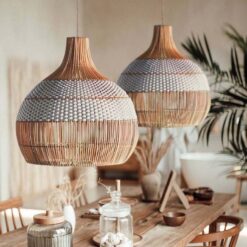
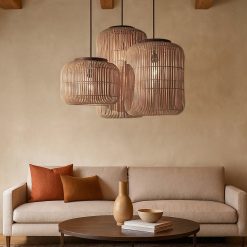
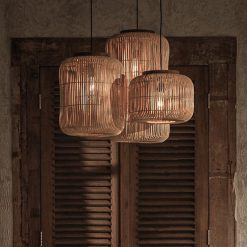
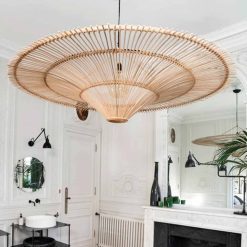
1. Best for Pendant Lights: Rattan
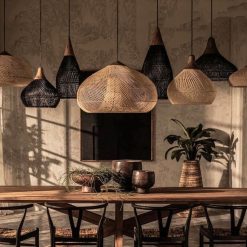
Rattan is the clear winner for lighting because it can be bent, woven, and shaped into:
- Dome shades
- Bell shades
- Open-weave designs
- Spiral and curved patterns
- Natural, airy forms that soften the light beautifully
This flexibility gives rattan pendant lights a warm, handcrafted aesthetic that you simply cannot achieve with bamboo.
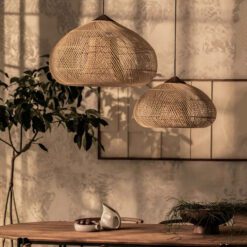
Rattan Pendant Light
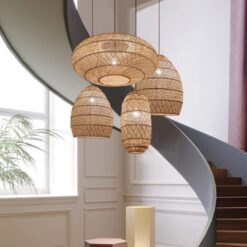
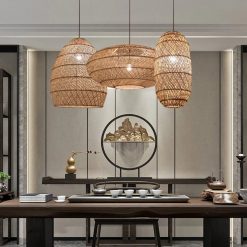
Rattan Pendant Light
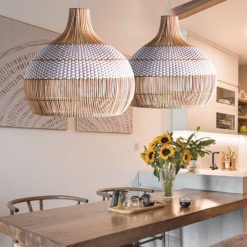
Rattan Pendant Light
Rattan Pendant Light
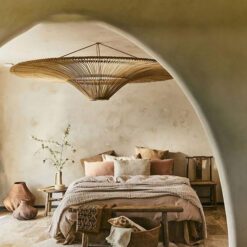
Rattan Pendant Light
2. Best for Furniture Frames: Bamboo
Bamboo’s rigidity makes it ideal for:
- Chairs with straight frames
- Table legs
- Stools
- Bed frames
- Minimalist shelving
Bamboo furniture tends to look clean, modern, and structured.
3. Best for Baskets & Storage Décor: Rattan
Because rattan peel and rattan core are highly flexible:
- Baskets
- Trays
- Magazine holders
- Plant stands
- Wall décor
…all benefit from rattan’s soft, natural weave.
4. Best for Wall Panels & Architectural Features: Bamboo
Bamboo can be split into thin, flat strips for:
- Wall paneling
- Screens
- Room dividers
- Flooring
These applications rely on bamboo’s hardness and straight grain.
5. Best for Organic Home Aesthetics: Rattan
If you want a space that feels:
- Calm
- Warm
- Handcrafted
- Nature-inspired
… then rattan is the ideal choice. It blends beautifully with Boho, Wabi-Sabi, Japandi, Scandinavian, and Modern Rustic interiors.
6. Best for Minimalistic or Zen-Inspired Interiors: Bamboo
Bamboo complements homes that prefer:
- Straight lines
- Clean surfaces
- Minimal design
Its smooth, simple form works well in Asian-inspired interiors.
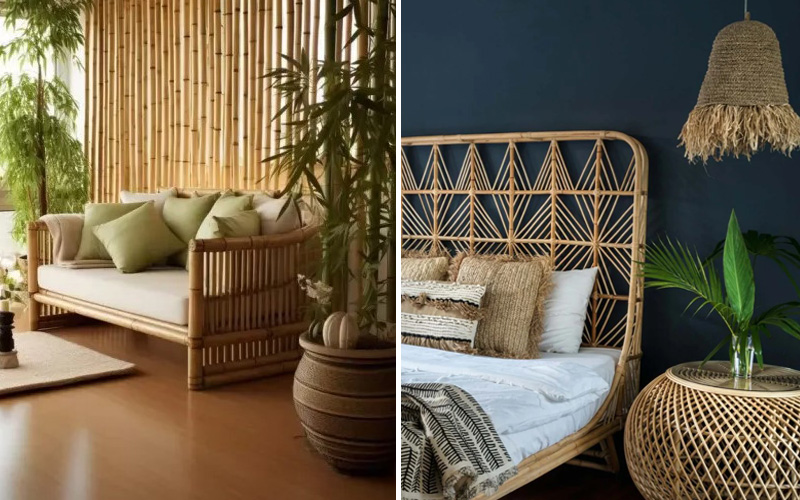
When to Choose Rattan vs When to Choose Bamboo
Choosing between rattan and bamboo becomes very simple once you understand what each material naturally excels at. This section helps homeowners make the right decision based on style, function, and environment.
1. Choose Rattan If You Want…
✔ Soft, Organic, and Handcrafted Aesthetics
Rattan is perfect when your goal is to create a warm, inviting atmosphere with a handmade feel. It blends seamlessly with:
- Boho
- Coastal
- Japandi
- Scandinavian
- Wabi-Sabi
- Farmhouse Natural
✔ Curved or Rounded Designs
Because rattan bends easily, it is the best material for:
- Dome pendant lights
- Bell-shaped or cylindrical shades
- Rounded chair backs
- Spiral or open-weave patterns
✔ Lightweight Yet Durable Home Décor
Rattan products are strong but very light, making them ideal for:
- Hanging lamps
- Wall art
- Baskets and organizers
✔ Artisanal, Texture-Rich Décor
Rattan peel, wicker patterns, and handwoven details add depth and character to any room.
✔ Indoor, Stable Environments
Rattan lasts decades indoors, especially when kept away from moisture and direct sunlight.
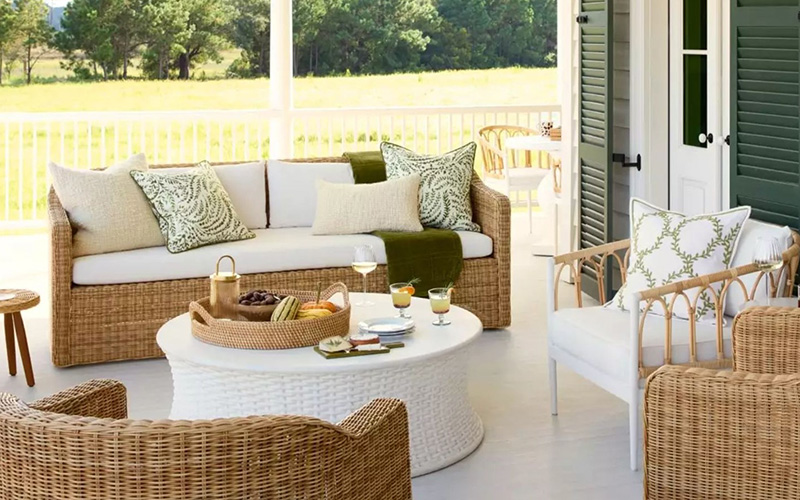
2. Choose Bamboo If You Want…
✔ Minimalist, Clean-Lined Aesthetics
Bamboo has a naturally smooth, modern appearance, perfect for:
- Zen interiors
- Asian-inspired spaces
- Minimalist or eco-modern homes
✔ Straight, Structural Elements
Because bamboo is rigid, it’s ideal for:
- Chair frames
- Stools
- Table legs
- Bed frames
- Shelving and storage units
✔ Hard Surfaces or Architectural Details
Bamboo shines in:
- Flooring
- Wall panels
- Screens and partitions
- Cabinet doors
✔ Eco-Friendly Products with Strong Sustainability Credentials
Bamboo regrows extremely fast and is one of the most renewable natural materials in the world.
✔ Slightly Better Performance in Semi-Outdoor Settings
Although still not recommended for full outdoor use, bamboo performs better than natural rattan in:
- Covered patios
- Roofed balconies
- Sunrooms
Conclusion
Rattan and bamboo may look similar at first glance, but they serve completely different purposes in interior design and handcrafted décor.
- Choose Rattan if you want flexible, woven, and organic pieces such as pendant lights, baskets, and artisanal décor.
- Choose Bamboo if you need straight, rigid, and minimalist forms like frames, panels, and architectural features.
Both materials are:
- Sustainable
- Natural
- Beautiful
- And timeless
…but their structure, flexibility, and crafting potential differ significantly.
Why Rattan Is the Best Choice for Lighting
When it comes to pendant lights – especially handcrafted woven shades – rattan is unbeatable. Its bendability, warmth, and natural beauty make it the preferred material in modern American homes.
If you’re decorating a living room, kitchen island, dining room, or bedroom, rattan lighting adds the perfect balance of:
- Texture
- Softness
- Natural elegance
- And artisanal charm
Ready to Style Your Home With Natural Lighting?
Explore handcrafted rattan pendant lights made by skilled Vietnamese artisans at VietShopDesign – sustainably made, beautifully woven, and designed to bring warmth and character to any space.
Read more:
- What Is Hemp Rope and How Is Hemp Rope Made?
- What Is Jute Rope, What Is Jute Twine? Uses & Benefits
- What Is Wicker? A Complete Guide to the Craft, Materials & Uses
- What Is PE Wicker? Full Guide to Materials, Benefits & Uses

Read more articles
25+ Bedroom Floor Lamp Ideas to Brighten & Elevate Your Space
Bedroom floor lamp ideas offer one of the simplest and most stylish ways to elevate [...]
Oct
Best Laundry Room Lighting Ideas for a Brighter, Cleaner Space
Laundry Room Lighting Ideas focus on turning one of the hardest-working spaces in your home [...]
Sep
20+ Guest Bedroom Lighting Ideas for a Warm, Welcoming Space
Guest bedroom lighting ideas focus on creating a warm, welcoming, and comfortable environment for anyone [...]
Sep
Best Study Room Lighting Ideas for a Bright and Focused Space
A well-designed study room is more than just a desk and a chair – it’s [...]
Sep
20+ Master Bedroom Lighting Ideas for a Modern, Elegant Space
Master bedroom lighting ideas go far beyond simply choosing a ceiling fixture. A master bedroom [...]
Sep
10 Home Office Lighting Ideas for a Bright, Productive Workspace
The home office has become one of the most important rooms in modern living. Whether [...]
Aug
How to Fix Eye Strain from Bad Home Office Lighting
You take screen breaks. You’ve adjusted your monitor brightness. You even bought blue-light glasses. And [...]
Aug
25+ Bedside Pendant Light Ideas for a Stylish Modern Bedroom
Bedside Pendant Light Ideas are becoming increasingly popular as homeowners look for smarter, more stylish [...]
Aug
Best Entryway Lighting Ideas to Brighten Your Entry Space
Your entryway sets the tone for your entire home – it’s the first space guests [...]
Aug
30+ Bedroom Pendant Light Ideas for a Stylish, Well-Lit Retreat
Bedroom Pendant Light Ideas can instantly elevate the atmosphere of your room, adding height, character, [...]
Aug
25+ Bedroom Ceiling Light Ideas to Transform Your Room
Bedroom Ceiling Light Ideas play a key role in creating a space that feels bright, [...]
Aug
How to Master Bedroom Lighting Ideas Like a Pro
Finding the right bedroom lighting ideas can completely transform the mood, comfort, and functionality of [...]
Jul
Explore our collections
Rattan Pendant Light
100 Products
Bamboo Pendant Light
39 Products
Fabric Pendant Light
44 Products
Wood Pendant Light
9 Products
Rope Pendant Light
18 Products
Rattan Wall Sconce
6 Products
Rattan Table Lamp
9 Products
Rattan Floor Lamp
9 Products