
Interior Design Styles
Biophilic Interior Design: Bringing Nature Into Modern Living
In today’s fast-paced and urbanized world, many people feel increasingly disconnected from nature. Biophilic interior design – sometimes referred to as biophilic design interior or biophilia interior – is an innovative approach that seeks to restore this connection by integrating natural elements into the spaces where we live and work.
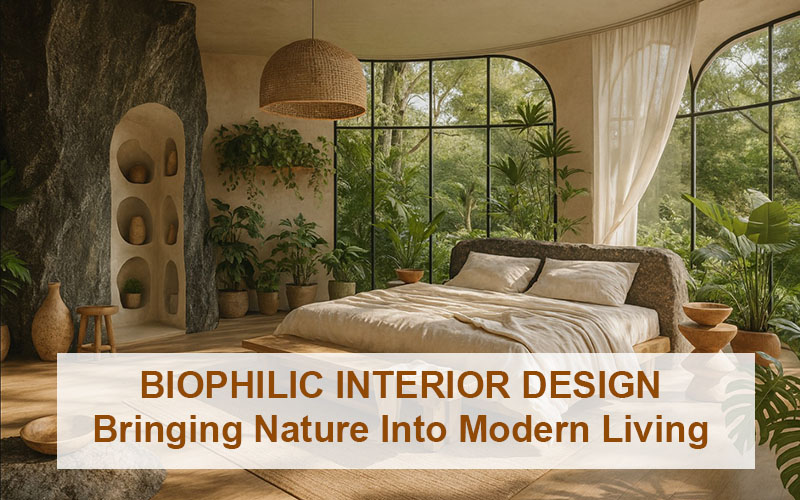
Unlike traditional interior styles that focus purely on aesthetics or functionality, interior biophilic design emphasizes the human need to feel close to nature. Whether through natural light, organic materials, or greenery, the goal is to create interiors that not only look beautiful but also improve health, productivity, and emotional well-being.
One of the reasons biophilic interior design is gaining popularity is its versatility. It works just as well in modern apartments as it does in large residential homes, and even in corporate offices or hospitality spaces. Many homeowners are embracing biophilia interior as part of their lifestyle, blending sustainable living with cozy, nature-inspired comfort.
Today, leading biophilic interior designers are helping families, businesses, and organizations transform their spaces into havens of calm and creativity. From simple biophilia home decor touches like adding plants and wooden textures, to large-scale redesigns of entire office buildings, the possibilities are endless.
Origins and Concept of Biophilic Design
The term “biophilia” was first popularized by biologist E.O. Wilson in the 1980s, who described it as “the innate human tendency to seek connections with nature and other forms of life.” Building on this idea, architects and interior designers began developing what is now known as the biophilic interior design concept.
At its core, biophilic design interiors focus on creating spaces that mimic or incorporate nature’s patterns, processes, and elements. This is not just about adding a few plants – it’s about designing entire environments that foster well-being by reflecting the natural world.
A central framework that guides interior design biophilic projects is the six principles of biophilic design. These principles include:
- Direct connection with nature (plants, water, natural light).
- Indirect connection with nature (use of natural materials, colors, textures).
- Spatial configurations inspired by nature (open spaces, organic forms).
- Natural patterns and biomimicry (shapes, fractals, light-shadow effects).
- Sensory engagement (soundscapes, scents, tactile experiences).
- Sustainable integration (eco-friendly practices and long-term health benefits).
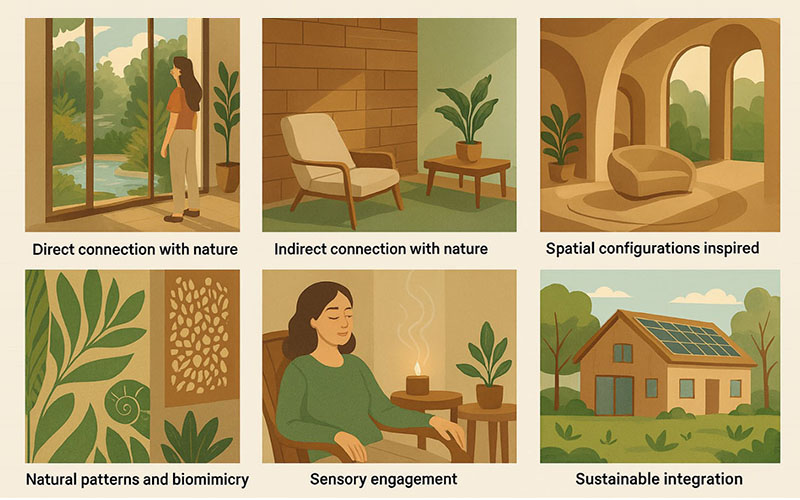
Understanding these principles helps explain why biophilic interior design has become more than just a design trend – it is considered a lifestyle shift. It’s about creating living and working spaces that align with our natural instincts, reduce stress, and promote harmony.
From residential biophilic interior design projects to modern office spaces, the concept has proven effective across cultures and industries. No matter the scale, applying the six principles of biophilic design ensures a healthier, more fulfilling environment.
Core Principles of Biophilic Interior Design
While the six principles of biophilic design provide a theoretical foundation, applying them to interiors requires practical elements. These biophilic interior design elements bring the concept to life inside homes and workplaces. From maximizing natural light to adding greenery and organic textures, each principle translates into design choices that foster well-being and beauty.
Natural Light in biophilic design interiors
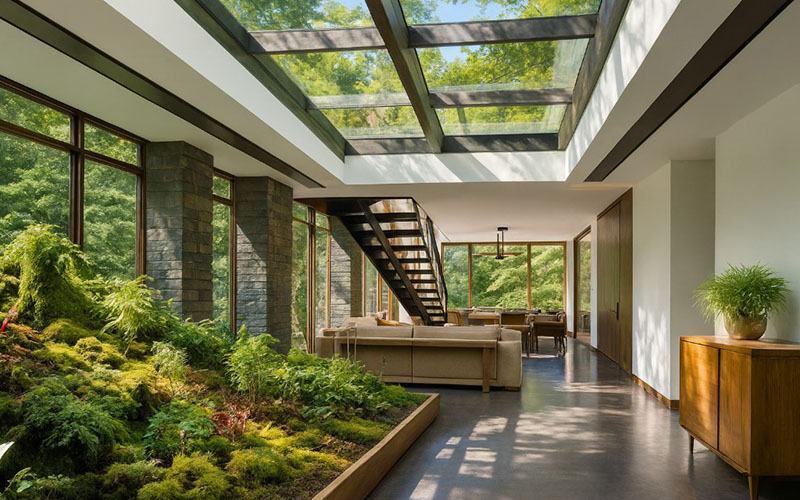
One of the strongest principles of biophilic design interiors is maximizing exposure to natural light. Large windows, skylights, and glass doors allow daylight to flood into a room, improving mood and reducing reliance on artificial lighting.
Natural Materials
From wood and bamboo to stone and clay, natural textures play a vital role in interior biophilic design. Using these materials creates a tactile connection with the environment, adding warmth and authenticity to the space.
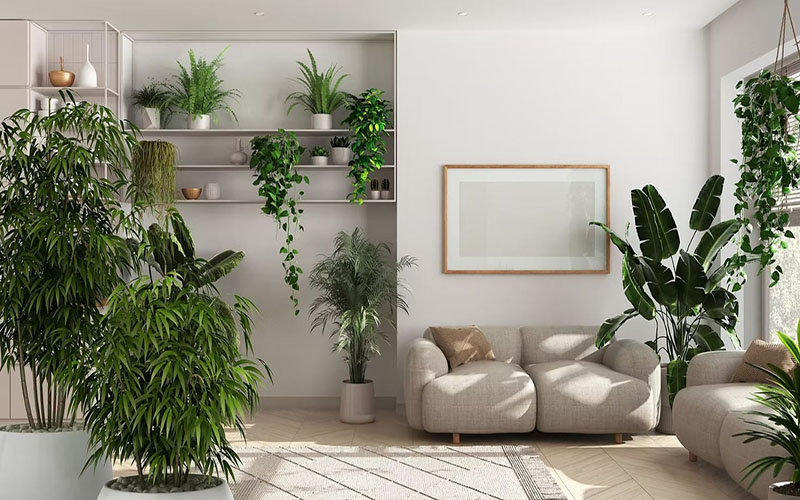
Greenery and Plants
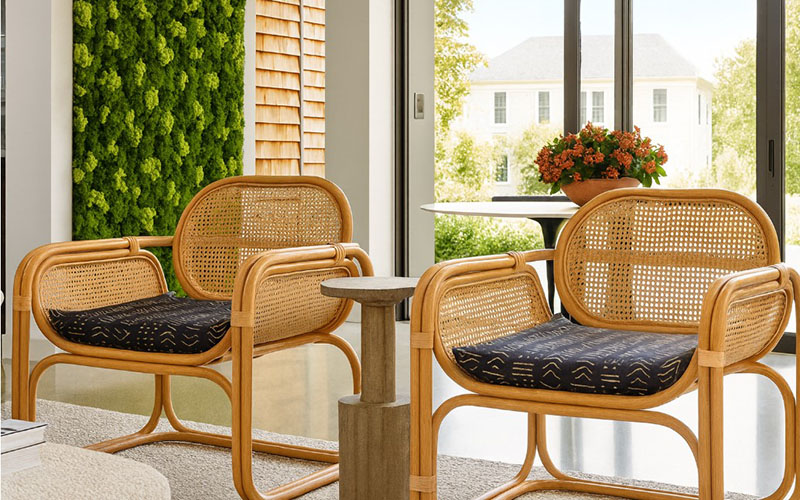
Indoor plants are one of the most recognizable biophilic design ideas. Whether it’s potted plants, hanging gardens, or vertical green walls, greenery not only purifies the air but also brings energy and life into the interior.
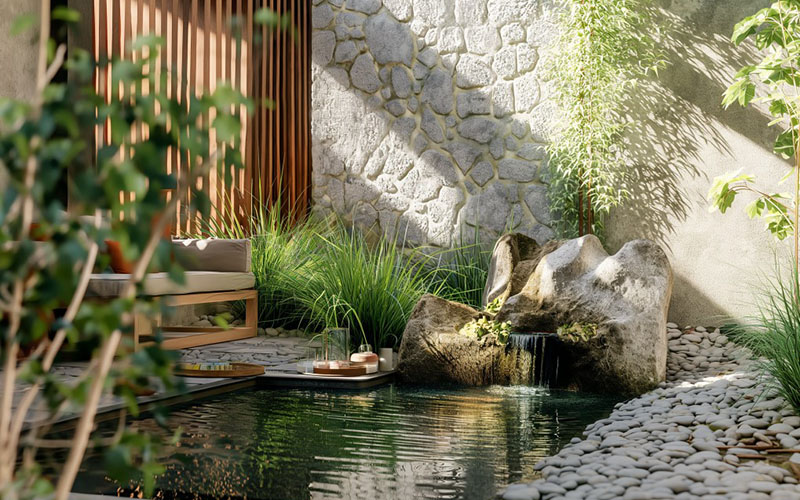
Water and Sensory Features
Incorporating elements like small fountains, aquariums, or even artwork depicting water helps create calm, soothing environments. This approach reflects the principle of multi-sensory design, engaging sight, sound, and even touch.
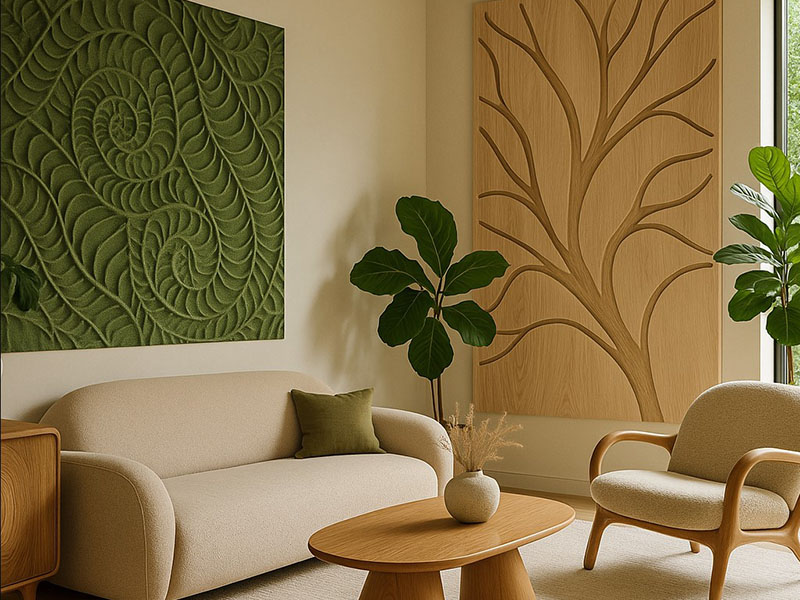
Patterns and Biomimicry
Nature-inspired shapes, such as fractals, curves, and organic forms, are common in biophilic interior design examples. These patterns mimic the geometry of leaves, shells, or tree branches, creating familiarity and comfort.
Connection Between Indoor and Outdoor
A seamless flow between interiors and outdoor areas is one of the six principles of biophilic design. Open floor plans, balconies, and large glass walls blur the boundaries, making the home feel more expansive and connected to nature.
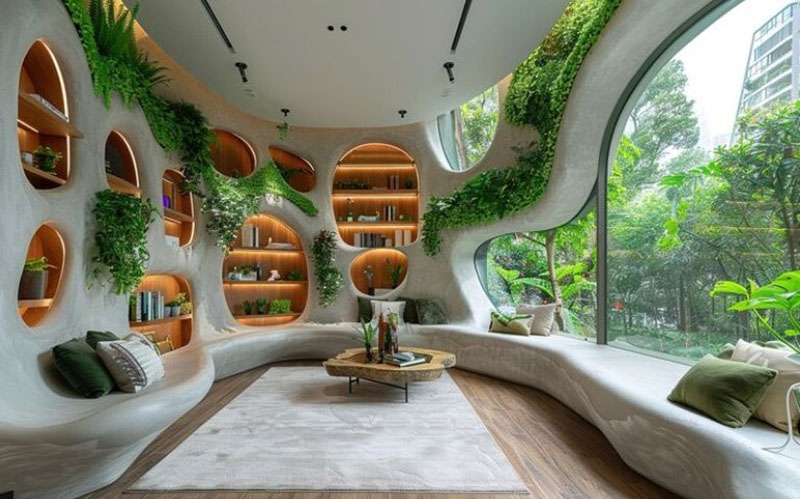
Together, these biophilic interior design elements not only enhance beauty but also contribute to a healthier, more sustainable lifestyle.
Benefits of Biophilic Interior Design
Choosing biophilic home interior design is not just about style – it’s about well-being. Research has consistently shown that biophilia has positive effects on both mind and body. Below are the top benefits:
Improved Mental Health
One of the main reasons people embrace biophilia home decor is its ability to reduce stress and anxiety. The presence of plants, natural textures, and daylight can lower cortisol levels and promote relaxation.
Enhanced Physical Health
Spaces designed with biophilic design home principles often enjoy cleaner air, better humidity levels, and more comfortable living conditions. Natural ventilation and plant-based purification systems are especially effective in improving overall wellness.
Boosted Productivity
In corporate settings, biophilic office interior design has been linked to higher focus, creativity, and job satisfaction. Employees working in green-inspired offices report fewer sick days and higher performance levels.
Increased Property Value
A home designed with residential biophilic interior design elements – such as open layouts, natural lighting, and eco-friendly materials – often stands out in the real estate market. Buyers and renters are increasingly drawn to sustainable and health-oriented living spaces.
Stronger Emotional Connection
By surrounding yourself with natural materials and patterns, you create a deeper emotional bond with your environment. A biophilic interior design home feels cozy, authentic, and timeless compared to sterile, industrial interiors.
| Benefits of Biophilic Interior Design | Summary |
|---|---|
| Improved Mental Health | Reduces stress & anxiety, lowers cortisol, promotes relaxation. |
| Enhanced Physical Health | Cleaner air, balanced humidity, better comfort with natural ventilation. |
| Boosted Productivity | Increases focus, creativity, job satisfaction; fewer sick days at work. |
| Increased Property Value | Eco-friendly, naturally lit homes attract buyers & renters, raising value. |
| Stronger Emotional Connection | Natural materials & patterns create coziness, authenticity, and timelessness. |
In short, adopting biophilic house design is an investment in both lifestyle and long-term value. It’s a design approach that enriches daily life while supporting physical and mental well-being.
Biophilic Design in Different Spaces
The beauty of biophilic interior design is its flexibility – it can be applied to almost any environment, from small apartments to large office complexes. Let’s explore how biophilic design interiors can enhance different types of spaces:
Biophilic Design in Homes
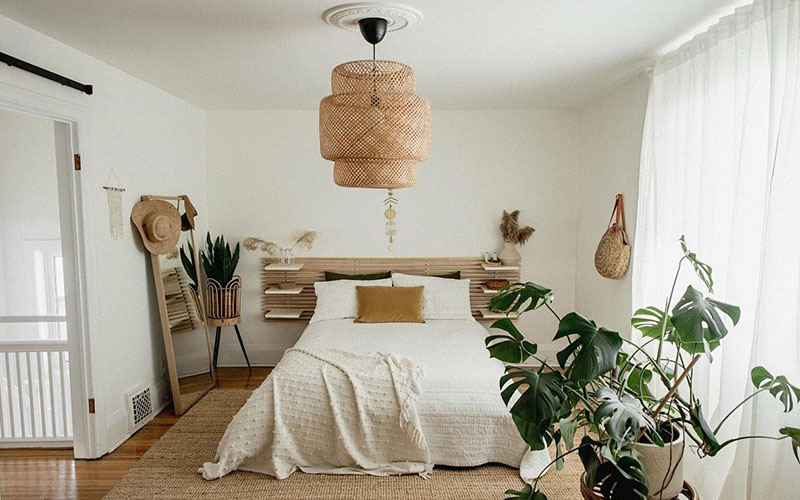
In residential spaces, biophilic home interior design blends comfort with nature. Adding biophilic home decor such as bamboo pendant lights, indoor plants, and rattan furniture can turn a simple room into a calming retreat. Bedrooms and bathrooms, in particular, benefit from natural light and soft, earthy tones that promote relaxation.
Living Rooms Biophilic Design
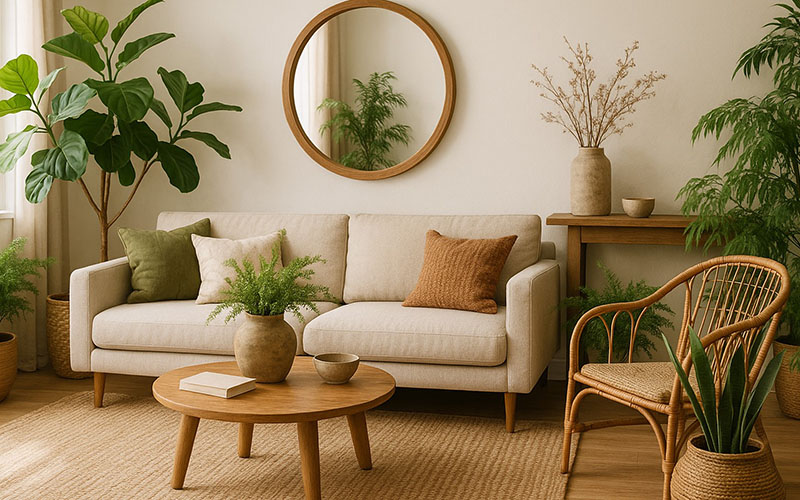
The biophilic living room has become a design trend for homeowners who want their central space to feel welcoming and restorative. Incorporating greenery, organic shapes, and natural textures makes the living room not only stylish but also a sanctuary for family gatherings.
Offices and Workplaces
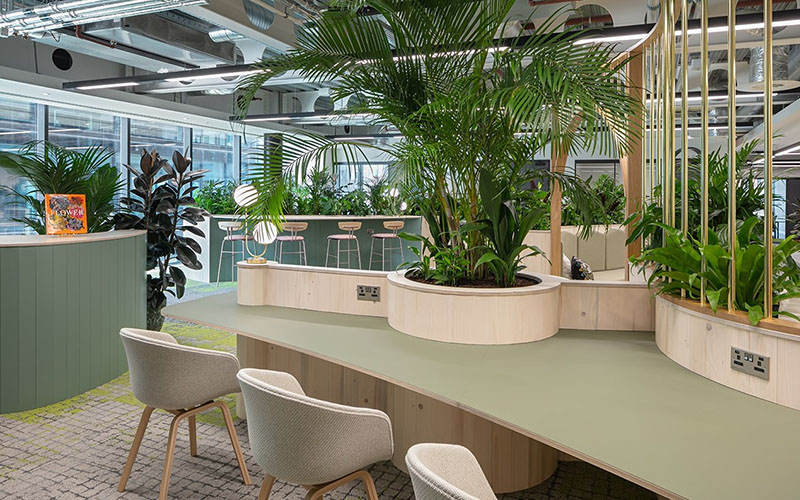
Many companies are now investing in biophilic office interior design to support employee well-being. Features like green walls, natural lighting, and open layouts improve focus and creativity while reducing stress. Brands like UGREEN biophilic design have highlighted how technology and nature can work together to create healthier work environments.
Hospitality and Public Spaces
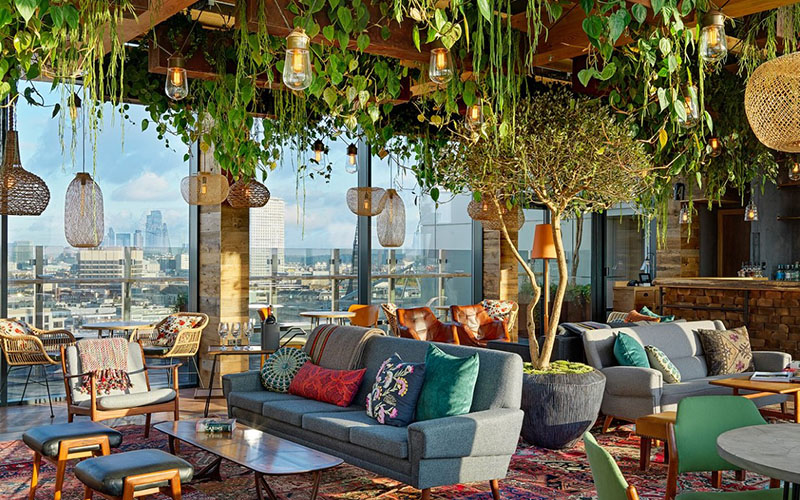
Hotels, resorts, cafés, and restaurants increasingly use biophilic decor to elevate the guest experience. Natural materials, water features, and outdoor-indoor blending give visitors a sense of calm and luxury.
Houses and Apartments
For homeowners, adopting biophilic house design means planning layouts with open spaces, ventilation, and eco-friendly materials. Even in small apartments, simple touches like vertical gardens and natural lighting can bring the outdoors inside.
By tailoring biophilic interior design home strategies to each type of space, you can achieve a balance between beauty, functionality, and well-being.
Biophilic Lighting Solutions
Lighting plays a central role in biophilic interior design. While natural light is always the first priority, carefully chosen artificial lighting can extend the soothing qualities of nature into the evening hours.
Natural Light as a Foundation
Large windows, skylights, and glass doors allow daylight to brighten interiors. Maximizing natural light is one of the six principles of biophilic design and forms the foundation for any healthy interior.
Wooden Lighting Fixtures
Wooden pendant lights and table lamps bring warmth to interiors while reinforcing the natural palette. Their organic textures complement other biophilic interior design elements such as stone or greenery.
Bamboo & Rattan Lighting
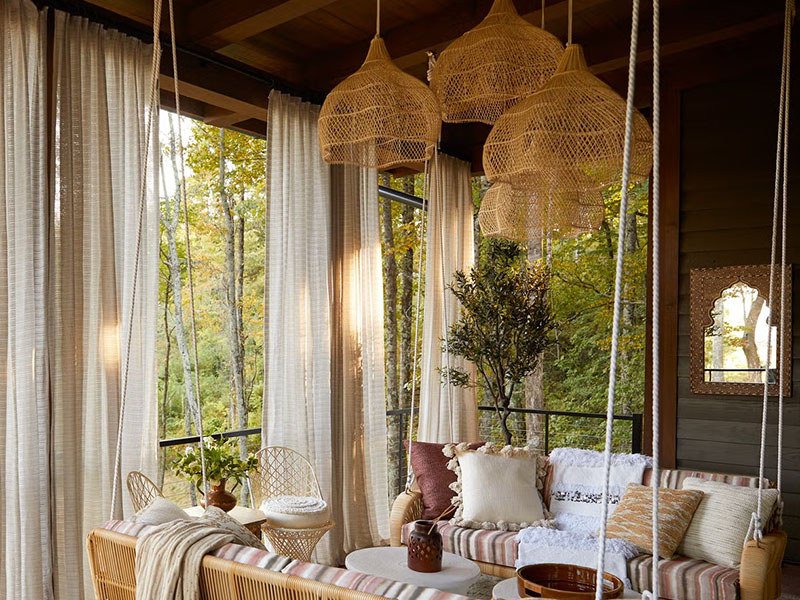
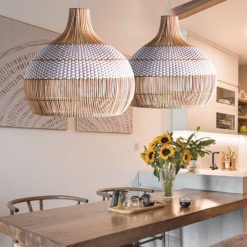
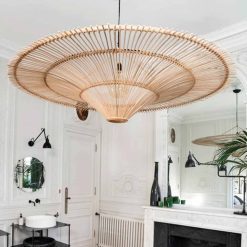
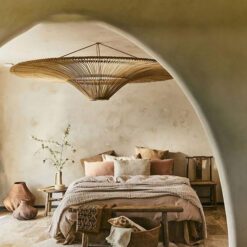
Biophilic lighting design often incorporates sustainable materials like bamboo and rattan. These handcrafted bamboo and rattan light fixtures diffuse light softly and cast natural shadow patterns, mimicking sunlight filtering through tree canopies. Such biophilic lighting adds both beauty and sensory depth to homes, cafés, and resorts.
Emotional and Health Benefits
Soft, warm lighting reduces stress and improves sleep quality. A thoughtfully designed biophilic lighting system can create cozy, restorative spaces that align with circadian rhythms.
Sustainable Innovation
Eco-friendly LEDs paired with natural fixtures combine energy efficiency with biophilic principles. This makes biophilic lighting design not only aesthetically pleasing but also practical and sustainable.
In short, whether you choose wooden fixtures or artisanal bamboo pendants, the right biophilic lighting can completely transform your space into a sanctuary of calm.
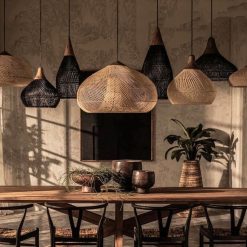
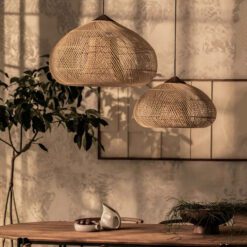
Rattan Pendant Light
Vintage Rattan Pendant Light Fixture High Quality Lamp Shades
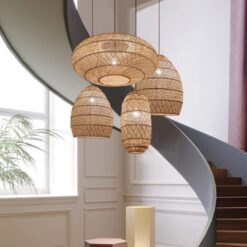
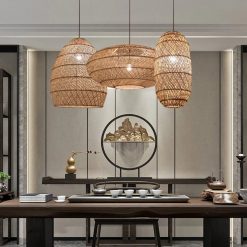
Rattan Pendant Light
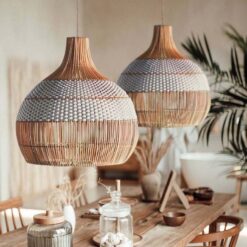
Rattan Pendant Light
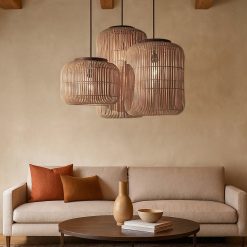
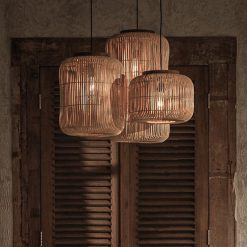
Rattan Pendant Light
Rattan Pendant Light
Practical Tips for Applying Biophilic Design at Home
Bringing nature into your living space doesn’t always require a full renovation. With a few thoughtful changes, you can enjoy the benefits of biophilic design home concepts right where you live. Here are some easy ways to start:
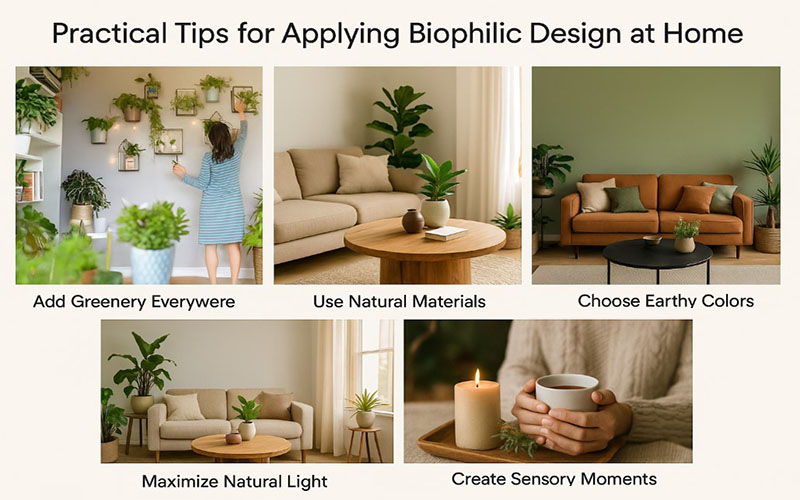
1. Add Greenery Everywhere
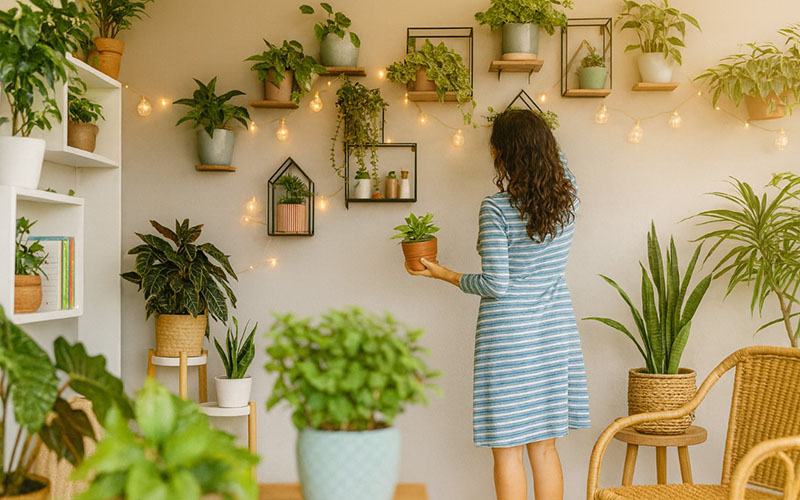
Plants are the simplest form of biophilic decor. From potted succulents on your desk to a large fiddle-leaf fig in the living room, greenery improves air quality and creates a calming atmosphere. For smaller apartments, consider vertical gardens or hanging planters to save floor space.
2. Use Natural Materials
Incorporate furniture and accessories made of bamboo, rattan, or reclaimed wood. These materials not only align with biophilia home decor but also introduce warmth and organic texture to your interiors.
3. Maximize Natural Light
Keep curtains light and airy to let daylight in. If privacy is a concern, use sheer fabrics that filter sunlight while maintaining brightness. Reflective surfaces like mirrors can also help distribute natural light more effectively.
4. Choose Earthy Colors
Soft greens, sandy beiges, and warm browns create a natural palette. These colors reflect landscapes and make your home feel grounded and harmonious.
5. Create Sensory Moments
Incorporate soothing sounds like water fountains or nature-inspired music. Natural scents – such as essential oils from lavender or eucalyptus – add another layer to the biophilic interior design home experience.
By starting small with biophilic design ideas, you can transform your home into a relaxing retreat that connects you more deeply with nature.
Challenges and How to Overcome Them
While residential biophilic interior design is inspiring and rewarding, there are some challenges that homeowners often face. The good news? With the right solutions, these obstacles can be easily managed.
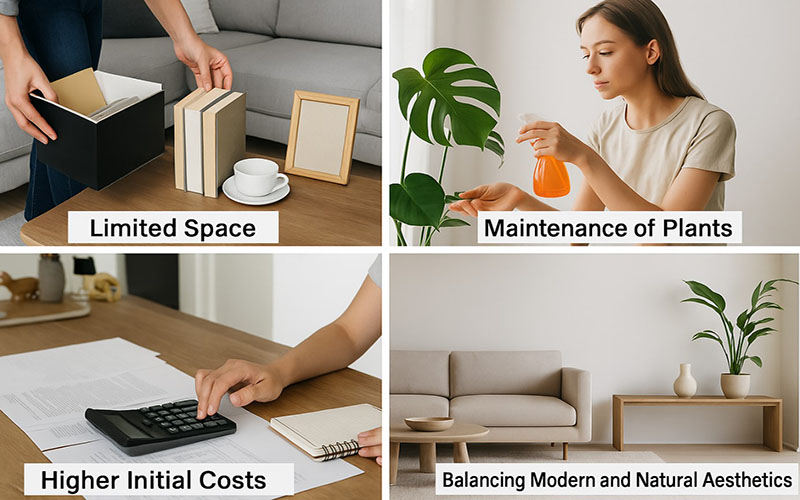
Limited Space
Urban apartments and compact homes may feel too small for greenery or natural features. Solution: use vertical gardens, window boxes, and multifunctional furniture made from natural materials. Even a single large plant in the corner can make a difference.
Maintenance of Plants
Not everyone has time to care for multiple houseplants. For busy homeowners, try low-maintenance options such as snake plants or succulents. Alternatively, high-quality artificial greenery can still provide visual benefits in a biophilic interior design home.
Higher Initial Costs
Eco-friendly materials and handcrafted furniture can sometimes be more expensive upfront. However, they last longer and contribute to healthier living, making them a smart investment. Think of biophilic house design as adding long-term value to your property.
Balancing Modern and Natural Aesthetics
Some worry that biophilic decor may not fit with contemporary or minimalist interiors. The solution is to integrate natural elements subtly – like adding a bamboo pendant light or a wooden side table – without overwhelming the overall style.
By addressing these challenges with creativity, you can fully embrace biophilic interior design home concepts while staying practical and cost-effective.
Biophilic Design Cost Considerations
One of the most common questions about biophilic house design is whether it’s expensive. The answer depends on how far you want to take the concept.
Upfront Costs vs Long-Term Value
It’s true that eco-friendly furniture, sustainable materials, and handcrafted décor can cost more initially. However, these investments tend to last longer and improve energy efficiency. For example, maximizing natural light reduces electricity bills, and indoor plants naturally improve air quality without costly machines.
Flexible Options for Every Budget
The beauty of biophilic home interior design is that it can be scaled to fit different budgets. You can start small with affordable touches like potted plants, rattan lampshades, or bamboo décor. Over time, you can expand to larger changes such as skylights, living walls, or natural stone flooring.
Value-Adding Investment
Homes that incorporate residential biophilic interior design often attract higher resale value. Buyers are increasingly looking for sustainable and health-oriented spaces, making biophilia not just a lifestyle choice but also a smart financial decision.
In short, while there may be higher upfront costs, the long-term rewards of biophilic house design – from health benefits to increased property value – make it worth the investment.
Case Studies & Inspirations
Looking for real-world examples of biophilic interior design? Many inspiring projects around the world demonstrate how nature can transform both homes and workplaces.
Residential Projects
Modern apartments that feature bamboo furniture, indoor gardens, and large windows showcase how biophilic interior design home principles can be applied even in small spaces. These biophilic interior design examples prove that you don’t need a mansion to live closer to nature.
Workplace Innovations
Companies have embraced biophilic office interior design to improve productivity and well-being. For instance, UGREEN biophilic design has demonstrated how green walls, daylight integration, and ergonomic furniture can create healthier workplaces. Employees in such environments often report less stress and more creativity.
Pioneering Designers
Firms like Oliver Heath Interior Design have become leaders in this field, setting global standards for integrating biophilia into everyday environments. Their projects highlight how the six principles of biophilic design can be applied across different scales, from private homes to commercial buildings.
Hospitality and Public Spaces
Hotels, resorts, and cafés often use biophilic decor to create immersive guest experiences. From natural lighting to indoor waterfalls, these spaces provide a refreshing alternative to sterile, industrial designs.
These biophilic interior design examples serve as inspiration for homeowners, architects, and businesses alike. They prove that biophilia is not just a passing trend – it’s a movement toward healthier, more sustainable living.
Biophilic Design vs Other Interior Design Styles
While biophilic design interiors have unique characteristics, they can also overlap with or complement other popular interior design movements. Understanding the differences can help homeowners and designers decide how to blend styles effectively.
Biophilic vs Minimalist
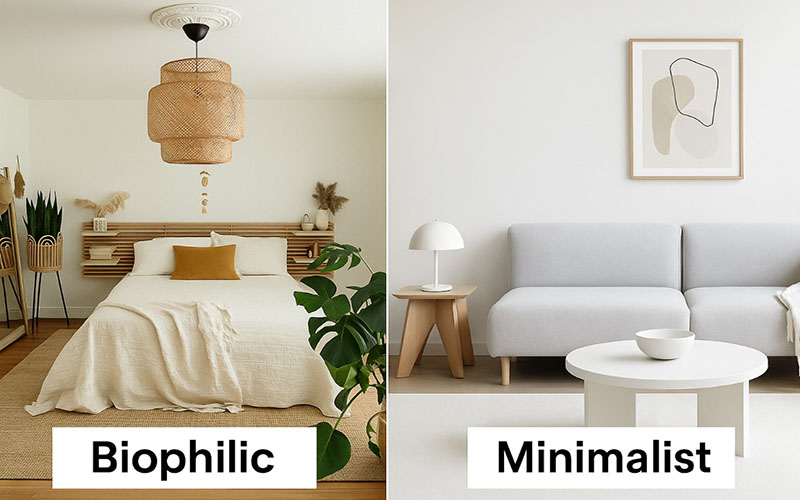
Minimalist design focuses on simplicity, clean lines, and reducing clutter. In contrast, interior design biophilic emphasizes natural richness – textures, greenery, and sensory engagement. However, they can be combined to create a balanced space that feels both calm and alive.
Biophilic vs Japandi
Japandi combines Scandinavian simplicity with Japanese tradition. Its use of natural materials and muted palettes makes it highly compatible with biophilic design ideas. Adding plants and more natural light can turn a Japandi-inspired space into a fully biophilic home.
Biophilic vs Modern Contemporary
Modern contemporary design highlights sleekness, functionality, and open layouts. Interior biophilic design can enhance these spaces by softening sharp edges with organic shapes and warm textures, making them more inviting and less sterile.
Complementary Styles
Ultimately, interior biophilic design doesn’t have to stand alone. It can enrich almost any style by adding the grounding, life-enhancing qualities of nature.
| Style | Key Difference | When Combined with Biophilic |
|---|---|---|
| Minimalist | Simple, clutter-free, clean lines. | Add greenery & natural textures → calm yet lively. |
| Japandi | Scandinavian simplicity + Japanese tradition. | More plants & light → fully biophilic feel. |
| Modern Contemporary | Sleek, functional, open layouts. | Biophilic softens edges, adds warmth & comfort. |
| Overall | Each style has its own identity. | Biophilic enriches them with vitality & connection. |
How to Start Your Biophilic Design Journey
Starting with biophilic interior design doesn’t have to be overwhelming. Whether you want to redesign your entire home or simply add a few natural touches, here are steps to guide your journey:
1. Consult Biophilic Interior Designers
Professional biophilic interior designers can help you create a cohesive plan tailored to your space, lifestyle, and budget. They understand how to integrate the six principles of biophilic design into practical solutions.
2. Begin with Small Biophilic Design Ideas
You don’t need to transform everything at once. Start with simple touches such as plants, bamboo pendant lights, or wooden furniture. These small changes quickly make a noticeable difference.
3. Build a Nature-Inspired Palette
Choose paints, fabrics, and finishes that reflect earthy colors. These subtle decisions align with the biophilic interior design concept and create harmony throughout your home.
4. Create a Personal Checklist
Write down the key biophilic design ideas you want to apply – more daylight, more greenery, natural materials – and implement them step by step. This method keeps the process manageable while ensuring long-term success.
5. Think Long-Term
Biophilic design home strategies are not just about aesthetics; they’re about healthier living. Approach the journey as an investment in your well-being, not just a decorative choice.
With the right mindset and inspiration, anyone can start their own biophilic interior design home transformation, one step at a time.
Biophilic interior design Conclusion
Biophilic interior design is more than just a style – it’s a lifestyle choice that reconnects people with nature in meaningful ways. By blending natural light, greenery, organic materials, and thoughtful layouts, biophilic design interiors improve health, boost productivity, and enhance the emotional quality of everyday life.
Whether you’re exploring biophilia home decor, experimenting with biophilic lighting design, or working with professional biophilic interior designers, there are endless ways to bring the outdoors inside. From small apartments to large-scale projects, residential biophilic interior design and biophilic office interior design have proven benefits for individuals and communities alike.
As sustainability and wellness continue to shape modern living, adopting biophilic design ideas is not just about following a trend – it’s about investing in a healthier, happier future. Start with simple changes like adding plants, natural textures, or bamboo lighting, and gradually expand your approach. Your home or workplace can become more than just a space – it can be a sanctuary that nurtures both body and mind.
FAQ About Biophilic Interior Design
What is biophilic interior design?
Biophilic interior design is an approach that integrates natural elements – like plants, wood, water, and natural light – into interior spaces. The goal is to improve well-being by fostering a stronger connection with nature.
What are the six principles of biophilic design?
The six principles of biophilic design include: direct connection with nature, indirect connection through materials and colors, natural spatial patterns, biomimicry, multi-sensory engagement, and sustainable integration.
What are biophilic interior design elements?
Common biophilic interior design elements include natural light, indoor plants, wood, bamboo, stone, water features, and organic patterns inspired by nature.
How do I use biophilic lighting in my home?
Biophilic lighting uses natural or nature-inspired fixtures like wooden or bamboo lamps to create warm, calming atmospheres. Biophilic lighting design often mimics sunlight patterns to support circadian rhythms.
Is biophilic interior design expensive?
It doesn’t have to be. Biophilic house design can start with affordable touches like plants or bamboo décor. Larger projects with skylights, green walls, or custom furniture may cost more but add long-term value to your home.
What are some biophilic interior design examples?
Examples include living walls in urban apartments, biophilic office interior design with daylight and green spaces, and hospitality projects by firms like Oliver Heath Interior Design or UGREEN biophilic design.



Unlock VIP Perks
Join as a priority member to receive gifts and be the first to access exclusive deals, our newest collections, and more...
Read more articles
10+ Scandinavian Rattan Dome Pendant Light Ideas for Natural Style
The dome pendant is one of interior design’s most enduring forms – and in natural [...]
Jun
9 Scandinavian Rattan Chandelier Ideas for Organic Elegance
Natural rattan chandeliers and pendant lights are the ultimate expression of Scandinavian design at its [...]
Jun
10+ Scandinavian Brown Rattan Light Ideas for a Warm, Earthy Style
Brown rattan pendant lights sit at the sweet spot between natural warmth and refined style. [...]
Jun
20+ Scandinavian Black Rattan Light Ideas for a Bold, Natural Style
Black rattan pendant lights are the design world’s best-kept secret. They carry all the warmth [...]
Jun
11 Scandinavian Beige Rattan Light Ideas for a Warm, Natural Nordic Style
Beige rattan pendant lights are having a moment – and it’s easy to see why. [...]
Jun
25+ Scandinavian Bamboo Light Ideas to Transform Your Home
If you’re looking to bring warmth, texture, and a touch of nature into your living [...]
Jun
7 Restaurant Wood Pendant Lights for Architectural Dining Atmosphere
Wood pendant lighting creates a restaurant dining atmosphere that no other natural organic fiber material [...]
Jun
12 Restaurant Wicker Rope Lighting for Textural Dining Atmosphere
Wicker, hemp rope, jute, and paper rope pendant lighting creates a quality of restaurant dining [...]
Jun
20+ Trending Restaurant Rattan Lights for Stylish Dining Atmosphere
The most memorably designed and the most genuinely impressive restaurant dining environments today go far [...]
Jun
7 Restaurant Rattan Dome Pendant Lights for Elegant Dining Atmosphere
The dome form is rattan’s most naturally generous restaurant pendant silhouette – and above a [...]
Jun
7 Restaurant Rattan Statement Chandeliers for Upscale Dining Atmosphere
A rattan statement chandelier above a restaurant dining room does something that a single pendant [...]
Jun
6 Restaurant Brown Rattan Pendant Lights for Warm Dining Atmosphere
Brown rattan pendant lighting in a restaurant dining environment creates the most warmly grounded and [...]
Jun
Explore our collections
Rattan Pendant Light
95 Products
Bamboo Pendant Light
38 Products
Fabric Pendant Light
41 Products
Wood Pendant Light
7 Products
Rope Pendant Light
14 Products
Rattan Wall Sconce
6 Products
Rattan Table Lamp
6 Products
Rattan Floor Lamp
9 Products