
Natural Materials & Craftsmanship
What Is Rattan? Definition, Uses & Benefits of This Natural Material
Rattan has become one of the most beloved natural materials in modern interior design – showing up in Rattan has become one of the most beloved natural materials in modern interior design – but despite its popularity, many people still wonder:
- What is rattan material?
- Is rattan the same as bamboo?
- Is rattan eco-friendly?
- Why do artisans in Vietnam and Southeast Asia work with this material so much?
These common questions appear because rattan now shows up everywhere – in living rooms, dining rooms, bedrooms, coastal homes, and even luxury hotels across the United States. From woven rattan pendant lights to curved rattan chairs and handcrafted baskets, this warm, organic material instantly adds texture, character, and a relaxed, natural feel to any space.
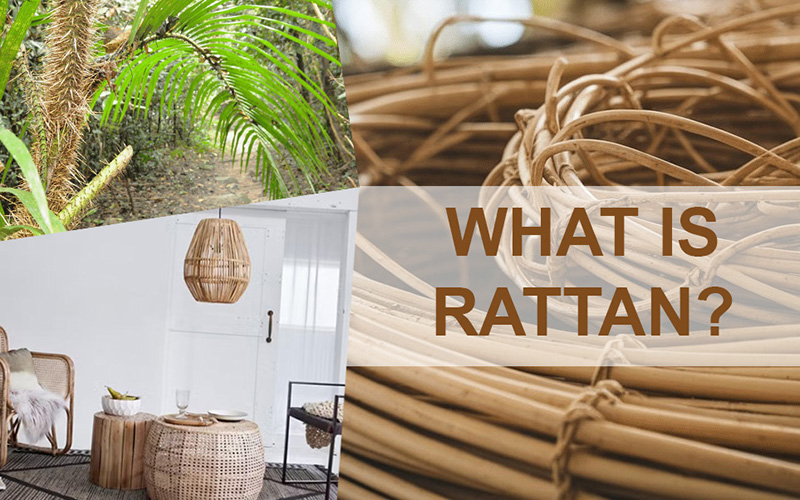
In an era where homeowners are leaning toward sustainable, handmade, and nature-inspired interiors, rattan stands out as a perfect choice. It blends beautifully with popular design styles like Boho, Coastal, Scandinavian, Japandi, and Wabi-Sabi, making it one of the most versatile materials available today.
This article gives you a clear, complete, and easy-to-understand explanation – so you’ll know exactly why rattan is special and why it’s used in so many handcrafted lighting and décor pieces.
What Is Rattan?
Many people wonder, “What is rattan made of, and is it the same as bamboo?” This common confusion makes sense, as both materials are natural, sustainable, and widely used in furniture and home décor. However, despite their similar appearance, rattan and bamboo come from entirely different plants and have distinct characteristics. Before exploring the unique qualities of rattan, it helps to understand what it truly is – and how it differs from bamboo.
1. Definition
Rattan is a natural material harvested from a type of fast-growing climbing palm found mainly in the tropical forests of Southeast Asia. Unlike regular trees, rattan grows as long, flexible vines that climb up surrounding trees – sometimes reaching lengths of up to 200–300 feet.
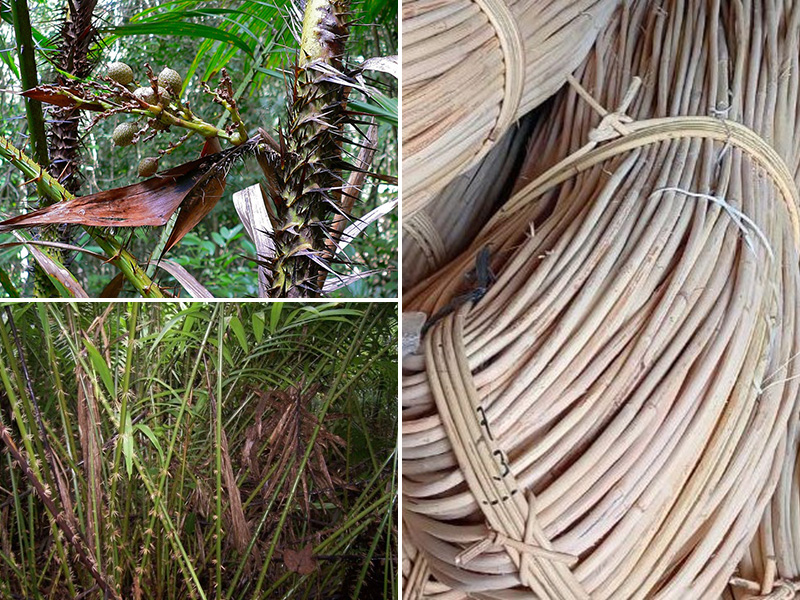
Even though many people think rattan is a kind of wood, it’s actually part of the palm family, not a tree. This gives it unique characteristics: it is solid (not hollow), extremely strong, surprisingly lightweight, and flexible enough to bend without breaking. These qualities make rattan ideal for weaving furniture, lighting, baskets, and countless handcrafted home décor items.
In short: Rattan = a strong, flexible, solid natural vine used for weaving.
2. Rattan vs Bamboo: What’s the Difference?
Many people confuse rattan with bamboo because both materials are natural and widely used in furniture and lighting. However, they are very different.
You may want to know: What Is Bamboo? Definition, Uses & Eco-Friendly Benefits
Here is the simplest way to understand the difference:
| Feature | Rattan | Bamboo |
|---|---|---|
| Structure | Solid inside | Hollow inside |
| Flexibility | Very flexible, easy to bend | Much stiffer, harder to bend |
| Shape | Round vine | Straight stalk |
| Texture | Smooth with natural nodes | Hard, smooth, ringed like grass |
| Best Uses | Weaving, lighting, chairs, baskets | Flooring, panels, furniture frames |
Quick Explanation
- Rattan is solid and flexible, making it perfect for weaving pendant lights and home décor.
- Bamboo is hollow and more rigid, making it better for frames, poles, or structural elements.
This is why many high-quality rattan pendant lights actually use a combination of both materials:
- Rattan fiber for weaving the outer shade
- Bamboo for structural rings or framing (optional)
Understanding this difference helps you appreciate why rattan is such a valuable and versatile material.
3. Rattan in Traditional Craftsmanship
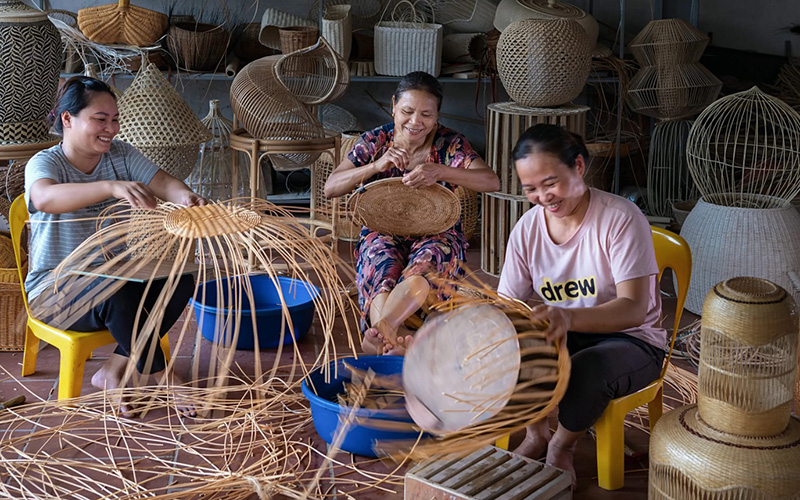
Rattan has been used for centuries in Southeast Asian cultures due to its strength, lightness, and abundance. In Vietnam, artisans have woven rattan into household items for generations – using techniques passed down through families. Today, these same traditional methods are used to create modern, stylish rattan lighting and home décor, blending heritage craft with contemporary design.
Where Does Rattan Come From?
1. Geographic Origin
Rattan naturally grows in the tropical rainforests of Southeast Asia, where the climate is warm, humid, and ideal for fast-growing climbing palms. The largest sources of rattan in the world come from:
- Indonesia
- Vietnam
- Malaysia
- Philippines
- Thailand
Among these, Vietnam is well-known for its skilled rattan craftsmanship, producing beautifully woven lighting, furniture, and décor that are exported worldwide – especially to the United States, Europe, and Australia.
Because rattan thrives in forest environments and relies on existing trees for support, it does not require deforestation. Instead, rattan harvesting often encourages forest preservation and sustainable community livelihoods.
2. How Rattan Grows in Nature
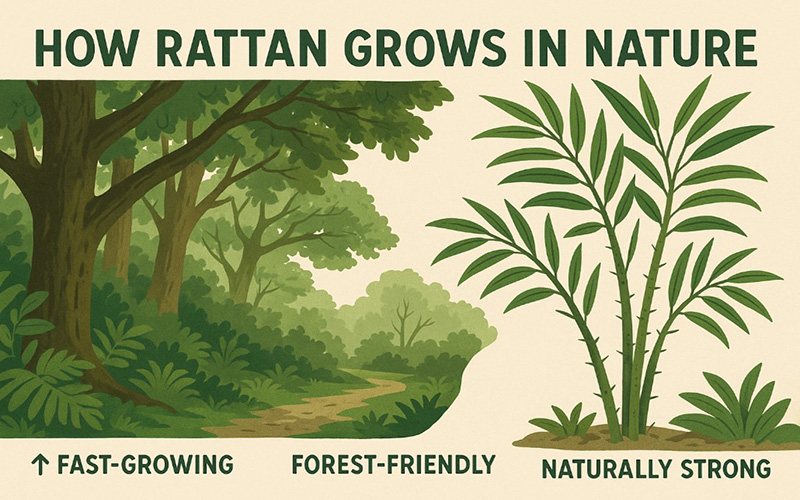
Rattan grows as long, slender vines that climb trees to reach sunlight. Unlike bamboo – which grows in individual stalks – rattan spreads through forest floors and climbs upward, sometimes growing hundreds of feet in length.
Its natural growth cycle gives it several unique qualities:
- Fast-Growing: Rattan regenerates quickly, making it a renewable and eco-friendly resource.
- Forest-Friendly: Because it depends on trees to climb, rattan harvesting encourages forest protection instead of clearing.
- Naturally Strong: Its solid core and fibrous structure make rattan incredibly durable while remaining lightweight.
These qualities make rattan one of the most sustainable natural materials available – and a favorite among environmentally conscious designers.
Types of Rattan
Rattan isn’t just one single type of material. It comes in several forms, each suitable for different purposes – especially in weaving, crafting, and furniture making. Understanding these variations helps you appreciate how artisans create such diverse and beautiful products.
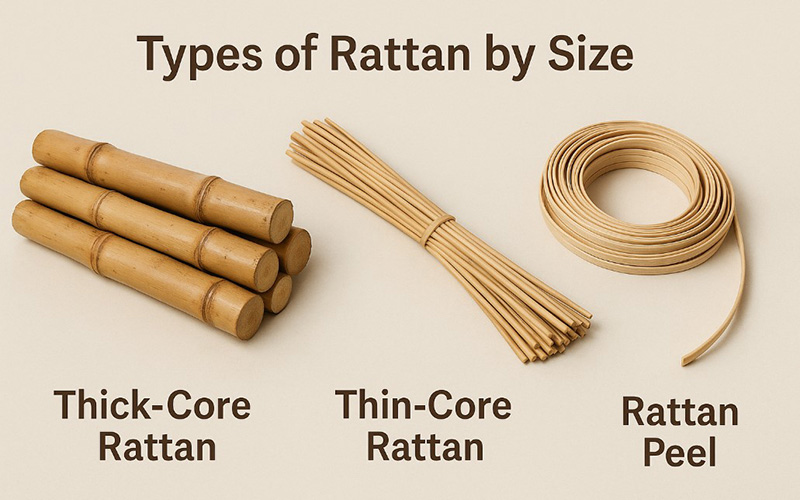
1. Types of Rattan by Size
1.1. Thick-Core Rattan
- The large, solid center of the rattan vine.
- Used for sturdy furniture frames, handles, and structural parts.
- Extremely strong and durable.
1.2. Thin-Core Rattan
- Smaller strands split from the main vine.
- Flexible and ideal for shaping details or weaving small patterns.
1.3. Rattan Peel
- The outer “skin” of the vine, peeled into long strips.
- Used for detailed weaving and binding – common in chairs, baskets, and lighting.
2. Types of Rattan by Use
- Rattan Pole: These are the full, un-split canes used for furniture, curved frames, and large structural pieces.
- Rattan Wicker: Refers to rattan that has been split or processed for weaving. This is the most common type used in: pendant lights, baskets, decorative wall art, storage items
- Cane Webbing: A mesh-like pattern made from rattan peel, commonly seen in: Chair backs, Cabinet doors, Room dividers, Wall décor. Its airy, lightweight look makes it extremely popular in modern interior design.
- Split Rattan: Thin strips created by cutting the vine lengthwise, used for detailed weaving or fine patterns.
3. Common Rattan Species
There are over 600 species of rattan, but only a few are commonly used in craftsmanship:
- Calamus – the most widespread, known for strength and length
- Daemonorops – strong and flexible, perfect for weaving
- Plectocomia – used for special textures and unique natural patterns
For consumers, the species doesn’t matter as much as the craftsmanship – Vietnamese artisans typically choose the best type for each product (lighting, baskets, or furniture).
How Rattan Is Processed (From Forest to Finished Product)
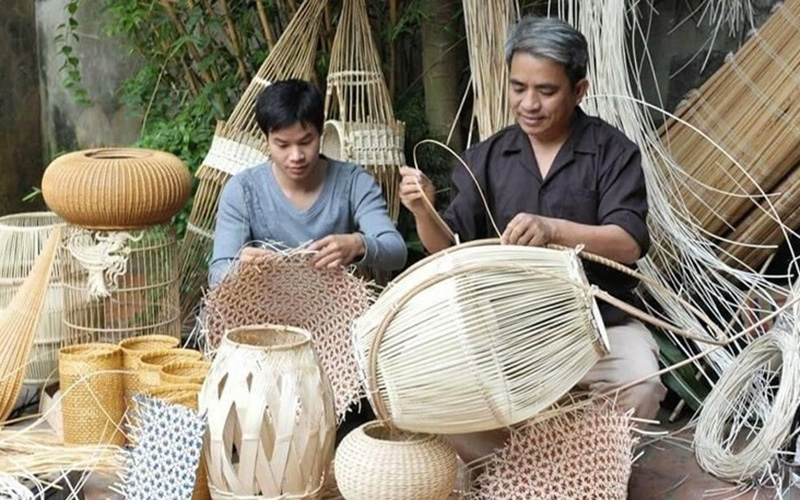
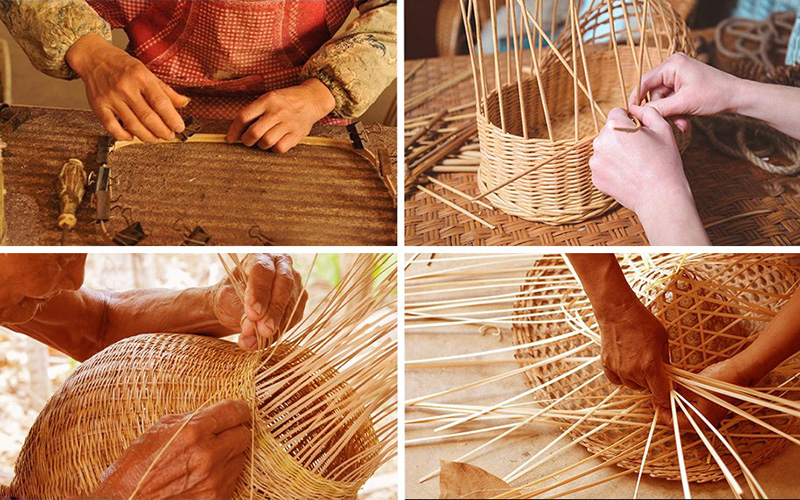
Rattan goes through a fascinating transformation before it becomes the beautiful woven furniture, pendant lights, and décor pieces we see in homes today. This process is often done by hand – especially in traditional craft villages in Vietnam and Indonesia – where artisans maintain century-old techniques.
Here is the detailed process from harvesting to the finished product:
Step 1 – Harvesting the Rattan Vines
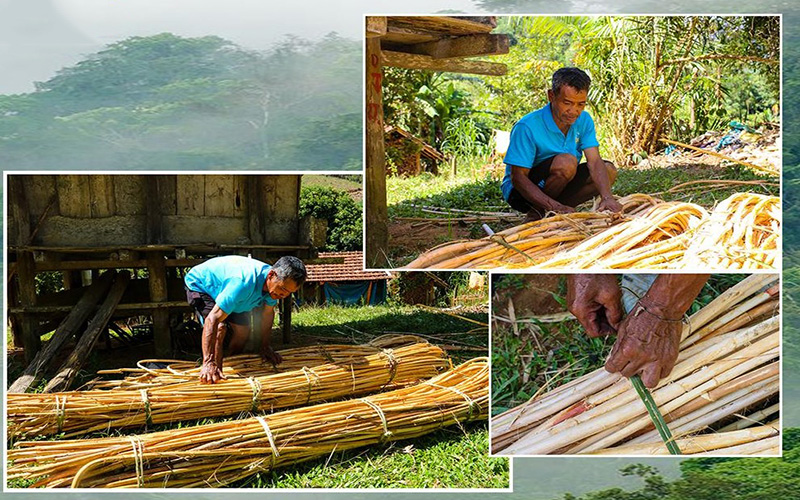
The process begins deep in the forest. Experienced harvesters identify mature rattan vines – typically between 2 to 7 years old – ensuring they are strong enough for craftsmanship but still flexible.
The vines are:
- Cut near the base
- Pulled down from trees
- Trimmed and bundled for transport
Rattan is lightweight, so moving it from forest to village is much easier than transporting hardwood.

Step 2 – Cleaning and Drying
Once delivered to the workshop, the vines go through an essential cleaning process:
Outer cleaning:
Workers scrub the rattan to remove dirt, leaves, and natural waxes.
Sun-drying:
Vines are laid out under the sun for several days. This:
- Removes excess moisture
- Prevents mold
- Strengthens the fibers
- Enhances the natural golden color
Smoke curing (traditional method):
Some artisans cure rattan over a small fire. This:
- Helps kill insects
- Adds natural protection
- Deepens the rattan’s warm, honey-toned color
This step is crucial for ensuring long-lasting durability.
Step 3 – Splitting, Peeling & Shaping
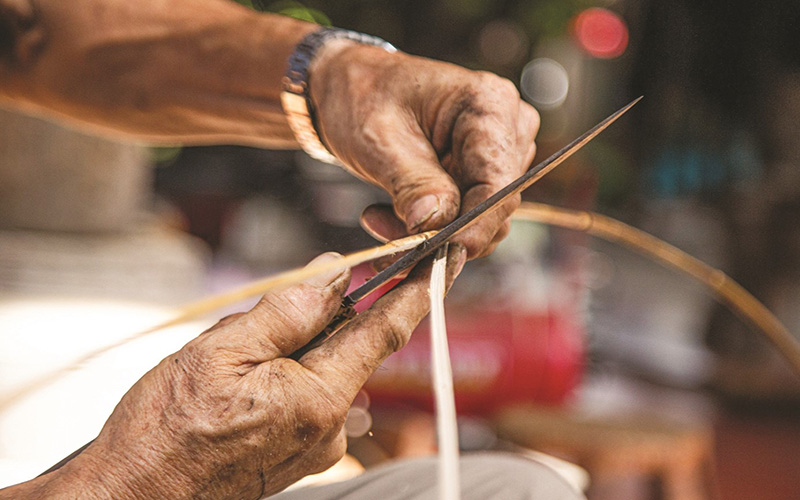
After drying, artisans prepare the rattan for weaving or structural use.
Splitting
The vine is cut into narrower strips depending on the product’s needs.
Peeling
The outer skin is removed to create cane, commonly used for detailed weaving.
Shaping
Rattan is heated or soaked in warm water to make it flexible, then bent into desired forms:
- Curved lamp frames
- Round baskets
- Furniture arms
- Decorative arches
Rattan’s natural bendability is one of the reasons it’s so loved in design.
Step 4 – Weaving & Final Craftsmanship
This is where the true artistry happens.
Artisans weave rattan by hand using various techniques – coiling, braiding, looping, and open-weave patterns – to create:
- Rattan pendant lights
- Woven chairs
- Storage baskets
- Decorative wall hangings
Each pattern has its own difficulty level, and the weaving process may take hours or even days.
Once the weaving is complete:
Finishing touches may include:
- Sanding the surface for smoothness
- Applying natural oils for protection
- Adding wood or bamboo framing
- Installing wiring for lighting products
Every piece becomes a blend of natural material and skilled craftsmanship – making rattan décor both functional and beautifully unique.
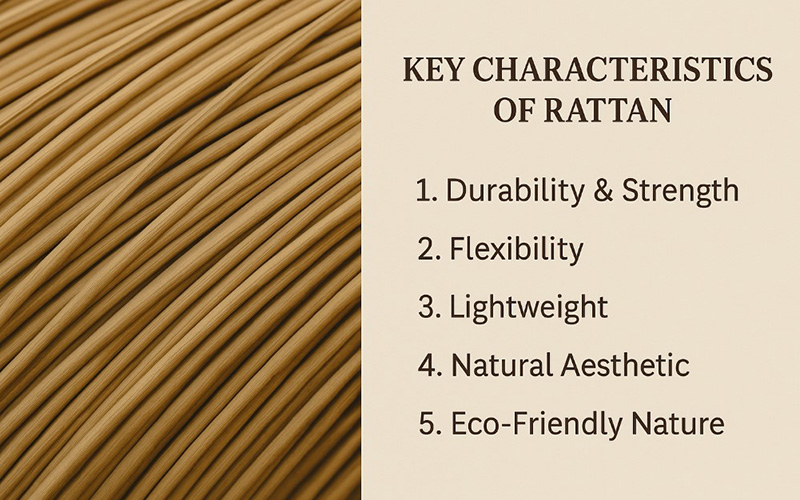
Key Characteristics of Rattan Material
Rattan isn’t just popular because it looks beautiful. It has natural qualities that make it one of the strongest and most versatile plant fibers in the world. Here are the features that make rattan so special:
1. Durability & Strength
Rattan is incredibly strong for its weight. Its solid-core structure makes it more durable than many hardwoods, which is why rattan furniture from decades ago is still used today.
In interior products like pendant lights, this strength ensures:
- Long-lasting shape
- Resistance to cracking
- Stability even with intricate weaving
2. Flexibility
One of rattan’s greatest advantages is how easily it bends.
When heated or soaked, it becomes highly pliable, allowing artisans to create:
- Curved lamp shades
- Round frames
- Organic, sculptural shapes
This flexibility is the reason rattan is used to create designs that would be impossible with solid wood.
3. Lightweight
Despite being strong, rattan is shockingly lightweight. This makes it a dream material for homeowners and designers because it’s easy to carry, hang, or move during room rearrangements.
For lighting products, this means:
- Safer installation
- Less stress on ceiling hooks
- Easier adjustments
4. Natural Aesthetic
Rattan has a warm, golden-beige tone that instantly softens a space. Its natural variations – slight lines, organic nodes, and subtle color differences – add character and texture.
This organic warmth is why rattan fits beautifully into styles like:
- Coastal
- Wabi-Sabi
- Japandi
- Scandinavian
- Boho
- Rustic and Modern Farmhouse
It brings nature indoors without overpowering the décor.
5. Eco-Friendly Nature
Rattan grows quickly, regenerates naturally, and requires minimal processing – making it one of the most sustainable materials for home décor.
Environmental benefits include:
- Low carbon footprint
- No deforestation required
- Handcrafted production supports artisan communities
- Biodegradable and recyclable
Choosing rattan is not only a design decision – but also an environmentally responsible one.
What Is Rattan Used For?
Rattan is one of the most versatile natural materials in the world. Because it is lightweight, durable, flexible, and beautifully textured, artisans and designers use it in a wide range of applications. From lighting to furniture and home décor, rattan brings warmth and organic charm to any space.
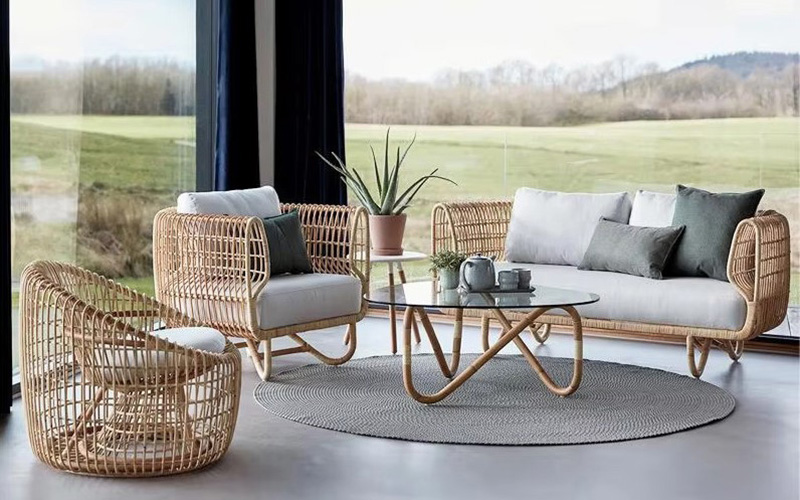
1. Rattan Furniture
Furniture is the most well-known use of rattan. Its strength and flexibility allow craftsmen to create pieces that are both sturdy and lightweight.
Common types of rattan furniture include:
- Armchairs and lounge chairs
- Sofas and sectional frames
- Dining chairs and bar stools
- Bed frames and headboards
- Side tables and coffee tables
- Outdoor-style loungers (usually synthetic rattan)
Rattan furniture fits beautifully into many design trends like Coastal, Scandinavian, Tropical, Boho, and Modern Minimalist. Its durability makes it suitable for long-term indoor use.
2. Rattan Lighting (One of the Most Popular Uses Today)
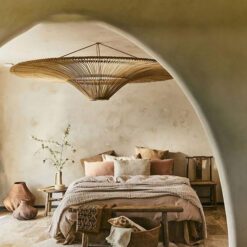
In recent years, rattan pendant lights have become a top trend in interior design – especially in the U.S. market. Their natural texture adds warmth, depth, and a handmade touch to any room.
Rattan lighting includes:
Why rattan is perfect for lighting?
- It diffuses light softly, creating warm ambient tones.
- The open-weave patterns cast beautiful shadows.
- Lightweight design makes installation easier.
- Works with Japandi, Wabi-Sabi, Coastal, Boho, and Organic Modern styles.
This is also why Vietnam has become a major producer of handcrafted rattan lighting exported worldwide.
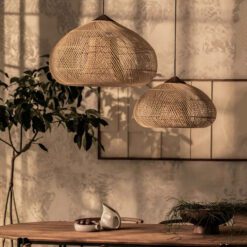
Rattan Pendant Light
Vintage Rattan Pendant Light Fixture High Quality Lamp Shades
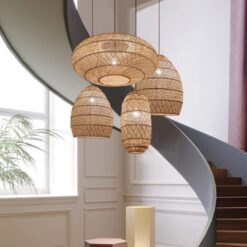
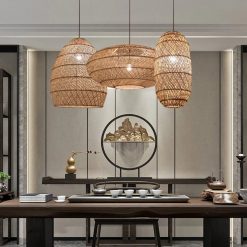
Rattan Pendant Light
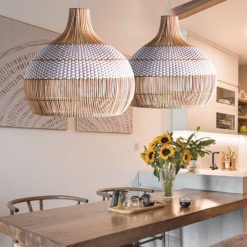
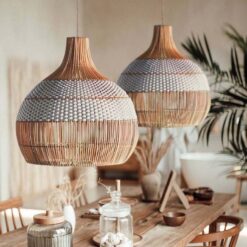
Rattan Pendant Light
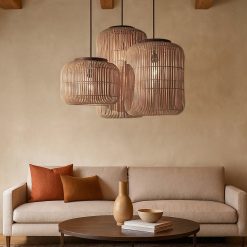
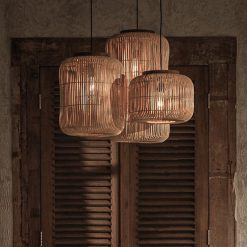
Rattan Pendant Light
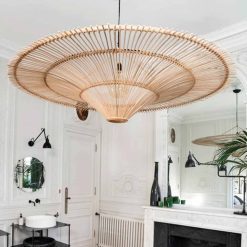
Rattan Pendant Light
3. Home Décor Made From Rattan
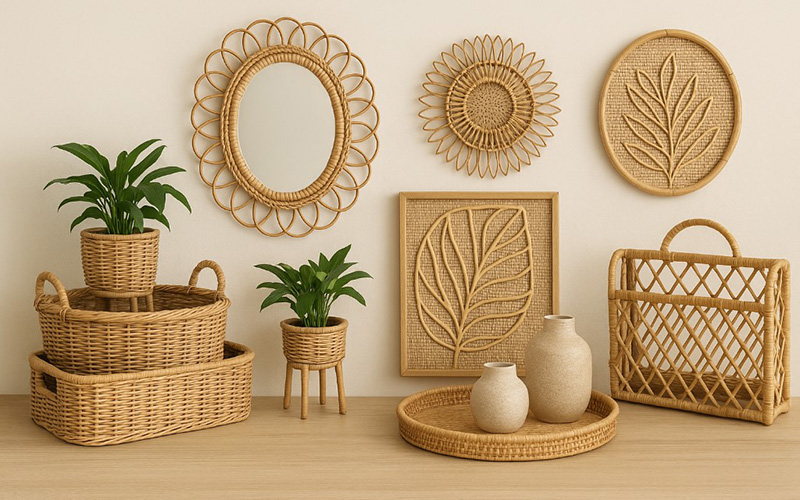
Beyond furniture and lighting, rattan is used to make countless decorative items:
- Storage baskets
- Mirrors with woven frames
- Wall décor and art pieces
- Trays and tabletop accessories
- Plant stands
- Magazine holders
These décor pieces bring a soft, natural look that enhances any interior without overpowering the space.
4. Rattan for Outdoor Use
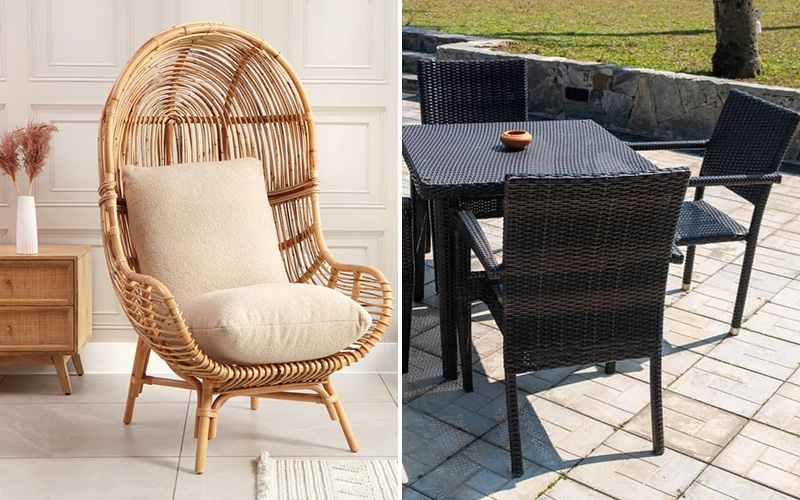
While rattan is durable, natural rattan is not ideal for full outdoor exposure because sun and rain can weaken the fibers. For this reason, many outdoor products use synthetic rattan resin (PE rattan) that looks similar but withstands weather better.
Natural rattan is best for:
- Covered patios
- Screened porches
- Indoor sunrooms
Synthetic rattan is better for:
- Poolside furniture
- Outdoor dining sets
- Backyard seating exposed to weather
Understanding the difference helps customers make better buying decisions.
Understand What Is PE Wicker
Rattan vs Other Natural Fibers
With so many natural materials used in home décor – bamboo, seagrass, wicker, cane, jute – it’s easy to confuse them. Although similar in appearance, each material has its own structure, texture, and ideal use.
1. Rattan vs Wicker
Many people assume wicker is a material, but that is incorrect.
- Rattan = a natural plant fiber.
- Wicker = a weaving technique that can use rattan, bamboo, synthetic resin, or other materials.
Example:
A “wicker chair” may be woven from rattan, synthetic resin, or bamboo – but the weaving style is what makes it wicker.
So, rattan wicker simply means rattan that has been woven using wicker techniques.
What Is Wicker? A Complete Guide to the Craft, Materials & Uses
2. Rattan vs Seagrass
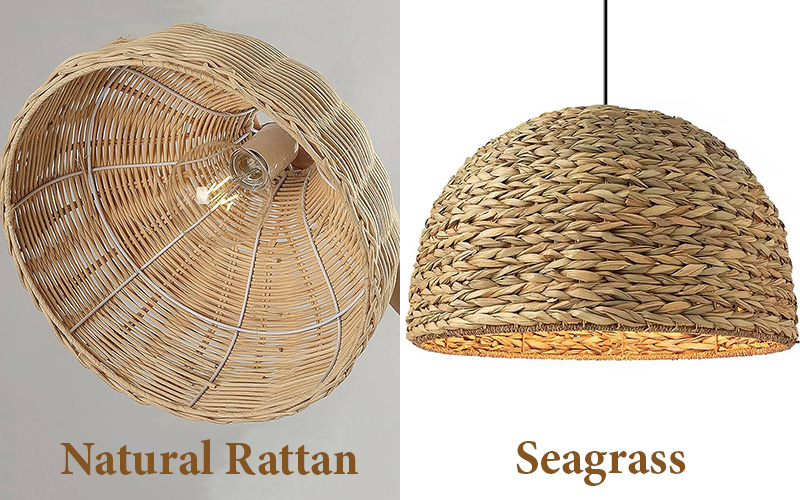
Seagrass is another popular, eco-friendly fiber used in décor.
Rattan
- Solid, strong, and durable
- Smooth texture
- Suitable for furniture and lighting
- Long-lasting structure
Seagrass
- Softer, more textured
- Not as strong as rattan
- Best for baskets, rugs, trays
- Offers a rustic, earthy look
Seagrass decor pairs beautifully with rattan, especially in Coastal and Boho interiors.
3. Rattan vs Bamboo
Although covered earlier, here’s a quick summary:
| Feature | Rattan | Bamboo |
|---|---|---|
| Structure | Solid vine | Hollow stalk |
| Flexibility | Highly flexible | Less flexible |
| Appearance | Smooth, warm-toned | Ringed, wood-like |
| Best Use | Woven crafts | Frames, panels |
Bamboo is excellent for rigid structures; rattan is perfect for weaving and organic forms.
See detail: Rattan vs Bamboo: Which Is Better? Full Comparison Guide
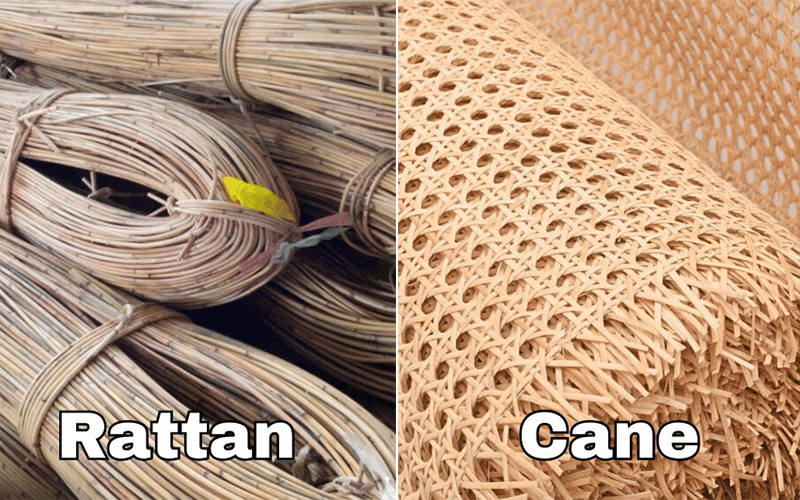
4. Rattan vs Cane (Cane Webbing)
Cane comes from the outer bark of the rattan vine.
Rattan
- Solid core
- Used for poles, weaving, structure
Cane
- Thin outer layer
- Used for decorative patterns
- Popular in mid-century furniture
Cane has an airy, open-weave look, ideal for cabinet doors, chairs, and wall accents.
5. Rattan vs Jute
Jute is a plant fiber commonly used in rugs and textiles.
| Feature | Rattan | Jute |
|---|---|---|
| Texture | Much stronger, solid fiber | Soft and rope-like |
| Strength & Usage | Used for large, structural pieces | Not suitable for furniture |
| Best Applications | Works in both décor and furniture | Best for rugs, mats, rope designs |
Benefits of Rattan
Rattan is more than just a stylish material – it offers practical, environmental, and aesthetic advantages that make it a top choice for homeowners, designers, and artisans worldwide.
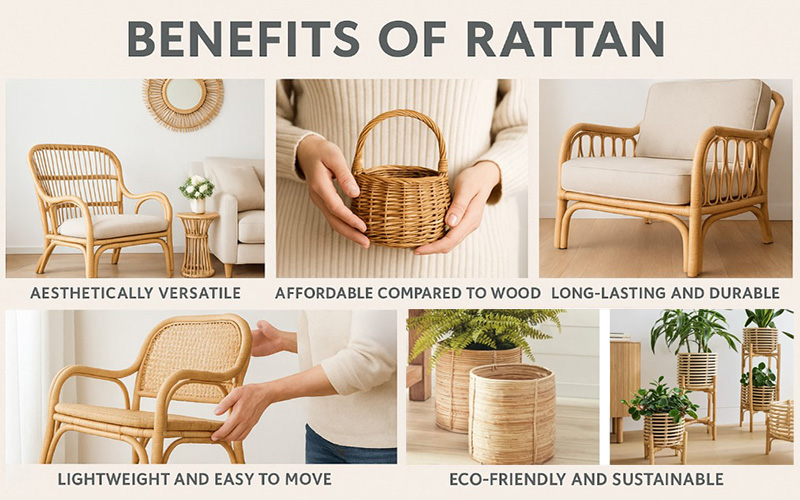
1. Aesthetically Versatile
One of the biggest reasons rattan is so popular is its ability to blend seamlessly into many interior design styles. Its warm, natural tones and organic textures make it an ideal material for:
- Japandi
- Wabi-Sabi
- Scandinavian
- Coastal & Beach House
- Boho
- Farmhouse
- Tropical
- Organic Modern
Whether your home leans minimalist, rustic, or beach-inspired, rattan adds depth and softness without overwhelming the space.
2. Affordable Compared to Wood
Rattan offers a high-end look without the high-end cost. Because it grows quickly and is abundant in Southeast Asia, rattan products are generally more affordable than furniture or lighting made from hardwoods.
This makes it a favorite among:
- First-time homeowners
- Apartment dwellers
- Airbnb hosts
- Designers working on budget-conscious renovations
You get warmth, texture, and craftsmanship – at a much more accessible price.
3. Long-Lasting and Durable
Although lightweight, rattan is impressively strong. Its solid-core structure gives it a durability that can last for decades when properly cared for.
Benefits include:
- Resistant to everyday wear
- Maintains shape over time
- Withstands regular use
- Ideal for woven structures
This is why many vintage rattan pieces from the 1970s are still popular and functional today.
4. Lightweight and Easy to Move
Unlike heavy wood furniture or metal lighting, rattan is incredibly lightweight.
This makes it easier to:
- Rearrange your furniture
- Hang pendant lights
- Move chairs or baskets
- Redecorate without heavy lifting
For homeowners who enjoy refreshing their spaces regularly, this is a major advantage.
5. Eco-Friendly and Sustainable
Rattan is one of the most environmentally friendly materials available today.
Environmental benefits include:
- Grows rapidly and regenerates naturally
- Requires minimal processing
- Biodegradable and recyclable
- Supports forest preservation
- Provides income to rural artisan communities
Choosing rattan isn’t just a design decision – it’s an eco-conscious lifestyle choice.
Disadvantages of Rattan
Although rattan is an incredible material, it isn’t perfect for every situation. Understanding its limitations helps homeowners choose the right product for the right environment.
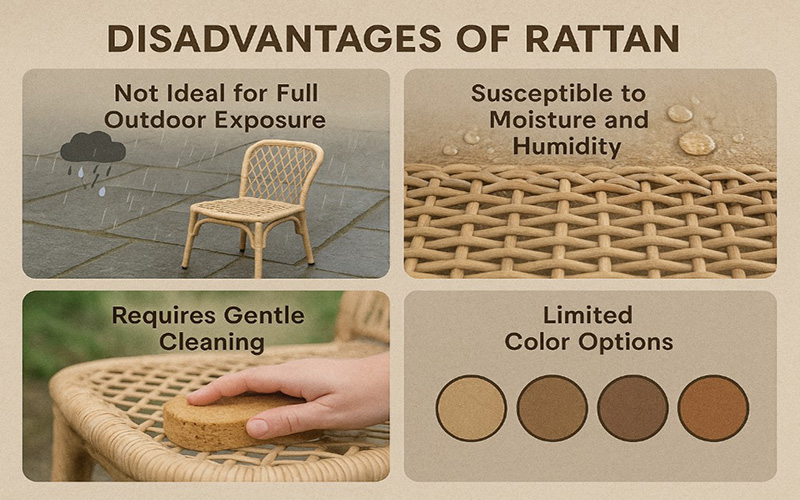
1. Not Ideal for Full Outdoor Exposure
Natural rattan can be sensitive to harsh outdoor conditions.
Rain, sun, and humidity can cause:
- Fading
- Drying and cracking
- Weakened fibers
- Mold or mildew growth
Solution: Use natural rattan indoors or in covered outdoor spaces. For patios or poolside areas, choose synthetic PE rattan, which is weather-resistant.
2. Susceptible to Moisture and Humidity
Because rattan is a natural fiber, excessive moisture can lead to:
- Mold
- Mildew
- Softening of the weave
Best practice: Keep rattan in dry, ventilated areas. If you live in a humid climate, occasional sun-drying or airflow helps maintain quality.
3. Requires Gentle Cleaning
Rattan needs to be cleaned carefully to preserve its texture and color.
Do NOT use:
- Harsh chemicals
- Pressure washers
- Soaking or submerging in water
Safe cleaning methods:
- Soft cloth wiping
- Gentle dusting
- A slightly damp cloth for stubborn dirt
- Natural oils for long-term preservation
A little care goes a long way.
4. Limited Color Options
Rattan naturally comes in shades of beige, honey, and warm brown. While these tones are beautiful and versatile, they may not suit every interior color palette.
However:
Many artisans now offer rattan in painted or stained finishes such as black, walnut, or white – though natural tones remain the most popular.
How to Identify Real Rattan (Not Synthetic or Fake)
As rattan becomes more popular in modern homes, the market is flooded with imitation materials – especially synthetic PE rattan, which is commonly used for outdoor furniture. While synthetic versions have their purpose, they cannot replace the natural warmth, texture, and authenticity of real rattan.
Here’s how to easily tell the difference so you always choose high-quality, genuine rattan products.
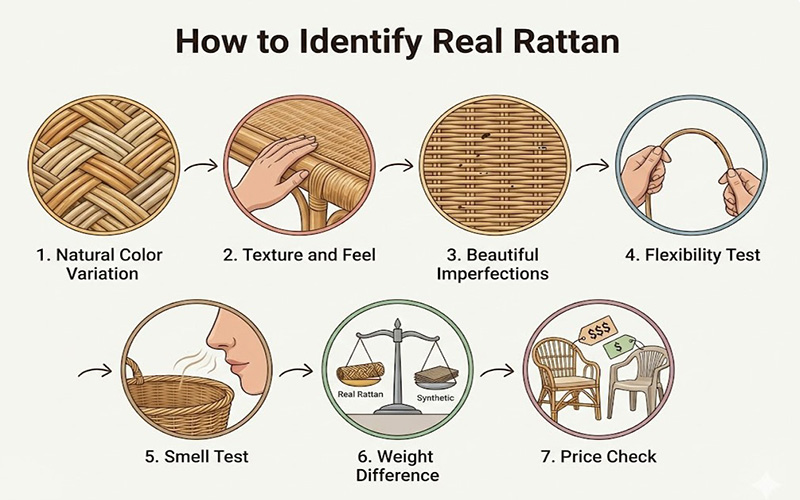
1. Natural Color Variation
Real rattan never looks perfectly uniform.
- You’ll notice slight changes in tone (beige, honey, warm tan).
- Some areas may appear darker or lighter.
- Natural nodes, fiber patterns, and minor imperfections are common.
Synthetic rattan usually has a perfectly even color, which is a clear sign it’s artificial.
2. Texture and Feel
When you touch real rattan, you can feel:
- A natural, slightly rough texture
- Subtle grain lines
- Firmness with slight flexibility
- A warm, organic surface
In contrast, synthetic rattan:
- Feels smooth or plastic-like
- Has a colder touch
- May feel too soft or overly flexible
- Often has a glossy plastic sheen
3. Beautiful Imperfections (Proof of Authenticity)
Natural rattan includes:
- Tiny marks from growth
- Slight unevenness in thickness
- Small discolorations or fiber lines
- Organic irregularities
These imperfections are part of its charm and are celebrated in design styles like Wabi-Sabi and Japandi.
4. Flexibility Test
Real rattan bends gently without snapping.
Synthetic rattan, depending on the type, may:
- Bend too easily and feel rubbery, or
- Be too stiff and crack like brittle plastic
Neither of these behaviors matches natural rattan.
5. Smell Test
Real rattan has a subtle, natural scent – similar to dried plants or wood.
Synthetic rattan:
- Often has a chemical or plastic smell
- Especially noticeable when new or exposed to heat
This quick test is surprisingly effective.
6. Weight Difference
Real rattan is lightweight but still feels sturdy.
Synthetic rattan is often:
- Extremely light
- Lacking the “solid” feel of real fibers
7. Price Check
Because real rattan requires:
- Forest harvesting
- Sun-drying or smoke curing
- Hand splitting
- Hand weaving
…it generally costs more than machine-made synthetic versions.
If the price is extremely cheap, it may not be genuine rattan.
How to Care for Rattan Products
Rattan is durable and long-lasting, but like any natural material, it needs proper care to maintain its beauty. The good news is that caring for rattan is simple and requires very little effort.
Here’s how to keep your rattan furniture, décor, and lighting looking beautiful for years.
1. Regular Cleaning
Basic cleaning routine:
- Dust using a soft cloth or feather duster
- Use a soft brush or vacuum with a brush attachment to reach woven gaps
- Wipe lightly with a slightly damp cloth if needed
Avoid:
- Excess water
- Strong chemical cleaners
- Harsh scrubbing
Rattan is porous, and too much moisture can weaken fibers.
2. Protect From Sunlight
Direct sunlight over long periods can:
- Dry out the fibers
- Cause fading
- Make the structure brittle
Prevention:
- Keep rattan away from strong, direct sun
- Use window curtains or UV-filtering films if needed
3. Control Humidity Levels
High humidity can cause:
- Mold
- Mildew
- Fiber softening
Best practices:
- Keep rattan in dry, well-ventilated spaces
- Use a dehumidifier during rainy seasons
- Occasionally place the item in gentle sunlight (1–2 hours) to remove moisture
4. Prevent Mold and Mildew
If mold appears:
- Wipe gently with a dry cloth
- Place the item under soft sunlight
- Use a very diluted white vinegar solution (light wipe only)
Avoid chemical mold removers, as they may damage the natural fibers.
5. Condition With Natural Oils
To maintain moisture balance and extend lifespan, you can occasionally apply:
- Linseed oil
- Walnut oil
- Natural wood conditioning oils
Apply very thin layers – too much oil attracts dust.
6. Avoid Excess Weight
Rattan is strong, but woven structures can deform under heavy pressure.
Avoid:
- Sitting on items not designed for seating
- Stacking heavy objects
- Pressing down on rattan lamps or baskets
This helps the weave maintain its shape for years.
7. Indoor Use Only (for Natural Rattan)
Natural rattan is not meant for harsh outdoor conditions.
Suitable:
- Indoor rooms
- Covered patios and screened porches
Not suitable:
- Rain
- Direct sun
- Poolside or open yards
If you need outdoor furniture, choose PE synthetic rattan, which is weather-resistant.
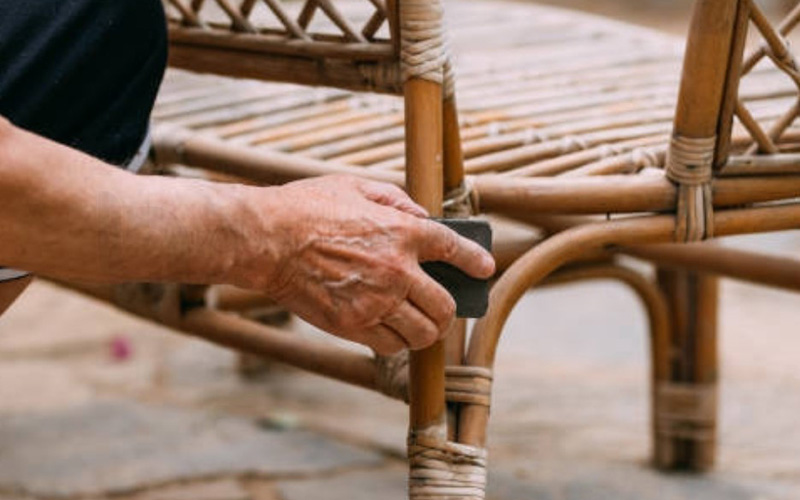
View the full guide: How To Clean Rattan Furniture just in few Steps
Is Rattan Eco-Friendly?
Rattan is widely recognized as one of the most sustainable natural materials used in furniture, lighting, and home décor. Its environmental benefits go far beyond aesthetics, making it a top choice for homeowners and designers who value eco-friendly living.
Here’s why rattan is considered an environmentally responsible material:
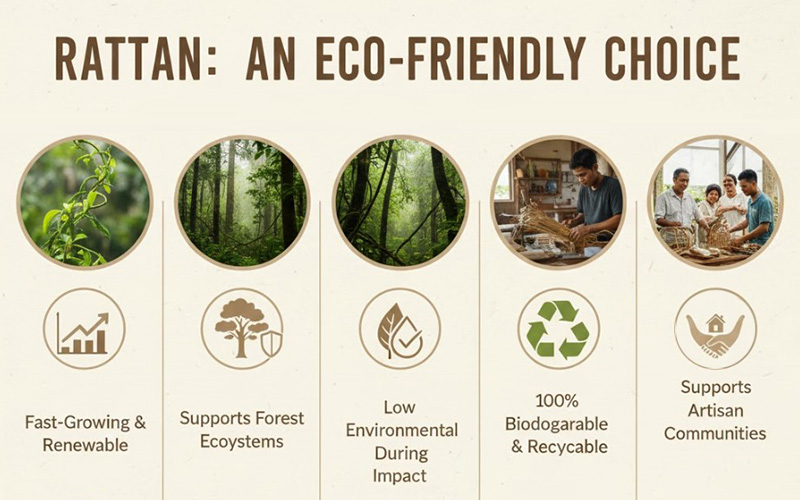
1. Fast-Growing and Highly Renewable
Rattan grows extremely quickly – much faster than hardwood trees.
Advantages:
- It reaches maturity within just a few years.
- It can be harvested without killing the plant.
- New shoots regrow naturally, ensuring a continuous supply.
This makes rattan one of the most renewable natural resources in the world.
2. Supports Forest Ecosystems
Unlike timber harvesting, rattan collecting does not require cutting down trees.
Rattan vines grow by climbing trees, so preserving forests is essential for their growth. This creates an incentive to protect old-growth forests, helping reduce deforestation in Southeast Asia.
Rattan harvesting also:
- Provides economic benefits for rural communities
- Encourages sustainable land management
- Promotes biodiversity in tropical forests
3. Low Environmental Impact During Processing
Rattan requires very little industrial processing.
Traditional steps include:
- Hand-harvesting
- Sun drying
- Light smoke curing
- Manual splitting and weaving
No heavy machinery, toxic chemicals, or energy-intensive manufacturing is required – making its carbon footprint significantly lower than synthetic materials or metal furnishings.
4. 100% Biodegradable and Recyclable
Real rattan is a natural plant fiber. When a product reaches the end of its life cycle, it will:
- Biodegrade naturally
- Break down without harming the environment
- Leave behind no plastic waste
This makes rattan an excellent alternative to petroleum-based materials like synthetic wicker and plastic.
5. Supports Artisan Communities
Most rattan products – especially in Vietnam, Indonesia, and the Philippines – are handcrafted by local artisans.
Buying rattan helps:
- Preserve traditional craftsmanship
- Create stable income for rural families
- Encourage sustainable village economies
In addition to being eco-friendly, rattan products also support cultural heritage and artisanal livelihoods.
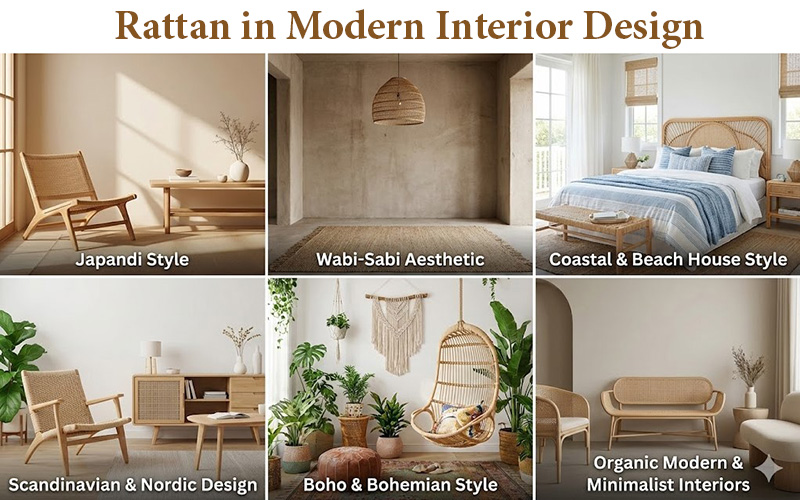
Rattan in Modern Interior Design
Rattan has made a major comeback in contemporary design, becoming a global favorite for its warmth, texture, and versatility. Today’s designers use rattan in ways that feel modern, sophisticated, and timeless – not outdated or old-fashioned.
Here’s how rattan is used across popular interior styles:
1. Japandi Style
Japandi combines Japanese minimalism with Scandinavian comfort.
Rattan fits perfectly because it brings:
- Natural texture
- Organic form
- Soft, warm tones
- Handcrafted authenticity
Rattan pendant lights, stools, and accent chairs are especially common in Japandi interiors.
2. Wabi-Sabi Aesthetic
Wabi-Sabi celebrates imperfection, simplicity, and nature.
Rattan works beautifully here because it naturally includes:
- Subtle inconsistencies
- Organic variations
- Handwoven patterns
- Raw, imperfect textures
It brings calm and soulful beauty to bedrooms, living rooms, and dining areas.
3. Coastal & Beach House Style
Rattan is a staple in coastal interiors because its warm, sandy tones resemble the beach environment.
It pairs effortlessly with:
- White and neutral color palettes
- Linen textiles
- Driftwood accents
- Airy, relaxed layouts
Rattan chandeliers and pendant lights are especially popular in coastal kitchens and dining rooms.
4. Scandinavian & Nordic Design
Scandinavian interiors prioritize simplicity, light, and functionality.
Rattan enhances this style by adding:
- Soft organic contrast
- Lightweight structure
- Minimal yet warm visual appeal
It blends beautifully with oak furniture, soft textiles, and clean lines.
5. Boho & Bohemian Style
Boho design embraces layers, patterns, and natural materials.
Rattan is often featured in:
- Hanging chairs
- Decorative mirrors
- Woven pendant lights
- Textured baskets
Its handcrafted charm fits perfectly with the eclectic, relaxed nature of boho décor.
6. Organic Modern & Minimalist Interiors
Modern homes today prioritize natural textures and earthy elements.
Rattan is ideal because it:
- Warms up minimalist spaces
- Adds subtle texture without clutter
- Creates a more inviting atmosphere
- Balances sleek, modern surfaces
The combination of rattan, stone, warm neutrals, and soft lighting is a major trend for 2026–2027.
7. Trending Uses of Rattan in 2026–2027
Designers increasingly use rattan in:
- Pendant lights over kitchen islands
- Dining room lighting clusters
- Textured headboards
- Bedroom accent pieces
- Wall décor and open-weave screens
- Living room cabinets and sideboards
Rattan’s versatility ensures it remains a timeless material – far beyond temporary design fads.
Conclusion
Rattan is far more than a design trend – it is a timeless, sustainable, and culturally rich material that has been used for centuries. Its natural warmth, flexibility, and durability make it an ideal choice for modern homes seeking comfort, authenticity, and eco-friendly design.
Whether you’re choosing a rattan pendant light for your dining room, a cane-webbed cabinet for your living room, or a set of woven baskets for storage, rattan brings:
- A sense of calm and natural beauty
- Handmade craftsmanship
- Long-lasting durability
- Compatibility with many design styles
- A sustainable, eco-conscious choice
In today’s world, where people are embracing organic textures, soft lighting, and meaningful craftsmanship, rattan continues to shine as one of the most versatile and beloved natural materials.
It fits effortlessly into Japandi, Wabi-Sabi, Coastal, Scandinavian, and Bohemian interiors – making it a perfect match for homes that value nature, simplicity, and warmth.
Bring the beauty of natural rattan into your home. Explore handcrafted lighting and décor at VietShopDesign and find pieces that elevate your space with warmth and authenticity.
Read more
- What Are Plant Fibres? Definition, Uses & Eco-Friendly Benefits
- What Is Hemp Rope and How Is Hemp Rope Made?



Unlock VIP Perks
Join as a priority member to receive gifts and be the first to access exclusive deals, our newest collections, and more...
Read more articles
25+ Best Outdoor Bamboo Pendant Lights for a Warm, Natural & Inviting Space
Outdoor bamboo pendant lighting transforms a pergola, patio, or covered garden dining space from a [...]
Jun
11 Best Organic Modern Rope Lighting Ideas for a Warm, Inviting Space
Wicker, hemp rope, jute, and water hyacinth bring the most authentically textural and the most [...]
Jun
25+ Trending Organic Modern Rattan Lights for a Cozy Living Space
The most beautifully designed organic modern interiors today are built not on safe pendant choices [...]
Jun
8 Organic Modern Rattan Dome Pendant Lights for a Soft, Natural Interior
The dome form is rattan’s most naturally generous and most softly organic pendant silhouette – [...]
Jun
9 Organic Modern Rattan Chandeliers for a Soft, Natural Interior
A rattan chandelier in an organic modern interior creates the most complete expression of what [...]
Jun
11 Organic Modern Brown Rattan Lights for a Warm, Earthy Home
Brown rattan brings the most warmly grounded and most gently earthy pendant tone to an [...]
May
15+ Organic Modern Black Rattan Lights for a Warm, Bold Home
Black rattan in an organic modern interior creates a precisely beautiful design tension – the [...]
May
12 Organic Modern Beige Rattan Lights for a Natural Interior
Beige rattan is the pendant material that organic modern design was made for – its [...]
May
25+ Organic Modern Bamboo Lights for a Soft, Natural Interior
Organic modern design lives at the most beautiful intersection of clean contemporary form and warm [...]
May
8 Best Organic Modern Wood Pendant Lights for a Warm, Natural Home
Wood pendant lighting brings a quality to an organic modern interior that no softer natural [...]
May
8 Modern Rustic Wood Lighting for a Warm, Architectural Interior
Wood pendant lighting belongs in a modern rustic interior the way exposed timber belongs in [...]
May
12 Modern Rustic Wicker Rope Pendant Lights for a Warm, Textural Interior
In a modern rustic interior built around exposed timber beams, rough stone walls, worn leather [...]
May
Explore our collections
Rattan Pendant Light
95 Products
Bamboo Pendant Light
38 Products
Fabric Pendant Light
41 Products
Wood Pendant Light
7 Products
Rope Pendant Light
14 Products
Rattan Wall Sconce
6 Products
Rattan Table Lamp
6 Products
Rattan Floor Lamp
9 Products