
Interior Design Styles
Best Wabi-Sabi Office Design Tips for a Organized Workspace
In a world filled with sleek perfection and constant upgrades, Wabi-Sabi office design offers a refreshing counterbalance – one that celebrates authenticity, imperfection, and the quiet beauty of simplicity. Rooted in ancient Japanese philosophy, Wabi-Sabi teaches us to find contentment in the natural flow of life – to appreciate the charm of things that are worn, weathered, or incomplete. When applied to interior design, it translates into warm, organic spaces that feel grounded, mindful, and real.
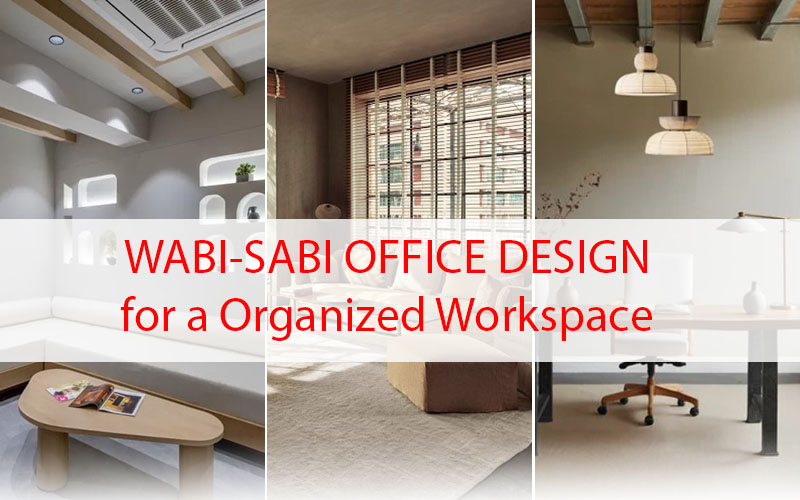
In an office environment, this approach transforms the typical sterile workspace into a place of calm and creativity. Instead of focusing on flawless surfaces or uniform décor, Wabi-Sabi embraces raw textures, muted colors, and handcrafted elements that tell a story.
A Wabi-Sabi office invites you to slow down, focus on what truly matters, and find harmony in your surroundings. It’s not just about aesthetics – it’s a mindset that nurtures clarity, productivity, and emotional well-being.
“In a world that strives for perfection, Wabi-Sabi reminds us that imperfection is where true beauty lives.”
If you’re not yet familiar with the foundations of this style, I recommend reading our full guide to Wabi Sabi Interior Design. It covers the philosophy, key principles, and overall aesthetic – giving you the perfect context before exploring how Wabi Sabi can be applied to a modern workspace.
Core Principles of Wabi-Sabi Applied to Office Design
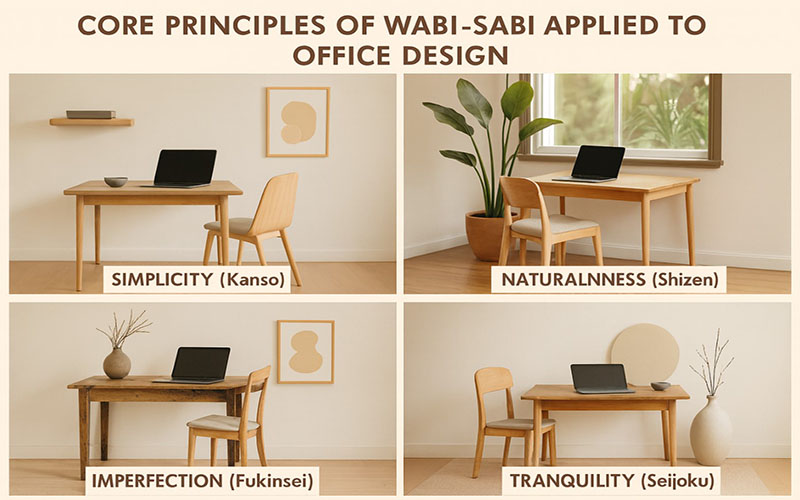
To design a Wabi-Sabi workspace, it’s important to understand its four core principles – each representing a timeless value of Japanese aesthetics and mindfulness.
1. Simplicity (Kanso)
Wabi-Sabi thrives on minimalism with meaning. This doesn’t mean a cold, empty office, but rather a space free of clutter and distraction. Every item has a purpose and is chosen for its natural form or emotional resonance.
Think of clean desks, open layouts, and natural light – a setting that promotes focus and serenity instead of chaos.
Example: A single handcrafted ceramic vase on a wooden desk speaks more than a dozen decorative pieces.
2. Naturalness (Shizen)
Wabi-Sabi design connects deeply with nature. Use materials such as wood, bamboo, rattan, linen, clay, or stone to create a tactile experience that grounds your senses.
Natural light is preferred over artificial illumination, while indoor plants – even a small bonsai or dried branch – can bring life and softness to your workspace.
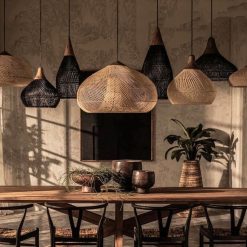
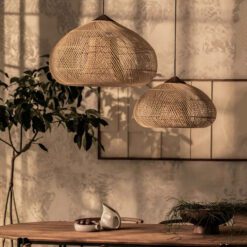
Tip: Choose a rattan pendant light or a linen lampshade for gentle, diffused illumination that echoes the rhythm of daylight.
3. Imperfection (Fukinsei)
Rather than chasing perfect symmetry or polished finishes, Wabi-Sabi celebrates the beauty of imperfection – a slightly uneven pottery mug, a reclaimed wood tabletop with visible grain, or an aged metal lamp with patina.
These details tell stories of time and craftsmanship, reminding us that flaws are not failures but part of authenticity.
Example: A handcrafted bamboo chair with small irregularities adds character that mass-produced furniture can’t replicate.
4. Tranquility (Seijaku)
At the heart of Wabi-Sabi lies stillness. A calm environment allows the mind to recharge and focus better. In office design, this means choosing neutral tones, soft textures, and layouts that promote mental clarity and quiet reflection.
Even in a bustling corporate setting, a tranquil corner with soft lighting, neutral walls, and natural accents can become a small sanctuary of mindfulness.
“A Wabi-Sabi office doesn’t demand attention – it invites peace.”
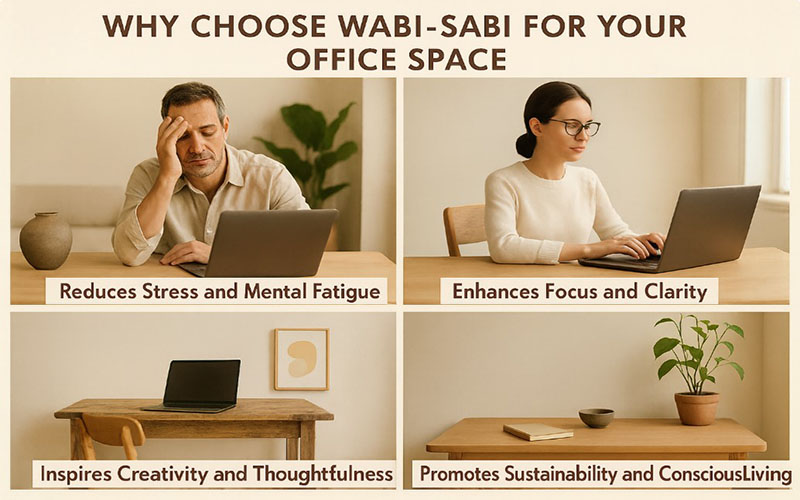
Why Choose Wabi-Sabi for Your Office Space?
Designing your workspace isn’t just about looks – it’s about how the space makes you feel. In a world driven by speed and technology, a Wabi-Sabi office offers a much-needed pause – a return to calm, authenticity, and human connection.
Here’s why more professionals and business owners are turning to Wabi Sabi office design for their workplaces:
1. Reduces Stress and Mental Fatigue
A Wabi-Sabi-inspired office replaces harsh lighting, bright plastics, and digital clutter with soft tones, natural textures, and organic materials.
This sensory harmony helps lower stress levels and promotes mindfulness during the workday – creating an environment where calm thinking comes naturally.
Imagine: Warm sunlight filtering through bamboo blinds, a linen curtain swaying gently, and the faint scent of wood – that’s serenity in motion.
2. Enhances Focus and Clarity
Minimalism is more than an aesthetic choice; it’s a productivity strategy.
By decluttering both your space and your mind, you remove distractions that drain focus.
Every element – from your desk lamp to your wall art – is intentional, helping you stay centered on what truly matters.
Tip: Keep only what you use daily on your desk. Store the rest neatly in natural wicker baskets or simple wooden drawers.
3. Inspires Creativity and Thoughtfulness
When surrounded by authentic, handcrafted pieces, creativity flows more freely.
The imperfections and organic shapes in Wabi-Sabi design stimulate curiosity – they remind you that innovation often comes from embracing difference rather than perfection.
Example: A handwoven rattan light fixture or a reclaimed-wood desk naturally sparks conversations and ideas.
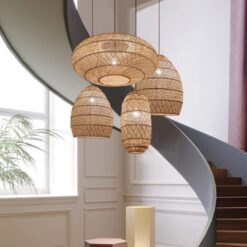
Rattan Pendant Light
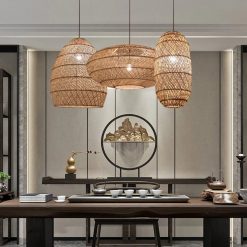
Rattan Pendant Light
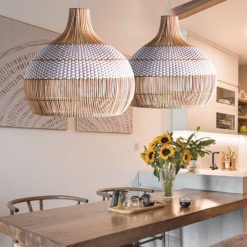
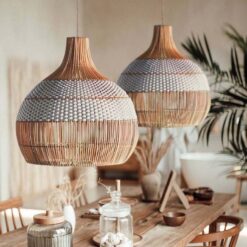
Rattan Pendant Light
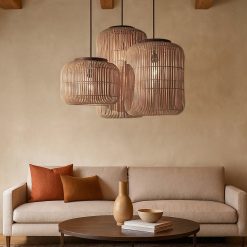
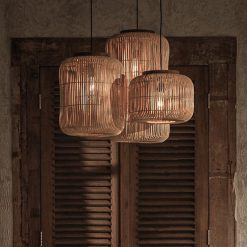
Rattan Pendant Light
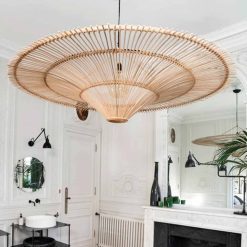
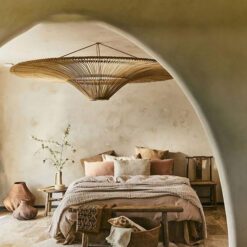
Rattan Pendant Light
4. Promotes Sustainability and Conscious Living
Wabi-Sabi aligns beautifully with eco-friendly values. It celebrates reuse, repair, and sustainability – a counter to the disposable culture of modern offices.
Using reclaimed furniture, recycled décor, and long-lasting natural materials not only benefits the planet but also adds soul to your workspace.
5. Reflects Authenticity and Purpose
A Wabi-Sabi office isn’t about impressing others; it’s about creating a space that feels true to who you are.
Whether you’re a designer, entrepreneur, or artist, your surroundings should tell your story – one that values depth, patience, and sincerity over trends.
“Your workspace should feel like a reflection of your soul – imperfect, evolving, and deeply real.”
Key Elements of Wabi-Sabi Office Design
To achieve the essence of Wabi-Sabi, focus on the key visual and emotional elements that define the style.
Each element contributes to creating a space that feels warm, grounded, and effortlessly beautiful.
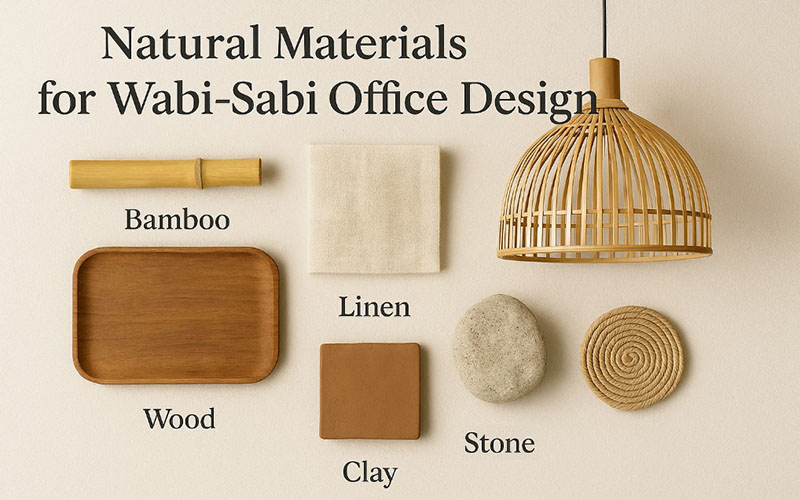
1. Natural Materials
The foundation of Wabi-Sabi design lies in organic textures.
Choose wood, bamboo, rattan, clay, linen, and stone – materials that age gracefully and gain character over time.
They bring warmth and a tactile connection to nature that synthetic materials simply can’t replicate.
Example: A bamboo pendant light casting soft shadows on a wooden desk instantly sets a calming tone.
2. Earthy Color Palette
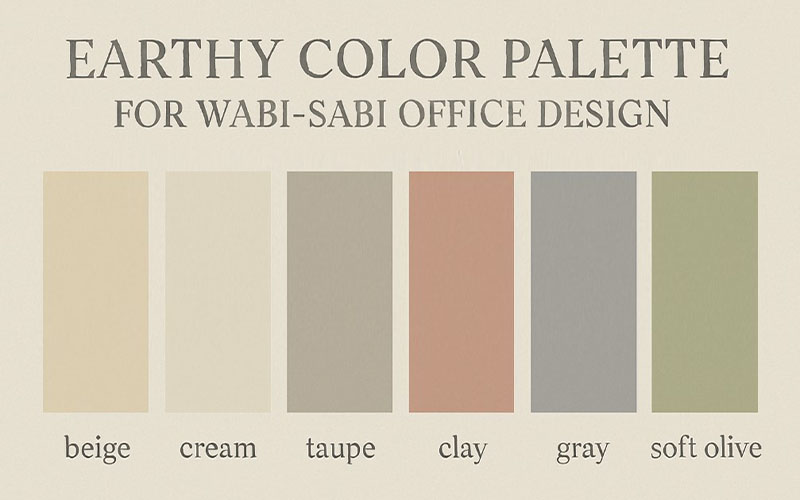
Stick to muted, natural hues like beige, cream, taupe, clay, gray, or soft olive.
These colors evoke peace and balance while complementing raw materials beautifully.
A splash of charcoal or rust can add subtle contrast without breaking the calm aesthetic.
Tip: Think “colors of nature” – the shade of stone, sand, or aged wood.
3. Organic Shapes and Imperfect Forms
In Wabi-Sabi, nothing is perfectly symmetrical – and that’s the point.
Favor furniture and decor with gentle curves, uneven edges, or handmade qualities that express individuality. A slightly crooked ceramic mug or uneven wood surface carries charm and life…
4. Soft, Natural Lighting
Avoid harsh, fluorescent lights. Instead, use diffused lighting that mimics daylight – think linen lampshades, rattan pendant lights, or paper lanterns.
Warm light enhances textures and creates a peaceful atmosphere that supports focus and relaxation.
Pro tip: Layer lighting – combine natural sunlight, warm desk lamps, and soft overhead fixtures for a balanced effect.
5. Greenery and Natural Decor
Nature plays a central role in Wabi-Sabi spaces. Add potted plants, dried flowers, or even bare branches to bring organic life indoors.
A small bonsai or ivy plant can instantly soften a workspace and remind you of life’s natural rhythm.
6. Minimal Furniture with Meaning
Choose quality over quantity.
A sturdy wooden table, a woven chair, and a single floating shelf can be enough if arranged mindfully.
Avoid overcrowding the space – negative space (or ma) is a vital part of Wabi-Sabi harmony.
7. Textural Contrast
Wabi-Sabi thrives on contrast – rough meets smooth, matte meets soft.
Pair a concrete wall with a linen curtain, or a stone floor with a wool rug to create depth without excess.
“Wabi-Sabi is not about decorating more – it’s about appreciating what already exists.”
How to Create a Wabi-Sabi Office: Step-by-Step Guide
Transforming your workspace into a serene Wabi-Sabi sanctuary doesn’t require a full renovation – it begins with intention. Follow these simple yet mindful steps to create an office that feels grounded, authentic, and beautifully imperfect.
- Declutter and Simplify
Start by removing anything unnecessary.
A clean, uncluttered space helps your mind breathe and focus.
Keep only items that serve a purpose or hold meaning – a handcrafted mug, a journal, or a favorite plant.
Tip: Use natural storage options like wicker baskets, wooden boxes, or linen trays instead of plastic organizers. - Choose Natural and Sustainable Materials
Introduce materials that age gracefully – wood, bamboo, rattan, linen, cotton, stone, or ceramic.
They bring tactile warmth and an earthy tone to your workspace, aligning perfectly with Wabi-Sabi values of authenticity and impermanence.
Example: Replace metal desk accessories with bamboo organizers or choose a linen office chair cushion. - Embrace a Neutral, Earthy Color Palette
Opt for muted shades that calm the senses – soft beige, warm gray, off-white, or faded olive.
These hues reflect nature’s palette and allow your mind to stay at ease while working.
Pro tip: If your space feels too flat, layer similar tones – for example, mix sandy beige walls with a warm wood floor and cream curtains. - Bring in Gentle, Natural Lighting
Lighting defines the mood of your workspace.
Avoid harsh LED lights and choose warm, diffused sources like rattan pendant lights, paper lanterns, or linen lampshades.
Soft shadows and golden tones create a meditative, peaceful atmosphere perfect for deep focus.
Tip: If possible, position your desk near a window to capture natural light throughout the day. - Add Natural and Organic Elements
Bring nature indoors with plants, dried flowers, or natural stones.
Even a single bonsai or a rustic clay vase filled with dried pampas grass can create a connection to the outdoors and introduce organic imperfection.
Example: A small aloe plant on your desk or a hanging ivy near the window instantly softens the room’s energy. - Accept Imperfection
A chipped cup, a worn wooden chair, or a slightly uneven handmade lamp – these are not flaws, but symbols of life and time.
Wabi-Sabi celebrates these imperfections as part of beauty itself.
Don’t over-decorate; let your space breathe with character and quiet stories.
“Perfection is sterile. Imperfection is alive.” - Maintain Balance and Flow
In Japanese aesthetics, “ma” means the space between things – the pause that gives rhythm and meaning.
Leave enough open space between furniture and decor to allow movement and mindfulness.
Your office should feel airy, not crowded – a place where energy flows freely.
Real-Life Wabi-Sabi Office Inspirations
Now that you know the principles and steps, let’s visualize how a Wabi-Sabi office comes to life in different settings.
Here are four real-world examples to inspire your design journey – whether you’re creating a cozy home office or a professional studio.
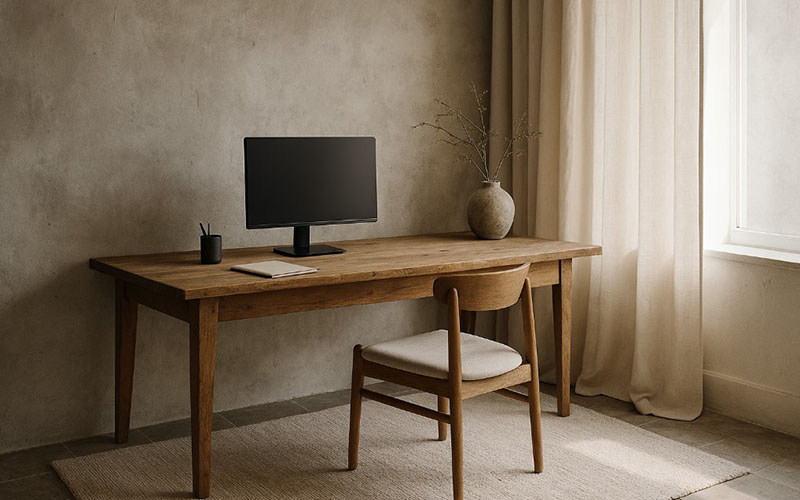
1. The Wabi-Sabi Home Office
A compact workspace with a reclaimed wooden desk, a neutral linen chair, and soft rattan lighting.
A small bonsai sits by the window, and sunlight filters through sheer curtains.
This setting radiates calm and focus – perfect for remote workers or creatives.
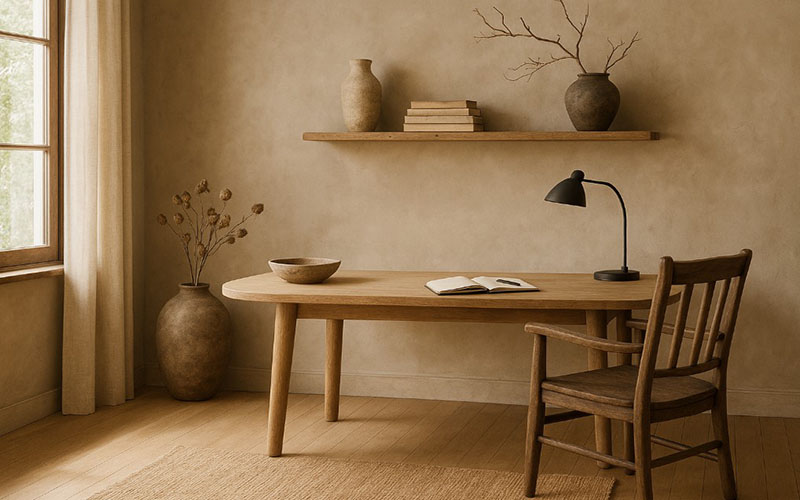
2. The Creative Studio Wabi-Sabi Design
An artistic environment that embraces raw materials and individuality.
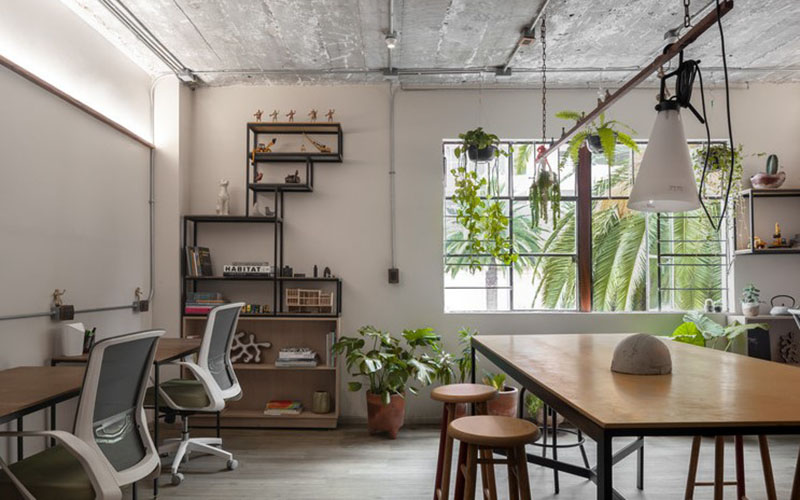
Rough concrete walls, mismatched pottery, open shelving, and hanging pendant lights create an authentic, tactile atmosphere.
Every object feels like it has a story – a true Wabi-Sabi workspace for designers and makers.
Tip: Combine industrial textures with handcrafted elements to balance structure and soul.
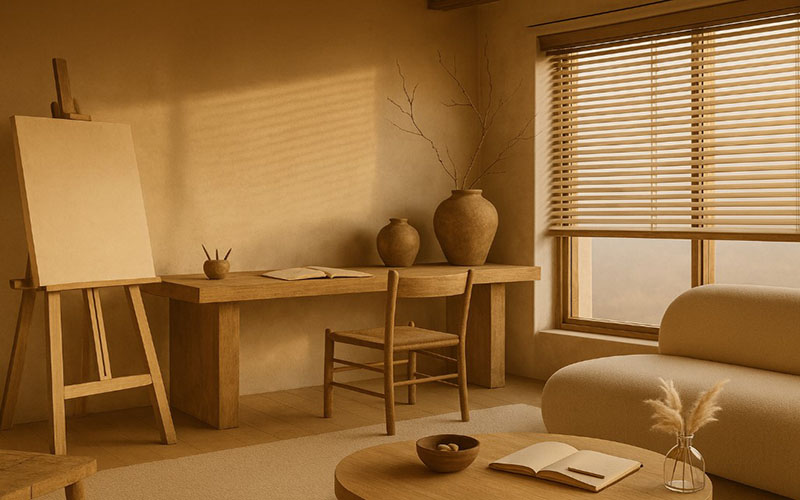
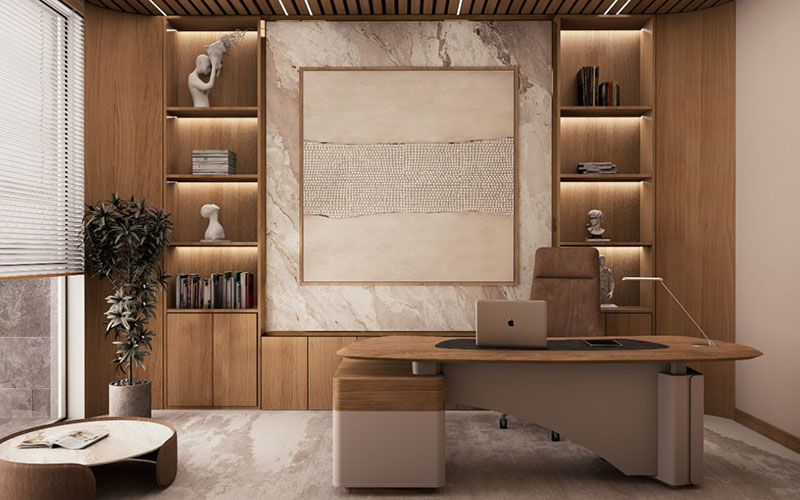
3. The Corporate Calm Office
Even modern corporate spaces can adopt Wabi-Sabi.
Think large glass windows, natural wooden desks, and linen partitions to soften hard lines.
Adding live plants, muted wall art, and warm pendant lighting transforms sterile rooms into mindful zones of productivity.
“A tranquil office doesn’t slow work – it enhances clarity and collaboration.”
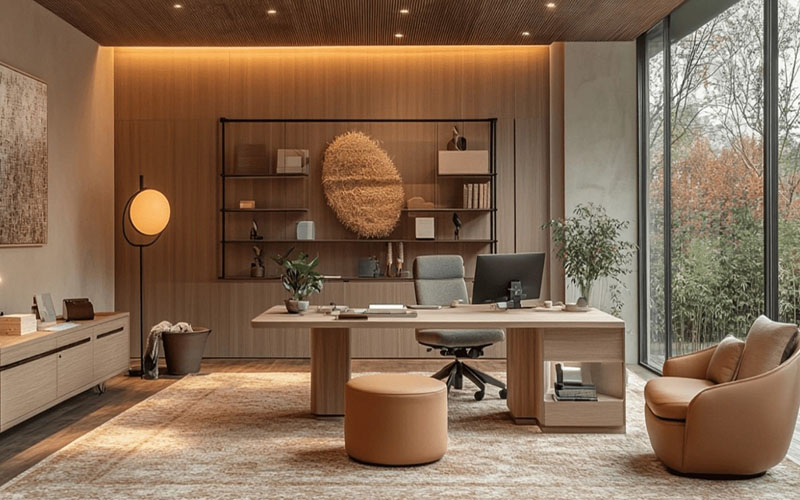
4. The Wabi-Sabi Shared Coworking Space
Coworking areas can integrate Wabi-Sabi values by focusing on warmth and community.
Use earthy tones, natural fiber rugs, and organic seating arrangements that encourage connection.
Soft lighting, recycled materials, and handmade decor foster both creativity and mindfulness among users.
Each of these setups reminds us that Wabi-Sabi isn’t a style you copy – it’s a feeling you cultivate.
It’s about slowing down, appreciating the imperfect, and finding stillness in everyday work life.
Combining Wabi-Sabi with Other Design Styles
One of the most beautiful aspects of Wabi-Sabi is its flexibility – it harmonizes effortlessly with other design philosophies.
Whether your style leans Scandinavian, Industrial, or Modern Minimalist, Wabi-Sabi can soften, balance, and enrich it with authenticity.
1. Wabi-Sabi + Japandi
Japandi design – a fusion of Japanese and Scandinavian aesthetics – is the perfect partner for Wabi-Sabi.
Both styles value simplicity, craftsmanship, and natural materials.
Japandi adds clean lines and light tones, while Wabi-Sabi brings emotional warmth and organic texture.
Example:
A pale oak desk, a woven rattan chair, and soft linen curtains – all paired with neutral walls and a minimal bamboo pendant light.
This combination creates a calming, modern, and harmonious workspace that feels both cozy and professional.
“Japandi offers structure; Wabi-Sabi adds soul.”
2. Wabi-Sabi + Industrial
If you love the raw appeal of industrial interiors but find them too cold, Wabi-Sabi can bring balance.
Blend rough concrete textures and metal accents with natural materials like wood, clay, and linen.
The result is a sophisticated, grounded atmosphere – strong yet soulful.
Tip:
Add handmade ceramics, woven lamps, or a few plants to soften industrial edges.
The combination of metal and rattan, or stone and linen, creates stunning visual contrast.
3. Wabi-Sabi + Modern Minimalism
Modern minimalism focuses on order and clarity, while Wabi-Sabi infuses emotion and depth.
Together, they form a workspace that is sleek but never sterile.
Instead of a white box, you get a warm, human-centered environment that encourages focus and calm.
Example:
A simple white desk with a natural oak chair, a linen lamp, and one handcrafted pottery vase – minimal, but full of intention.
4. Wabi-Sabi + Bohemian Touches
For those who prefer a more eclectic and artistic vibe, blending Wabi-Sabi with Boho elements creates relaxed charm.
Mix soft textiles, woven baskets, neutral rugs, and layered lighting.
Keep the palette earthy to maintain serenity while adding subtle personality through handmade pieces.
No matter which style you pair it with, Wabi-Sabi adds soulfulness and emotional resonance – turning an ordinary office into a sanctuary of calm and creativity.
| Style Mix | Essence | Tip | Mood |
|---|---|---|---|
| Wabi-Sabi + Japandi | Harmony of Japanese and Scandinavian aesthetics; simplicity, craftsmanship, natural tones. | Pale oak desk, rattan chair, linen curtains, bamboo pendant light. | Calm, modern, and emotionally warm workspace. |
| Wabi-Sabi + Industrial | Balances rough concrete and metal with organic warmth of wood, clay, and linen. | Add handmade ceramics, woven lamps, or plants to soften edges. | Strong yet soulful; grounded sophistication. |
| Wabi-Sabi + Modern Minimalism | Merges minimal order with natural imperfection for emotional depth. | White desk, oak chair, linen lamp, handcrafted vase. | Sleek but human-centered and calming. |
| Wabi-Sabi + Bohemian Touches | Mixes artistic freedom with earthy serenity; natural fibers and handmade decor. | Use woven baskets, layered lighting, and neutral rugs. | Relaxed, creative, and cozy with authentic charm. |
Wabi-Sabi Office Accessories and Lighting Ideas
Accessories and lighting are where the Wabi-Sabi spirit truly shines.
They complete your workspace – not by adding clutter, but by enhancing harmony, warmth, and meaning.
1. Choose Handmade and Natural Accessories
Select objects that tell a story – pieces crafted by hand, with slight irregularities and texture.
These small imperfections reflect authenticity and craftsmanship.
Ideas:
- Hand-thrown ceramic cups and vases
- Woven baskets or bamboo organizers
- Clay planters with rustic finishes
- Linen or cotton desk mats
- Reclaimed wooden picture frames
Pro tip: Avoid glossy plastics or overly symmetrical decor. Let organic shapes take the lead.
2. Integrate Warm, Organic Lighting
Lighting sets the emotional tone of your workspace.
In Wabi-Sabi design, light should feel soft, warm, and natural – a gentle echo of sunrise or sunset.
A handcrafted wabi-sabi pendant light adds both texture and authenticity to your space, blending natural warmth with minimalist beauty.
Best lighting options:
- Rattan pendant lights for diffused texture and natural shadows
- Linen or paper lampshades for a soothing glow
- Ceramic or stone table lamps to ground the look
- Wall sconces with dimmers for evening tranquility
“Light should never shout – it should whisper calm into the room.”
If you’re seeking soft, natural lighting for a Wabi-Sabi home, explore our woven collection.
Rattan Pendant Light
Rattan Pendant Light
Rattan Pendant Light
Rattan Pendant Light
Rattan Pendant Light
3. Add Green Touches
Greenery connects your mind to nature – a key principle of Wabi-Sabi.
Even a single plant can breathe life into the space and soften sharp lines.
Suggestions:
- Bonsai or small ficus trees
- Snake plants, peace lilies, or philodendrons
- Dried pampas grass or eucalyptus stems in clay vases
4. Keep Texture in Focus
Combine contrasting textures – smooth ceramic with coarse linen, rough bamboo with polished wood.
This interplay of tactile surfaces adds warmth and depth without breaking minimalism.
5. Let Time Shape Your Space
Unlike trend-driven décor, a Wabi-Sabi office evolves gracefully.
Let your accessories age naturally – the fading of wood, the wear on your chair, or the softening of fabric – all become part of your story.
“Nothing lasts, nothing is finished, and nothing is perfect – and that’s where beauty lives.”
Maintenance and Long-Term Mindset
Designing a Wabi-Sabi office isn’t a one-time project – it’s a living process.
Unlike trends that fade with every season, Wabi-Sabi design grows richer over time.
The secret lies not in replacing but in appreciating the aging process of materials, textures, and spaces.
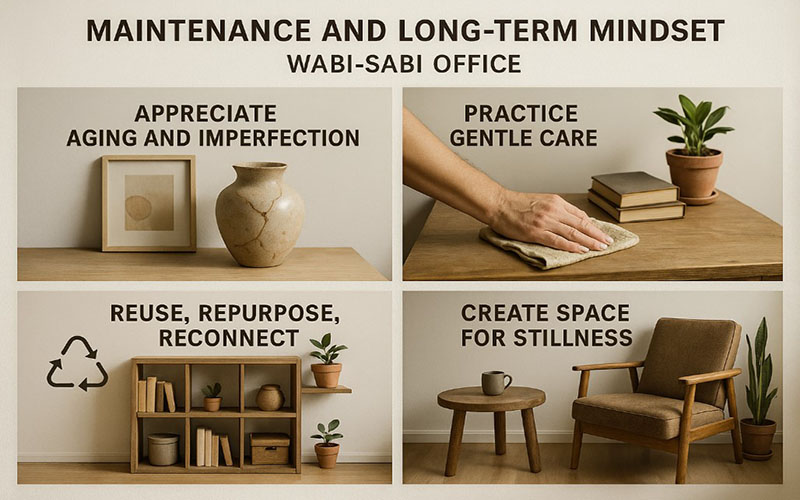
1. Appreciate Aging and Imperfection
Wood darkens, linen softens, and pottery chips – yet these aren’t flaws.
They’re visual reminders of life’s passage and your connection with the space.
Each mark tells a story of use, patience, and time – exactly what Wabi-Sabi celebrates.
Tip: Instead of sanding or repainting old furniture, try nourishing it with natural oils to enhance its patina.
2. Practice Gentle Care
Since most Wabi-Sabi materials are natural, they deserve gentle maintenance.
Suggestions:
- Clean wooden surfaces with mild soap and soft cloths.
- Dust rattan or bamboo lamps regularly but avoid excessive water.
- Let sunlight in to keep air fresh and energy balanced.
- Replace synthetic air fresheners with essential oils like cedarwood or sandalwood for a natural scent.
This type of care keeps your workspace alive – not polished to perfection, but nurtured with respect.
3. Reuse, Repurpose, Reconnect
In the Wabi-Sabi mindset, sustainability isn’t a trend – it’s a way of life.
Before buying something new, ask: Can this be repurposed or mended?
A slightly cracked mug becomes a pen holder, a worn-out stool turns into a plant stand.
These thoughtful touches add authenticity and prevent waste.
4. Create Space for Stillness
Finally, Wabi-Sabi is as much about mental maintenance as physical upkeep.
Take short pauses during your day – moments to breathe, stretch, and reflect.
Your office isn’t just a workspace; it’s a sanctuary for clarity and renewal.
“Caring for your space is caring for your mind – both deserve patience and kindness.”
Conclusion
In a world obsessed with speed, perfection, and constant change, Wabi-Sabi office design stands as a quiet rebellion – a reminder that beauty lies in the imperfect, the aged, and the unfinished.
By blending natural materials, soft light, and mindful simplicity, a Wabi-Sabi workspace nurtures not only productivity but peace.
It helps you slow down, breathe deeper, and reconnect with what truly matters – purpose, authenticity, and inner calm.
Whether you work from home, lead a creative studio, or manage a team in a corporate office, Wabi-Sabi invites you to transform your surroundings into a place of harmony and humanity.
Every scratch, every uneven texture, every quiet corner becomes a reflection of your journey – humble, imperfect, and deeply beautiful.
“When your workspace breathes with imperfection, it becomes more than a place to work – it becomes a place to be.”
Frequently Asked Questions
Stick to earthy, muted tones such as beige, taupe, gray, off-white, clay, or soft olive.
These shades reflect natural calm and pair beautifully with wood, bamboo, and linen.
Avoid overly bright or synthetic colors – subtlety is key in Wabi-Sabi.
Start Wabi-Sabi home office ideas by decluttering – remove unnecessary décor and keep only what you truly need or love.
Choose a small wooden desk, soft lighting, and one or two natural accessories like a plant or ceramic cup.
Even a small corner can radiate peace if it feels intentional and open.
Use warm, diffused light instead of harsh white lighting.
Rattan pendant lamps, linen shades, or paper lanterns are ideal – they soften shadows and highlight textures beautifully.
If possible, let in natural daylight and supplement it with dimmable warm lights.
Absolutely. Wabi-Sabi isn’t about rejecting modernity – it’s about balancing it.
You can mix minimalist modern pieces with organic materials.
For instance, pair a sleek black metal chair with a reclaimed wooden desk or add a linen throw to a modern leather seat.
Yes – sustainability lies at the heart of Wabi-Sabi.
This style promotes reuse, repair, and natural materials over disposable trends.
Choosing handcrafted, durable, and biodegradable products reduces waste and supports local artisans.
Use natural storage solutions like wicker baskets, bamboo trays, or wooden shelves.
Group items by function instead of symmetry.
Organization in Wabi-Sabi isn’t about perfection – it’s about effortless flow and easy accessibility.
See More Wabi Sabi Interior Design by Room:
- Wabi Sabi Living Room Design: Create a Calm, Natural Space
- Wabi Sabi Dining Room Ideas for a Warm and Natured Home
- Wabi Sabi Kitchen Design for a Warm, Peaceful, and Nature Home
- Wabi Sabi Bathroom Design: The Ultimate Guide
- Wabi Sabi Entryway Ideas: Simple, Natural, Beautifully Design Tips

Read more articles
25+ Bedroom Floor Lamp Ideas to Brighten & Elevate Your Space
Bedroom floor lamp ideas offer one of the simplest and most stylish ways to elevate [...]
Oct
Best Laundry Room Lighting Ideas for a Brighter, Cleaner Space
Laundry Room Lighting Ideas focus on turning one of the hardest-working spaces in your home [...]
Sep
20+ Guest Bedroom Lighting Ideas for a Warm, Welcoming Space
Guest bedroom lighting ideas focus on creating a warm, welcoming, and comfortable environment for anyone [...]
Sep
Best Study Room Lighting Ideas for a Bright and Focused Space
A well-designed study room is more than just a desk and a chair – it’s [...]
Sep
20+ Master Bedroom Lighting Ideas for a Modern, Elegant Space
Master bedroom lighting ideas go far beyond simply choosing a ceiling fixture. A master bedroom [...]
Sep
10 Home Office Lighting Ideas for a Bright, Productive Workspace
The home office has become one of the most important rooms in modern living. Whether [...]
Aug
How to Fix Eye Strain from Bad Home Office Lighting
You take screen breaks. You’ve adjusted your monitor brightness. You even bought blue-light glasses. And [...]
Aug
25+ Bedside Pendant Light Ideas for a Stylish Modern Bedroom
Bedside Pendant Light Ideas are becoming increasingly popular as homeowners look for smarter, more stylish [...]
Aug
Best Entryway Lighting Ideas to Brighten Your Entry Space
Your entryway sets the tone for your entire home – it’s the first space guests [...]
Aug
30+ Bedroom Pendant Light Ideas for a Stylish, Well-Lit Retreat
Bedroom Pendant Light Ideas can instantly elevate the atmosphere of your room, adding height, character, [...]
Aug
25+ Bedroom Ceiling Light Ideas to Transform Your Room
Bedroom Ceiling Light Ideas play a key role in creating a space that feels bright, [...]
Aug
How to Master Bedroom Lighting Ideas Like a Pro
Finding the right bedroom lighting ideas can completely transform the mood, comfort, and functionality of [...]
Jul
Explore our collections
Rattan Pendant Light
100 Products
Bamboo Pendant Light
39 Products
Fabric Pendant Light
44 Products
Wood Pendant Light
9 Products
Rope Pendant Light
18 Products
Rattan Wall Sconce
6 Products
Rattan Table Lamp
9 Products
Rattan Floor Lamp
9 Products