
Interior Design Styles
Wabi Sabi Kitchen Design for a Warm, Peaceful, and Nature Home
Wabi Sabi kitchen design is gaining major attention in the U.S. as more homeowners seek kitchens that feel warm, natural, and intentionally simple. Instead of glossy perfection, this style celebrates organic materials, soft lighting, earthy tones, and the quiet beauty of everyday objects.
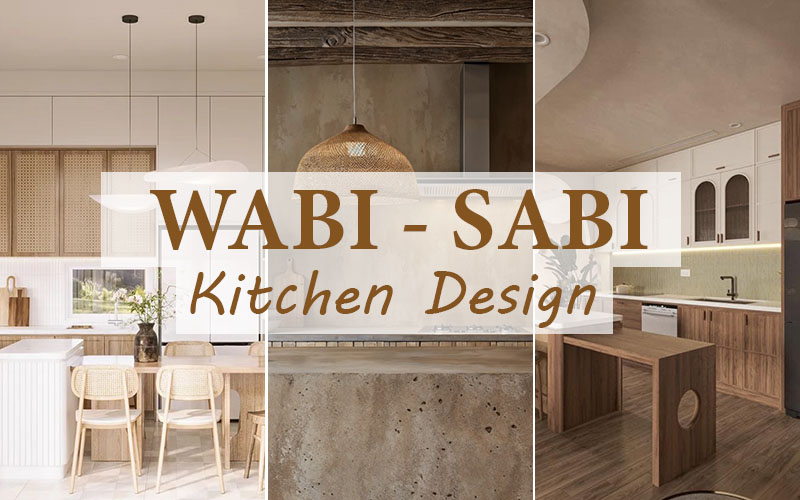
Because the kitchen naturally reflects daily rituals, Wabi Sabi truly comes alive here – worn wood, handcrafted ceramics, linen textures, and woven rattan pendant lights all add character and soul. It’s a style rooted in authenticity, embracing patina, texture, and the gentle calm of natural light.
In this guide, you’ll learn the key elements of a Wabi Sabi kitchen – materials, colors, lighting, layout, and organization – so you can create a peaceful, soulful cooking space inspired by nature.
If you’re new to the Wabi Sabi philosophy, I recommend checking out our full guide on Wabi Sabi Interior Design. It explains the core principles and mindset behind the style, which will help you better understand how these ideas come to life in a Wabi Sabi kitchen.
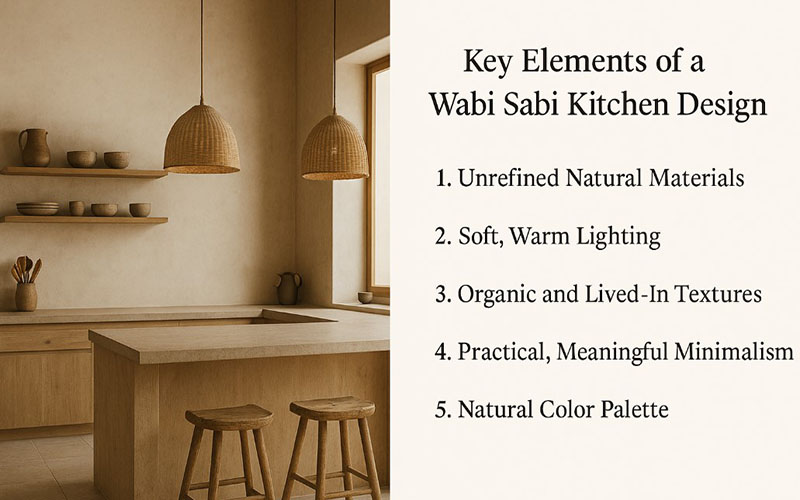
Key Elements of a Wabi Sabi Kitchen Design
Before you dive in, explore the basics first: What is Wabi Sabi
A successful wabi sabi kitchen design is not about creating a picture-perfect space. Instead, it’s about choosing elements that feel natural, warm, and emotionally grounding. Below are the essential characteristics that define a wabi sabi style kitchen today, ensuring your space feels calming, meaningful, and authentically lived-in.
1. Unrefined Natural Materials
Wabi Sabi kitchens celebrate materials that feel close to nature and reveal their natural beauty. Instead of glossy cabinetry or synthetic finishes, the focus shifts to:
- Raw or lightly finished wood for cabinets, shelves, or countertops
- Stone surfaces such as matte granite, honed marble, soapstone, or limestone
- Clay, terracotta, or concrete for walls, backsplashes, or accessories
- Natural fibers like rattan, bamboo, seagrass, or wicker in lighting and storage
These materials create a kitchen that feels grounded, timeless, and full of soul. Their subtle imperfections make the space more human and welcoming.
2. Soft, Warm Lighting
Lighting is one of the easiest ways to achieve a kitchen Wabi Sabi atmosphere. Avoid bright white LED fixtures, which create harsh reflections and eliminate warmth.
Instead, opt for:
- Rattan pendant lights above the kitchen island
- Bamboo or wicker chandeliers for overhead lighting
- Linen or fabric lampshades for soft corners
- Warm-toned bulbs (2700K) for an inviting, evening glow
Natural-fiber lighting diffuses light gently, creating soft shadows and a peaceful ambiance – an essential element of Wabi Sabi kitchens.
3. Organic and Lived-In Textures
Texture is a defining characteristic of Wabi Sabi. Look for surfaces that feel tactile and authentic:
- Textured tiles or hand-painted backsplashes
- Linen runners, cotton napkins, and loosely woven tablecloths
- Matte dishware and stoneware bowls
These elements add depth and comfort without overwhelming the space.
4. Practical, Meaningful Minimalism
Wabi Sabi kitchens are uncluttered, but not bare. The goal is functional simplicity:
- Clear countertops with only everyday essentials
- Open shelving that displays useful, beautiful items
- A mix of storage options to hide excess clutter
This creates a kitchen that feels peaceful and effortless, where everything has a purpose.
5. Natural Color Palette
A Wabi Sabi kitchen uses earthy, desaturated tones that mimic nature:
- Warm whites, creams, and soft grays
- Clay, terracotta, sand, and taupe
- Muted greens and olive tones
- Deep wood browns
- Charcoal and stone accents
These tones set the foundation for a balanced, calming environment that encourages slow, mindful living.
Wabi Sabi Kitchen Layout & Flow
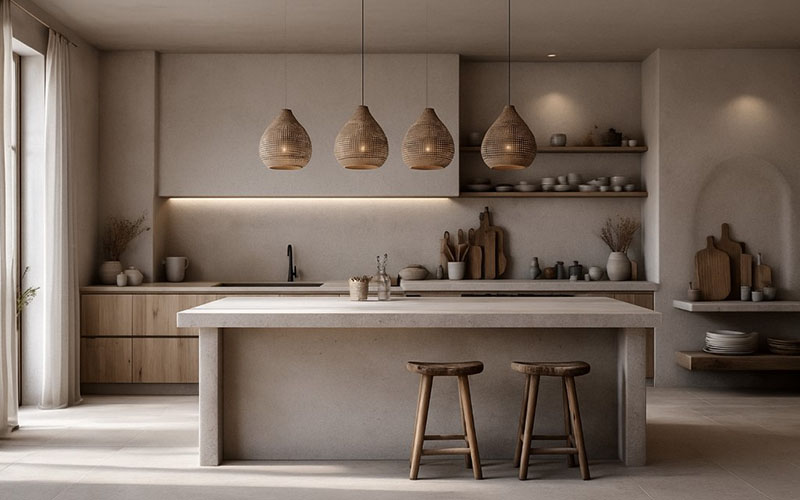
A beautiful wabi sabi kitchen design doesn’t depend on expensive materials or elaborate decorations. Instead, it begins with the layout – how your space feels, flows, and functions every day. The goal is to create a kitchen that feels open, calm, and effortless, where every movement is natural and every item has a purpose.
1. Open, Airy Flow
A wabi sabi style kitchen values breathing room. Instead of filling every corner or stacking heavy cabinets to the ceiling, allow space for movement and light.
- Keep pathways uncluttered
- Avoid bulky upper cabinets in tight kitchens
- Let natural light flow freely through the room
This makes the kitchen feel calming rather than crowded.
2. Natural Work Zones
A functional kitchen Wabi Sabi layout separates tasks intuitively:
- A calm tea or coffee corner
- A wooden board station for chopping
- A ceramic jar area for utensils
- A shelf for frequently used bowls and plates
These zones help the space feel intentional and grounded.
3. The Beauty of Negative Space
Wabi Sabi embraces ma, the Japanese concept of meaningful emptiness. In a kitchen, this looks like:
- Empty countertop corners
- Space around decor pieces
- A clean backsplash with breathing room
- Open shelving with only essential items
Negative space keeps the kitchen relaxed and visually soothing.
4. A Soft, Grounded Kitchen Island
If your kitchen includes an island, make it the emotional center of the room:
- Choose natural stone or matte wood
- Add soft rattan pendant lights above
- Use mismatched, organic-shaped stools
- Keep the surface mostly clear for a serene look
This creates a calm, communal focal point – perfect for cooking, conversations, and slow-living rituals.
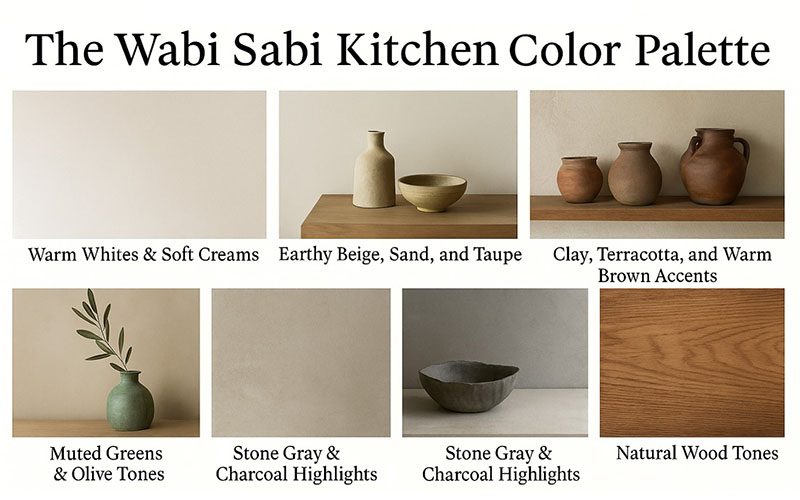
The Wabi Sabi Kitchen Color Palette
A Wabi Sabi kitchen uses a muted, earthy palette inspired by nature. These tones make the space feel warm, timeless, and soothing – ideal for cooking and gathering.
Below are the most kitchen-friendly colors for a wabi sabi style kitchen.
1. Warm Whites & Soft Creams
Soft white is the foundation of many wabi sabi kitchen ideas. It reflects natural light beautifully and makes the room feel open and calm.
Avoid stark “pure white,” which feels cold and clinical. Instead, choose warm-toned whites with a hint of beige or cream.
2. Earthy Beige, Sand, and Taupe
These colors soften harsh edges and pair perfectly with:
- Raw wood
- Stone countertops
- Clay pottery
- Linen textiles
They create a warm, grounding atmosphere without feeling heavy.
3. Clay, Terracotta, and Warm Brown Accents
Perfect for backsplashes, stoneware, or décor:
- Terracotta bowls
- Clay vases
- Matte brick-like tiles
These rich earthy tones echo traditional Japanese materials and instantly warm up the kitchen.
4. Muted Greens & Olive Tones
One of the most popular modern choices for Wabi Sabi kitchens:
- Sage green cabinets
- Eucalyptus-toned shelves
- Olive-toned walls
These shades connect the kitchen to nature and pair beautifully with rattan, bamboo, and neutral décor.
5. Stone Gray & Charcoal Highlights
Used sparingly, charcoal and deep gray add refined contrast:
- Matte stone counters
- Dark pottery
- Aged metal handles
These darker accents keep the palette balanced and sophisticated without losing softness.
6. Natural Wood Tones
Wood tones are essential to every kitchen Wabi Sabi palette:
- Honey brown
- Warm oak
- Walnut
- Ashwood
- Reclaimed or aged finishes
Visible grain patterns enhance authenticity and warmth.
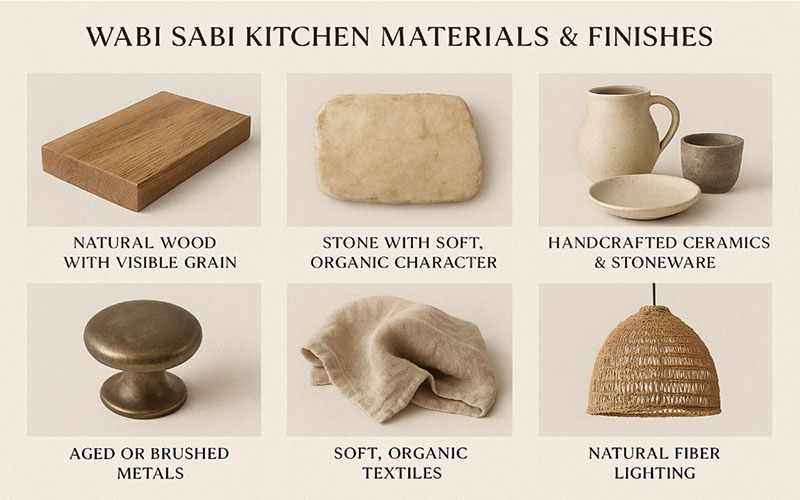
Wabi Sabi Kitchen Materials & Finishes
Materials are the heart of every wabi sabi kitchen design. They define the atmosphere of the space through their texture, warmth, and natural aging. Instead of flawless, glossy finishes, a wabi sabi style kitchen embraces materials that feel honest, tactile, and grounded in nature.
1. Natural Wood With Visible Grain
Wood is one of the most important materials in a Wabi Sabi kitchen. The beauty is in its natural imperfections:
- Reclaimed wood cabinetry
- Matte or lightly sealed oak countertops
- Open shelves with knots and grain patterns
- Wooden cutting boards that gain character over time
Choose matte finishes over lacquer or shine. Let the wood feel raw and authentic.
2. Stone With Soft, Organic Character
Stone brings grounding and texture into the space. Perfect options include:
- Honed marble
- Soapstone
- Matte granite
- Limestone
- Concrete counters or islands
Stone with subtle veining, mineral variations, or natural inconsistencies perfectly expresses the Wabi Sabi spirit.
3. Handcrafted Ceramics & Stoneware
Ceramic bowls, mugs, plates, and vases are essential to the emotional warmth of a kitchen Wabi Sabi. Look for:
- Uneven glazes
- Handmade textures
- Asymmetrical shapes
- Japanese-inspired pottery
These pieces bring soul to your kitchen shelves and daily rituals.
4. Aged or Brushed Metals
Instead of shiny chrome, Wabi Sabi kitchens use metals that age gracefully:
- Brushed brass
- Aged bronze
- Blackened steel
- Patina-rich copper
These finishes tie beautifully into earthy palettes and natural materials.
5. Soft, Organic Textiles
Textiles help soften the structure of the kitchen:
- Linen tablecloths
- Cotton napkins
- Woven jute or seagrass rugs
- Tea towels in neutral hues
Natural fibers add warmth and quiet texture without competing for attention.
6. Natural Fiber Lighting
Lighting doubles as both décor and material in a Wabi Sabi kitchen. Perfect choices include:
- Rattan pendant lights
- Bamboo pendant lights
- Wicker chandeliers
- Seagrass or jute lampshades
These materials create warm, diffused shadows that instantly elevate the kitchen’s atmosphere.
Wabi Sabi Kitchen Storage & Organization
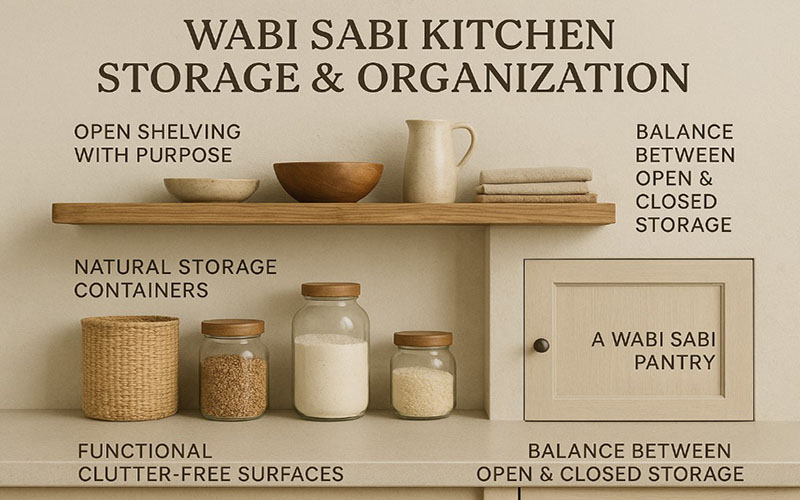
Storage is what brings functionality and beauty together in a wabi sabi kitchen design. The goal is not to hide everything, nor to display every item. It’s about curating what feels meaningful and useful – and letting the rest quietly disappear.
1. Open Shelving With Purpose
Open shelves are a hallmark of wabi sabi style kitchens, but only when used intentionally:
- Display handmade ceramics
- Arrange everyday bowls and plates
- Use simple pottery for utensils
- Avoid overcrowding the shelves
Keep what you use, not what you want to show off.
2. Natural Storage Containers
Replace plastic containers with items made from organic materials:
- Wicker or rattan baskets
- Wooden boxes or crates
- Clay or ceramic jars
- Opaque glass jars for dry goods
These bring harmony to the kitchen while supporting Wabi Sabi’s natural, grounded look.
3. Functional Clutter-Free Surfaces
A Wabi Sabi kitchen is calm because it’s not visually overwhelming. Achieve this by:
- Clearing countertops
- Grouping utensils in one ceramic jar
- Using trays to organize small items
- Storing appliances behind closed cabinetry
The key is soft minimalism – not an empty, unusable kitchen.
4. A Wabi Sabi Pantry
Your pantry can express Wabi Sabi too:
- Use matching glass jars for grains
- Keep labels simple and handwritten
- Organize shelves by color and material
- Choose wood or bamboo baskets for grouping items
This creates a soothing, cohesive look even behind closed doors.
5. Balance Between Open & Closed Storage
Too many open shelves can make a kitchen feel chaotic. Too many closed cabinets can make it feel heavy.
Wabi Sabi finds the middle ground:
- Open shelves for daily-use, beautiful items
- Closed cabinets for less aesthetic necessities
The balance keeps the kitchen functional while preserving its natural calm.
Wabi Sabi Kitchen Décor
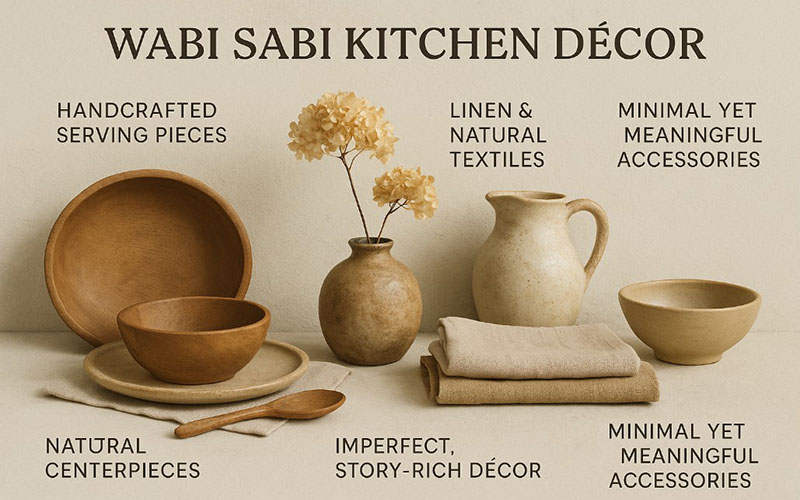
Wabi Sabi kitchen décor is all about choosing simple, meaningful, and natural elements that bring warmth into your space without overwhelming it. Instead of filling the kitchen with trendy pieces or matching sets, the goal is to decorate with intentionality. Every item should feel authentic, functional, and emotionally grounding.
1. Handcrafted Serving Pieces
Handmade objects instantly add soul to a wabi sabi style kitchen. Look for:
- Hand-thrown ceramic bowls
- Uneven clay mugs
- Rustic wooden cutting boards
- Japanese-inspired plates and dishes
These pieces don’t need to match perfectly – subtle variations and irregular shapes make them more beautiful.
2. Natural Centerpieces
A Wabi Sabi kitchen doesn’t require elaborate styling. A single natural object can transform the mood of the room:
- A clay vase with olive branches
- A bowl of seasonal fruits
- Dried flowers in a textured jug
- Fresh herbs in terracotta pots
These centerpieces feel grounded and effortlessly elegant.
3. Linen & Natural Textiles
Textiles bring softness and comfort to kitchen décor:
- Stonewashed linen runners
- Cotton tablecloths
- Simple fabric seat cushions
- Linen bread bags or napkins
Neutral tones and organic textures make the kitchen feel warm and inviting.
4. Imperfect, Story-Rich Décor
Wabi Sabi celebrates items with character:
- Vintage pottery with patina
- Old wooden trays
- Rustic jars with slight chips or wear
- Mismatched handmade plates in similar tones
These imperfections create a kitchen that feels truly lived-in and full of personality.
5. Minimal Yet Meaningful Accessories
Only display décor that adds value or emotion:
- A favorite teapot
- A simple ceramic pitcher
- A handmade rattan basket
- A textured mortar and pestle
Less décor creates more impact, making the space feel calm and intentional.
Wabi Sabi Kitchen Lighting
Lighting plays a major role in shaping the soul of a wabi sabi kitchen design. Bright white overhead lights can feel harsh and clinical, while warm, soft, diffused lighting gently transforms the kitchen into a calm, nurturing environment. One of the easiest ways to achieve the Wabi Sabi look is through lighting made from natural materials.
1. Rattan Pendant Lights
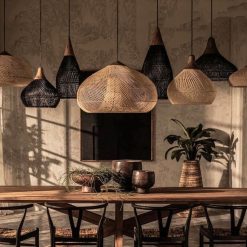
Rattan pendant lights are one of the most iconic choices for a kitchen Wabi Sabi aesthetic. They diffuse light beautifully, soften shadows, and add organic texture to the space.
Perfect locations include:
- Above the kitchen island
- Over a cozy breakfast nook
- Centered above a wooden dining table
Handwoven patterns bring warmth and natural variation, aligning perfectly with Wabi Sabi principles.
2. Bamboo or Wicker Chandeliers
For a soft focal point, choose lightweight bamboo or wicker chandeliers. Their natural fibers create gentle, ambient light that feels comforting and grounded.
They pair wonderfully with:
- Matte stone countertops
- Wooden shelving
- Muted green or earth-toned cabinets
This combination enhances the serene, nature-inspired mood.
3. Linen or Fabric Shades
Linen lampshades are ideal for creating soft, welcoming light in corners that feel too cold or bare.
Use them for:
- Small counter lamps
- Buffet lamps near pantry or prep zones
- Reading light in a coffee or tea corner
Their texture adds quiet elegance.
4. Warm Under-Cabinet Lighting
Instead of bright LED strips, choose warm-toned under-cabinet lighting (2700K–3000K). This enhances the natural tones of wood and stone while making evening cooking feel more relaxed.
5. Evening Mood Lighting
Mood lighting is a powerful part of wabi sabi kitchen ideas:
- Candles
- Small ceramic lamps
- Rattan wall sconces
- Soft accent lighting
These layers of light add intimacy and calm to the kitchen, especially during nighttime rituals.
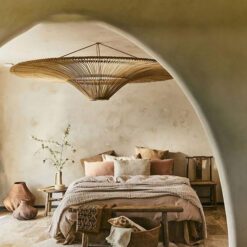
Don’t miss our rattan and bamboo lights, perfect for Wabi-Sabi spaces.
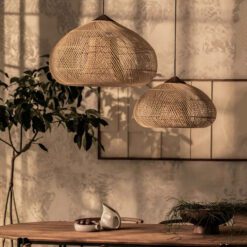
Boho Rattan Pendant Lights
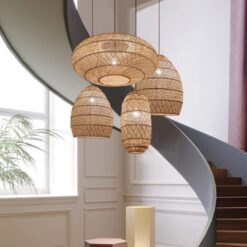
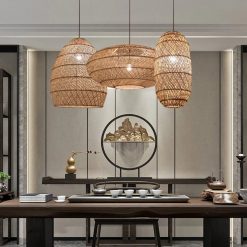
Rattan Pendant Light
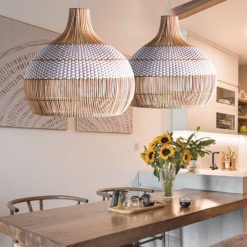
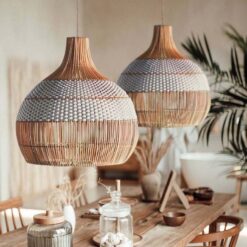
Boho Rattan Pendant Lights
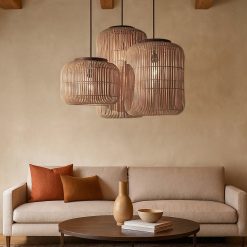
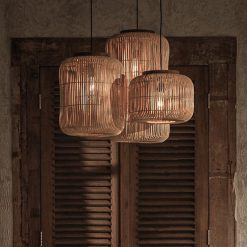
Boho Rattan Pendant Lights
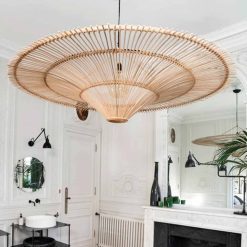
Boho Rattan Pendant Lights
The Wabi Sabi Kitchen: Daily Rituals & Lifestyle Applications
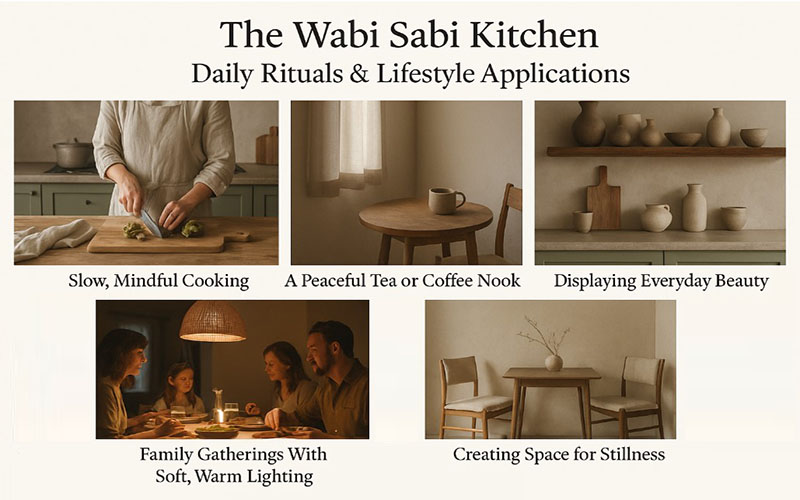
A Wabi Sabi kitchen is not just about materials and layout – it’s about how you live in the space. Your daily rituals become part of the design, adding warmth, meaning, and emotional depth. This lifestyle approach is what makes wabi sabi kitchen design feel more human and grounded than any other style.
1. Slow, Mindful Cooking
Instead of rushing through meals, the Wabi Sabi kitchen encourages slowing down:
- Preparing food with intention
- Enjoying the sound of chopping wood on a real cutting board
- Using handmade ceramic bowls for serving
The process becomes as meaningful as the result.
2. A Peaceful Tea or Coffee Nook
One of the most loved wabi sabi kitchen ideas is creating a small, intentional corner for tea or coffee.
Use:
- A bamboo or rattan tray
- A simple clay teapot
- Two ceramic cups with uneven glazes
- A small linen mat
This corner becomes a grounding ritual for the morning or evening.
3. Displaying Everyday Beauty
In a kitchen Wabi Sabi, everyday items double as décor:
- Wooden spoons in a ceramic jar
- Fresh herbs in terracotta pots
- Imperfect pottery on open shelves
These objects add quiet charm without needing “perfect” styling.
4. Family Gatherings With Soft, Warm Lighting
Wabi Sabi kitchens encourage connection. With warm rattan pendant lights or bamboo chandeliers, meals feel:
- Calmer
- More intimate
- More intentional
People naturally slow down and enjoy the moment.
5. Creating Space for Stillness
Even the busiest kitchen benefits from moments of calm:
- Keeping one countertop corner empty
- Lighting a candle at sunset
- Opening a window to let fresh air circulate
These simple rituals bring balance to your daily life.
Wabi Sabi Kitchen Inspiration Ideas
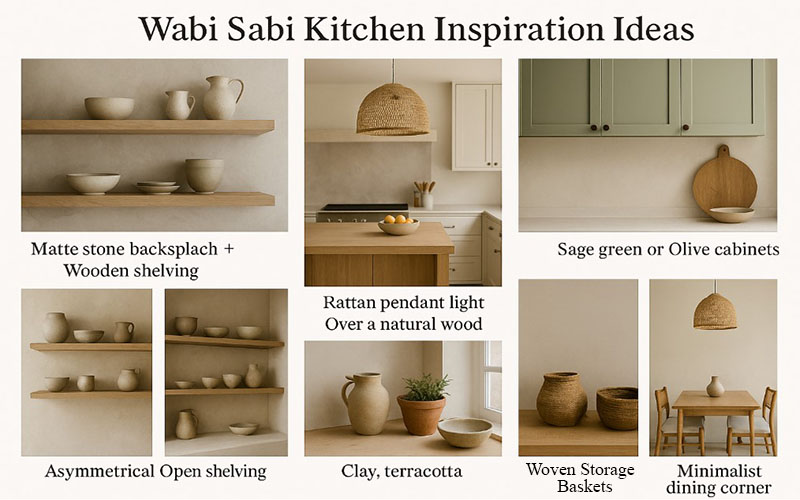
If you’re ready to explore wabi sabi kitchen ideas visually, here are some inspiring concepts to help guide your styling. These ideas are simple, affordable, and work beautifully in both small and large kitchens.
1. Matte Stone Backsplash + Wooden Shelving
This timeless combination blends texture, warmth, and authenticity. Choose:
- Honed marble
- Limestone
- Matte ceramic tiles
Then pair them with raw wood shelves displaying handcrafted pottery.
2. Rattan Pendant Lights Over a Natural Wood Island
This is the instant Wabi Sabi makeover.
The warm glow of rattan lighting brings softness and makes the island feel like the heart of the home.
3. Sage Green or Olive Cabinets
Muted greens pair beautifully with rattan, bamboo, stone, and clay.
They create a natural, calming foundation for a wabi sabi style kitchen.
4. Asymmetrical Open Shelving
Instead of perfectly aligned shelves, choose:
- Staggered heights
- Mixed lengths
- Organic arrangements
This adds gentle irregularity – the true essence of Wabi Sabi.
5. Clay, Terracotta, and Stone Accents
Place handcrafted clay vases, terracotta pots, or stone bowls near windows, on shelves, or on the island.
Their textures add depth without overpowering the space.
6. Woven Storage Baskets
Use rattan or seagrass baskets for:
- Bread storage
- Produce
- Kitchen linens
- Organizing open shelves
They soften the look of a kitchen and highlight natural textures.
7. Minimalist Dining Corner
A small wooden table, two linen-cushioned chairs, one rattan pendant light, and a simple ceramic vase can create a serene Wabi Sabi-inspired dining nook.
Wabi Sabi Small Kitchen Design Tips
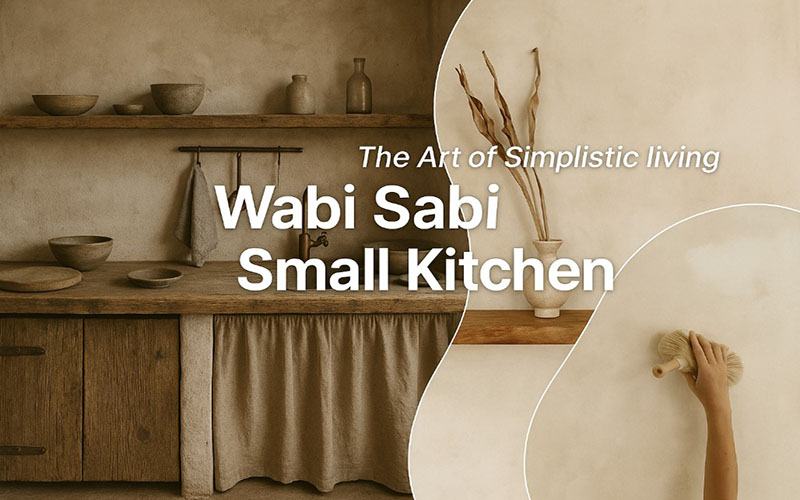
A small kitchen can express Wabi Sabi just as beautifully – sometimes even more – because the philosophy thrives in simplicity and intentional living. With the right choices, a compact space can feel warm, calm, and naturally inviting.
1. Prioritize Light, Natural Materials
In small spaces, materials matter more than ever. Use:
- Light wood tones
- Rattan or bamboo lighting
- Matte stone or textured tiles
- Soft linen curtains
These materials brighten the room and reduce visual heaviness.
2. Keep Countertops Minimal
A cluttered counter makes a small kitchen feel chaotic. Instead:
- Keep only daily essentials
- Place utensils in one ceramic jar
- Use a small wooden tray to group items
- Store appliances inside cabinets
Minimal surfaces = maximum sense of calm.
3. Use Soft, Layered Lighting
Small kitchens often suffer from harsh overhead lights. Fix this by using:
- Compact rattan pendants
- Warm under-cabinet lighting
- A small ceramic lamp in a corner
- 2700K bulbs for warmth
Soft lighting visually expands the room and creates a cozy atmosphere.
4. Incorporate Open Shelving Wisely
Open shelves can make a small kitchen feel bigger – if used correctly:
- Limit shelves to one or two
- Display only functional, beautiful items
- Avoid overcrowding
A single shelf with handmade ceramics or a clay vase instantly adds Wabi Sabi charm.
5. Choose One Strong Natural Accent
Pick one hero piece:
- A rattan light
- A reclaimed wood board
- A large pottery bowl
- A rustic stool
One focal point reduces visual noise and makes the entire kitchen feel intentional.
6. Embrace Soft, Muted Colors
Stick to warm whites, soft beige, muted greens, or light gray. These hues:
- Brighten the room
- Help surfaces blend naturally
- Keep the space calm
Avoid bold, high-contrast colors that shrink the room visually.
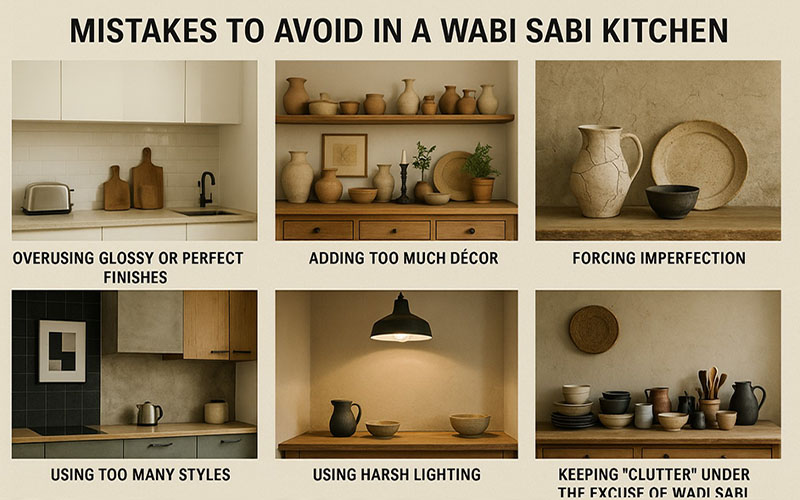
Mistakes to Avoid in a Wabi Sabi Kitchen
Even though Wabi Sabi is simple, it’s easy to misunderstand or misapply the style. Avoiding these mistakes ensures your wabi sabi kitchen design feels authentic rather than forced.
1. Overusing Glossy or Perfect Finishes
High-shine countertops, glossy cabinets, and polished metal fixtures go against the core of Wabi Sabi.
Choose matte, textured, or naturally imperfect surfaces instead.
2. Adding Too Much Décor
Wabi Sabi is not boho, farmhouse, or maximalist.
Avoid:
- Layering too many baskets
- Filling shelves with decorative items
- Styling every inch of the countertop
Choose fewer pieces, but make them meaningful.
3. Forcing Imperfection
Manufactured “fake rustic” décor or overly distressed furniture feels artificial. Instead:
- Let real materials age naturally
- Choose authentic handmade items
- Avoid mass-produced faux-weathered décor
Authenticity is essential.
4. Mixing Too Many Styles
Wabi Sabi blends well with Japandi, minimalist, or Scandinavian interiors, but mixing too many styles – farmhouse, industrial, boho, Mediterranean – can dilute its calming effect. Stick to:
- Natural wood
- Stone
- Clay
- Neutral tones
- Simple shapes
5. Using Harsh Lighting
Cold white LED lights create a sterile, clinical feel. Always choose:
- Warm bulbs
- Soft diffused lighting
- Woven or fabric lampshades
Lighting sets the emotional tone of the kitchen.
6. Keeping “Clutter” Under the Excuse of Wabi Sabi
Wabi Sabi doesn’t mean messy or chaotic. It means:
- Simplicity
- Intentional décor
- Everyday beauty
Keep your kitchen functional, not cluttered.
Wabi Sabi Kitchen Design FAQs
Yes. Even a modern, streamlined kitchen can embrace Wabi Sabi by incorporating natural materials, warm lighting, matte finishes, and handmade elements. You don’t need a full remodel – simple swaps like rattan lighting or clay pottery can transform the atmosphere instantly.
Not at all. Wabi Sabi values simplicity and authenticity, not luxury. Many elements – linen towels, a handmade bowl, a bamboo pendant light – are affordable. Instead of buying many decorative items, the focus is on a few meaningful pieces.
Natural, matte surfaces are ideal: honed marble, soapstone, concrete, matte granite, limestone
Avoid glossy or polished finishes. Subtle texture and natural variation bring more warmth and authenticity.
Absolutely. Wabi Sabi blends beautifully with Japandi, Scandinavian, minimalist, or modern rustic styles. The key is staying consistent with natural materials, soft lighting, and earthy tones.
Warm, diffused lighting. Natural-fiber pendants like rattan, bamboo, or wicker are ideal because they create soft shadows and a calming mood. Avoid bright white LEDs or overly intense overhead lights.
Conclusion
A wabi sabi kitchen design is more than a trend – it is a refreshing approach to living. By embracing natural materials, soft lighting, warm textures, and meaningful simplicity, your kitchen becomes a peaceful retreat where cooking, gathering, and daily rituals feel calm and grounding. Whether your space is large or small, modern or rustic, Wabi Sabi brings warmth, authenticity, and emotional depth into the heart of your home.
If you’re ready to bring this natural elegance into your kitchen, explore handcrafted rattan and bamboo lighting designed for Wabi Sabi interiors at vietshopdesign.com. Each piece is artisan-made, sustainably crafted, and perfect for creating a warm, serene kitchen that feels beautifully imperfect – just as it should.
See More Wabi Sabi Interior Design by Room:
- Best Wabi-Sabi Office Design Tips for a Organized Workspace
- Wabi Sabi Living Room Design: Create a Calm, Natural Space
- Wabi Sabi Dining Room Ideas for a Warm and Natured Home
- Wabi Sabi Bathroom Design: The Ultimate Guide
- Wabi Sabi Entryway Ideas: Simple, Natural, Beautifully Design Tips
- Wabi Sabi Bedroom Design: Create a Calm, Natural Retreat

Read more articles
Best Attic Lighting Ideas for Cozy, Functional Spaces
Transforming an attic into a functional, inviting space starts with the right lighting. Because attics [...]
Oct
Home Office Lighting Guide: Design a Space That Boosts Focus
If you’ve ever finished a workday with a headache, tired eyes, or a strange feeling [...]
Oct
Best Pantry Lighting Ideas to Brighten Your Storage Space
A well-lit pantry doesn’t just make your kitchen look more organized – it also transforms [...]
Oct
25+ Bedroom Floor Lamp Ideas to Brighten & Elevate Your Space
Bedroom floor lamp ideas offer one of the simplest and most stylish ways to elevate [...]
Oct
Best Laundry Room Lighting Ideas for a Brighter, Cleaner Space
Laundry Room Lighting Ideas focus on turning one of the hardest-working spaces in your home [...]
Sep
20+ Guest Bedroom Lighting Ideas for a Warm, Welcoming Space
Guest bedroom lighting ideas focus on creating a warm, welcoming, and comfortable environment for anyone [...]
Sep
Best Study Room Lighting Ideas for a Bright and Focused Space
A well-designed study room is more than just a desk and a chair – it’s [...]
Sep
20+ Master Bedroom Lighting Ideas for a Modern, Elegant Space
Master bedroom lighting ideas go far beyond simply choosing a ceiling fixture. A master bedroom [...]
Sep
10 Home Office Lighting Ideas for a Bright, Productive Workspace
The home office has become one of the most important rooms in modern living. Whether [...]
Aug
How to Fix Eye Strain from Bad Home Office Lighting
You take screen breaks. You’ve adjusted your monitor brightness. You even bought blue-light glasses. And [...]
Aug
25+ Bedside Pendant Light Ideas for a Stylish Modern Bedroom
Bedside Pendant Light Ideas are becoming increasingly popular as homeowners look for smarter, more stylish [...]
Aug
Best Entryway Lighting Ideas to Brighten Your Entry Space
Your entryway sets the tone for your entire home – it’s the first space guests [...]
Aug
Explore our collections
Rattan Pendant Light
102 Products
Bamboo Pendant Light
39 Products
Fabric Pendant Light
44 Products
Wood Pendant Light
13 Products
Rope Pendant Light
20 Products
Rattan Wall Sconce
6 Products
Rattan Table Lamp
9 Products
Rattan Floor Lamp
9 Products