
Natural Materials & Craftsmanship
What Are Plant Fibres? Definition, Uses & Eco-Friendly Benefits
As the world embraces sustainable, non-toxic, and nature-inspired living, more people are becoming interested in a key question: What are plant fibres, and why are they used in so many handcrafted products, textiles, and interior décor?
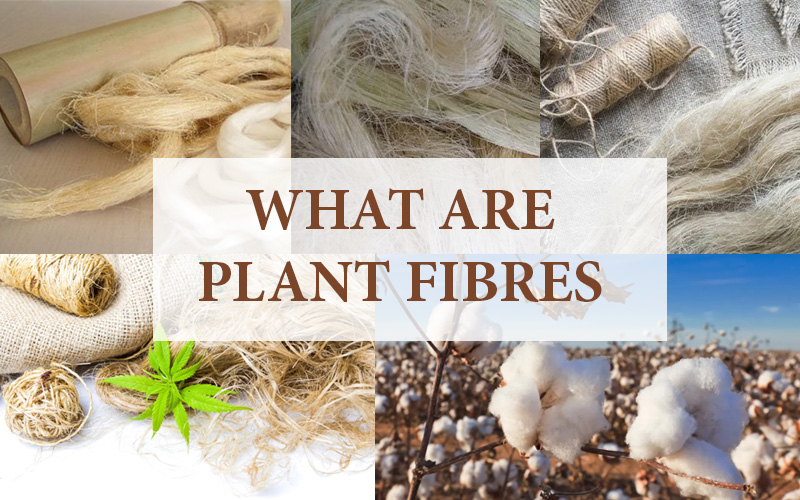
Plant fibres are among the oldest and most versatile natural materials on Earth. They come directly from fibers of plants, offering strength, breathability, and organic beauty without the need for heavy chemical processing. From woven baskets and rugs to pendant lights, rope, fabrics, and artisanal home décor, plant fibres bring warmth, texture, and authenticity into modern living spaces.
Today, as interior design styles like Wabi-Sabi, Japandi, Scandinavian, Boho, and Organic Modern gain popularity, plant fibres have become even more essential. Homeowners increasingly prefer materials that are renewable, biodegradable, and connected to nature – and plant fibres perfectly fit that demand.
This guide explains what plant fibres are, how they are formed, and why they remain some of the most environmentally friendly and aesthetically appealing materials available today.
What Are Plant Fibres?
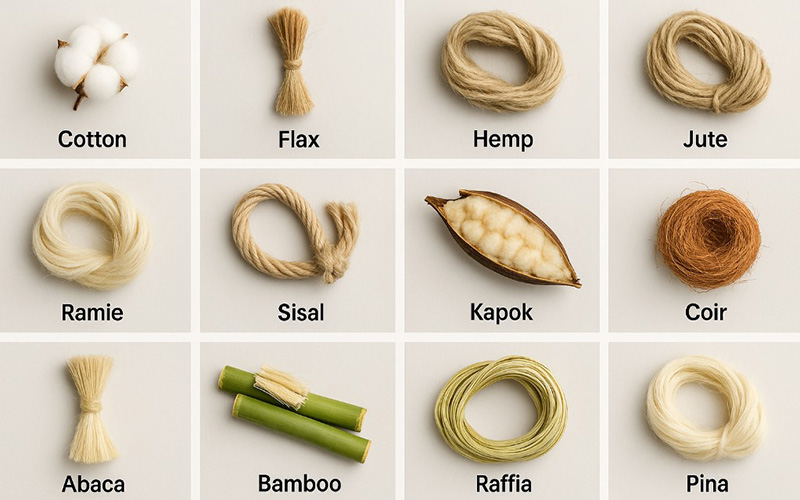
Plant fibres are natural fibres derived from different parts of plants, including stems, leaves, grasses, seeds, and even fruits. Unlike synthetic fibres made through industrial chemical processes, plant fibres come from natural fiber plants, making them renewable, biodegradable, and environmentally low-impact.
These fibres form the basis of many essential materials used in home décor, textiles, rope making, and handcrafted products. Common examples include:
- Flax fiber (used to make linen)
- Hemp plant fiber
- Fibres from the jute plant
- Leaf fibers such as those from the sisal plant and agave sisal
- Grass fibre like bamboo fiber
- Natural weaving materials such as water hyacinth fiber, pineapple leaf fiber, or fibres from the banana fiber plant
Because they come straight from the plant, these fibres have a naturally textured look and feel – making them perfect for warm, earthy, and organic interiors.
In short, plant fibres are sustainable, versatile, and beautiful natural materials that connect modern homes with nature through texture, craftsmanship, and eco-friendly living.
How Plant Fibres Are Formed
Plant fibres may appear simple, but each strand is a highly structured material formed inside the plant. Their strength and flexibility come from cellulose, the natural compound that provides rigidity and durability to plant cells.
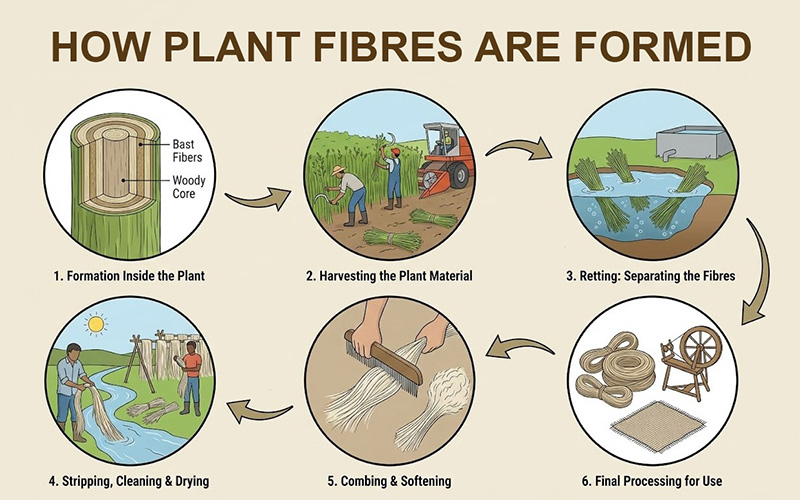
Below is the full journey of how plant fibres form and become usable:
1. Formation Inside the Plant
Depending on the species, fibres develop in different plant parts:
- Bast fibres form in the stems (e.g., flax fiber, hemp plant fiber, jute plant).
- Leaf fibers form in thick, fibrous leaves (e.g., sisal plant, agave sisal, pineapple leaf fiber, banana fiber plant).
- Grass fibre forms in fast-growing grasses (e.g., bamboo fiber, water hyacinth fiber).
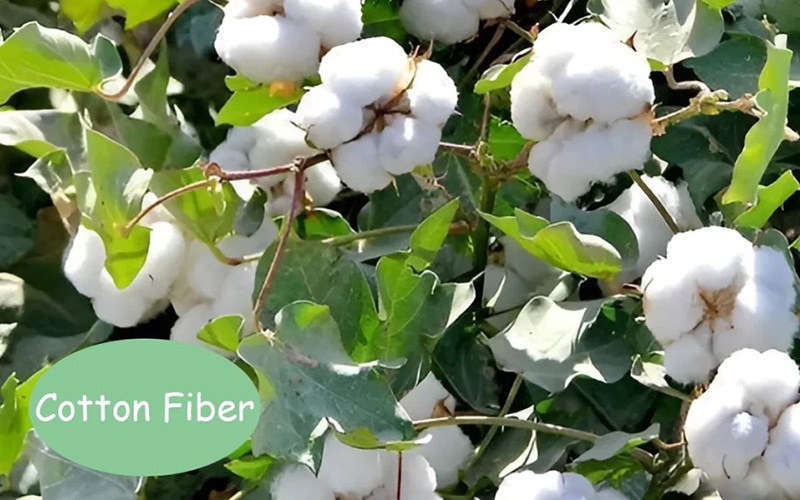
- Seed and fruit fibres (e.g., cotton) also develop naturally but are less relevant to woven interior décor.
Each type has a unique structure, giving it different levels of strength, softness, and flexibility.
2. Harvesting the Plant Material
When plants reach maturity, stems, leaves, or grasses are harvested at precise times to ensure fibre quality.
Examples:
- Flax fiber is harvested just before full ripeness for maximum softness.
- The jute plant is collected at peak height to achieve long, strong fibres.
- Bamboo fiber and other grass fibre materials are harvested when mature enough for durability.
Proper harvesting directly affects colour, texture, and softness.
3. Retting: Separating the Fibres
For many bast fibres (such as flax, hemp, and jute), a process called retting is used. This involves soaking or exposing plant material to moisture so that natural bacteria break down the outer layers.
Types of retting include:
- Water retting
- Dew retting
- Enzymatic retting (modern, eco-friendly)
This step frees fibre bundles from the woody plant core.
4. Stripping, Cleaning & Drying
After retting, fibres are:
- stripped from stems or leaves
- cleaned of bark, pulp, and debris
- washed and dried to prevent mold or discoloration
Examples: Leaf fibres from the sisal plant, agave sisal, or pineapple leaf fiber are usually extracted via decortication – a method of scraping away leafy material to reveal strong internal fibres.
5. Combing & Softening
Once dry, fibres are combed or carded to align the strands and make them smooth enough for spinning, weaving, or braiding.
- Hemp plant fiber and flax fiber become soft, workable fibres suitable for rope or textiles.
- Grass fibre such as bamboo fiber or water hyacinth fiber is often braided or twisted rather than spun.
6. Final Processing for Use
After preparation, the fibres can be shaped into:
- woven baskets
- pendant lights and lamp shades
- mats and rugs
- textiles (linen, bamboo-based fabrics)
- ropes and cordage
- artisanal décor pieces
Their natural strength and earthy texture make plant fibres ideal for sustainable interior design.
Types of Plant Fibres (With Examples)
Plant fibres come from different parts of the plant, and each category offers unique characteristics in terms of strength, softness, thickness, and appearance. Understanding the major fibre groups helps explain why certain materials – like flax fiber, hemp plant fiber, or sisal plant fibres – are ideal for ropes, woven décor, or textiles.
Below are the three primary categories of plant fibres, illustrated with common examples used in handcrafted products and natural home décor.
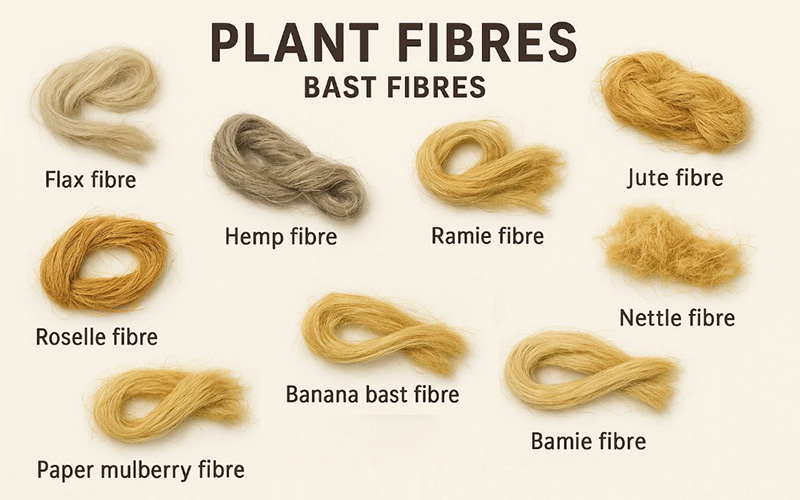
1. Bast Fibres (Fibres From Plant Stems)
Bast fibres are extracted from the inner bark or stem of certain plants. They are known for exceptional tensile strength, breathability, and durability. These fibres are long, flexible, and ideal for rope, cordage, textiles, and woven items.
Common Bast Fibres
- Flax fiber
- Hemp plant fiber / hemp plant fibre
- Fibres from the jute plant
- Kenaf fibres (related bast fibre)
Key Characteristics
- Naturally long and smooth
- Stronger than many synthetic fibres
- Highly breathable
- Biodegradable and eco-friendly
Where They Are Used
- Linen textiles (from flax fiber)
- Rope and twine (from hemp plant fiber and jute plant)
- Rugs, mats, and eco-friendly packaging
- Woven baskets and storage décor
Because bast fibres come from natural fiber plants, they have become staples in sustainable home décor and eco-conscious design.
2. Leaf Fibres (Fibres Extracted From Plant Leaves)
Leaf fibres are stiffer and more rigid than bast fibres, making them excellent for heavy-duty applications such as rope, sturdy baskets, and structural weaving.
Common Leaf Fibres
- Sisal plant fibre
- Agave sisal (sisal agave sisalana)
- Pineapple leaf fiber
- Banana fiber plant
Key Characteristics
- Coarse, strong, and durable
- Resistant to saltwater and abrasion
- Ideal for outdoor or high-use items
- Distinctive natural texture
Where They Are Used
- Heavy-duty rope and cordage
- Floor mats and doormats
- Handwoven baskets
- Pendant light shades
- Decorative wall textures
- Reinforced eco-friendly composites
Leaf fibres like sisal plant and agave sisal are especially prized for their strength and have been used for centuries in crafting both functional and decorative home objects.
3. Grass & Reed Fibres
Grass fibres come from fast-growing plants such as reeds, grasses, and aquatic plants. These fibres are lightweight, flexible, and ideal for weaving and decorative applications.
Common Grass & Reed Fibres
- Bamboo fiber
- Water hyacinth fiber
- Grass fibre (general term covering multiple species)
Key Characteristics
- Lightweight but strong
- Soft, natural sheen
- Flexible and easy to weave
- Naturally textured and visually warm
Where They Are Used
- Handwoven pendant lights
- Furniture accents
- Woven baskets and storage bins
- Rugs, mats, and placemats
- Decorative wall hangings
- Eco-friendly home décor pieces
Grass fibres – especially bamboo fiber and water hyacinth fiber – have become highly popular in modern design styles like Wabi-Sabi, Japandi, Coastal, and Boho due to their soft, organic appearance and sustainable nature.
4. Woody Vine Fibres
Woody vine fibres are plant-derived fibres taken from the long, climbing stems of rattan palms. Unlike soft bast or leaf fibres, these fibres are naturally hard, strong, and durable, making them ideal for furniture and decorative applications.
Rattan, one of the most important woody vine fibres, is harvested from fast-growing climbing palms found in tropical forests. Its structure includes two main components:
- Cane (outer skin) – smooth, flexible, and perfect for weaving.
- Rattan core (inner part) – thicker, strong, and commonly used for frames.
Because of its exceptional strength, bendability when steamed, and beautiful natural texture, rattan is widely used in chairs, baskets, pendant lights, and handcrafted home décor. It is a renewable, biodegradable plant fibre that supports sustainable craftsmanship.
5. Seed, Fruit, and Miscellaneous Fibres
Although not part of the top 15 list, plant fibres can also come from seeds (cotton), fruits (coir from coconuts), and special plant structures. These fibres are widely used in textiles and stuffing materials but are less common in woven décor.
Key Characteristics of Plant Fibres
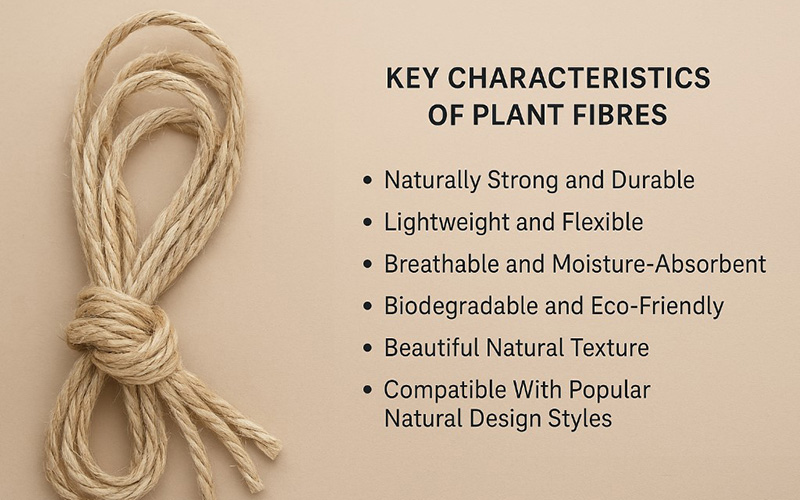
Plant fibres stand out not only because they come from renewable sources, but also because they offer a unique combination of physical, environmental, and aesthetic qualities. These characteristics are the reason materials like flax fiber, hemp plant fiber, sisal plant fibres, and bamboo fiber have been used for centuries – and remain in high demand in modern sustainable design.
Below are the most important qualities that define plant fibres.
1. Naturally Strong and Durable
Thanks to their cellulose-rich structure, plant fibres are naturally strong. Bast fibres – especially flax fiber, hemp plant fiber, and fibres from the jute plant – offer excellent tensile strength, making them perfect for ropes, rugs, handwoven baskets, and high-use decor pieces.
Leaf fibres such as sisal plant and agave sisal are even tougher, with natural resistance to friction and heavy wear.
2. Lightweight and Flexible
Most plant fibres have a light structure that makes them easy to shape, weave, braid, or twist. Grass fibres such as bamboo fiber and water hyacinth fiber are particularly valued for their flexibility. This makes them ideal for pendant lights, furniture accents, and artisanal décor.
3. Breathable and Moisture-Absorbent
Plant fibres naturally allow air to circulate, preventing heat buildup and helping regulate humidity. This is one of the reasons flax linen, hemp textiles, jute rugs, and bamboo-based fabrics feel cool, breathable, and comfortable.
4. Biodegradable and Eco-Friendly
Because plant fibres originate from natural fiber plants, they break down naturally without releasing harmful chemicals or microplastics. Their production also tends to require less energy and fewer chemicals compared to synthetic fibres.
This makes plant fibres an essential choice for eco-conscious homeowners and sustainable interior design.
5. Beautiful Natural Texture
Plant fibres are known for their organic, earthy textures. Their unique grains, fibres, and subtle imperfections add warmth and character to home décor – something synthetic materials cannot replicate.
The soft sheen of flax fiber, the rustic texture of grass fibre, and the bold structure of sisal plant fibres all contribute to the visual appeal of handcrafted pieces.
6. Compatible With Popular Natural Design Styles
Because of their neutral colours and organic feel, plant fibres fit perfectly into design styles centered on calmness, simplicity, and natural beauty:
- Wabi-Sabi
- Japandi
- Scandinavian
- Boho
- Coastal
- Organic Modern
These interiors emphasize authenticity – something plant fibres deliver effortlessly.
Benefits of Using Plant Fibres in Home Interiors
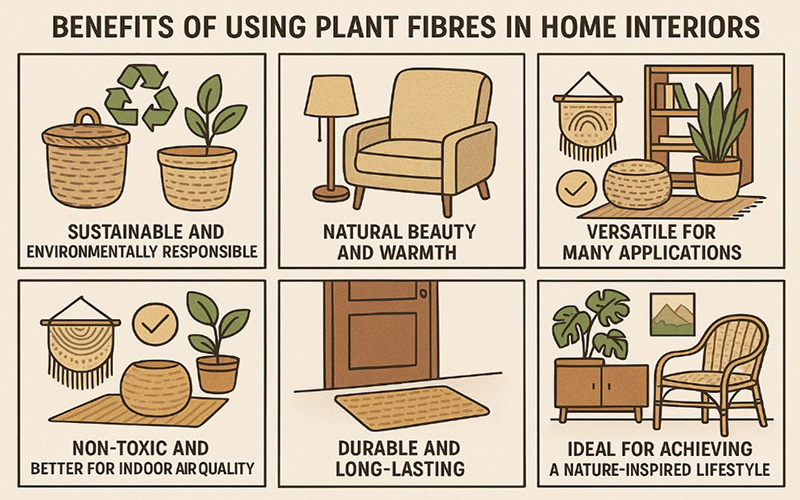
As more homeowners look for ways to create warm, healthy, and sustainable living spaces, plant fibres have become a preferred material for furniture, lighting, décor, and textiles. Below are the most important benefits that explain why plant fibres remain so popular today.
1. Sustainable and Environmentally Responsible
Because plant fibres come from renewable sources and are biodegradable, they have a significantly lower environmental footprint than synthetic materials. Many plant species – such as bamboo, jute plant, hemp plant fibre, and sisal plant – grow quickly and require minimal pesticides or irrigation.
This aligns perfectly with modern sustainability trends and eco-conscious consumers.
2. Natural Beauty and Warmth
Plant fibres introduce warmth, depth, and organic charm to any room. The natural appearance of flax fiber, water hyacinth fiber, banana fiber plant fibres, and pineapple leaf fiber makes them ideal for interior styles that celebrate authenticity and simplicity.
Whether used in rugs, pendant lights, or woven baskets, these materials instantly make a space feel more inviting.
3. Versatile for Many Applications
Plant fibres come in a wide range of textures – from soft and smooth to coarse and structural – making them suitable for:
- Pendant lights and lamp shades
- Rugs and mats
- Handwoven storage baskets
- Wall décor and panels
- Textiles such as linen
- Rope, twine, and cordage
- Eco-friendly home accessories
Grass fibre and bamboo fiber are often used for lighting and furniture accents, while bast fibres like flax fiber and hemp plant fiber are ideal for textiles and rope. Leaf fibres such as sisal plant and agave sisal excel in heavy-duty applications.
4. Non-Toxic and Better for Indoor Air Quality
Because they come from nature and require less chemical processing, plant fibres do not emit harmful VOCs commonly found in synthetic materials. This makes them a healthy choice for families, children’s spaces, and anyone sensitive to chemicals.
5. Long-Lasting When Used Properly
Although plant fibres are natural, they can be incredibly long-lasting when used in appropriate environments. Jute plant fibres make durable rugs and floor mats. Bamboo fiber and water hyacinth fiber create robust woven furniture and décor. Sisal and agave sisal are strong enough for high-traffic areas.
Their natural strength ensures years of use with minimal maintenance.
6. Ideal for Achieving a Nature-Inspired Lifestyle
Plant fibres help connect indoor spaces with nature, making your home feel grounded, calming, and balanced. This is why they are central to design philosophies like Wabi-Sabi, which embraces natural textures, imperfection, and organic materials as part of everyday life.
Common Applications of Plant Fibres
Because plant fibres are strong, flexible, biodegradable, and rich in natural texture, they are used in a wide range of home décor, textiles, and handcrafted products. Their organic appearance and sustainable qualities make them especially popular in modern interior design.
1. Woven Lighting and Lampshades
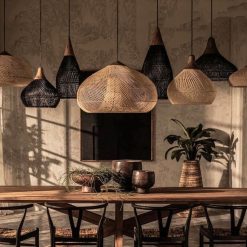
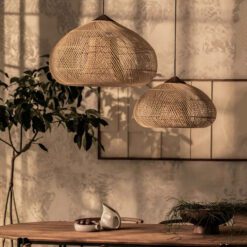
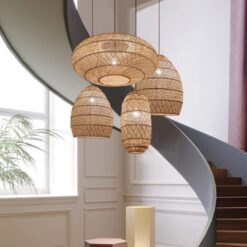
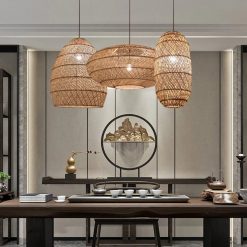
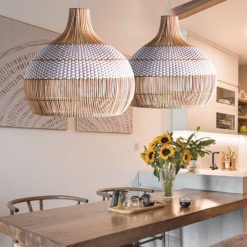
Grass fibres and leaf fibres – such as bamboo fiber, water hyacinth fiber, banana fiber plant, and pineapple leaf fiber – are commonly used to create woven pendant lights, lampshades, and wall sconces.
Why they are popular:
- Provide warm, diffused ambient lighting
- Add natural texture and visual softness
- Fit perfectly into Wabi-Sabi, Japandi, Boho, and Coastal interiors
Woven lighting is one of the fastest-growing applications of plant fibres in contemporary home décor.
Rattan Pendant Light
Rattan Pendant Light
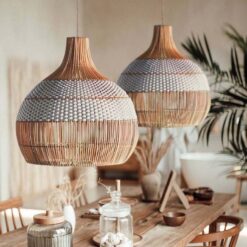
Rattan Pendant Light
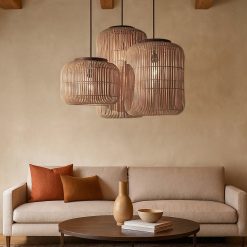
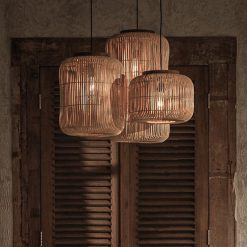
Rattan Pendant Light
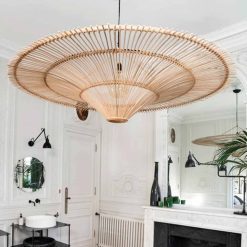
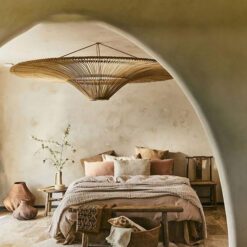
Rattan Pendant Light
2. Furniture Accents and Surface Panels
Plant fibres can be woven into beautiful structures for:
- cabinet doors
- chair backs
- headboards
- wall panels
- room dividers
Materials like grass fibre, water hyacinth fiber, and bamboo fiber create smooth yet durable woven surfaces with a handcrafted aesthetic.
3. Rugs, Mats, and Floor Coverings
Bast fibres and leaf fibres – especially those from the jute plant, hemp plant fiber, and sisal plant – are widely used for durable rugs and doormats.
Benefits:
- Strong and long-lasting
- Neutral and calming color tones
- Suitable for high-traffic areas
Sisal, jute, and hemp rugs are excellent choices for natural-inspired interiors.
4. Handwoven Baskets and Storage Solutions
Plant fibres are ideal for crafting baskets, trays, and décor organizers.
Materials like water hyacinth fiber, bamboo fiber, and banana fiber plant are especially valued for their soft, flexible, and richly textured appearance.
These baskets add warmth, storage convenience, and an artisanal feel to any room.
5. Textiles and Natural Fabrics
Some plant fibres – particularly flax fiber – are spun into soft, breathable, and lightweight textiles such as linen.
Hemp and bamboo-based fabrics are also popular for sustainable fashion and interior textiles.
6. Rope, Cordage, and Macramé
Strong fibres such as:
are used to create rope, twine, cordage, macramé decorations, and functional binding materials.
7. Eco-Friendly Packaging and Handcrafted Items
Plant fibres are also used in:
- recycled paper
- handmade crafts
- gift packaging
- natural art materials
Their soft, organic feel adds a touch of authenticity and sustainability to everyday items.
Plant Fibres vs Synthetic Fibres
Understanding the difference between plant fibres and synthetic fibres helps explain why natural materials are increasingly preferred in sustainable design. Below is a clear comparison.
1. Origin & Composition
| Feature | Plant Fibres | Synthetic Fibres |
|---|---|---|
| Source | Natural fiber plants (flax fiber, hemp plant fiber, jute plant, bamboo fiber) | Petroleum-based chemicals |
| Biological Structure | Cellulose | Man-made polymers |
| Renewability | Renewable | Non-renewable |
2. Environmental Impact
| Aspect | Plant Fibres | Synthetic Fibres |
|---|---|---|
| Biodegradable | ✔️ Yes | ❌ No |
| Chemical Pollution | Very low | High (microplastics, chemicals) |
| Carbon Footprint | Low | High |
| Eco-Friendliness | ✔️ Excellent | ❌ Poor |
3. Durability & Performance
| Aspect | Plant Fibres | Synthetic Fibres |
|---|---|---|
| Strength | High for bast fibres (flax, hemp) | High |
| UV Resistance | Medium | High |
| Moisture Resistance | Medium | High |
| Breathability | ✔️ Excellent | ❌ Very limited |
| Longevity | Develop a natural patina | May crack, peel, or become brittle |
4. Aesthetic Qualities
| Aspect | Plant Fibres | Synthetic Fibres |
|---|---|---|
| Texture | Warm, organic, handcrafted | Uniform, often plastic-like |
| Colors | Earthy natural tones | Any color possible |
| Feel | Natural and calming | Smooth, sometimes artificial |
5. Best Use Cases
Plant Fibres
- Woven lighting
- Rugs & mats
- Baskets & organizers
- Wall panels
- Rope & macramé
- Sustainable home décor
- Linen textiles
Synthetic Fibres
- Outdoor furniture
- Waterproof fabrics
- Industrial-strength applications
Why Plant Fibres Are Popular in Modern Sustainable Design
In a world increasingly focused on eco-friendly living, consumers and designers are turning toward materials that are renewable, non-toxic, and deeply connected to nature. Plant fibres perfectly align with these values, which is why they have become a cornerstone of modern sustainable design.
1. They Support an Eco-Conscious Lifestyle
Plant fibres come from renewable resources – flax, hemp, jute plant, sisal plant, agave sisal, bamboo fiber, water hyacinth fiber, and more. They require minimal chemical processing, grow quickly, and naturally decompose at the end of their lifecycle.
This makes them one of the most environmentally responsible material choices available today.
2. They Bring Calm, Natural Beauty to Interiors
Modern design styles increasingly favor warm, grounded, nature-connected spaces. Plant fibres deliver exactly that.
Their organic textures, earthy tones, and subtle imperfections add:
- softness
- warmth
- visual depth
- handcrafted charm
Whether it’s a bamboo fiber pendant light or a jute plant rug, plant fibres instantly make a room feel more serene and welcoming.
3. They Fit Perfectly Into Popular Interior Styles
Plant fibres are foundational in many trending design aesthetics, including:
- Wabi-Sabi
- Japandi
- Scandinavian Minimalism
- Boho
- Tropical & Coastal
- Organic Modern
Each of these styles celebrates natural materials, authentic textures, and simple, meaningful design – values that plant fibres embody beautifully.
4. They Are Healthy, Non-Toxic, and Low-VOC
Unlike synthetic fibres, which may release VOCs and microplastics, plant fibres are naturally low-emission and chemically safe. They help maintain better indoor air quality and reduce harmful pollutants inside the home.
This makes them ideal for:
- bedrooms
- nurseries
- living rooms
- eco-conscious households
5. They Support Traditional Craftsmanship
Plant fibres have been used for thousands of years in weaving, rope-making, basketry, and decorative arts. Using these materials today helps preserve:
- artisan knowledge
- handmade techniques
- cultural heritage
Each piece crafted from flax fiber, grass fibre, or banana fiber plant carries the touch of human craftsmanship – something mass-produced synthetic items cannot replicate.
6. They Provide Versatility Without Compromising Sustainability
Plant fibres can be:
- soft (flax fiber)
- strong (hemp plant fiber)
- coarse (sisal plant)
- flexible (bamboo fiber)
- textured (water hyacinth fiber)
- decorative (pineapple leaf fiber)
Their versatility allows designers to create lighting, furniture, textiles, baskets, rugs, wall décor, and more – all within a sustainable framework.
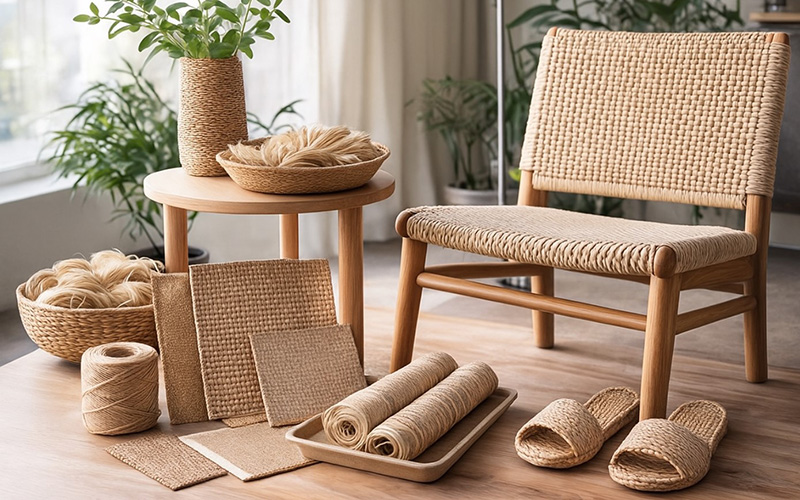
Frequently Asked Questions
Plant fibres are natural fibres extracted from different parts of plants – such as stems, leaves, and grasses. They include materials like flax fiber, hemp plant fiber, jute plant fibres, banana fiber plant, sisal plant, and bamboo fiber. These fibres are renewable, biodegradable, and widely used in sustainable home décor, textiles, and handcrafted products.
The primary categories include:
– Bast fibres: flax fiber, hemp plant fiber, jute plant
– Leaf fibres: sisal plant, agave sisal, pineapple leaf fiber, banana fiber plant
– Grass fibres: bamboo fiber, water hyacinth fiber
Each type offers different strengths, textures, and applications.
Yes. Plant fibres come from natural fiber plants and are fully biodegradable. They require less energy, fewer chemicals, and lower emissions compared to synthetic fibres. They are one of the most sustainable materials available today.
Plant fibres are used in:
– lighting and lampshades
– rugs and mats
– baskets and storage
– rope and macramé
– textiles (linen, hemp fabric)
– wall panels and furniture accents
– artisanal home décor
Yes. Bast fibres like flax fiber and hemp plant fiber are exceptionally strong, while leaf fibres like sisal plant offer heavy-duty durability. With proper use and care, plant-fibre products can last many years.
Some of the strongest plant fibres include:
– hemp plant fiber
– flax fiber
– sisal plant fibres
– agave sisal
These are widely used for rope, cordage, rugs, and structural weaving.
Absolutely. Plant fibres complement a wide range of styles – including Wabi-Sabi, Japandi, Scandinavian, Coastal, Organic Modern, Rustic, and Boho – thanks to their natural colours and textures.
Conclusion
Plant fibres remain some of the most sustainable, versatile, and beautiful natural materials available today. Whether they come from the jute plant, flax fiber, hemp plant fibre, bamboo fiber, or leaf fibres like sisal and pineapple leaf fiber, these materials bring warmth, depth, and authenticity to any space. Their biodegradable nature, low environmental impact, and rich organic texture make plant fibres essential for eco-conscious homeowners and designers who value natural simplicity and long-lasting quality.
From woven lighting to rugs, wall panels, furniture accents, textiles, and handcrafted décor, plant fibres allow you to create a home that feels grounded, calming, and deeply connected to nature. If you’re looking to embrace sustainable living and elevate your interior with materials that are both functional and meaningful, plant fibres are the perfect place to start.
Ready to bring the beauty of natural materials into your home? Explore our handcrafted lighting and décor made from authentic plant fibres at vietshopdesign – where sustainability meets timeless design.
See more:
- What Is Synthetic Materials? Definitions, Benefits & Uses
- What Is Wicker? A Complete Guide to the Craft, Materials & Uses
- What Is PE Wicker? Full Guide to Materials, Benefits & Uses

Read more articles
25+ Bedroom Floor Lamp Ideas to Brighten & Elevate Your Space
Bedroom floor lamp ideas offer one of the simplest and most stylish ways to elevate [...]
Oct
Best Laundry Room Lighting Ideas for a Brighter, Cleaner Space
Laundry Room Lighting Ideas focus on turning one of the hardest-working spaces in your home [...]
Sep
20+ Guest Bedroom Lighting Ideas for a Warm, Welcoming Space
Guest bedroom lighting ideas focus on creating a warm, welcoming, and comfortable environment for anyone [...]
Sep
Best Study Room Lighting Ideas for a Bright and Focused Space
A well-designed study room is more than just a desk and a chair – it’s [...]
Sep
20+ Master Bedroom Lighting Ideas for a Modern, Elegant Space
Master bedroom lighting ideas go far beyond simply choosing a ceiling fixture. A master bedroom [...]
Sep
10 Home Office Lighting Ideas for a Bright, Productive Workspace
The home office has become one of the most important rooms in modern living. Whether [...]
Aug
How to Fix Eye Strain from Bad Home Office Lighting
You take screen breaks. You’ve adjusted your monitor brightness. You even bought blue-light glasses. And [...]
Aug
25+ Bedside Pendant Light Ideas for a Stylish Modern Bedroom
Bedside Pendant Light Ideas are becoming increasingly popular as homeowners look for smarter, more stylish [...]
Aug
Best Entryway Lighting Ideas to Brighten Your Entry Space
Your entryway sets the tone for your entire home – it’s the first space guests [...]
Aug
30+ Bedroom Pendant Light Ideas for a Stylish, Well-Lit Retreat
Bedroom Pendant Light Ideas can instantly elevate the atmosphere of your room, adding height, character, [...]
Aug
25+ Bedroom Ceiling Light Ideas to Transform Your Room
Bedroom Ceiling Light Ideas play a key role in creating a space that feels bright, [...]
Aug
How to Master Bedroom Lighting Ideas Like a Pro
Finding the right bedroom lighting ideas can completely transform the mood, comfort, and functionality of [...]
Jul
Explore our collections
Rattan Pendant Light
100 Products
Bamboo Pendant Light
39 Products
Fabric Pendant Light
44 Products
Wood Pendant Light
9 Products
Rope Pendant Light
18 Products
Rattan Wall Sconce
6 Products
Rattan Table Lamp
9 Products
Rattan Floor Lamp
9 Products