
Interior Design Styles
Wabi Sabi Dining Room Ideas for a Warm and Natured Home
A Wabi Sabi dining room transforms one of the most important spaces in your home into a warm, grounded, and deeply meaningful environment. The dining room is where people gather – where conversations flow, meals are shared, and moments naturally slow down. This makes it the perfect place to embrace the Wabi Sabi philosophy of simplicity, nature, and “beautiful imperfection.”
Unlike modern dining rooms filled with glossy tables, symmetrical décor, and perfectly styled centerpieces, a Wabi Sabi style dining room feels authentic and lived-in. It highlights natural textures like raw wood, stone, linen, and clay. It celebrates the organic shapes of handmade ceramics, the patina on a wooden table, and the soft glow of warm lighting. There is no pressure for everything to look flawless – only a desire for the space to feel calm, inviting, and emotionally comforting.
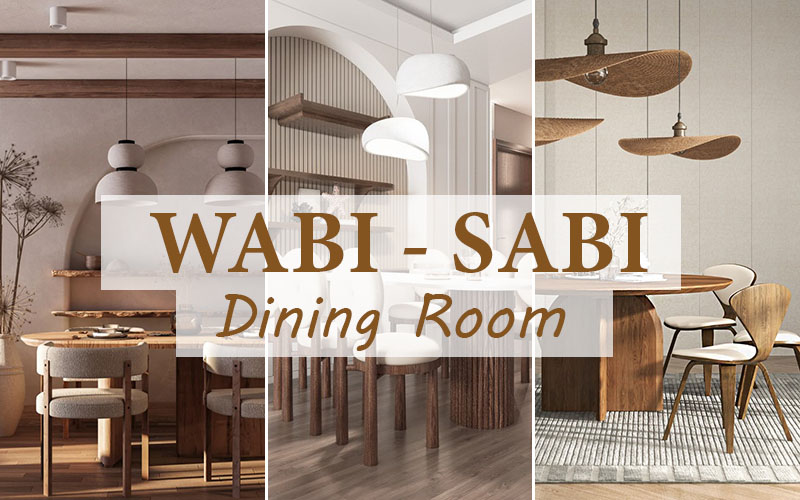
Whether you’re redesigning your entire dining area or simply adding a few touches of warmth and natural beauty, this guide explores inspiring Wabi Sabi dining room ideas to help you create a dining space that supports slow living, meaningful connection, and everyday serenity.
If you want to understand the philosophy behind this aesthetic, be sure to read our complete guide to Wabi Sabi Interior Design. It covers the core principles and mindset that bring authenticity to every Wabi Sabi space – including the dining room.
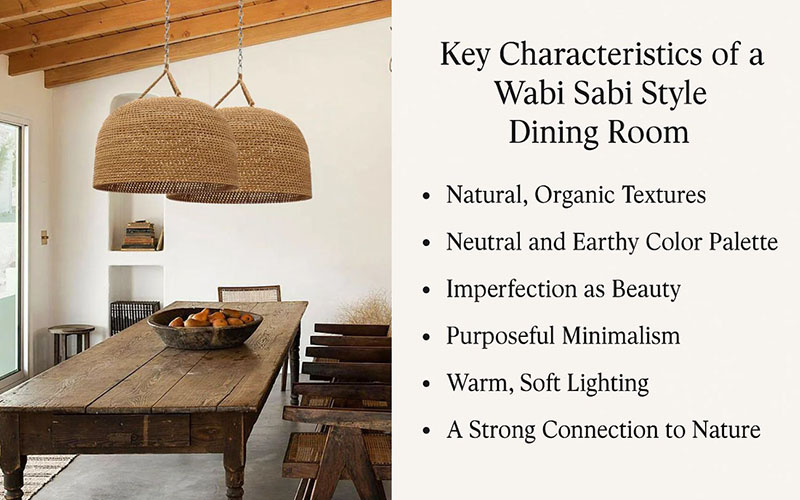
Key Characteristics of a Wabi Sabi Style Dining Room
Learn the foundation of this philosophy: What is Wabi Sabi
A beautifully executed Wabi Sabi dining room design blends natural materials, imperfect textures, and thoughtful simplicity to create a space that feels grounded and real. These are the essential characteristics that define the aesthetic.
1. Natural, Organic Textures
Texture is central to Wabi Sabi. Choose materials that feel warm, earthy, and tactile:
- raw, unfinished wood
- textured stoneware
- woven rattan or bamboo
- natural fiber rugs
- clay vases and pottery
The more organic and handmade the texture feels, the more authentic your space becomes.
2. Neutral and Earthy Color Palette
A Wabi Sabi dining room embraces soft, nature-inspired hues that calm the mind:
- warm white
- cream
- beige
- sand
- taupe
- clay
- muted sage or olive
- stone gray
This palette creates a serene atmosphere that enhances the dining experience.
3. Imperfection as Beauty
Wabi Sabi sees beauty in the authentic, the irregular, and the aged. Welcome:
- mismatched ceramic plates
- hand-thrown bowls
- uneven glaze finishes
- wooden tables with knots and grain
- linen with natural wrinkles
These “imperfections” add soul and personality to the dining room.
4. Purposeful Minimalism
A Wabi Sabi style dining room is simple but not empty. Keep the space uncluttered, with only meaningful items displayed. Examples:
- a single stone vase on the table
- a woven runner
- a small ceramic tray
- a few handcrafted objects on a shelf
Let negative space bring calm.
5. Warm, Soft Lighting
Nothing elevates a dining room like lighting. Wabi Sabi lighting should feel warm and gentle, never harsh. Best choices:
- rattan pendant lights
- bamboo chandeliers
- linen or fabric lampshades
- ceramic lamps
- candlelight
Soft lighting encourages slow, mindful dining.
6. A Strong Connection to Nature
Nature is at the heart of Wabi Sabi. Bring it into your dining room through:
- branches in a clay vase
- natural stone centerpieces
- dried foliage
- wooden furniture
- woven textures
These elements make your dining space feel grounded and alive.
Wabi Sabi Dining Room Layout & Flow
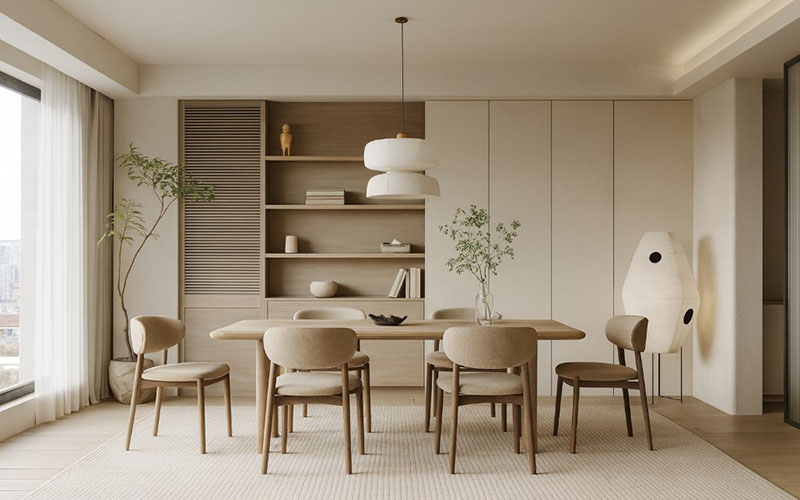
A Wabi Sabi dining room should feel open, breathable, and naturally welcoming. The layout is not about strict symmetry or perfect alignment – it’s about creating an environment that encourages comfort, conversation, and a sense of ease. The flow of the room should guide people gently and intuitively, without clutter or visual heaviness.
1. Open, Breathable Arrangement
Wabi Sabi spaces embrace openness and calm. Avoid placing furniture too close together or blocking natural pathways. Tips:
- Keep space around the dining table for movement
- Avoid oversized or bulky furniture
- Allow natural light to flow freely
- Use “air gaps” between furniture to create a sense of spaciousness
An open layout helps guests feel relaxed and unhurried.
2. Conversation-Friendly Seating
A Wabi Sabi dining room encourages slow, meaningful interactions. The seating arrangement should support eye contact and comfort. Consider:
- a round or oval dining table for better flow
- chairs arranged gently, not rigidly
- benches on one side for a casual, grounded feel
Round tables, in particular, soften the room and create natural connection.
3. Clear Movement Paths
Avoid obstacles that interrupt movement or make the room feel cramped. Keep walkways clear:
- between the kitchen and dining area
- around the dining table
- near the windows or lighting sources
When people can move easily, the space feels more harmonious.
4. Intentionally Used Negative Space
Negative space is a key component of Wabi Sabi. Instead of filling every wall or corner, leave areas untouched. Examples of effective negative space:
- a quiet corner with a single vase
- a bare wall with subtle texture
- shelves with only a few curated pieces
This simplicity allows the room to breathe and highlights what truly matters.
5. Small Dining Room Wabi Sabi Layout Tips
Even a small dining room can embrace the Wabi Sabi aesthetic beautifully. Suggestions:
- choose a light wood table to open the space
- use a bench on one side to save room
- keep colors soft and neutral
- layer gentle lighting instead of a single bright fixture
- use vertical space for décor rather than tabletop clutter
Minimal, intentional placement makes a small Wabi Sabi dining room feel peaceful rather than tight.
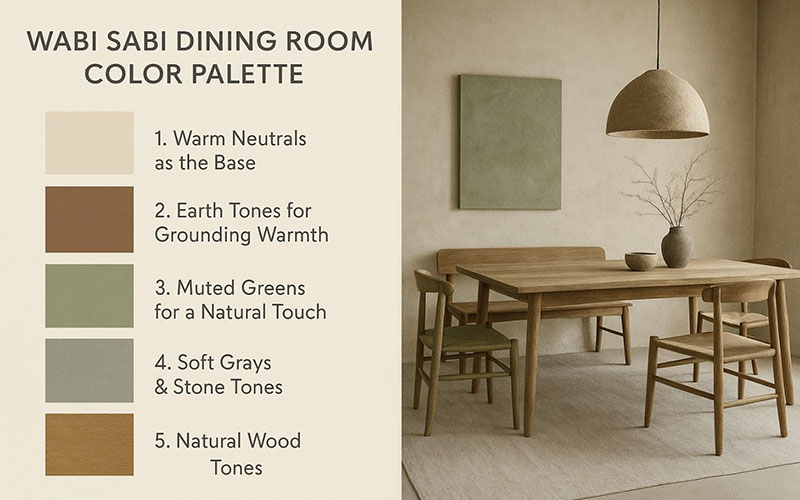
Wabi Sabi Dining Room Color Palette
Color is a foundational element of a Wabi Sabi style dining room.
The right palette creates a sense of harmony, warmth, and grounded calm – ideal for slow meals and mindful gatherings. Instead of bright, bold colors, Wabi Sabi leans into soft, earthy tones inspired by nature.
1. Warm Neutrals as the Base
These shades create an inviting atmosphere without overwhelming the senses:
- warm white
- cream
- oat
- beige
- light sand
They provide a clean but cozy foundation for natural materials like wood and linen.
2. Earth Tones for Grounding Warmth
Add depth and warmth with earthy hues:
- clay
- terracotta
- warm brown
- honey wood tones
- burnt umber
These colors bring richness while staying true to Wabi Sabi’s gentle aesthetic.
3. Muted Greens for a Natural Touch
Greens are excellent for adding harmony and a sense of nature. Choose tones like:
- sage
- eucalyptus
- muted olive
- moss green
Use these in textiles, table decor, or accent walls to introduce calm energy.
4. Soft Grays & Stone Tones
Gray is a perfect grounding color when used softly. Ideal shades:
- stone gray
- warm gray
- charcoal accents (sparingly)
These pair beautifully with wood, ceramics, and linen.
5. Natural Wood Tones
Wood is a defining part of Wabi Sabi dining rooms.
Look for:
- raw oak
- reclaimed pine
- aged walnut
- weathered wood finishes
Visible grain, knots, and patina add authenticity and soul to the space.
6. How to Combine Colors Harmoniously
For a balanced Wabi Sabi palette:
- start with warm neutrals (60%)
- add earthy accents (20%)
- introduce muted greens or stone tones (10–15%)
- finish with dark grounding elements like charcoal or aged metal (5%)
The result is a dining room that feels soft, cohesive, and effortlessly natural.
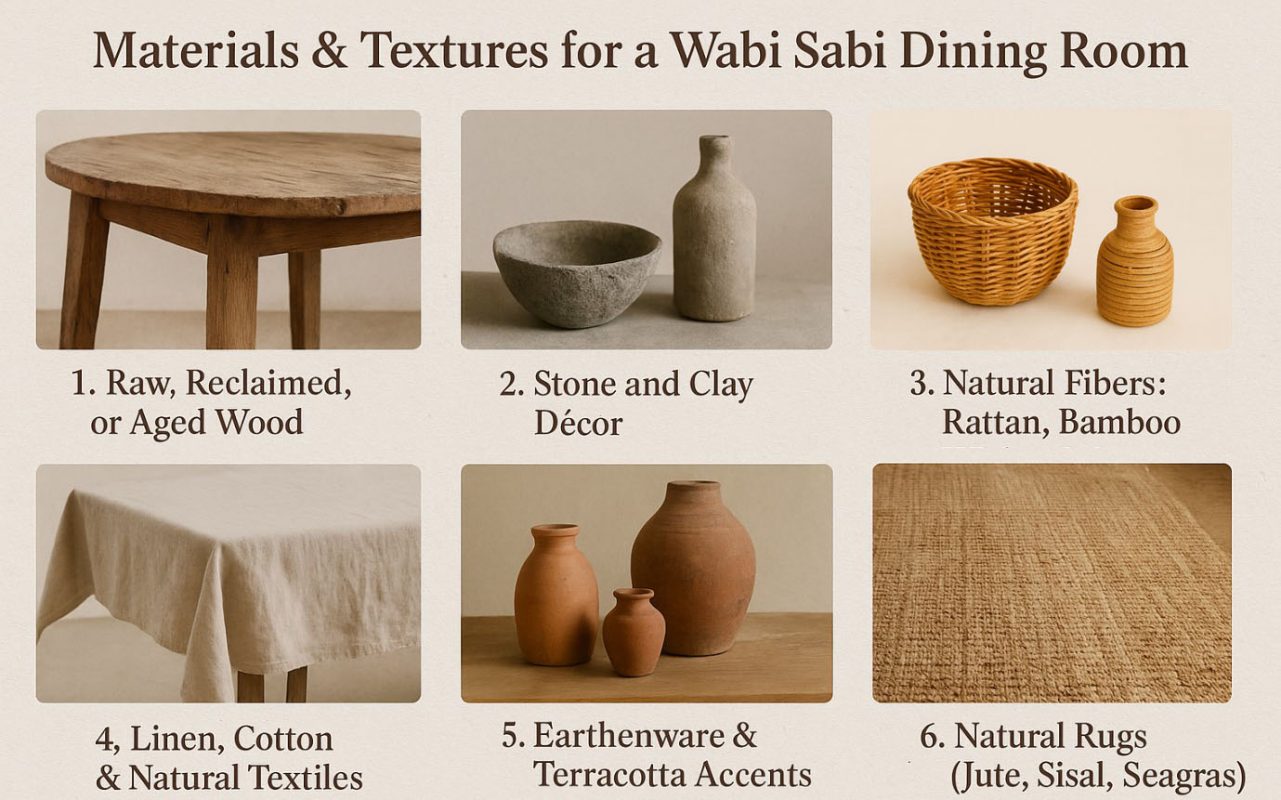
Materials & Textures for a Wabi Sabi Dining Room
Materials and textures shape the emotional character of a Wabi Sabi dining room. Instead of polished finishes or synthetic surfaces, Wabi Sabi embraces organic materials that feel warm, tactile, and honest. These textures bring depth and a sense of grounding to the dining experience.
1. Raw, Reclaimed, or Aged Wood
Wood is the soul of Wabi Sabi design. Choose pieces that highlight natural grain, knots, and imperfections. Ideal uses:
- rustic dining tables
- reclaimed wood benches
- weathered sideboards
- natural wood shelving
Aged wood adds history and warmth to the room.
2. Stone and Clay Décor
These materials introduce a sense of earthiness and calm. Use them in:
- ceramic vases
- clay bowls
- stone centerpieces
- textured pottery
- handcrafted dinnerware
The slight irregularities in handmade ceramics embody Wabi Sabi at its finest.
3. Natural Fibers: Rattan, Bamboo, Wicker & Seagrass
Natural fibers add softness and artisanal charm. Incorporate them through:
- rattan dining chairs
- woven bamboo pendant lights
- seagrass baskets
- wicker trays or wall art
Their organic variations bring warmth and visual interest.
4. Linen, Cotton & Natural Textiles
Soft textiles help balance the texture of wood and stone. Best uses:
- linen table runners
- cotton napkins
- natural-fiber placemats
- textured throw blankets over benches
Wrinkles and folds are welcome – they add authenticity and lived-in beauty.
5. Earthenware & Terracotta Accents
These materials introduce subtle warmth and depth. Use them for:
- planters
- serving dishes
- small decorative bowls
- sculptural pieces
Each item adds a handcrafted, earthy feel.
6. Natural Rugs (Jute, Sisal, Seagrass)
A rug made from natural fibers grounds the room without overpowering it. Benefits:
- brings in texture
- softens sound
- adds organic warmth
Perfect for dining rooms with wood or stone floors.
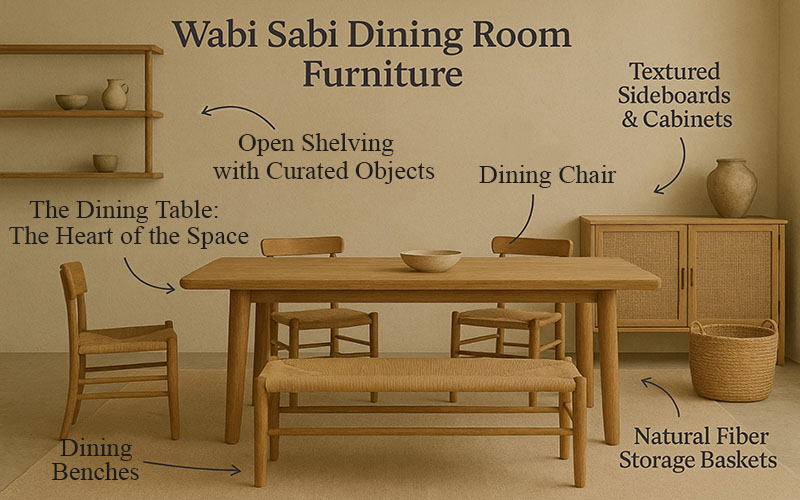
Wabi Sabi Dining Room Furniture
Furniture choices influence how the dining room feels and functions. In a Wabi Sabi dining room design, every piece should evoke comfort, intention, and natural beauty. Focus on simple silhouettes, tactile materials, and calming textures.
1. The Dining Table: The Heart of the Space
The dining table is the centerpiece of a Wabi Sabi dining room. Look for:
- solid wood with visible grain
- live-edge designs
- reclaimed wood surfaces
- matte or uncoated finishes
Avoid glossy or perfectly polished surfaces – natural patina is the goal.
2. Dining Chairs with Natural Textures
Choose chairs that feel comfortable, grounded, and artisanal. Great options:
- rattan or wicker dining chairs
- bamboo-frame chairs
- wooden chairs with soft curves
- mixed seating (imperfect match = authenticity)
Texture is more important than symmetry.
3. Dining Benches for a Relaxed Feel
Benches bring a grounded, casual mood to the dining room. Benefits:
- save space in small dining rooms
- create a relaxed, communal vibe
- highlight natural wood beautifully
They pair especially well with rustic tables.
4. Open Shelving with Curated Objects
Avoid overcrowding your storage spaces. In Wabi Sabi design, shelves should feel airy and intentional. Style them with:
- a few handmade ceramics
- natural wood trays
- a woven basket
- a clay vase with branches
Let simplicity guide your choices.
5. Textured Sideboards & Cabinets
Sideboards should feel earthy and subtle, not overly modern. Good materials:
- reclaimed wood
- rattan-panel cabinets
- stone-topped sideboards
- bamboo-front storage pieces
These pieces add depth without feeling heavy.
6. Natural Fiber Storage Baskets
Woven baskets aren’t just functional – they’re part of the aesthetic. Use them for:
- organizing linens
- storing table décor
- holding seasonal items
Their texture softens the room and keeps clutter out of sight.
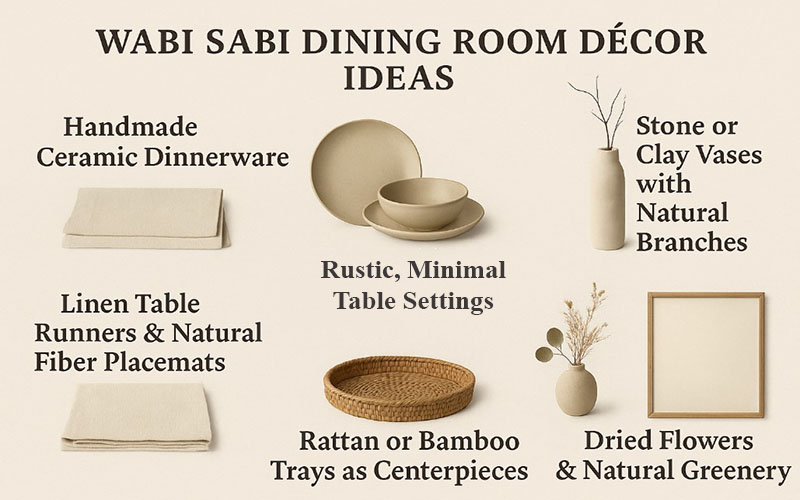
Wabi Sabi Dining Room Décor Ideas
Décor in a Wabi Sabi dining room should feel meaningful, natural, and quietly beautiful. Instead of filling the space with trendy accessories, focus on handcrafted pieces, organic shapes, and simple arrangements that reflect the warmth of nature. Below are inspiring Wabi Sabi dining room ideas you can use to bring soul and authenticity into your dining space.
1. Handmade Ceramic Dinnerware
Hand-thrown plates, bowls, and cups instantly bring Wabi Sabi charm to the dining table. Look for:
- uneven rims
- matte finishes
- natural glazes
- subtle imperfections
Each piece adds character and elevates even the simplest meal.
2. Linen Table Runners & Natural Fiber Placemats
Replace synthetic fabrics with natural materials. Try using:
- stonewashed linen runners
- cotton placemats
- jute or bamboo table mats
Their gentle textures soften the table and create a relaxed dining experience.
3. Stone or Clay Vases with Natural Branches
A single branch in a clay or stone vase creates a stunning, minimalist centerpiece. Good choices:
- eucalyptus
- olive branches
- dried flowers
- airy wild stems
This simple styling adds height, movement, and organic beauty.
4. Rattan or Bamboo Trays as Centerpieces
Woven trays add warmth and a grounded, artisanal feel. Use them to display:
- candles
- pottery
- stacked ceramic bowls
- dried botanicals
Their soft texture blends beautifully with rustic wood tables.
5. Dried Flowers & Natural Greenery
Fresh flowers aren’t necessary in Wabi Sabi design. Dried or seasonal foliage feels more authentic and longer-lasting. Try:
- dried hydrangeas
- pampas grass
- seed pods
- pressed greens in a shallow bowl
These elements evolve naturally over time.
6. Rustic, Minimal Table Settings
A Wabi Sabi table should feel thoughtful, not over-decorated. Layer:
- a simple linen runner
- handmade plates
- wooden utensils
- ceramic cups
- a single centerpiece
The goal is quiet beauty – not perfection.
7. Natural Textures Layered Softly
Mix materials like:
- linen
- stone
- rattan
- weathered wood
Layering textures brings depth while maintaining the calm aesthetic.
8. Minimal Wall Décor
Avoid filling every wall. Instead, choose intentional pieces such as:
- textured canvas art
- fiber wall hangings
- monochrome ink prints
- handcrafted ceramic wall plates
Keep the walls light and serene.
9. Seasonal Décor Inspired by Nature
Rather than trendy decorations, rotate natural elements throughout the year:
- fall branches
- winter pine boughs
- spring green stems
- summer wildflowers
This keeps the dining room feeling fresh and connected to the outdoors.
Wabi Sabi Dining Room Lighting
Lighting has a profound influence on the mood of a Wabi Sabi style dining room. The right fixtures create warmth, softness, and intimacy – turning every meal into a calming experience. Avoid harsh or cool lighting; instead, use warm, diffused illumination that highlights natural textures.
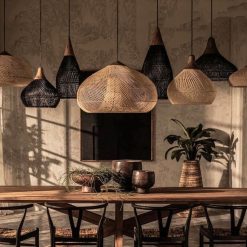
1. Rattan Pendant Lights
Rattan pendants are ideal for Wabi Sabi design. They cast soft, organic shadows that make the dining table glow beautifully. Perfect placement:
- centered above the dining table
- grouped in a cluster for larger rooms
- hung low for intimate dining
They’re one of the most authentic lighting choices for this style.
2. Bamboo Chandeliers
Bamboo lighting blends Japanese simplicity with modern natural aesthetics. Benefits:
- lightweight and airy
- softens the room instantly
- complements wood furniture and earthy tones
A bamboo chandelier can become the room’s focal point.
3. Linen or Fabric Lampshades
Linen diffuses light in a warm, calming way – ideal for slow dinners or gatherings. Use them as:
- floor lamps
- table lamps on a sideboard
- wall sconces with fabric shades
Their glow adds quiet elegance.
4. Ceramic Table Lamps
Ceramic lamps introduce handcrafted texture and artisan beauty. Choose lamps with:
- matte finishes
- natural clay tones
- organic silhouettes
They pair perfectly with pottery and raw wood.
5. Candlelight for Slow, Mindful Dining
Candles create intimacy and add a soothing ambience. Use:
- beeswax candles
- stone candleholders
- ceramic tea light bowls
The flicker of candlelight enhances the Wabi Sabi dining experience.
6. Choose Warm Bulbs Only
To achieve a true Wabi Sabi atmosphere:
- select warm bulbs (2700K)
- avoid cool or daylight LEDs
- choose soft, diffused light over direct beams
Warm lighting highlights the textures and imperfections that make the dining room feel alive.
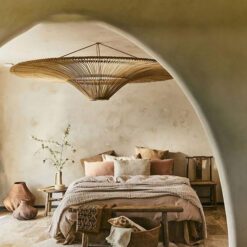
Don’t miss our rattan and bamboo lighting collection – it pairs beautifully with Wabi-Sabi interiors.
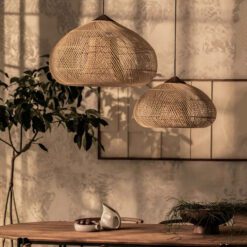
Rattan Pendant Light
Vintage Rattan Pendant Light Fixture High Quality Lamp Shades
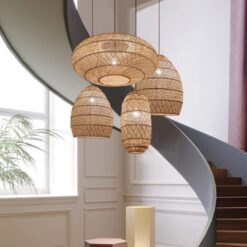
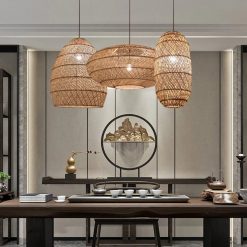
Rattan Pendant Light
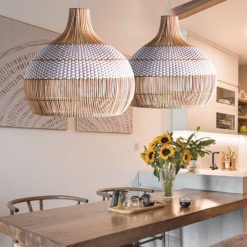
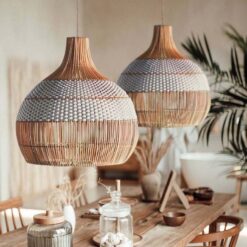
Rattan Pendant Light
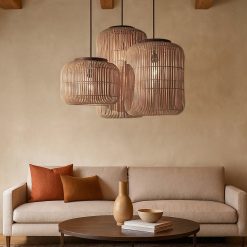
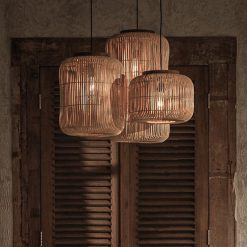
Rattan Pendant Light
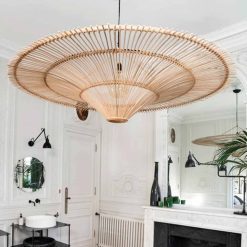
Rattan Pendant Light
Wabi Sabi Dining Table Styling
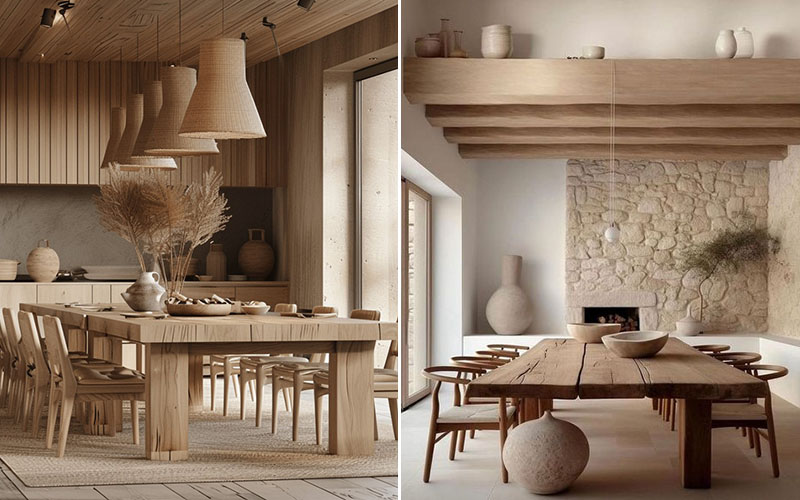
The dining table is the heart of a Wabi Sabi dining room, and how you style it sets the tone for the entire space. Instead of polished, perfectly symmetrical centerpieces, Wabi Sabi table styling focuses on natural textures, handmade objects, and understated compositions that feel warm, welcoming, and intentionally imperfect.
1. Simple, Organic Centerpieces
A single, meaningful element makes the strongest impact. Ideas:
- a handmade clay vase with a single branch
- a stone bowl filled with river pebbles
- a rustic wooden tray with a candle
- a ceramic pitcher with dried flowers
These natural centerpieces create quiet beauty without overwhelming the table.
2. Minimal Table Settings
A Wabi Sabi table should never feel crowded or overly decorated. Try:
- uneven ceramic plates
- stone-textured bowls
- linen napkins with soft creases
- bamboo or wooden utensils
Each piece should feel tactile, authentic, and intentionally placed.
3. Layering Natural Materials
Layering adds depth while keeping the styling simple. Combine:
- linen runners
- wooden boards
- ceramic pieces
- rattan placemats
The contrast of textures enhances the Wabi Sabi mood.
4. Embrace Irregularity
Let your table settings feel soft and human – not overly curated. Examples:
- plates that don’t match perfectly
- folded napkins instead of crisp ironed ones
- centerpieces placed slightly off-center
This slight asymmetry adds charm and visual interest.
5. Seasonal Styling
Rotate natural elements according to the seasons.
Try:
- dried hydrangeas in fall
- pine branches in winter
- fresh greens in spring
- wildflowers in summer
This keeps your dining room connected to nature’s cycles.
6. Incorporate Patina
Wabi Sabi celebrates the beauty of age. Use:
- worn wooden boards
- vintage brass candles
- a ceramic bowl with a crackled glaze
These items bring history and character to your dining table.
Wabi Sabi Dining Room for Small Spaces
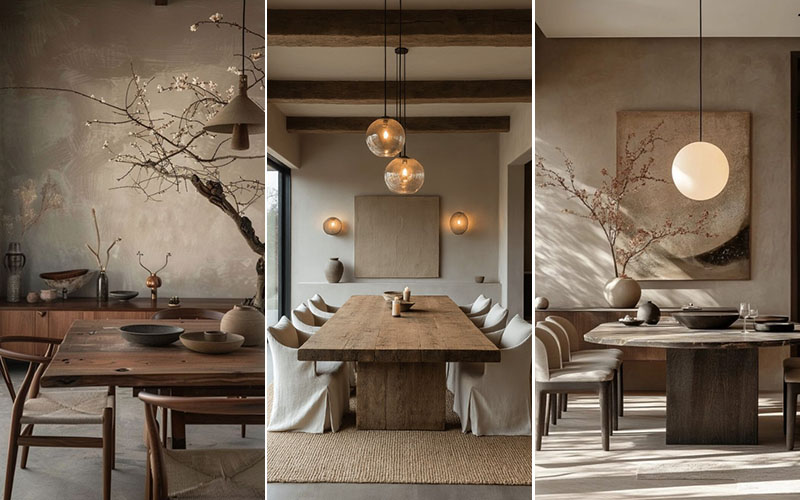
A small dining room is actually ideal for a Wabi Sabi style dining room, because the philosophy values simplicity, intentionality, and breathable space. With the right approach, even a compact area can feel spacious, harmonious, and beautifully grounded.
1. Choose Lighter Wood Tones
Light, natural wood makes small rooms feel open and airy. Good options:
- ash
- pine
- light oak
- birch
Avoid dark glossy finishes that make the space feel heavy.
2. Use a Round or Oval Table
Round tables improve flow and help maximize limited space. Benefits:
- easier movement
- encourages conversation
- visually softer edges
- fits well into small corners
A round reclaimed wood table is perfect for Wabi Sabi.
3. Incorporate Bench Seating
Benches save space and create a casual, grounded look. Use them:
- on one side of the table
- against a wall
- in narrow dining areas
Their low profile makes the room feel more spacious.
4. Keep Décor Minimal and Meaningful
In small spaces, clutter becomes more noticeable. Choose:
- a single branch arrangement
- one ceramic bowl
- a woven tray
- a linen runner
Focus on a few high-impact pieces.
5. Use Vertical Space
Instead of table clutter, draw the eye upward. Add:
- floating wood shelves
- a large vertical branch arrangement
- tall vases
- wall-mounted rattan décor
This makes the room feel larger and more dynamic.
6. Rely on Soft, Layered Lighting
Soft, ambient lighting expands a small space visually. Use:
- rattan pendants
- linen-shaded wall sconces
- ceramic table lamps
- candles
Avoid bright overhead lights – their harshness shrinks the room.
7. Keep Colors Calm and Muted
A calm palette makes the dining room feel open and grounded. Use:
- warm neutrals
- soft beige
- muted greens
- stone gray
These hues make the space feel serene, not crowded.
Common Mistakes to Avoid in a Wabi Sabi Dining Room
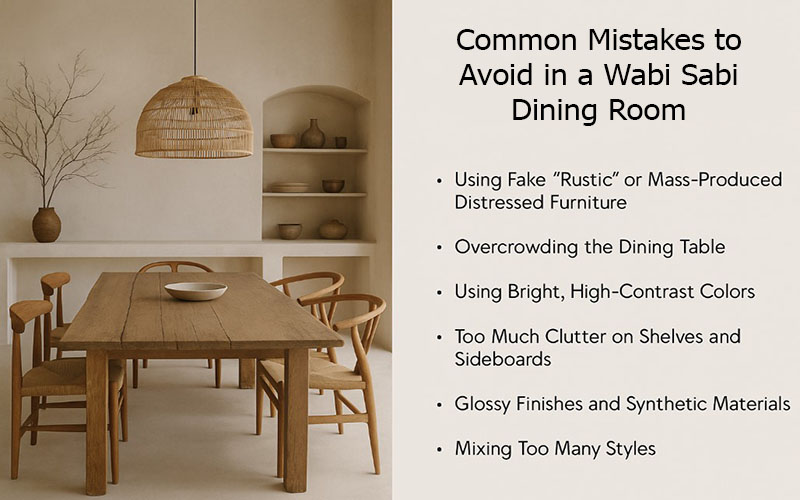
Even though a Wabi Sabi dining room looks effortless, it’s surprisingly easy to go off-track. Avoiding these common mistakes ensures your space stays true to the philosophy of authenticity, simplicity, and natural beauty.
1. Using Fake “Rustic” or Mass-Produced Distressed Furniture
Wabi Sabi celebrates genuine imperfection, not faux aging. Avoid:
- factory-made “distressed-look” tables
- printed wood textures
- fake rustic finishes
Instead, choose:
- reclaimed wood
- real patina
- handmade furniture
Authenticity is key.
2. Overcrowding the Dining Table
Too many centerpieces or decorative items disrupt the calm atmosphere. Skip:
- multiple vases
- busy table runners
- excessive seasonal décor
Choose:
- one thoughtful piece
- a single branch in a vase
- a simple ceramic bowl
Less is more.
3. Using Bright, High-Contrast Colors
Bold, saturated colors break the harmony of Wabi Sabi. Avoid:
- bright yellow
- vivid red
- intense blue
- harsh black and white contrasts
Stick to muted, earthy tones that promote relaxation.
4. Too Much Clutter on Shelves and Sideboards
Open shelves should breathe. Avoid filling them with:
- mass-produced knick-knacks
- overly decorative items
- clutter disguised as décor
Keep only meaningful, handcrafted objects.
5. Glossy Finishes and Synthetic Materials
High-shine surfaces go against the soft, organic look of Wabi Sabi.
Avoid:
- lacquered tables
- polished metals
- plastic décor
Choose:
- matte ceramics
- weathered wood
- linen textiles
- woven natural fibers
6. Mixing Too Many Styles
A dining room that combines boho, industrial, modern glam, and farmhouse all at once loses harmony. Stick with:
- nature-inspired materials
- soft, cohesive colors
- simple, grounded forms
Consistency maintains balance.
Wabi Sabi Dining Room FAQs
Neutral and earthy tones like warm white, beige, clay, sage green, and soft gray create the most calming atmosphere. These colors enhance natural materials like wood, linen, and ceramic.
Wabi Sabi is perfect for budget-friendly design. Try: branches from your backyard, thrifted pottery
linen runners, reclaimed wood pieces, simple handmade ceramics.
The beauty lies in authenticity, not price.
Rustic, raw, or reclaimed wood tables are ideal. Choose pieces with visible grain, natural imperfections, or live edges.
oft, warm, diffused lighting works best. Use: rattan pendant lights, bamboo chandeliers, linen shade lamps, ceramic table lamps, candles
Avoid cool white bulbs or harsh overhead lighting.
Conclusion
A Wabi Sabi dining room design transforms everyday meals into moments of presence, connection, and quiet joy. By embracing natural materials, soft textures, imperfect details, and thoughtful simplicity, your dining room becomes a grounding sanctuary where people gather and feel at ease.
Whether it’s a rustic wooden table, clay dinnerware, a linen table runner, or a warm rattan pendant light, each element adds emotional depth and authenticity. A Wabi Sabi style dining room isn’t about perfection – it’s about creating a space that feels real, comforting, and connected to nature.
If you want to elevate your dining room with gentle, nature-inspired lighting, explore our handcrafted rattan and bamboo pendant lights here. Their warm glow and organic textures perfectly complete the Wabi Sabi.
See More Wabi Sabi Interior Design by Room:
- Best Wabi-Sabi Office Design Tips for a Organized Workspace
- Wabi Sabi Living Room Design: Create a Calm, Natural Space
- Wabi Sabi Kitchen Design for a Warm, Peaceful, and Nature Home
- Wabi Sabi Bathroom Design: The Ultimate Guide
- Wabi Sabi Entryway Ideas: Simple, Natural, Beautifully Design Tips
- Wabi Sabi Bedroom Design: Create a Calm, Natural Retreat



Unlock VIP Perks
Join as a priority member to receive gifts and be the first to access exclusive deals, our newest collections, and more...
Read more articles
25+ Best Outdoor Bamboo Pendant Lights for a Warm, Natural & Inviting Space
Outdoor bamboo pendant lighting transforms a pergola, patio, or covered garden dining space from a [...]
Jun
11 Best Organic Modern Rope Lighting Ideas for a Warm, Inviting Space
Wicker, hemp rope, jute, and water hyacinth bring the most authentically textural and the most [...]
Jun
25+ Trending Organic Modern Rattan Lights for a Cozy Living Space
The most beautifully designed organic modern interiors today are built not on safe pendant choices [...]
Jun
8 Organic Modern Rattan Dome Pendant Lights for a Soft, Natural Interior
The dome form is rattan’s most naturally generous and most softly organic pendant silhouette – [...]
Jun
9 Organic Modern Rattan Chandeliers for a Soft, Natural Interior
A rattan chandelier in an organic modern interior creates the most complete expression of what [...]
Jun
11 Organic Modern Brown Rattan Lights for a Warm, Earthy Home
Brown rattan brings the most warmly grounded and most gently earthy pendant tone to an [...]
May
15+ Organic Modern Black Rattan Lights for a Warm, Bold Home
Black rattan in an organic modern interior creates a precisely beautiful design tension – the [...]
May
12 Organic Modern Beige Rattan Lights for a Natural Interior
Beige rattan is the pendant material that organic modern design was made for – its [...]
May
25+ Organic Modern Bamboo Lights for a Soft, Natural Interior
Organic modern design lives at the most beautiful intersection of clean contemporary form and warm [...]
May
8 Best Organic Modern Wood Pendant Lights for a Warm, Natural Home
Wood pendant lighting brings a quality to an organic modern interior that no softer natural [...]
May
8 Modern Rustic Wood Lighting for a Warm, Architectural Interior
Wood pendant lighting belongs in a modern rustic interior the way exposed timber belongs in [...]
May
12 Modern Rustic Wicker Rope Pendant Lights for a Warm, Textural Interior
In a modern rustic interior built around exposed timber beams, rough stone walls, worn leather [...]
May
Explore our collections
Rattan Pendant Light
95 Products
Bamboo Pendant Light
38 Products
Fabric Pendant Light
41 Products
Wood Pendant Light
7 Products
Rope Pendant Light
14 Products
Rattan Wall Sconce
6 Products
Rattan Table Lamp
6 Products
Rattan Floor Lamp
9 Products